

Inside the Claude Source Code Leak
 Suyash Raizada
Inside the Claude source code leak is less about model secrets and more about what modern LLM products actually run on: the agentic harness, orchestration logic, tool permissions, and long-context state management. On March 31, 2026, Anthropic accidentally published the complete Claude Code source through an npm release packaging mistake. The exposed artifact included a roughly 60 MB source map file that enabled reconstruction of a large TypeScript codebase, and mirrors spread quickly across GitHub. Anthropic stated it was a release packaging issue caused by human error rather than a security breach, and that no customer data or credentials were exposed.
For LLM app developers and prompt engineers, the real value lies in the architecture patterns visible in production-grade code: how to maintain conversation state, coordinate multiple agents, enforce tool governance, and ship experimental autonomy safely behind feature flags.

What Happened in the Claude Source Code Leak
The incident stemmed from an npm distribution that included original sources alongside a large source map (reported at around 59.8 MB). Source maps are intended to map bundled JavaScript back to original TypeScript for debugging purposes, but they can also allow near-complete reconstruction of readable source code. Community reports estimated the exposure at over 512,000 lines across approximately 1,900 files, with notable modules including a large inference and token-handling engine, a tool and permission layer, and extensive command handling logic.
Two important clarifications for teams assessing risk:
This was not model weights. The leak centered on orchestration, UI, tool wiring, and runtime behavior.
This was a supply chain packaging failure. Build artifacts can unintentionally publish more than intended, even without an intrusion.
Key Technical Takeaways for LLM App Developers
1) Memory Architecture: Index-Based State Instead of Fragile Inline Memory
A standout pattern from the leaked implementation was a layered memory approach that uses a small index to track where information lives, rather than stuffing full state inline into the prompt or a monolithic session blob. Retrieval happens on demand, and failed updates do not corrupt the overall memory state.
Why it matters for LLM apps:
Long conversations are error-prone: naive append-everything approaches amplify hallucinations and contradictions over time.
Indexing encourages validation: you can gate what becomes durable memory and keep raw chat separate from verified facts.
Resilience improves: if a write fails or a tool call errors, the agent does not lose its entire state.
Practical implementation guidance:
Maintain a memory index (IDs, timestamps, topics, embedding pointers) separate from memory payloads (notes, summaries, artifacts).
Adopt staged updates: treat memory as a candidate first, then commit it after validation.
Use retrieval policies: fetch only what is needed for the current tool call or planning step to control token growth.
2) Agent Orchestration Is a Product Layer, Not a Prompt Trick
The leak highlighted robust orchestration beyond a single-model prompt. There were indications of coordinator-style operation where a primary process schedules subordinate agents in parallel, plus integration components connecting editor environments. This reinforces a practical reality: as agents grow more capable, success depends on the harness that sequences reasoning, tool calls, and checks, not just the base model.
Patterns worth adopting:
Coordinator mode: one controller plans, delegates tasks, merges results, and handles retries.
Parallelism with guardrails: concurrency can increase throughput, but only when tool permissions and shared state are properly controlled.
Central token accounting: planning loops, tool outputs, and streaming responses need unified budgeting.
For prompt engineers, this reframes the role of prompts: they become policy and protocol inputs to an execution engine rather than the sole mechanism for behavior.
3) Tool Permissions: Treat Tools Like an Operating System API
The exposed tool layer and permission handling underscored a critical design principle: reliable agent autonomy requires a fine-grained permission schema. Tools are not just functions. They are capabilities with scope, auditing needs, and sometimes irreversible consequences, including file writes, network calls, git operations, and pull request creation.
Recommended permission model for production agents:
Least privilege by default: deny by default, then allow narrow scopes explicitly.
Contextual grants: permissions that expire or are scoped to a directory, repository, or task.
Auditable approvals: store who approved what, when, and why, especially in enterprise environments.
Safe fallbacks: if a tool is denied, the agent should degrade gracefully and suggest steps rather than acting.
This is directly relevant to anyone building developer tools, RAG assistants, or autonomous agents that interact with enterprise systems.
4) KAIROS and the Shift to Background Autonomy
One of the most discussed revelations was an unreleased capability referenced heavily via feature flags: KAIROS. Based on the exposed references, it points toward an always-on background daemon mode with persistent sessions, enabling the tool to operate continuously rather than only responding to explicit prompts.
For developers, this implies new architectural requirements:
Persistent session design: state must survive restarts and handle partial failures.
Event-driven triggers: filesystem changes, CI signals, issue updates, and editor events become inputs.
Continuous safety checks: background autonomy increases risk, so permission checks and rate limits must be more robust.
If you are building autonomous agents, treat agent uptime as a first-class concern: scheduling, resource ceilings, kill switches, and clear user-visible logs all need deliberate design.
5) Feature Flags as a Safety and Governance Primitive
The extensive use of feature flags, including the KAIROS references, illustrates how mature teams ship agentic behaviors: not as a single large release, but via controlled rollouts, experiments, and staged exposure.
How to apply this to LLM products:
Separate policy from code: allow switching behaviors without redeploying everything.
Use progressive delivery: internal users first, then a beta cohort, then general availability.
Track regressions: couple flags with telemetry for refusal rates, tool errors, latency, and user overrides.
Support safe rollback: when tool misuse rises, you need a fast and reliable off switch.
Takeaways for Prompt Engineers: Protocols, Not Prose
While prompts remain important, the leaked architecture suggests they are most effective when they define structured policies rather than freeform instructions:
Tool usage rules - when to call tools, how to format inputs, and what to do on failure
Verification steps - checklists before writing files or creating commits
State update policies - what becomes durable memory versus what stays ephemeral
Escalation paths - when to ask the user, when to halt, and when to log and continue
This prompt-as-protocol framing aligns well with professional prompt engineering practice, where structured reasoning and explicit behavioral constraints consistently outperform vague natural language instructions.
Model Version Risk: Newer Is Not Always More Accurate
The leaked materials included internal roadmap references and reported evaluation metrics for unreleased model variants. One referenced model family showed a higher false-claims rate in a newer iteration compared to an older one. This highlights a practical operational risk: model upgrades can introduce regressions in factuality, instruction following, or tool reliability.
Production guidance for enterprises:
Run regression suites before upgrading models, covering factuality, safety, tool correctness, and latency.
Version-pin critical workflows and only upgrade behind feature flags.
Use evaluation gates: block rollout if key metrics degrade beyond defined thresholds.
Supply Chain Lessons: Source Maps Are Sensitive Artifacts
Security researchers noted that the incident appeared to be a basic packaging configuration failure. The broader lesson is that build-time artifacts, particularly source maps, can unintentionally expose a company's internal logic and security-relevant implementation details to anyone who downloads a public package.
Actionable checklist for teams shipping LLM tooling:
CI verification: fail builds if source maps or TypeScript sources are included unintentionally in public packages.
Artifact allowlists: define exactly which files can ship to npm or other registries.
Release diff scanning: compare package contents against prior releases automatically before publishing.
Security review for developer tools: IDE bridges, local agents, and CLIs deserve threat modeling on par with any endpoint application.
As development pipelines grow more complex, a Tech Certification can strengthen expertise in secure software delivery and automation, while a Marketing Certification helps align security initiatives with business goals and stakeholder trust.
Conclusion: What the Claude Source Code Leak Teaches Builders
The Claude source code leak is ultimately a window into how serious LLM products are engineered: with memory indexes, orchestrators, permissioned tools, feature flags, and continuous evaluation. The most valuable takeaways for LLM app developers and prompt engineers are not about copying implementation details, but about adopting the underlying principles:
Design memory as a resilient system, not a single prompt blob.
Build an agentic harness that coordinates tools, state, and verification.
Treat permissions and auditability as core product requirements.
Ship autonomy gradually with feature flags, telemetry, and rollback paths.
Test model upgrades like any other high-risk dependency change.
As the industry moves toward always-on agents and deeper IDE integration, these patterns will increasingly separate reliable enterprise-grade systems from brittle prototypes.
FAQs
1. What is the “Claude source code leak”?
The term usually refers to reports or discussions claiming that internal details of Claude were exposed publicly. In reality, most of what surfaced involves partial artifacts like system prompts, behavior guidelines, or tool instructions. Full model weights or core training pipelines have not been publicly released. The phrase “leak” is often overstated but still useful for understanding how LLM systems work.
2. Was Claude’s full source code actually leaked?
No, there is no verified evidence that the full source code or model weights were leaked. Large AI systems are highly protected and distributed across secure environments. What typically appears online are fragments or reverse-engineered behaviors. These do not represent the complete system.
3. What kind of information was reportedly exposed?
The information discussed in such cases usually includes system prompts, role instructions, guardrails, and tool usage logic. These elements define how the AI behaves and responds. While not the full system, they are valuable for understanding how production AI is structured. Developers often study these patterns.
4. Why is this important for developers?
Even partial insights reveal how real-world AI systems are designed and deployed. Developers can learn how to structure prompts, manage context, and enforce safety. This knowledge helps build more reliable AI applications. It bridges the gap between theory and production.
5. What are system prompts in AI models?
System prompts are hidden instructions that guide the AI’s behavior before any user input is processed. They define tone, rules, and limitations. A strong system prompt ensures consistency and safety. It is one of the most critical components in LLM applications.
6. What can prompt engineers learn from this?
Prompt engineers can learn how structured instructions improve output quality. They can observe how constraints and roles are applied. This helps in designing better prompts. It also reduces errors and hallucinations.
7. How do modern AI systems enforce safety?
Safety is implemented through multiple layers, including system prompts, filters, and policy checks. These layers work together to prevent harmful or misleading outputs. It is not a single mechanism but a combination of safeguards. Developers must adopt similar approaches.
8. What is role-based prompting?
Role-based prompting assigns different roles such as “system,” “assistant,” or “user.” Each role has specific instructions. This structure helps control how the AI behaves in different contexts. It is widely used in advanced AI systems.
9. What are AI agents and how are they related?
AI agents are systems that can perform multi-step tasks using reasoning and tools. The insights from such leaks show how agents are structured. They combine prompts, memory, and tool usage. This is the future of AI applications.
10. What is tool integration in LLMs?
Tool integration allows AI to interact with external systems like APIs, databases, or software. Instead of just generating text, the AI can perform actions. This makes it more useful in real-world workflows. It is a key part of modern AI systems.
11. How does context management work in Claude?
Context management involves handling large amounts of input data efficiently. Claude is known for its large context window. This allows it to process long documents and conversations. Proper context handling improves accuracy and relevance.
12. What is prompt chaining?
Prompt chaining breaks complex tasks into smaller steps. Each step builds on the previous one. This improves control and accuracy. It is commonly used in advanced AI workflows.
13. What are the risks of exposing system prompts?
Exposing system prompts can reveal how the AI is controlled. This can lead to misuse or attempts to bypass safety measures. It also exposes proprietary design strategies. Developers must protect these components.
14. Does this affect the security of AI systems?
Not significantly if only partial information is exposed. Core systems remain secure. However, it highlights the importance of protecting sensitive components. Security must be continuously improved.
15. What is the difference between source code and prompts?
Source code includes the actual implementation of the model and infrastructure. Prompts are instructions that guide behavior. Most “leaks” involve prompts, not core code. This distinction is important.
16. How can developers apply these insights?
Developers can design better prompts, build structured workflows, and integrate tools effectively. Learning from real-world systems improves efficiency. It also helps avoid common mistakes. Practical insights are valuable.
17. What ethical concerns arise from such leaks?
Leaks can expose proprietary technology and raise privacy concerns. They may also lead to misuse. Ethical use of information is important. Respecting intellectual property is essential.
18. What does this reveal about modern AI architecture?
It shows that AI systems rely heavily on structured prompts and layered design. The model itself is only one part of the system. Surrounding infrastructure plays a major role. This is a key insight for developers.
19. Is prompt engineering more important than model size?
In many cases, yes. A well-designed prompt can significantly improve performance. Model size alone does not guarantee better results. Structure and clarity matter more.
20. What is the main takeaway from the Claude “leak”?
The biggest takeaway is that AI success depends on system design, not just the model. Prompt structure, safety layers, and tool integration are critical. Developers who understand these will build better applications. The future of AI lies in systems, not just models.
Related Articles
View All
Claude Ai
How to Use Claude Fable 5.1 for Free
Find out whether Claude Fable 5.1 is available for free, which Claude plans provide access, and what users need to know before trying Anthropic’s latest AI model.
Claude Ai
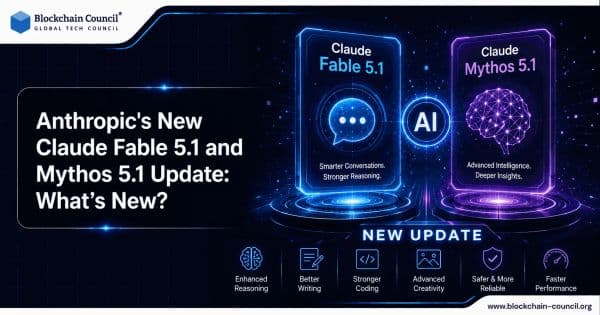
Anthropic's New Claude Fable 5.1 and Mythos 5.1 Update: What's New?
Anthropic’s Claude Fable 5.1 and Mythos 5.1 update brings stronger coding, long-running agentic workflows, research, vision, and knowledge-work capabilities. Fable 5.1 is generally available and introduces cheaper cache reads, potentially reducing typical workload costs by about 25% and highly agentic workloads by up to 45%. Mythos 5.1 uses the same underlying model but offers expanded cybersecurity and biology capabilities to vetted organizations through trusted-access programs.

Claude Ai
Fable 5 vs Claude vs ChatGPT: Which AI Model Should You Choose?
Compare Fable 5, Claude, and ChatGPT across coding, research, DevOps, cost, context, and governance to choose the right AI model.
Trending Articles

Top 5 DeFi Platforms
Explore the leading decentralized finance platforms and what makes each one unique in the evolving DeFi landscape.
What is AWS? A Beginner's Guide to Cloud Computing
Everything you need to know about Amazon Web Services, cloud computing fundamentals, and career opportunities.

Can DeFi 2.0 Bridge the Gap Between Traditional and Decentralized Finance?
The next generation of DeFi protocols aims to connect traditional banking with decentralized finance ecosystems.