

Claude Code Router
 Suyash Raizada
Artificial intelligence systems are no longer single purpose tools. Modern applications rely on multiple AI models, APIs, and services working together in coordinated pipelines. This complexity has led to the rise of routing systems that decide how requests are handled. One such concept gaining attention is the Claude code router.
A Claude code router refers to a system or framework that intelligently routes coding related requests to appropriate AI models or processing paths. It acts as a decision layer, ensuring that each request is handled efficiently based on its complexity, context, and requirements.

For professionals aiming to master AI workflows and development systems, structured learning programs such as the Claude Code Certification and the AI expert certification provide essential knowledge of AI architecture and intelligent routing.
What is a Claude Code Router
A Claude code router is an intelligent system that directs coding related requests to the most suitable AI model, function, or processing pipeline.
Core Concept
Instead of sending every request to a single AI model, the router evaluates:
Complexity of the task
Required resources
Context of the request
It then chooses the optimal path.
Why Code Routing is Important
Efficiency
Routing ensures that simple tasks are handled quickly while complex ones receive deeper processing.
Cost Optimization
Different models have different costs. Routing helps manage expenses.
Performance Improvement
Requests are processed faster and more accurately.
How a Claude Code Router Works
Step 1: Input Analysis
The system analyzes the incoming request.
Step 2: Classification
The request is categorized based on type and complexity.
Step 3: Routing Decision
The router selects the appropriate model or tool.
Step 4: Execution
The request is processed and results are returned.
Real World Example
A development platform receives three types of requests:
Simple syntax correction
API integration code
Complex algorithm design
The router:
Sends simple tasks to lightweight models
Routes complex tasks to advanced models
Optimizes processing time and cost
Key Features of Claude Code Router
Intelligent Decision Making
Automatically selects the best processing path.
Scalability
Handles large volumes of requests efficiently.
Flexibility
Supports multiple models and tools.
Context Awareness
Considers user history and project context.
Benefits of Using a Code Router
Faster Development
Developers receive quicker responses.
Reduced Costs
Efficient use of resources lowers expenses.
Improved Accuracy
Complex tasks are handled by capable systems.
Claude Code Router vs Traditional Systems
Traditional Approach
Single model processing
Limited flexibility
Higher cost for simple tasks
Routed Approach
Multi model architecture
Dynamic decision making
Optimized performance
Use Cases of Claude Code Router
Software Development Platforms
Improve coding assistance tools.
Enterprise Applications
Manage large scale AI workflows.
API Gateways
Route requests to appropriate services.
Automation Systems
Handle diverse tasks efficiently.
Role of AI in Routing
Pattern Recognition
AI identifies request types.
Optimization
Improves routing decisions over time.
Learning Capability
Adapts based on usage patterns.
Developers can enhance their skills through the AI Powered coding expert Course.
Challenges of Code Routing
Complexity
Designing routing systems requires expertise.
Latency
Routing decisions may add slight delays.
Integration Issues
Combining multiple systems can be challenging.
Best Practices for Implementation
Define Clear Rules
Establish criteria for routing decisions.
Monitor Performance
Track efficiency and accuracy.
Optimize Continuously
Improve routing logic over time.
Claude Code Router in Teams
Collaboration
Teams benefit from consistent outputs.
Productivity
Reduces manual decision making.
Knowledge Sharing
Improves understanding of workflows.
Integration with Modern Development Tools
IDE Integration
Enhances developer experience.
Cloud Platforms
Supports scalable infrastructure.
APIs
Enables seamless communication.
AI and the Future of Routing
Autonomous Systems
AI will make routing decisions independently.
Real Time Optimization
Continuous improvement of performance.
Increased Adoption
More industries will use routing systems.
Marketing and Business Applications
Workflow Automation
Improves operational efficiency.
Customer Support
Routes queries to appropriate systems.
Data Analysis
Enhances decision making.
Professionals can explore these applications through the AI powered marketing course.
Security Considerations
Data Protection
Ensure sensitive data is handled securely.
Access Control
Limit permissions for different systems.
Monitoring
Detect and prevent unauthorized access.
Recent Developments
Advanced Routing Algorithms
More accurate decision making.
Integration with AI Platforms
Seamless connectivity with multiple tools.
Improved Performance
Faster and more reliable systems.
Impact on Developers
Simplified Workflows
Less manual decision making.
Increased Efficiency
Faster development cycles.
Enhanced Learning
Exposure to advanced systems.
Future Outlook
Smarter Systems
More intelligent routing decisions.
Broader Applications
Use across multiple industries.
Continuous Innovation
Ongoing improvements in AI technology.
Conclusion
Claude code router systems represent a significant advancement in AI driven development. By intelligently directing requests to the most appropriate processing paths, they improve efficiency, reduce costs, and enhance performance.
As AI systems become more complex, the importance of routing will continue to grow. Developers and organizations that adopt these systems will benefit from faster workflows, better resource management, and improved outcomes.
Understanding and implementing code routing strategies will be essential for staying competitive in the evolving world of artificial intelligence.
FAQs
1. What is a Claude code router?
A Claude code router is a system that directs coding related requests to the most suitable AI model or processing path. It analyzes the request and determines how it should be handled. This improves efficiency and accuracy. It is used in advanced AI workflows.
2. Why is code routing important?
Code routing ensures that tasks are handled efficiently by the appropriate systems. It reduces costs and improves performance. Without routing, resources may be wasted. It is essential for scalability.
3. How does a code router work?
It analyzes input, classifies the request, selects a processing path, and executes the task. Each step is optimized for efficiency. The system uses AI to improve decisions. This process enhances performance.
4. Can beginners use code routers?
Beginners may find them complex, but learning resources can help. Understanding basic concepts is important. With practice, usage becomes easier. It is a valuable skill.
5. What are the benefits of using a code router?
Benefits include faster processing, cost savings, and improved accuracy. It also enhances scalability. Organizations can handle more tasks efficiently. It improves overall performance.
6. Are code routers used in real applications?
Yes, they are used in software platforms, APIs, and enterprise systems. Many modern applications rely on routing. It is a growing trend. Adoption is increasing.
7. What challenges do code routers face?
Challenges include complexity, latency, and integration issues. Designing efficient systems requires expertise. Continuous optimization is needed. These challenges can be managed.
8. How does AI improve routing?
AI enables pattern recognition and decision making. It learns from data and improves over time. This leads to better routing decisions. Efficiency increases.
9. What industries use code routing?
Industries such as technology, finance, and marketing use it. It supports various applications. Adoption is growing rapidly. Its impact is significant.
10. Is code routing expensive?
Initial setup may require investment, but it reduces long term costs. Efficient resource usage saves money. It is cost effective over time. Benefits outweigh costs.
11. Can code routers handle large workloads?
Yes, they are designed for scalability. They can manage high volumes of requests. Performance remains stable. They support growth.
12. How secure are code routers?
Security depends on implementation. Proper measures protect data. Monitoring helps detect threats. Best practices ensure safety.
13. What tools are used to build code routers?
Tools include AI models, APIs, and cloud platforms. Developers use various technologies. Integration is important. Tools vary by application.
14. How do code routers affect developers?
They simplify workflows and improve efficiency. Developers can focus on complex tasks. Learning opportunities increase. Productivity improves.
15. What is the future of code routing?
The future includes smarter systems and broader adoption. AI will enhance decision making. Innovation will continue. Growth is expected.
16. Can code routers reduce errors?
Yes, by directing tasks to appropriate systems, errors are minimized. Accuracy improves. Validation processes help. Reliability increases.
17. How can professionals learn about code routing?
They can take courses, certifications, and practice with real projects. Continuous learning is essential. Skills improve over time. Education helps.
18. What is the role of APIs in routing?
APIs enable communication between systems. They are essential for routing. Proper integration ensures functionality. They support workflows.
19. Are code routers customizable?
Yes, they can be tailored to specific needs. Custom rules improve performance. Flexibility is a key feature. It enhances usability.
20. Why is Claude code router important?
It improves efficiency, scalability, and performance in AI systems. It enables better resource management. It supports innovation. It is essential for modern development.
Related Articles
View All
Claude Ai
How to Use Claude Fable 5.1 for Free
Find out whether Claude Fable 5.1 is available for free, which Claude plans provide access, and what users need to know before trying Anthropic’s latest AI model.
Claude Ai
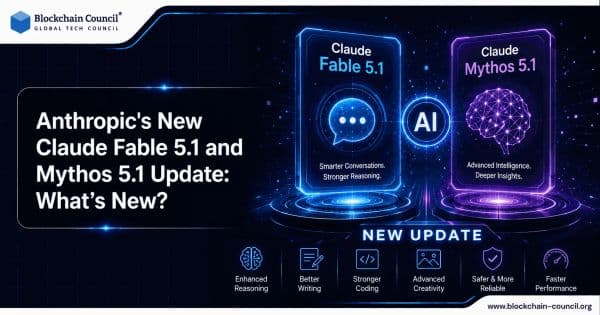
Anthropic's New Claude Fable 5.1 and Mythos 5.1 Update: What's New?
Anthropic’s Claude Fable 5.1 and Mythos 5.1 update brings stronger coding, long-running agentic workflows, research, vision, and knowledge-work capabilities. Fable 5.1 is generally available and introduces cheaper cache reads, potentially reducing typical workload costs by about 25% and highly agentic workloads by up to 45%. Mythos 5.1 uses the same underlying model but offers expanded cybersecurity and biology capabilities to vetted organizations through trusted-access programs.

Claude Ai
Fable 5 vs Claude vs ChatGPT: Which AI Model Should You Choose?
Compare Fable 5, Claude, and ChatGPT across coding, research, DevOps, cost, context, and governance to choose the right AI model.
Trending Articles
How Blockchain Secures AI Data
Understand how blockchain technology is being applied to protect the integrity and security of AI training data.
What is AWS? A Beginner's Guide to Cloud Computing
Everything you need to know about Amazon Web Services, cloud computing fundamentals, and career opportunities.

Can DeFi 2.0 Bridge the Gap Between Traditional and Decentralized Finance?
The next generation of DeFi protocols aims to connect traditional banking with decentralized finance ecosystems.