

Verification vs Validation: Differences, Examples, and Best Practices

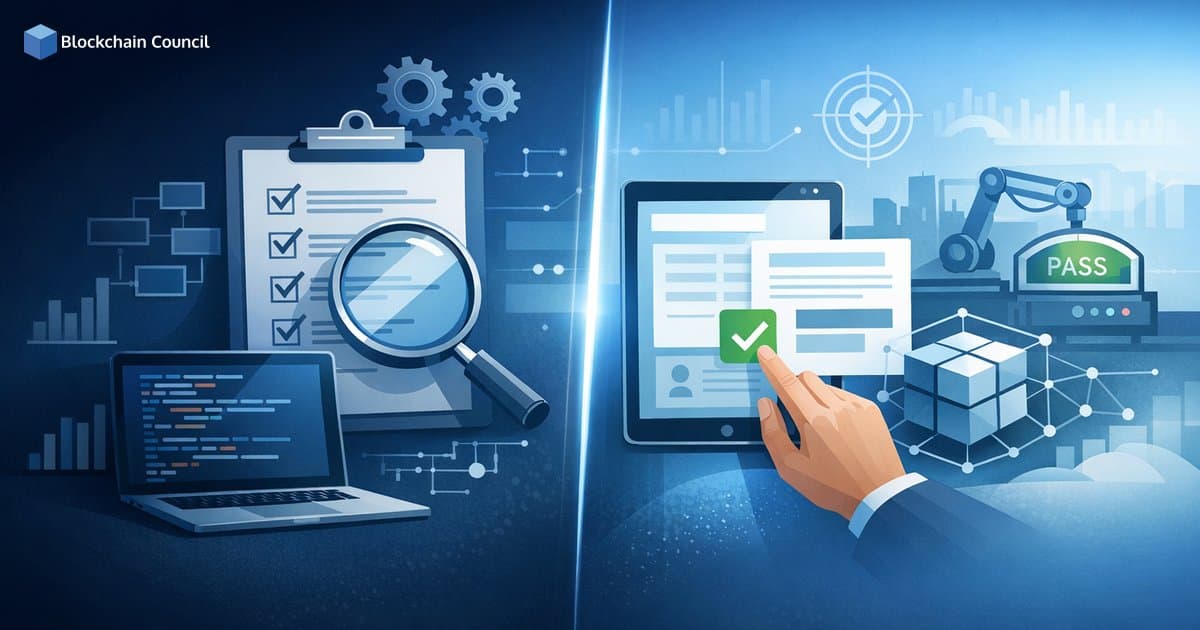
Verification vs validation is one of the most important distinctions in quality engineering because it separates two different questions: did we build the system correctly, and did we build the correct system? Across software, hardware, systems engineering, and regulated industries, verification and validation are complementary processes that reduce defects, prevent costly rework, and improve user outcomes when applied together.
Verification vs Validation: Core Definitions
Most engineering and software testing references converge on the same underlying meaning:

- Verification checks whether a product, service, or system conforms to specified requirements and design specifications. It is commonly summarized as "Are we building it right?"
- Validation checks whether the final system meets user needs, stakeholder expectations, and intended use. It is commonly summarized as "Are we building the right thing?"
Some project management materials reverse the slogan wording, but the technical distinction remains consistent: verification is conformance to specification, and validation is fitness for real-world use.
Quick Comparison: Verification vs Validation
- Primary basis
- Verification: requirements, specs, designs, standards
- Validation: user needs, workflows, operational context
- Typical timing
- Verification: throughout development, often early (even before code runs)
- Validation: when a runnable product, integrated build, or prototype exists
- Typical focus
- Verification: intermediate artifacts such as requirements, design, and code
- Validation: integrated system behavior and outcomes in use-like scenarios
Why Both Verification and Validation Matter
Relying on only one side of this distinction creates predictable failure modes:
- Verification without validation can produce a system that works exactly as specified but fails to deliver value because the requirements were incomplete, outdated, or misaligned with actual user behavior.
- Validation without verification increases the risk of unstable builds, defects escaping into late testing, and expensive fixes discovered after integration or deployment.
Industry quality practice consistently demonstrates that defects are cheaper to address when discovered earlier. This is one reason modern teams invest in early verification - through requirements reviews, static analysis, and automated unit tests - while also ensuring validation occurs with realistic scenarios and direct stakeholder involvement.
Verification Activities: How Teams Build It Right
Verification is often performed before executing the system, or alongside execution in lower-level tests. Common verification techniques include:
- Requirements reviews and inspections to confirm completeness, consistency, and testability.
- Design and architecture reviews to ensure the design satisfies requirements and follows established standards.
- Code reviews to confirm that implementation matches the design and coding guidelines.
- Static analysis and linters to detect defects, security issues, and rule violations without running the code.
- Traceability checks that link user needs to requirements, and requirements to test cases and results.
In most organizations, QA and engineering teams share verification responsibilities. The goal is to catch issues at the artifact level, before they become costly system-level failures.
Validation Activities: How Teams Confirm the Right Thing Was Built
Validation requires an executable product, an integrated build, or at minimum a prototype that users can react to. Common validation methods include:
- System testing and end-to-end testing across realistic workflows.
- User acceptance testing (UAT) with business stakeholders and end-users.
- Usability testing to confirm that real users can complete tasks correctly and efficiently.
- Exploratory and scenario-based testing to surface issues not covered by scripted test cases.
- Non-functional validation such as performance, reliability, and security testing under realistic conditions.
- Field trials, pilots, and beta programs to validate real-world fit and operational readiness.
Modern validation is increasingly data-driven. Teams use telemetry, feature flags, and controlled rollouts to validate outcomes and user behavior alongside functional correctness.
How Verification vs Validation Fits into Modern Lifecycles
V-Model and Integrated V&V
Traditional systems engineering often uses a V-model: as you move down the left side, you refine requirements into design and code, with verification occurring at each level. As you move up the right side, you validate increasingly integrated behavior, culminating in acceptance-level validation against user needs.
Shift-Left and Continuous Testing in Agile and DevOps
Verification and validation are frequently implemented within CI/CD pipelines using these approaches:
- Shift-left verification using static checks, unit tests, contract tests, and automated quality gates that run on every commit.
- Earlier validation using prototypes, mockups, and simulations so stakeholders can validate requirements before full implementation begins.
- Continuous validation via staged rollouts and monitoring to confirm that features produce their intended outcomes.
This approach reduces late-stage surprises while keeping the product aligned with real-world needs throughout the delivery cycle.
Real-World Examples of Verification and Validation
Example 1: Fintech Payment Application
Verification might include:
- Reviewing payment-flow requirements for missing edge cases.
- Design reviews confirming that encryption and tokenization patterns match internal standards.
- Static analysis and code reviews for secure implementation.
- Unit tests verifying fee calculations against the requirement specification.
Validation might include:
- End-to-end testing with realistic payment scenarios and failure conditions.
- UAT with pilot merchants to confirm that operational workflows match their actual needs.
- Load tests to validate performance during peak transaction volumes.
This illustrates the core distinction: a system can be implemented correctly against its specification and still fall short if it does not reflect how merchants actually operate.
Example 2: Semiconductor Design and Silicon Bring-Up
Verification typically includes simulation and formal checks to prove the design matches architectural specifications. Validation happens later with physical silicon, boards, and real workloads to confirm the chip meets user use cases and performance expectations. Discovering issues only during validation is extremely costly after manufacturing, which is why verification depth is critical in hardware development.
Example 3: Safety-Critical and Regulated Products
In industries such as medical devices, verification typically demonstrates that design outputs meet design inputs and documented requirements, while validation demonstrates that the product is safe and effective for its intended use - often through usability studies and real-world evaluations. Standards in avionics, automotive, and medical software commonly require traceable evidence of both verification and validation activities.
Practical Checklist: Applying Verification vs Validation in Your Project
-
Clarify intended use and stakeholder needs
- Write user scenarios and define success criteria.
- Confirm that requirements represent the right problem to solve, not just a list of features.
-
Make requirements testable
- Use measurable acceptance criteria and clear definitions of done.
- Plan verification tests that map directly to requirements.
-
Build a layered test strategy
- Verification emphasis: reviews, static analysis, unit tests, integration checks.
- Validation emphasis: end-to-end tests, UAT, usability, performance, and security exercises.
-
Automate what scales, keep humans where insight matters
- Automate repetitive verification and regression validation wherever practical.
- Reserve human effort for exploratory testing, UX validation, and stakeholder alignment.
-
Maintain traceability
- Link needs to requirements, requirements to tests, and tests to evidence.
- This is especially critical in safety-critical and compliance-driven environments.
Skills and Learning Paths for Quality Engineering
Verification and validation span testing, requirements engineering, secure SDLC, and increasingly AI-assisted tooling. Teams looking to formalize these practices can benefit from structured upskilling. Relevant programs on Blockchain Council include:
- Software testing and QA focused certifications
- Cybersecurity and secure development lifecycle training
- AI and automation programs that support intelligent testing and analysis workflows
- Blockchain development certifications where smart contract correctness and user-level validation both require rigorous quality practices
Conclusion
Verification vs validation is not a choice between two processes. It is a complete quality strategy: verification ensures the system is built correctly against specifications, and validation ensures the delivered system solves the right problem for real users under real conditions. As standards tighten and software delivery accelerates through DevOps, the strongest teams treat verification as continuous and validation as user-centered, evidence-driven, and iterative. When both are executed with clear traceability and intent, quality becomes predictable rather than accidental.
Related Articles
View All
Blogs
Authentication vs Authorization: Key Differences, Examples, and Best Practices
Authentication vs authorization explained for developers: how AuthN proves identity, how AuthZ enforces permissions, common examples, failure modes, and best practices.

Blogs
Best Valentine Gifts for your Loved Ones
Valentine's Day is around the corner, and it's time to think about what to gift your loved one. Traditional Valentine’s gifts like chocolates, flowers, teddy bears, and jewelry are fabulous. However, they don't necessarily create lasting memories. So, this Valentine’s, why not gift your partner a lifetime of experience, skills, and knowledge? Why not gift them something so unique and meaningful that it stays with them forever?

Blogs
How to Create Bilibili Account & Video Upload Guide: A Step-by-Step Tutorial for Beginners
Learn how to create a Bilibili account and upload your first video with this beginner-friendly step-by-step guide. It covers registration, login, video uploading, thumbnails, titles, categories, descriptions, and publishing. Bilibili’s official creator guidance confirms these core registration and upload steps.
Trending Articles
The Role of Blockchain in Ethical AI Development
How blockchain technology is being used to promote transparency and accountability in artificial intelligence systems.
How Blockchain Secures AI Data
Understand how blockchain technology is being applied to protect the integrity and security of AI training data.
How to Install Claude Code
Learn how to install Claude Code on macOS, Linux, and Windows using the native installer, plus verification, authentication, and troubleshooting tips.