

Vietnam Govt Explores Blockchain for Logistics

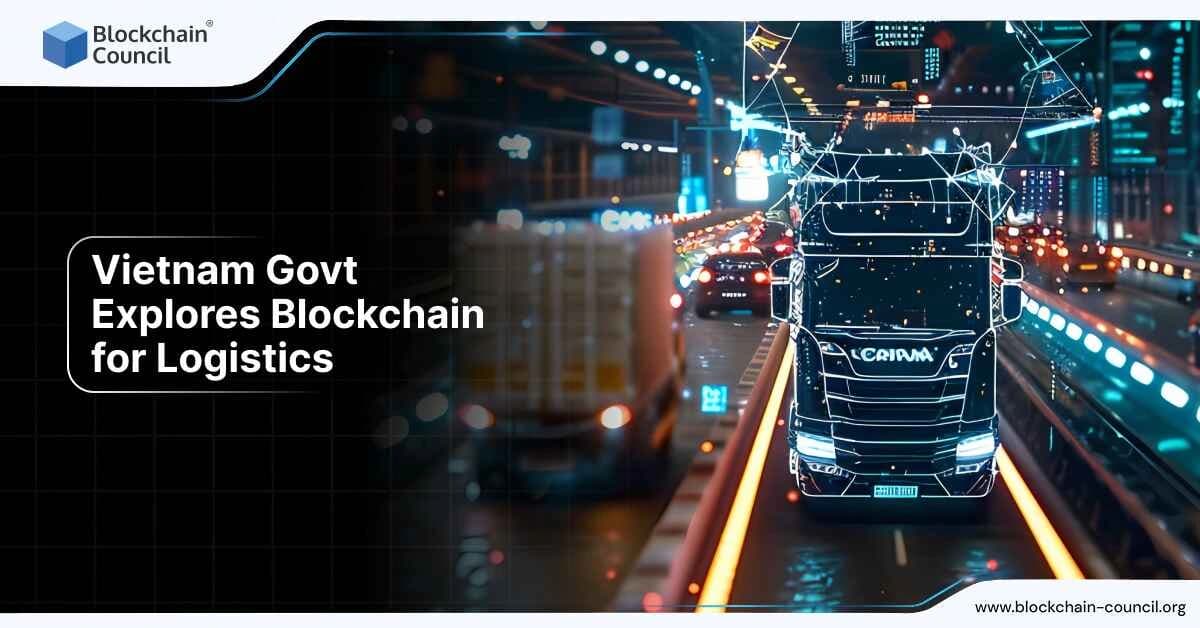
Vietnam is officially testing blockchain for national logistics infrastructure. The government is using pilot programs, smart city projects, and regulatory sandboxes to explore how blockchain can track goods, reduce paperwork, and improve transparency across its growing trade economy.
If you’re wondering how Vietnam is using blockchain in real-world logistics, who is involved, and what comes next, this article breaks it down clearly and directly.

Why Vietnam Is Turning to Blockchain
Vietnam is a key trade hub in Southeast Asia. Its logistics system supports manufacturing, agriculture, and export industries. But the system still faces issues like slow paperwork, lack of tracking, and limited data sharing between ports, customs, and transport providers.
To fix this, the government launched a national blockchain strategy in late 2024. Logistics was named a top priority. The idea is simple: use blockchain to track goods, digitize documents, and connect public and private systems on one shared ledger.
This move aligns with Vietnam’s 2030 vision for a more efficient, secure, and tech-driven supply chain.
Key Goals of Vietnam’s Blockchain Logistics Pilot
The pilot is part of a broader program that includes AI, IoT, and digital identity. But blockchain is the backbone for logistics. It offers three core benefits:
- Traceability: Track goods from factory to port to destination, with records visible to all parties.
- Automation: Replace manual steps like customs filing and shipping updates with smart contracts.
- Security: Prevent fraud and tampering through tamper-proof, time-stamped records.
What’s in the National Blockchain Strategy
Vietnam’s 2024–2030 blockchain roadmap supports:
- Smart contracts for logistics and customs
- Real-time tracking of goods
- Shared ledgers between government and businesses
- Integration with digital identity and AI systems
- Legal sandboxes for testing in smart city zones
The government is also building a sandbox for digital assets. While this sandbox focuses on crypto, it overlaps with logistics since some supply chain tokens or payments may use blockchain.
Vietnam’s Sandbox and Smart City Testing
Pilot tests are taking place in Da Nang, one of Vietnam’s top smart city zones. This area has been chosen to test:
- Blockchain-based shipment tracking
- Smart customs forms
- Digital identity for freight operators
- Verified document sharing
The sandbox programs let firms run blockchain-based systems under supervision, without facing penalties. This allows real-world testing without full legal commitment.
Key Public and Private Partners
The project involves ministries and major tech companies:
- Ministry of Information and Communications oversees the blockchain strategy.
- CMC Corp and FPT Software provide technical platforms.
- Vietnam Blockchain Corporation works on logistics systems.
- Bybit and other crypto firms consult on token and payment infrastructure.
- Local ports and customs offices assist with testing in real shipments.
This mix of partners shows strong public-private collaboration, which is key for national infrastructure projects.
How the Pilot Works in Practice
- A shipment is created by a manufacturer in Da Nang.
- A digital record is logged on blockchain with product info, batch, and destination.
- As the goods move, ports and customs scan and update the record.
- Smart contracts release forms or permissions based on conditions like weight or delay.
- At the end, the customer can view the full journey, verified on-chain.
This removes the need for emails, calls, or third-party updates.
Blockchain vs Traditional Logistics Systems
| Feature | Traditional Logistics | Blockchain-Driven Logistics |
| Tracking transparency | Limited to internal tools | Shared, real-time across parties |
| Document handling | Manual and siloed | Digital, verified on blockchain |
| Fraud prevention | Weak, prone to errors | Strong, immutable records |
| Cost and delay risk | High due to rework | Lower through automation |
| Compliance and auditing | Manual reports | On-chain proofs and real-time logs |
This shows why Vietnam is testing blockchain to streamline its logistics backbone.
Blockchain Use Cases in Vietnam’s Logistics Vision
| Use Case | Blockchain Role | Expected Benefit |
| Freight tracking | Shared ledger with location updates | Real-time traceability |
| Customs document submission | Smart contract triggers for clearance | Reduced wait time at borders |
| Container security checks | On-chain verification logs | Less fraud and human error |
| Port logistics coordination | Interlinked records between operators | Improved ship-to-truck handoff |
| Invoice and billing records | Timestamped digital records | Fewer disputes and faster settlement |
This makes blockchain not just a tech upgrade, but a practical logistics reform tool.
Upskill to Join the Blockchain Supply Chain Wave
Vietnam’s logistics experiment will need developers, analysts, and managers who understand blockchain workflows. Whether you’re in tech or business, these certifications can help:
- Blockchain Certification: Learn how to design and build logistics apps with smart contracts and verifiable data.
- Data Science Certification: Understand how to analyze supply chain data and monitor performance across digital ledgers.
- Marketing and Business Certification: Build business cases, support policy rollouts, and guide digital transformation in logistics companies.
What Happens Next
Vietnam’s pilot programs will expand from 2025 through 2026, with results informing national rollouts by 2030. Smart ports, customs offices, and freight hubs are being upgraded in parallel.
If successful, Vietnam may lead Southeast Asia in blockchain-based trade, setting an example for cross-border data exchange, tokenized logistics, and real-time regulatory reporting.
Final Takeaway
Vietnam is not experimenting with blockchain just for headlines. It is actively building a system where blockchain supports core supply chain tasks—tracking, verifying, and moving goods.
With early pilots already underway, and partnerships forming across government and tech, Vietnam’s plan is clear: turn blockchain into a working tool for trade, not just a concept on paper.
Related Articles
View All
Blockchain
Beyond Cryptocurrency: How Blockchain Is Transforming Real-World Industries
Explore how blockchain works beyond cryptocurrency in banking, supply chains, healthcare, tokenisation, CBDCs, and government, plus key challenges and career paths.
Blockchain
Smart Contracts & dApps: How Blockchain Becomes Programmable
Learn how smart contracts and dApps make blockchain programmable, from Ethereum and tokens to DeFi, NFTs, real use cases, benefits, and key risks.

Blockchain
Behind the Blocks: How Blockchain Transactions Actually Work
Go behind the blocks to see how a blockchain transaction really works: wallets and keys, digital signatures, verification, hashing, blocks, consensus, proof of work vs proof of stake, and how miners and validators secure the network.
Trending Articles
The Role of Blockchain in Ethical AI Development
How blockchain technology is being used to promote transparency and accountability in artificial intelligence systems.
AWS Career Roadmap
A step-by-step guide to building a successful career in Amazon Web Services cloud computing.

Top 5 DeFi Platforms
Explore the leading decentralized finance platforms and what makes each one unique in the evolving DeFi landscape.