

How Blockchain Makes Donations and Charity More Transparent
 Suyash Raizada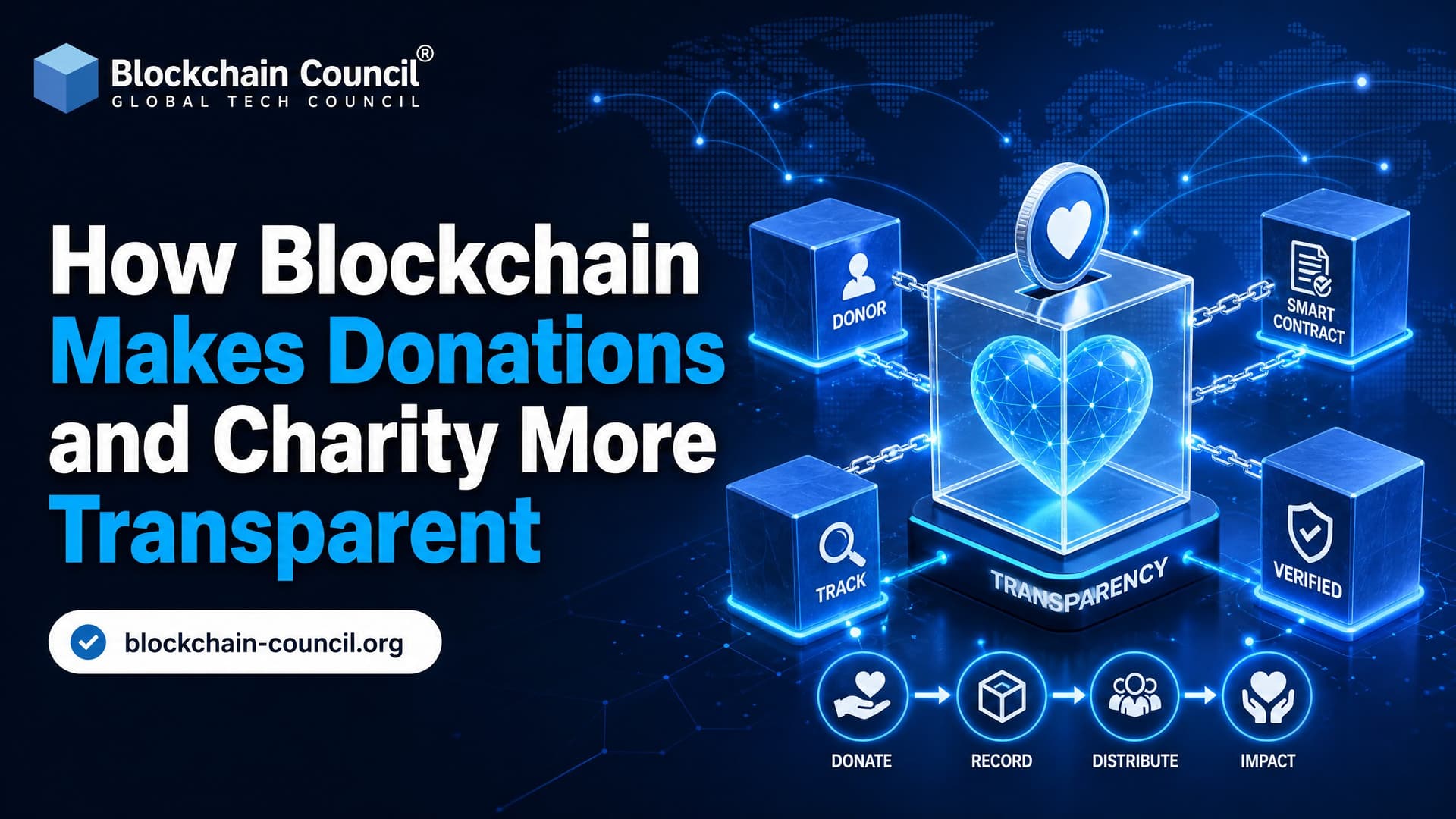
How Blockchain Makes Donations and Charity More Transparent is becoming an important question for donors, nonprofits, enterprises, and technology professionals. Charity depends on trust, yet traditional donation systems often make it difficult to see where funds go, who handles them, and how much ultimately reaches beneficiaries. Blockchain offers a practical way to improve that visibility by recording transactions on an immutable, publicly verifiable ledger.
By combining transparent records, near real-time tracking, smart contracts, and reduced reliance on intermediaries, blockchain can strengthen accountability across the donation lifecycle. It does not solve every problem in philanthropy, but it can make fund flows easier to verify and harder to manipulate.

Why Charity Transparency Matters
Many donors hesitate to give because they are unsure how their money will be used. In conventional donation systems, funds may pass through banks, payment processors, partner organizations, vendors, and local administrators before reaching the intended cause. Each step can create delays, costs, and reporting gaps.
Common transparency challenges include:
- Limited visibility into how donations are allocated and spent
- Complex chains of intermediaries that are hard to audit
- Risk of fund diversion, misreporting, or corruption
- Delayed reporting through annual statements or manual updates
- Administrative and transaction costs that reduce impact
When donors cannot verify outcomes, trust can decline. This is where blockchain can provide a stronger technical foundation for transparent giving.
How Blockchain Makes Donations and Charity More Transparent
Immutable Transaction Records
Blockchain is a decentralized digital ledger that records transactions in linked blocks secured by cryptography. Once a transaction is confirmed, it is extremely difficult to alter or delete without detection. This creates a permanent audit trail for donations, transfers, and disbursements.
In a blockchain-based charity system, each donation can be associated with a unique transaction identifier. Donors, auditors, and participating organizations can use this identifier to verify that funds were received and moved according to the recorded history. Compared with private spreadsheets or disconnected accounting systems, this improves confidence in the integrity of donation records.
Because blockchain transactions are widely verifiable, donors can see where money is going and how it is spent. This public verification is one of the clearest ways blockchain improves charitable accountability.
End-to-End Fund Traceability
Another key reason this topic matters is end-to-end traceability. Blockchain can track a donation from the donor wallet or payment gateway to a charity, then onward to project accounts, vendors, local partners, or beneficiaries.
Rather than relying only on periodic reports, donors can follow the movement of funds through multiple layers of the donation chain.
The Luxarity initiative with Consensys Social Impact offers a useful example. The project used blockchain to allow consumers to trace funds from their wallet to grant beneficiaries, supporting transparency in a social impact program connected to luxury fashion resale. This shows how blockchain can be integrated into corporate social responsibility and consumer donation experiences.
Near Real-Time Donor Visibility
Traditional charity reporting is often retrospective. Donors may receive an annual report, a newsletter, or a project update weeks or months after funds are spent. Blockchain can provide near real-time visibility because transactions are recorded and viewable as they occur.
Platforms such as GiveTrack have demonstrated how blockchain data can let donors monitor donations, allocations, and project updates in one interface. This does more than improve transparency. It can also increase engagement, because donors can see their contribution moving through the system rather than disappearing into a black box.
Near real-time tracking is especially valuable for disaster relief, emergency aid, and fast-moving humanitarian programs where speed and accountability are both critical.
The Role of Smart Contracts in Transparent Giving
Smart contracts are self-executing programs that run on a blockchain when predefined conditions are met. In charity, smart contracts can encode donation rules, automate fund releases, and make spending conditions visible to donors and auditors.
For example, a donation smart contract could specify that:
- 80 percent of funds go to school supplies
- 20 percent goes to approved operational costs
- Funds are released only after a verified milestone is completed
- Every release is recorded on chain for public audit
This model is sometimes called algorithmic philanthropy, where funds are programmed to be released only when agreed conditions are satisfied. Alice.si is often cited as a blockchain-based charity platform that links donations to verified goals, releasing funds when charities meet stated impact milestones.
This approach can reduce discretion, prevent misuse, and connect giving more directly to measurable outcomes. However, it also depends on reliable off-chain verification. Blockchain can prove that a payment happened, but it cannot independently confirm that a classroom was built or that medical supplies were delivered unless trusted verification data is added.
Reducing Intermediaries and Transaction Costs
Blockchain can enable peer-to-peer donations, allowing funds to move more directly between donors, charities, and beneficiaries. This can reduce dependence on banks, payment processors, and other intermediaries, particularly in cross-border giving.
Lower transaction costs are not only an efficiency benefit. They are also a transparency benefit, because donors can better understand how much of their contribution reaches the intended cause. Blockchain donations can often move more quickly and with lower handling fees than some traditional systems.
Binance Charity has been cited as an example of using blockchain to deliver aid with fewer intermediaries in certain relief initiatives. By recording transactions on chain, such platforms can show the flow of funds while reducing the cost and delay associated with conventional channels.
Security and Fraud Reduction
Blockchain improves donation transparency through cryptographic security and distributed validation. Instead of relying on a single centralized database, many blockchain networks distribute records across multiple nodes. This makes unauthorized changes more difficult and easier to detect.
Security benefits include:
- Tamper-resistant records: Confirmed transactions are difficult to alter.
- Public auditability: Transaction histories can be independently checked.
- Decentralized verification: Multiple network participants validate activity.
- Reduced record manipulation: Misuse is harder to hide once funds are on chain.
Blockchain does not eliminate fraud entirely. Scams, false charities, poor governance, and inaccurate off-chain claims can still occur. But it can significantly reduce the ability to manipulate transaction histories or obscure fund movement.
Use Cases in Blockchain Charity
GiveTrack
GiveTrack is a blockchain donation platform designed to help donors follow contributions in real time. It combines blockchain transaction data with project updates so donors can see how funds are allocated and spent.
Binance Charity
Binance Charity has used blockchain to support direct donation models and improve traceability in humanitarian aid. Its approach illustrates how crypto donations and transparent ledgers can be used in global relief contexts.
Alice.si
Alice.si focuses on outcome-based giving. Donations can be held until verified milestones are achieved, helping connect funding to measurable impact.
Luxarity and Consensys Social Impact
The Luxarity case shows how blockchain can support transparent corporate philanthropy. Donors could choose causes and trace funds through the blockchain system to final grant beneficiaries.
Blockchain Beyond Crypto Donations
Many people associate blockchain charity only with cryptocurrency. In practice, blockchain can also be used to record and track fiat donations. A donor may contribute using traditional currency, while the charity records the payment, allocation, and disbursement data on a blockchain ledger.
This hybrid model is important because many charities still operate primarily in fiat currency. It allows organizations to improve transparency without requiring every donor or beneficiary to use crypto wallets directly.
Blockchain also supports NFT-based fundraising, where digital assets are sold or auctioned to raise money for a cause. While NFT fundraising requires careful governance and market awareness, it has created new ways for charities to engage digital communities.
Challenges Charities Must Address
Despite its promise, blockchain is not a complete solution by itself. Effective implementation requires attention to governance, regulation, user experience, and data quality.
- On-chain vs off-chain truth: Blockchain records transactions, but external impact claims still need verification.
- Regulatory compliance: Charities must manage tax, anti-money-laundering, and know-your-customer requirements.
- Usability: Donors and beneficiaries may need simple interfaces that hide wallet and key management complexity.
- Environmental concerns: Organizations should consider energy-efficient blockchain networks.
- Privacy: Public transparency must be balanced with beneficiary data protection.
Professionals who want to understand these implementation issues more deeply can explore Blockchain Council learning paths such as blockchain certification programs, smart contract training, and Web3 courses, which provide useful foundations for designing responsible donation systems.
The Future of Transparent Philanthropy
The future of blockchain charity is likely to involve stronger integration with digital identity, verifiable credentials, impact reporting, and automated compliance tools. As standards mature, donors may be able to compare charities using transparent, machine-readable data about fund flows, project milestones, and administrative costs.
Smart contracts may also support more outcome-based philanthropy, where funding is released according to verified progress. Enterprises and corporate social responsibility teams may use blockchain to prove social impact to stakeholders, customers, and regulators.
Conclusion
Blockchain improves charitable transparency through four core capabilities: immutable records, traceable fund flows, programmable smart contracts, and near real-time visibility. Together, these features can reduce opacity, strengthen accountability, lower costs, and rebuild donor trust.
Blockchain will not replace ethical governance, strong audits, or credible impact measurement. When implemented carefully, however, it can give donors, charities, and beneficiaries a shared source of truth. For a sector built on trust, that transparency can be transformative.
Related Articles
View All
Blockchain
Blockchain Certification Programs You Can Join Online
Discover the best blockchain certification programs you can join online. Learn blockchain fundamentals, smart contracts, enterprise blockchain, and career opportunities with globally recognized certifications.

Blockchain
Agile for Blockchain Teams: Managing Sprints, Smart Contracts, and Decentralized Roadmaps
Learn how agile for blockchain teams works when sprints, smart contracts, audits, governance, and decentralized roadmaps are planned around risk.

Blockchain
How to Write a PRD for Blockchain Products: Key Sections, Examples, and Best Practices
Learn how to write a PRD for blockchain products with key sections, practical examples, tokenomics, security, governance, and success metrics.
Trending Articles

Top 5 DeFi Platforms
Explore the leading decentralized finance platforms and what makes each one unique in the evolving DeFi landscape.
What is AWS? A Beginner's Guide to Cloud Computing
Everything you need to know about Amazon Web Services, cloud computing fundamentals, and career opportunities.

Can DeFi 2.0 Bridge the Gap Between Traditional and Decentralized Finance?
The next generation of DeFi protocols aims to connect traditional banking with decentralized finance ecosystems.