

China Expands RealDID Blockchain Identity System to Hong Kong
 Blockchain Council
China is now expanding its blockchain-based identity system, RealDID, to Hong Kong. This means mainland Chinese citizens will be able to access digital services in Hong Kong using a secure and privacy-friendly identity system based on blockchain. The goal is simple: make cross-border access safer, faster, and more private — all while meeting strict legal and technical requirements.
RealDID isn’t just another ID tool. It changes how users verify who they are online, without giving up sensitive personal information. It’s also a big step forward in how digital identity can work across regions, especially between mainland China and Hong Kong.

What Is RealDID?
RealDID is a decentralised identity system developed by the Ministry of Public Security in China. It’s built on the Blockchain-based Service Network (BSN), and it allows users to create a secure digital identity that doesn’t rely on a central authority storing their private data.
This system is already live in mainland China and now, it’s entering Hong Kong through a new pilot project. It works by giving each user a unique blockchain-based ID. This ID can be used for signing up, logging in, or verifying identity — without revealing personal information like name, ID number, or mobile phone.
How RealDID works
When someone creates a RealDID, they get a digital key pair. The public key is used to verify their identity, and the private key stays with the user. Any time identity verification is needed, the system checks the key — not their name or ID.
In Hong Kong, this means mainland Chinese residents can now use RealDID to sign up for financial platforms or online services. They meet KYC (Know Your Customer) requirements, but without sharing private data.
Why This Matters Now
There’s growing demand for safer digital identity systems, especially with so many services moving online. Traditional login methods are prone to leaks, fraud, and surveillance. RealDID changes that by giving users control over their data.
The expansion to Hong Kong matters because it’s one of the first real-world cross-border tests for decentralised ID in Asia. It shows how blockchain-based identity can fit into everyday life — in finance, e-commerce, travel, and public services.
And because the RealDID rollout supports private stablecoin payments like the HKDA, it’s also helping to build a foundation for secure Web3 interactions across borders.
Key Features of RealDID
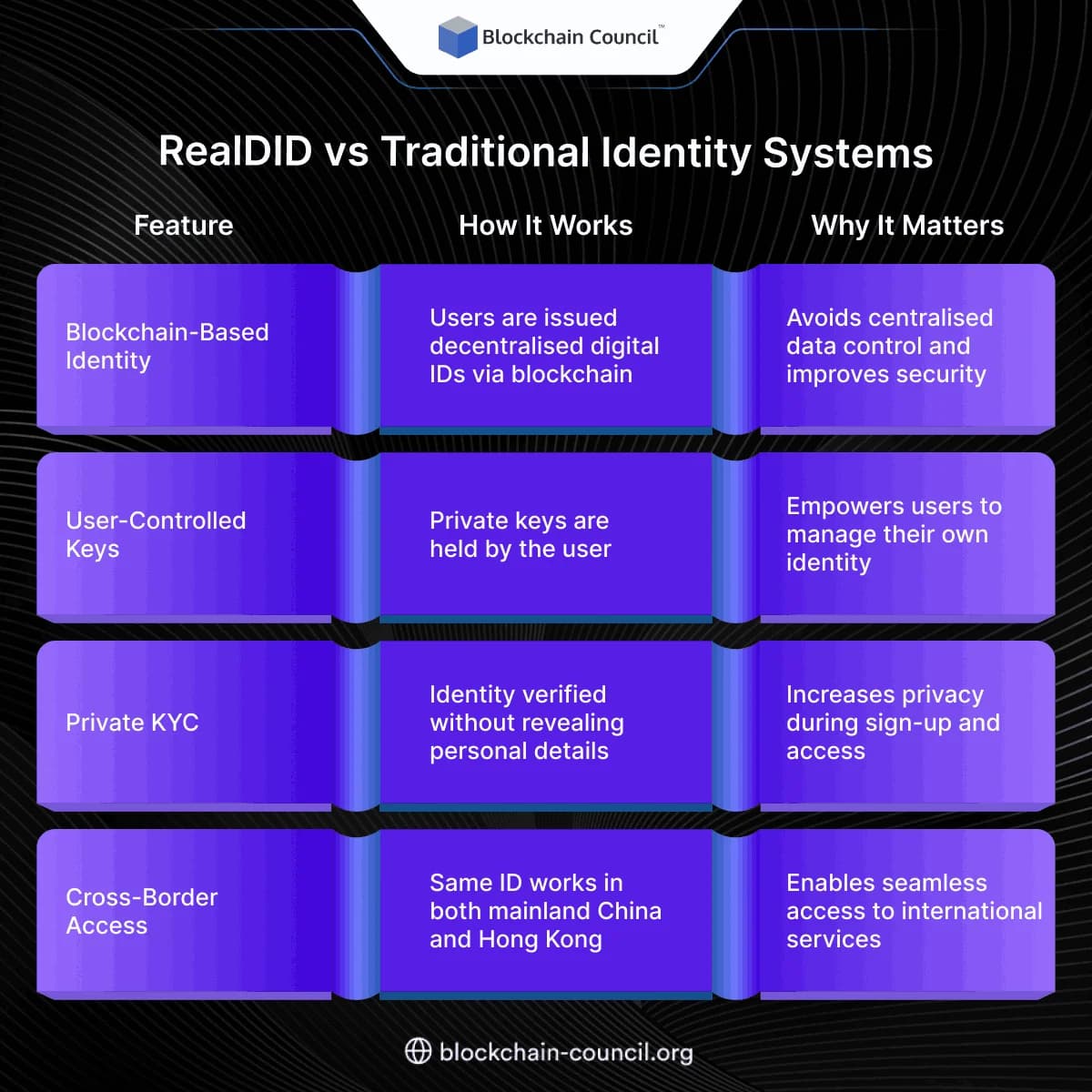
RealDID comes with a set of features that make it more flexible and secure than traditional identity systems.
Privacy-first identity
The system does not expose real-world identity unless legally required. That makes it different from traditional ID systems which collect and store data on central servers.
Self-controlled data
With RealDID, users manage their own keys. They decide when and where to use their ID. There’s no third party that can access or misuse their data.
Seamless cross-border use
RealDID is designed for use beyond China’s borders. In Hong Kong, it’s already being tested with services like stablecoin transactions and digital banking apps.
RealDID vs Traditional Identity Systems
Benefits for Users and Businesses
For everyday users
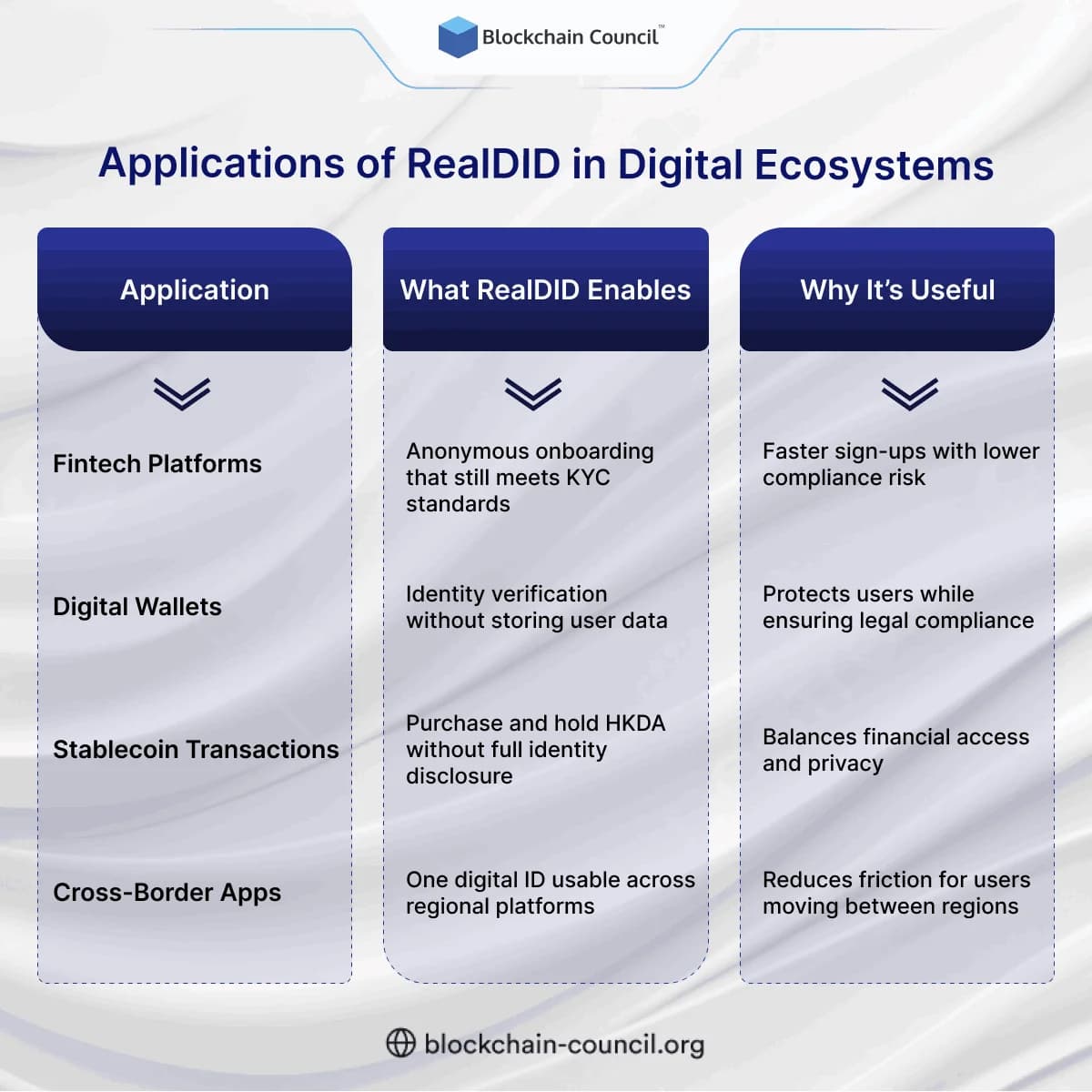
RealDID means safer access to digital platforms. Whether someone’s signing up for a fintech app or sending funds across borders, they can do it without giving away their name or ID.
This reduces risks like identity theft, spam, or over-surveillance. It also saves time since you no longer need to upload documents or wait for manual checks.
For companies and developers
Businesses get a reliable way to onboard users while staying compliant. Since RealDID handles identity through blockchain, the need to store and protect sensitive user data is reduced.
This helps with data protection laws and lowers the cost of managing customer information. It also opens up cross-border access to more users — especially in Hong Kong’s financial sector.
For tech teams looking to integrate blockchain-based identity systems, pursuing a Blockchain Certification can help deepen knowledge of decentralised protocols and Web3 applications.
RealDID’s Use in Stablecoin Transactions
One of the standout use cases in Hong Kong is stablecoin payments. RealDID allows verified users to buy and hold HKDA, a regulated stablecoin in the city. The key difference is that users stay anonymous while still meeting KYC checks.
This is a major shift. Until now, users had to go through full name-based ID checks to use any digital currency in regulated environments. RealDID proves that with blockchain, there’s another way.
It also means users can access tokenised financial products without signing away personal details — a big deal for privacy-conscious investors.
Applications of RealDID in Digital Ecosystems
How This Affects the Future of Identity
The RealDID system isn’t just a test. It’s the start of something bigger. Governments, financial institutions, and Web3 companies are watching closely to see how this rollout goes.
If it works in Hong Kong, it could lead to similar systems in Southeast Asia, Europe, and beyond. Already, there are signs that decentralised identity will be part of how we log in, sign up, and send money in the future.
This shift also creates demand for skills in blockchain integration, digital identity, and regulatory tech. Whether you’re in IT, law, or finance, certifications like Data Science Certification or Marketing and Business Certification can give you the tools to stay ahead of this fast-changing space.
Conclusion
China’s expansion of the RealDID system to Hong Kong is more than just a tech rollout — it’s a glimpse into the future of digital identity. With blockchain at its core, RealDID gives users a way to stay private, secure, and in control while accessing services across borders.
From fintech to stablecoins, it’s proving that identity doesn’t have to be invasive to be trusted. And as more people demand privacy and better control online, systems like RealDID will become the new normal — not just in China, but around the world.
Related Articles
View All
Blockchain
Blockchain Digital Identity Management Patents: Key Innovations and Market Trends
A practitioner-focused look at blockchain digital identity management patents, from biometric wallets and DIDs to KYC, EU wallets, IoT, and market growth.

Blockchain
The Future of Blockchain Wallets: Smart Wallets, Account Abstraction, and Web3 Identity
Explore the future of blockchain wallets through smart wallets, account abstraction, gas abstraction, recovery, and Web3 identity.

Blockchain
Beyond Cryptocurrency: How Blockchain Is Transforming Real-World Industries
Explore how blockchain works beyond cryptocurrency in banking, supply chains, healthcare, tokenisation, CBDCs, and government, plus key challenges and career paths.
Trending Articles
AWS Career Roadmap
A step-by-step guide to building a successful career in Amazon Web Services cloud computing.

Top 5 DeFi Platforms
Explore the leading decentralized finance platforms and what makes each one unique in the evolving DeFi landscape.
How Blockchain Secures AI Data
Understand how blockchain technology is being applied to protect the integrity and security of AI training data.