Is Blockchain + IoT the Next Big Industrial Revolution?

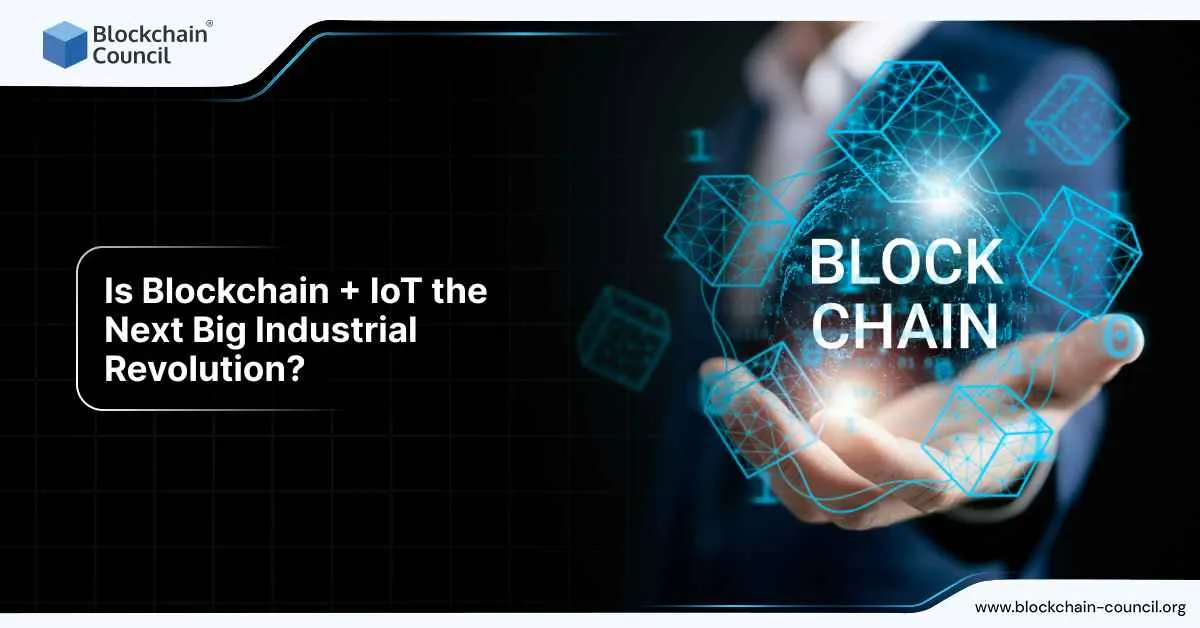
The idea of combining blockchain with the Internet of Things (IoT) is gaining serious traction in 2025. With billions of devices already collecting and sharing data, industries face challenges of trust, transparency, and scalability. Blockchain offers a potential solution by making IoT networks more secure, more reliable, and easier to automate. Together, they could trigger the next wave of industrial transformation. If you’re curious about building skills for this space, exploring blockchain technology courses is a great place to start.
Understanding the Blockchain + IoT Pairing
IoT connects sensors, machines, and everyday devices to share data. Think of smart meters, factory equipment, medical devices, or connected vehicles. Blockchain, on the other hand, creates tamper-proof records of transactions and allows automated actions through smart contracts.

When you combine them, you get IoT devices that not only gather and share data but also record it securely, prove its authenticity, and even trigger automated workflows. This takes IoT from simple connectivity to trusted, verifiable, and automated systems.
Why This Combination Matters Now
Several factors are making blockchain + IoT especially relevant in 2025:
- Trust in device data: IoT networks are growing, but device data can be tampered with. Blockchain provides a trusted record.
- Automation: Smart contracts can execute actions automatically, based on real-time sensor data.
- Transparency and compliance: Regulators and customers increasingly demand proof of origin, authenticity, and sustainability. Blockchain enables auditable records.
- Scale: Billions of IoT devices will overwhelm centralized systems. A decentralized approach makes it more manageable.
- Pressure from industry: Supply chains, energy, and healthcare now require both efficiency and accountability.
Real Industrial Use Cases in Action
Blockchain + IoT is already being tested across industries:
Smart supply chains
Sensors track goods from factory to customer. Blockchain logs every step, cutting fraud and improving visibility.
Predictive maintenance
Manufacturing plants use sensors to detect machine wear. Data stored on blockchain can trigger maintenance orders automatically, reducing downtime.
Energy grids
IoT meters record consumption, while blockchain supports peer-to-peer energy trading, billing accuracy, and transparent usage records.
Healthcare
Medical devices collect patient data. Blockchain ensures records cannot be altered and helps confirm authenticity of medicines.
Smart cities
Sensors manage parking, waste, and traffic. Blockchain secures the data and reduces manipulation.
Logistics and vehicles
Shipment tracking, toll payments, and route optimization become safer and more transparent when IoT data is recorded on blockchain.
Current Challenges
While promising, adoption is not without obstacles:
- Scalability: IoT devices generate massive amounts of data, but blockchain networks are slower.
- Energy use: Public blockchains can consume significant resources, while IoT devices often have limited power.
- Interoperability: Many devices and blockchains still lack shared standards.
- Security gaps: Even with blockchain, IoT devices can be hacked or spoofed.
- Cost and expertise: Setting up blockchain + IoT systems requires upfront investment and skilled teams.
Comparing IoT Alone and IoT with Blockchain
IoT vs Blockchain-Enabled IoT in 2025
| Aspect | IoT Alone | IoT + Blockchain |
| Data trust | Vulnerable to tampering | Immutable and verifiable |
| Automation | Limited | Smart contracts enable workflows |
| Transparency | Centralized, less visible | Shared and auditable |
| Scalability | Strains central systems | Decentralized distribution |
| Security | Device-level protection only | Enhanced by blockchain layer |
| Compliance | Harder to prove | On-chain audit trail |
| Efficiency | Dependent on providers | Reduced intermediaries |
| Interoperability | Fragmented | Moving toward shared standards |
| Cost | Lower upfront | Higher initial but longer-term savings |
| Industrial outlook | Useful but limited | Key to next industrial leap |
Research and Industry Signals
Recent studies highlight that blockchain helps secure IoT data integrity and improves privacy, particularly in sensitive sectors like healthcare and supply chains. Many pilots are already live, but large-scale deployment is still limited by interoperability and cost. Researchers suggest combining blockchain with edge computing and off-chain storage to solve performance issues.
Industry also sees new business models emerging, such as pay-per-use equipment, devices-as-a-service, or peer-to-peer energy exchanges. These approaches could redefine how industries operate and how consumers interact with technology.
Why It Could Be Revolutionary
Taken together, blockchain + IoT represents more than a technical upgrade. It is a shift in how industries might be structured:
- Less reliance on centralized authorities.
- Smarter, self-managing systems that act on real-time data.
- More sustainable and efficient use of resources.
- Greater consumer trust through transparency.
This is why many experts describe it as a foundation for a new industrial revolution.
Why It Matters for You
For professionals, this shift opens new opportunities. Understanding IoT, blockchain, and how they work together will be valuable across industries. If your focus is on analyzing IoT data or blockchain networks, a Data Science Certification can give you the skills to handle massive data streams. If you want to guide organizations through adopting these systems, a Marketing and Business Certification can help you lead strategy and transformation.
Conclusion
Blockchain and IoT together are more than buzzwords. They offer real solutions to challenges in trust, automation, and scalability. While barriers like cost, standards, and energy use remain, the direction is clear. From supply chains to smart cities, blockchain-enabled IoT is set to redefine how industries work.
This makes it more than a passing trend. It could very well be the foundation of the next industrial revolution.