

Blockchain-Based Voting Systems
 Blockchain Council
Blockchain-based voting systems are changing how elections happen. They provide a secure, transparent way to cast and count votes using blockchain technology. Unlike traditional voting, these systems reduce fraud risks, speed up counting, and allow more people to vote easily.
By recording votes on an unchangeable digital ledger, blockchain voting makes elections more trustworthy. This article explains how blockchain voting works, its benefits and challenges, and why it is gaining momentum worldwide.

How Blockchain Voting Works
Blockchain voting uses a decentralised ledger where each vote is recorded as a transaction. Once a vote is added, it cannot be altered or deleted, which protects the election from tampering.
Step 1: Voter registration
Voters register using secure digital IDs. This step ensures only eligible voters can participate.
Step 2: Casting a vote
Registered voters submit encrypted votes through an app or website. The votes are then added to the blockchain network.
Step 3: Vote verification and counting
Votes are counted in real time by the network. Anyone can audit the votes because blockchain records are public and transparent.
Step 4: Publishing results
The final results are published on the blockchain and cannot be changed. This guarantees election integrity.
Benefits of Blockchain Voting
Enhanced security
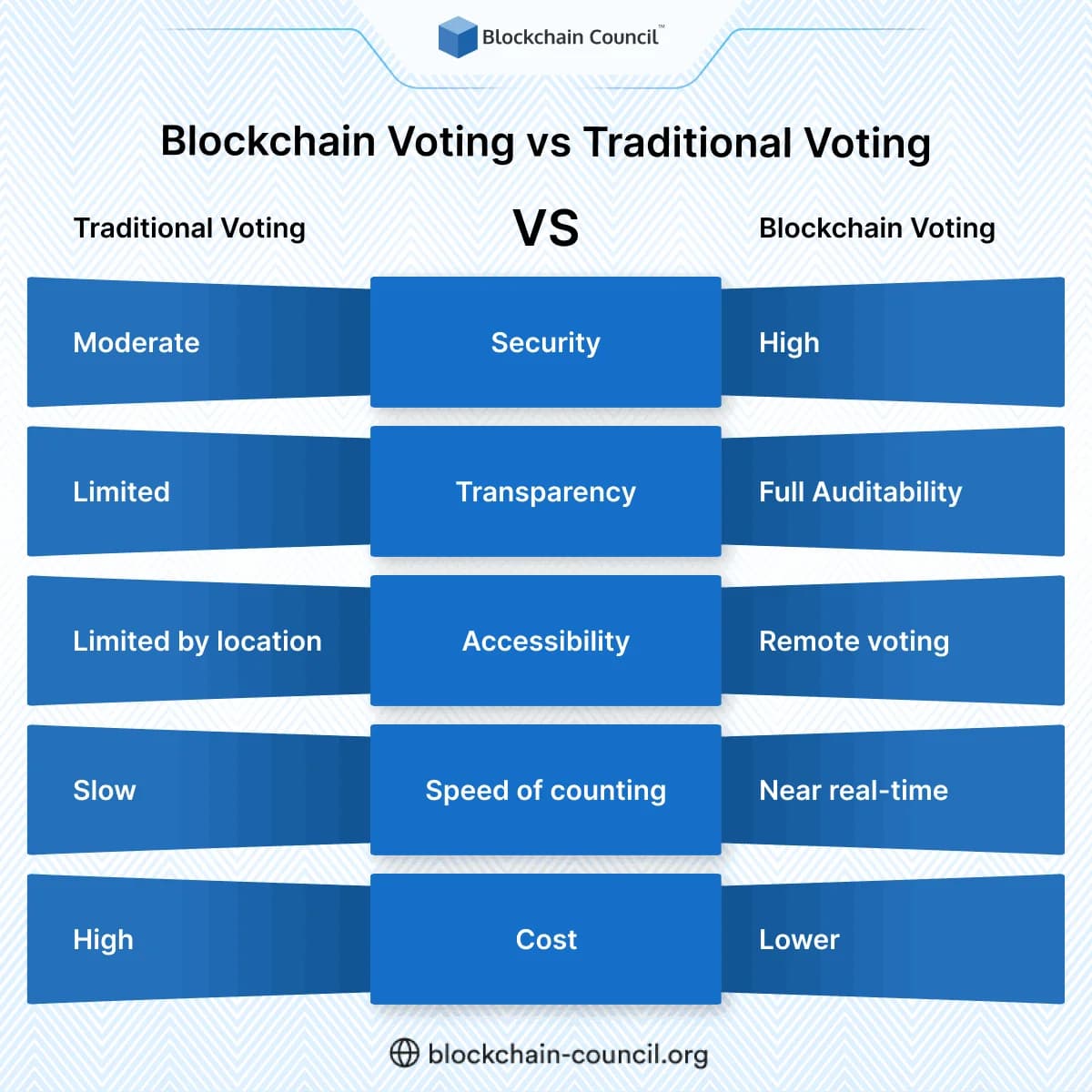
Blockchain’s decentralised nature eliminates a single point of failure. Encrypted votes linked together create a system highly resistant to hacking and fraud.
Transparency and trust
Blockchain’s public ledger allows voters and observers to verify votes independently. This transparency builds trust in the results.
Greater accessibility
People can vote remotely from anywhere with internet access. This helps voters who live abroad, have disabilities, or cannot easily reach polling stations.
Cost savings
Reducing the need for physical polling stations, paper ballots, and manual counting lowers the cost of running elections.
Blockchain Voting vs Traditional Voting
Challenges to Overcome
Digital access gaps
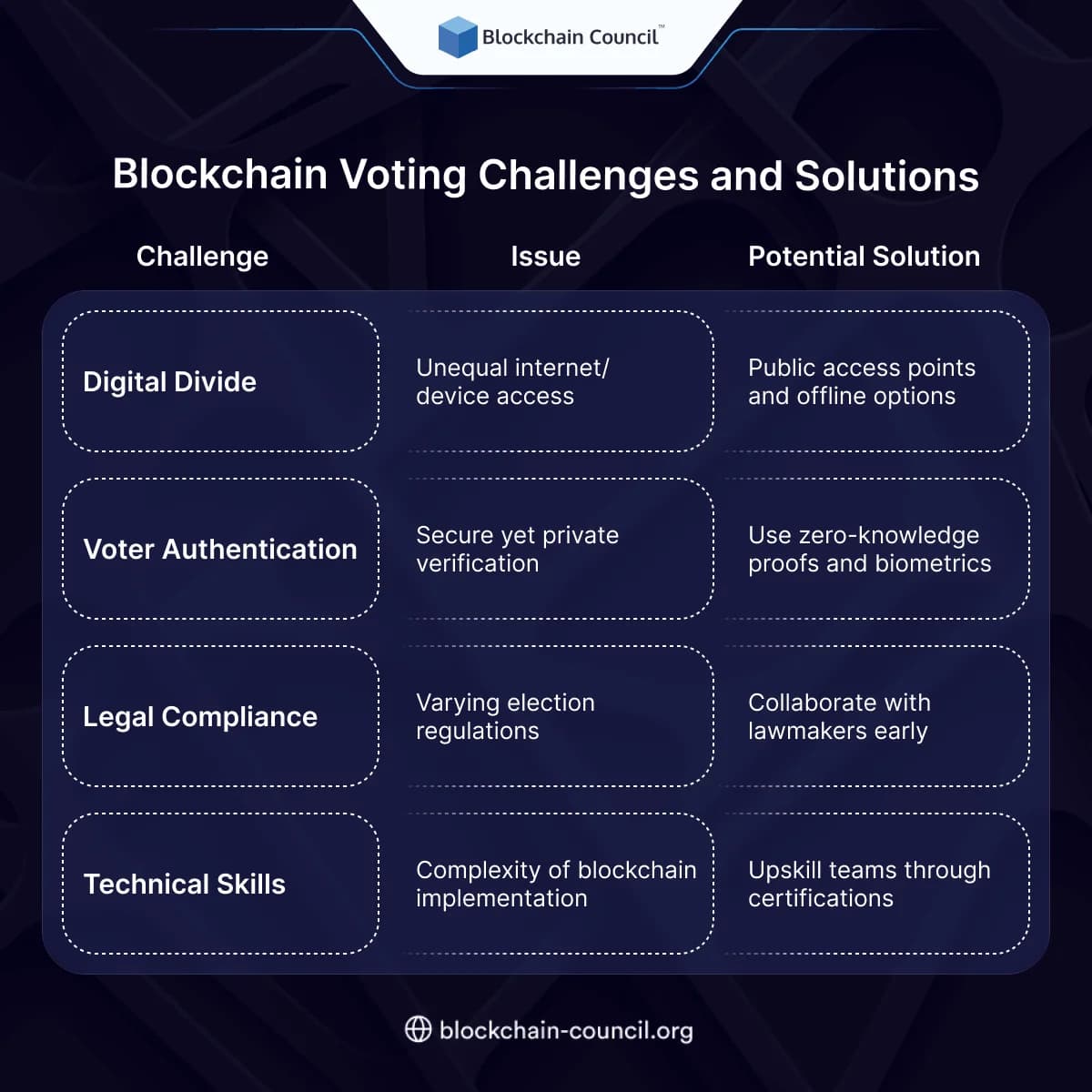
Not everyone has reliable internet or smart devices, which can exclude some voters from blockchain voting.
Voter identity verification
Balancing privacy with the need to verify each voter’s identity is difficult but essential.
Legal and regulatory hurdles
Election laws vary worldwide, and many don’t yet cover blockchain voting methods.
Technical complexity
Building and maintaining secure blockchain voting platforms require expertise and investment.
Blockchain Voting Challenges and Solutions
Real-Life Examples
West Virginia piloted a blockchain voting app in 2020 to help overseas military vote securely. Estonia’s digital voting system, while not blockchain-based, shares the goal of secure, remote voting. These cases demonstrate growing interest and viability.
Why Professionals Should Care
Blockchain voting is complex and evolving. Professionals involved in election technology, cybersecurity, or policy will benefit from deep knowledge of blockchain. Pursuing a Blockchain Certification is a great start.
Data analysts working with election data should consider a Data Science Certification. Marketing and business experts focusing on election campaigns or public engagement can gain an edge through a Marketing and Business Certification, helping them understand technology’s role in modern elections.
Conclusion
Blockchain-based voting systems offer a promising path to more secure, transparent, and accessible elections. They tackle many weaknesses of traditional voting, from fraud to slow counts and limited access.
While challenges remain, such as digital inclusion and regulatory compliance, blockchain voting is proving itself through pilot programs and innovation worldwide.
For anyone interested in the future of voting or election technology, understanding blockchain and its implications is essential. Gaining certifications in blockchain, data science, or business can prepare professionals to lead in this rapidly changing field.
Related Articles
View All
Blockchain
Centralised vs Decentralised Systems
Centralised vs decentralised systems explained: compare control, reliability, speed, cost, security, and privacy, see real examples from banks to blockchains, learn about hidden centralisation, and use a simple guide to choose the right model.

Blockchain
Blockchain Infrastructure for Global Financial Systems: Payments, Settlement, CBDCs, and Standards
Blockchain infrastructure is entering core finance through CBDCs, stablecoins, tokenised securities, and regulated settlement systems.

Blockchain
Blockchain Distributed Systems Engineering: A Practical Guide
Learn how Blockchain Distributed Systems Engineering combines consensus, fault tolerance, smart contracts, security, and software process for real-world systems.
Trending Articles

Top 5 DeFi Platforms
Explore the leading decentralized finance platforms and what makes each one unique in the evolving DeFi landscape.
How Blockchain Secures AI Data
Understand how blockchain technology is being applied to protect the integrity and security of AI training data.
Claude AI Tools for Productivity
Discover Claude AI tools for productivity to streamline tasks, manage workflows, and improve efficiency.