
Secure MLOps (DevSecMLOps) in 2026: CI/CD Guardrails, Model Signing, and Supply-Chain Security

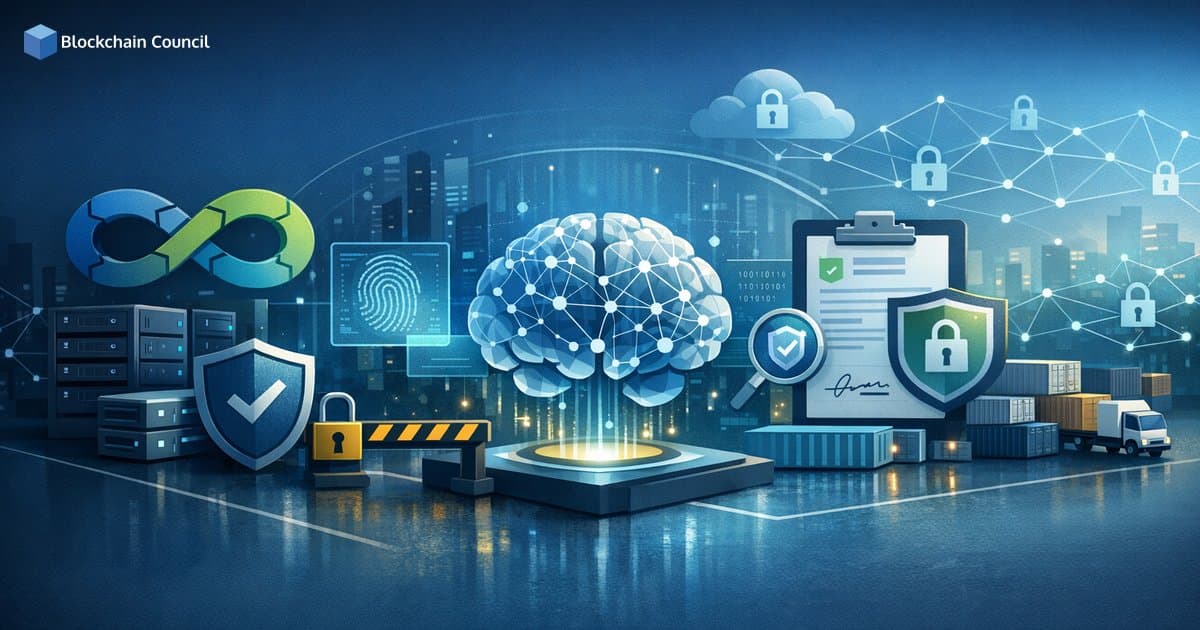
Secure MLOps (DevSecMLOps) is becoming the default standard for running machine learning in production in 2026. As organizations operationalize LLMs, RAG systems, and autonomous agents, they are finding that classic DevSecOps controls are necessary but not sufficient. Models are non-deterministic, data is a first-class dependency, and prompts can behave like untrusted user input. Secure MLOps (also called MLSecOps) addresses these realities by embedding security across the full AI lifecycle, with particular focus on CI/CD guardrails, model signing, and software and data supply-chain security.
Industry adoption is accelerating alongside market growth projections for MLOps, and security programs are responding to real incidents. The 2023 ShadowRay incident, for example, demonstrated how weak authentication in compute resources and pipeline controls can enable large-scale compromise and data exfiltration. The 2026 takeaway is clear: AI delivery pipelines must be verifiable, gated, and continuously monitored, not just fast.

What is Secure MLOps (DevSecMLOps) in 2026?
Secure MLOps (DevSecMLOps) integrates security, privacy, and compliance controls into ML operations from data ingestion through model retirement. In 2026, that scope routinely includes LLMOps and agentic workflows, where the pipeline must govern not only code and containers, but also prompts, retrieval sources, tool permissions, and model artifacts.
Modern DevSecMLOps programs typically align with recognized risk and compliance frameworks, including NIST AI RMF, SOC 2, ISO 27001, GDPR, HIPAA, PCI DSS, and emerging regulatory obligations such as EU AI Act logging requirements. The practical goal is a system where every release is explainable, auditable, and resilient against common AI threats including model poisoning, prompt injection, and dependency vulnerabilities.
Threat Model: Why Traditional Controls Fall Short for AI Pipelines
DevSecMLOps starts with recognizing that ML systems expand the attack surface in specific ways:
Data poisoning and backdoors introduced through compromised training data, unlabeled sources, or third-party datasets.
Prompt injection against LLMs and agents, including indirect prompt injection through retrieved content.
Dependency and container vulnerabilities in training, serving, feature engineering, and orchestration components.
Artifact tampering, where a model, tokenizer, or configuration is swapped after evaluation.
Privilege abuse, particularly when agents can call tools, access data stores, or execute actions.
Security teams increasingly map these risks to MITRE ATLAS tactics across MLOps phases and run AI-focused red-team exercises to identify gaps early. This is one reason many enterprises are formalizing MLSecOps as a dedicated function that partners with platform engineering and data science teams.
CI/CD Guardrails: The Security Perimeter for LLMOps
In 2026, CI/CD guardrails are the most practical way to shift security left for AI. They treat AI releases like software releases, but add AI-specific validations and progressive delivery patterns that account for non-determinism.
1) Pipeline Security Scanning and Gated Releases
Baseline controls are now standard practice:
SAST for application and orchestration code.
Container and dependency scanning using tools widely adopted in cloud-native security, such as Trivy or Grype.
Secrets scanning to prevent credential leakage in notebooks, configs, and prompts.
These checks must be tied to deployment gates. Policy-as-code with Open Policy Agent (OPA) is widely used to enforce rules such as blocking deployments without an approved SBOM, denying images with critical CVEs, and requiring signed artifacts before promotion.
2) AI-Specific Semantic Testing and Eval-Driven Promotion
Because LLM behavior cannot be validated with unit tests alone, organizations are adopting semantic tests and evaluation suites as release requirements. Common gate criteria include:
Hallucination checks using RAG cross-referencing, citation requirements, or answerability scoring.
Schema enforcement for structured outputs, such as JSON schema validation.
Safety policy checks for disallowed content and policy violations.
Regression evals against a fixed test set plus adversarial prompts.
This approach is reflected in CI/CD patterns used for LLMs and agents, where input guardrails (prompt injection defenses, PII redaction) and output validations (hallucination checks, format constraints) are treated as first-class deployment requirements rather than runtime-only additions.
3) Runtime Guardrails for Agents: Containing the Blast Radius
Agents increase risk because they can take actions, not just generate text. In 2026, CI/CD pipelines increasingly require runtime controls that limit what an agent can do:
RBAC and least privilege for tool use and data access.
Sandboxed execution for untrusted code, plugins, and external tool calls.
Invariant-style guardrails that enforce rules on agent actions, for example blocking exfiltration attempts or disallowed destinations.
Rate limiting and quota controls to prevent cost spikes during attacks or runaway loops.
These controls are increasingly required for regulated deployments, including sovereign pipeline models that support EU AI Act-oriented logging and traceability requirements.
Model Signing: Proving Integrity from Training to Production
Model signing is becoming a cornerstone of DevSecMLOps because ML artifacts are relatively easy to tamper with and difficult to inspect. A signed model provides cryptographic assurance that the artifact promoted to production is exactly what passed evaluation and security checks.
What to Sign (Not Just the Model File)
A mature signing strategy covers:
Model weights and architecture metadata.
Tokenizers and embedding models, which materially affect model behavior.
Serving configuration, including quantization settings, context limits, and safety parameters.
Prompts and system policies when versioned as deployable artifacts.
Dataset and feature references, so training inputs remain traceable.
Gated Promotion and Immutable Audit Trails
In 2026, teams increasingly combine:
Signed artifacts in registries with strict promotion workflows spanning development, staging, and production.
Immutable logs capturing approvals, evaluations, and policy decisions.
Separation of duties so no single actor can both modify and approve a high-risk release.
This reduces the risk of a model drifting into an unauditable state and supports incident response when unusual behavior or data exposure is detected.
Supply-Chain Security: SBOMs for Code, Containers, Data, and Models
Supply-chain attacks are not limited to application libraries. In AI systems, the supply chain includes datasets, pre-trained models, feature pipelines, plugins, and inference infrastructure. Secure MLOps treats all of these as dependencies that must be inventoried and verified.
SBOM and Provenance for AI
Organizations are expanding SBOM practices to cover:
Software dependencies used in training and serving.
Container images and base layers.
Datasets and data sources, including licensing and collection context.
Pre-trained models and third-party artifacts.
The operational benefit is faster vulnerability response and clearer compliance evidence. Regulated environments consistently report improvements including stronger vulnerability detection, fewer false positives through better policy scoping, faster drift detection, and smoother audits against SOC 2, ISO 27001, and sector-specific requirements.
Adversarial Testing to Detect Poisoning and Backdoors
SBOMs establish what you are running, but not whether it is malicious. That is why supply-chain security in 2026 typically includes adversarial testing and red-teaming. Frameworks such as the Adversarial Robustness Toolbox (ART) are commonly used to test robustness, search for backdoors, and validate defenses against manipulation attempts.
This is especially relevant in defense and financial services, where security leaders increasingly require MLSecOps controls that demonstrate integrity and provenance end-to-end.
Reference Architecture: A Practical DevSecMLOps Checklist
Use this implementation checklist to align CI/CD guardrails, model signing, and supply-chain security:
Identity-first pipeline: enforce IAM, RBAC, MFA, and short-lived credentials for build and deploy systems.
Automated scanning: SAST, dependency scanning, container scanning, and secrets detection in every build.
Policy-as-code gates: use OPA or an equivalent tool to block releases that fail security, compliance, or evaluation thresholds.
AI eval gates: require semantic tests for safety, hallucination resistance, and schema correctness before promotion.
Signed artifacts: sign models and related assets, verify signatures at deploy time, and record immutable approvals.
Expanded SBOM: include code, images, datasets, and pre-trained models with provenance metadata.
Runtime protection: prompt injection defenses, PII scrubbing, anomaly monitoring, and agent action guardrails.
Continuous monitoring: drift detection, abuse detection, and audit-ready logs for compliance and incident response.
Skills and Certification Pathways for Secure MLOps Teams
DevSecMLOps requires cross-functional expertise spanning ML engineering, cloud security, and governance. For organizations building this capability, structured training and role-based certification pathways provide a clear foundation. Relevant domains include Machine Learning, Artificial Intelligence, Cyber Security, and DevOps, along with specialized tracks supporting AI governance and secure deployment practices.
Conclusion: Verifiable AI Delivery as the 2026 Standard
In 2026, Secure MLOps (DevSecMLOps) is no longer an optional hardening step. CI/CD guardrails provide enforceable security and quality gates for non-deterministic systems. Model signing establishes artifact integrity and auditability. Supply-chain security extends the defensive perimeter to include data, models, and dependencies. Together, these practices help enterprises reduce the risk of poisoning, prompt injection, and dependency compromise while meeting growing regulatory and customer expectations for trustworthy AI.
Organizations that succeed will treat AI like critical software: measured, gated, verified, and continuously monitored across its entire lifecycle.
Related Articles
View All
AI & ML
AI Security Fundamentals in 2026: Threats, Controls, and a Secure AI Lifecycle
Learn AI security fundamentals in 2026: key threats like prompt injection and data poisoning, essential controls, and a secure AI lifecycle checklist for enterprises.

AI & ML
AI Security in Finance: Fraud Detection Hardening, Model Risk Management, and Compliance Best Practices
Learn AI security in finance with practical fraud detection hardening, model risk management controls, and compliance-ready audit trails for modern regulators.

AI & ML
Model Theft and Extraction in 2026: Risks, Attack Methods, and Protection Strategies
Model theft and extraction in 2026 threatens LLM intellectual property and user privacy through API probing, inversion attacks, and distillation. Learn how these attacks work and how to build layered defenses to reduce risk.
Trending Articles
The Role of Blockchain in Ethical AI Development
How blockchain technology is being used to promote transparency and accountability in artificial intelligence systems.
AWS Career Roadmap
A step-by-step guide to building a successful career in Amazon Web Services cloud computing.
Top 5 DeFi Platforms
Explore the leading decentralized finance platforms and what makes each one unique in the evolving DeFi landscape.