
RAG vs Fine-Tuning vs Prompt Engineering


RAG vs fine-tuning vs prompt engineering is one of the most consequential decisions enterprise teams face when deploying GenAI. All three methods customize how large language models (LLMs) behave, but they optimize for different constraints: speed to value, data freshness, factual accuracy, governance, and long-term maintenance. In most enterprise deployments, the best outcome comes from a layered approach rather than a single technique.
This guide explains how retrieval-augmented generation (RAG), fine-tuning, and prompt engineering compare, when each is the right choice, and how to combine them into an enterprise-grade GenAI architecture.

What Prompt Engineering, RAG, and Fine-Tuning Actually Do
Prompt Engineering
Prompt engineering shapes model behavior using instructions, examples, and constraints in the prompt itself. It is the fastest way to adapt an LLM because it requires no training pipeline and can often be implemented within hours.
Best at: tone, formatting, task framing, guardrails, and rapid iteration
Limitations: brittle for complex compliance requirements, inconsistent structured output at scale, and sensitive to prompt length and context placement
Retrieval-Augmented Generation (RAG)
RAG grounds LLM responses in enterprise knowledge by retrieving relevant documents or passages at query time and injecting them into the model context. RAG is model-agnostic and performs well when facts change frequently, because updating the knowledge store does not require retraining.
Best at: factual accuracy, citations, knowledge access across large corpora, and real-time freshness
Trade-off: adds retrieval latency (typically 100 ms to 2 seconds) and requires indexing, embedding, and access control design
Fine-Tuning
Fine-tuning updates a model's parameters using domain-specific training data so the model learns consistent style, behavior, or output schemas. It is the right choice when prompts alone cannot produce reliable behavior, particularly for brand tone, structured outputs, or specialized reasoning patterns.
Best at: behavioral consistency, domain-specific style, and repeated patterns such as strict JSON output
Limitations: knowledge becomes frozen until retraining; ongoing maintenance is higher due to periodic refresh cycles
RAG vs Fine-Tuning vs Prompt Engineering: Enterprise Comparison
Enterprises typically evaluate these approaches across setup time, cost, data freshness, hallucination risk, and operational overhead.
Setup Time and Implementation Complexity
Prompt engineering: commonly hours, since it involves mostly application logic and prompt iteration
RAG: often 1 to 4 weeks because it involves data ingestion, chunking strategy, embedding generation, vector search configuration, and evaluation
Fine-tuning: typically 2 to 8 weeks due to dataset creation, training runs, safety testing, and deployment governance
Cost Profile: Upfront vs. Ongoing
Costs are frequently misunderstood. Prompt engineering has near-zero startup cost but may increase per-request spend when teams rely on very large prompts. RAG typically involves moderate upfront infrastructure costs and a higher per-request cost than pure prompting because retrieval occurs on every query - however, it can reduce overall spend by avoiding large context windows and minimizing retraining frequency. Fine-tuning generally carries the highest upfront cost and recurring maintenance cost because retraining and validation repeat on a regular cycle.
Prompt engineering: near-zero startup cost
RAG: moderate startup cost, often achievable under $10,000 for a basic implementation
Fine-tuning: higher startup cost, often $5,000 to $50,000 or more depending on model size, dataset requirements, and process rigor
Data Freshness and Governance
Prompt engineering: static by nature, unless teams continuously update prompts or inject new data manually
RAG: supports real-time updates by re-indexing sources, aligning well with enterprise knowledge that changes daily such as policies, pricing, and product documentation
Fine-tuning: knowledge is frozen until the next retraining cycle, which introduces drift risk when policies or product details change
Hallucination Reduction and Reliability
Prompt constraints and instructions such as "answer only from the provided context" can reduce hallucinations, but they cannot guarantee grounding without trusted sources behind them. Fine-tuning improves behavioral consistency but does not inherently guarantee factual correctness. RAG generally provides the most significant reduction in hallucinations for knowledge-based tasks because it supplies verified context at inference time and can support citations traceable to source documents.
Why Long-Context Models Do Not Eliminate the Need for RAG
Leading models now support very large context windows, including multi-million token ranges. Enterprise teams still report a precision problem when crucial facts are buried inside long prompts or large document dumps. Targeted retrieval of the most relevant passages consistently outperforms context stuffing, particularly when accuracy and auditability are priorities.
This is why many production systems use RAG even when models can technically ingest massive context. RAG optimizes for relevance, not just capacity.
When to Use Each Approach: A Decision Framework
Use the scenarios below to map business requirements to the appropriate implementation path.
Choose Prompt Engineering When
You are starting out and need a working prototype quickly.
The primary requirement is tone, formatting, and user experience.
You need lightweight guardrails such as refusal rules, response templates, and step-by-step reasoning prompts.
Choose RAG When
You need product or policy knowledge sourced from internal docs, tickets, wikis, or PDFs.
You must cite documents or trace outputs back to verified sources.
Hallucinations are frequent and correctness is critical, such as in support, legal operations, or policy Q&A.
Your data changes often and you need real-time freshness without retraining.
Choose Fine-Tuning When
You need a consistent brand voice or organization-specific communication style.
You require reliable structured output such as valid JSON, tool call schemas, or stable classification labels.
Prompts and RAG still produce inconsistent behavior across edge cases and you want the model to internalize patterns rather than follow instructions each time.
Hybrid Approaches: The Enterprise Default
Most enterprise GenAI systems layer all three methods because each addresses a different aspect of the reliability and governance problem:
Prompt engineering sets the task, constraints, and safety rules.
RAG supplies current, verified facts from trusted sources.
Fine-tuning enforces consistent style and repeated behaviors that prompts alone cannot reliably lock down.
Example 1: Customer Support Copilot
Prompt engineering: enforce tone, empathy guidelines, and escalation criteria
RAG: retrieve relevant help articles and past tickets; return answers with citations
Optional fine-tuning: ensure stable categorization, disposition codes, and structured CRM notes
Example 2: Enterprise Search Across Large Document Repositories
RAG: core retrieval and citation layer for governance and trust
Fine-tuning: adapt to domain vocabulary and preferred answer formats
Prompt engineering: apply policies such as "only answer from provided sources"
Example 3: Layered Policy Assistant for Employees
Fine-tuning: consistent decision explanations aligned with HR and legal tone
RAG: retrieve the latest policy documents and regional addendums
Prompt engineering: set confidence thresholds and instructions to ask clarifying questions when needed
Operational Considerations Enterprises Often Underestimate
Evaluation and Monitoring
Teams often focus on building the initial demo and underestimate the ongoing evaluation work. RAG requires retrieval quality checks covering chunking strategy, embedding model selection, and recall and precision metrics. Fine-tuning requires dataset governance, drift detection, and defined retraining criteria. Prompt engineering requires regression testing because small wording changes can shift model outputs in unexpected ways.
Security and Access Control
RAG introduces additional security surfaces including document permissions, row-level access, and source provenance. The retrieval layer must honor identity and access management rules so the model never receives unauthorized context.
Maintenance Burden
Prompt engineering: low maintenance, but can become difficult to manage when prompts proliferate across teams without governance
RAG: medium maintenance due to indexing pipelines, data connectors, and ongoing relevance tuning
Fine-tuning: high maintenance due to retraining cycles, validation requirements, and version management
Skills and Training: What Teams Should Build First
For enterprise readiness, structured skill development across all three layers is valuable:
Prompt engineering fundamentals: instruction hierarchy, few-shot examples, schema prompting, and safety constraints
RAG engineering: chunking strategies, embedding and vector search, evaluation methods, and source attribution
Fine-tuning operations: dataset creation, alignment techniques, safety testing, and deployment governance
Blockchain Council offers certification programs relevant to these skill areas, including the Certified AI Developer and Certified Prompt Engineer designations, along with applied tracks covering LLM application development and AI governance.
Future Outlook: Agentic Workflows and Layered Grounding
Agentic workflows are increasingly common: systems that plan, retrieve, call tools, verify outputs, and iterate toward a goal. In these architectures, RAG serves as the grounding backbone for dynamic enterprise knowledge, fine-tuning handles niche behavioral requirements, and prompt engineering orchestrates multi-step policies and guardrails. As vector databases and embedding pipelines mature and decrease in cost, RAG adoption is expanding across departments beyond early adopter teams.
Conclusion: Matching the Method to the Constraint
Choosing between RAG vs fine-tuning vs prompt engineering is less about identifying a single winner and more about matching the method to the enterprise constraint. Start with prompt engineering for speed, add RAG when accuracy and freshness matter, and apply fine-tuning when you need consistent behavior that prompts cannot reliably enforce. For most production deployments, a hybrid architecture delivers the strongest balance of correctness, governance, and maintainability.
Related Articles
View All
AI & ML
Secure RAG for Regulated Industries: Privacy, Access Control, and Prompt Injection Defense
Learn how Secure RAG for regulated industries protects sensitive data using encryption, fine-grained access control, and prompt injection defenses.
AI & ML
Prompt Engineering for Vibe Coding
Understand how prompt engineering enhances vibe coding by enabling precise instructions and better outputs from AI-powered development tools.

AI & ML
AI Skills for Coders in 2026: Prompt Engineering, Code Generation, and AI Debugging Workflows
AI skills for coders in 2026 include prompt engineering, AI code generation, and AI debugging workflows to ship faster with quality, testing, and observability.
Trending Articles
The Role of Blockchain in Ethical AI Development
How blockchain technology is being used to promote transparency and accountability in artificial intelligence systems.
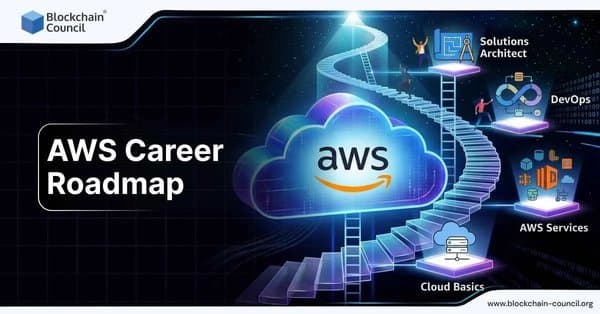
AWS Career Roadmap
A step-by-step guide to building a successful career in Amazon Web Services cloud computing.
Top 5 DeFi Platforms
Explore the leading decentralized finance platforms and what makes each one unique in the evolving DeFi landscape.