

Enterprise AI Consulting: GRC Strategies for Responsible AI


Enterprise AI consulting has shifted rapidly from model deployment to building durable governance, risk, and compliance (GRC) capabilities for responsible AI. As generative AI expands across business functions, many organizations discover that adoption is outpacing oversight, particularly when employees use AI tools informally and when third-party models enter critical workflows. Industry reporting cited by CIO notes that only 24% of organizations had fully enforced enterprise AI GRC policies, highlighting a governance maturity gap that consulting teams are now being asked to close.
This article explains what is changing in AI governance, why GRC is becoming the operating system for responsible AI, and how enterprises can implement practical controls aligned with leading frameworks such as the EU AI Act, the NIST AI Risk Management Framework (AI RMF 1.0), and ISO/IEC 42001:2023.

Why Enterprise AI Consulting Now Centers on AI GRC
Across industries, executives want AI outcomes that are scalable, auditable, and legally defensible. That requires operational control, not just principles. The most mature programs treat AI governance as an extension of enterprise GRC, using familiar mechanisms like policies, control testing, risk registers, internal audit, vendor oversight, and incident response.
Key Drivers Reshaping Responsible AI Programs
Regulatory pressure is increasing. The European Commission describes the EU AI Act as a risk-based framework with obligations for prohibited practices, high-risk systems, and certain transparency requirements. The law entered into force in 2024 with phased implementation thereafter.
Security and privacy are now core governance concerns. Common risks include data leakage, prompt injection, model inversion, training data provenance issues, and third-party dependency risk.
Model risk management is expanding beyond finance. Practices such as validation, change control, explainability, and independent review are being adopted across sectors.
Shadow AI has become a practical governance issue. Microsoft and LinkedIn's 2024 Work Trend Index reports broad AI usage by knowledge workers, which increases the likelihood of unapproved tools and unmanaged data flows.
Responsible AI as a GRC Problem, Not Only an Ethics Problem
Ethics still matters, but enterprise realities demand that responsible AI is implemented through controls that can be evidenced. Regulators and auditors increasingly expect AI-influenced decisions to be traceable, justifiable, and governed with clear accountability. That means organizations need to answer questions such as:
What AI systems are we using, and for what purpose?
Who approved each use case, and under which policy?
What data was used, and do we have lineage and consent evidence?
How was the model tested for bias, safety, security, and robustness?
How do we monitor drift, incidents, and changes after deployment?
How do we retire or replace models safely?
Core Frameworks Shaping Enterprise AI GRC Strategies
Enterprise AI consulting commonly maps controls to recognized frameworks to improve consistency across teams and jurisdictions.
EU AI Act (Risk-Based Obligations)
The EU AI Act is the most comprehensive horizontal AI law to date and is particularly relevant for multinational enterprises. It introduces risk tiers and corresponding obligations, including requirements commonly associated with high-risk AI such as governance, documentation, and oversight. It also includes transparency requirements for certain AI-generated or manipulated content as described by the European Commission.
NIST AI RMF 1.0 (Operational Risk Management)
NIST AI RMF 1.0 is widely used as an enterprise reference for implementing AI risk management. It structures activities into four functions: govern, map, measure, and manage. Consulting teams often translate these functions into policies, control libraries, and measurable risk indicators that can be reported to leadership.
ISO/IEC 42001:2023 and ISO/IEC 23894:2023 (Management System and Risk Guidance)
ISO/IEC 42001:2023 is the first AI management system standard designed for certifiable governance. It is increasingly used to establish audit-ready management practices across the AI lifecycle. ISO/IEC 23894:2023 provides AI risk management guidance that complements operational risk processes.
Blockchain Council training paths in AI governance, AI risk management, generative AI, and AI security can support role-based upskilling for risk, compliance, and engineering teams.
A Practical Enterprise AI GRC Implementation Roadmap
Most AI GRC consulting engagements follow a lifecycle approach, from data acquisition to model retirement. The steps below reflect common implementation patterns described in enterprise practice reporting.
1) Build an AI Inventory and Classify Use Cases
You cannot govern what you cannot see. Start with a living inventory that includes internal models, vendor tools, embedded AI in SaaS platforms, and employee-used AI tools.
Catalog use cases, owners, data sources, model types, and vendors.
Classify by impact and risk: informational, decision-support, or decision-making.
Identify jurisdictional exposure (for example, EU operations) and regulated domains (employment, finance, healthcare).
2) Define Governance, Accountability, and Escalation
Responsible AI fails when roles are unclear. Establish a cross-functional AI governance committee and define decision rights.
Executive ownership for AI risk and compliance, with board reporting for high-impact use cases.
RACI across legal, compliance, privacy, security, risk, procurement, engineering, and business units.
Exception handling for urgent deployments, with time-boxed approvals and compensating controls.
Incident escalation paths for model failures, data exposure, or harmful outputs.
3) Create AI Policies and Control Standards
Policies translate principles into enforceable requirements. A strong baseline policy set typically includes:
Acceptable use policy for employees and contractors, including guidance to avoid entering confidential or regulated data into unapproved tools.
Data governance policy covering consent, minimization, retention, and lineage expectations.
Model development and validation policy including documentation, versioning, and independent review requirements.
Human oversight policy defining when a human must review, approve, or override model outputs.
Third-party AI procurement policy for due diligence, contract controls, and ongoing vendor monitoring.
Incident response policy for AI-specific events such as prompt injection, harmful content generation, or unexpected decision behavior.
4) Implement Testing, Validation, and Continuous Monitoring
Testing should match risk. High-impact systems need deeper evaluation for fairness, safety, robustness, privacy, and security.
Bias and fairness assessment, including adverse impact analysis where employment or eligibility is involved.
Security testing for threats like prompt injection and data leakage pathways.
Privacy impact assessments and data protection reviews, especially for sensitive data.
Robustness and red-teaming to evaluate failure modes and misuse scenarios.
Drift and performance monitoring with thresholds, alerts, and rollback plans.
Audit logging and evidence retention for approvals, changes, evaluations, and incidents.
5) Strengthen Third-Party and Vendor Governance
Many AI failures trace back to vendor issues: unclear data use, opaque training sources, or unplanned model changes. Vendor governance should include:
Due diligence on provider security controls, data handling, and sub-processor dependencies.
Contractual controls addressing confidentiality, security obligations, breach notification, and indemnities.
Transparency requirements where feasible on training data provenance and model update practices.
Exit plans to manage concentration risk and ensure continuity if a vendor relationship ends.
6) Train the Workforce for AI Literacy and Safe Use
Even well-designed controls fail without adoption. Training should be role-based:
Business users: safe prompting, data handling, and when to escalate issues.
Developers and ML teams: secure AI engineering, evaluation, monitoring, and documentation practices.
Legal, risk, and compliance: regulatory mapping, evidence expectations, and review workflows.
Blockchain Council courses and certifications in generative AI, AI security, data privacy, and machine learning can support structured upskilling for these roles.
Industry Examples: Where AI GRC Controls Matter Most
Financial Services
Use cases include fraud detection, credit decision support, AML monitoring, and customer service automation. GRC priorities include model validation, explainability aligned to impact, audit trails, and governance of third-party model dependencies. Practices like champion-challenger testing and board reporting are common in mature programs.
Healthcare and Life Sciences
Use cases include clinical documentation support, triage assistance, claims review, and quality surveillance. Controls prioritize human-in-the-loop review, protected health information safeguards, data minimization, and post-deployment performance checks due to patient safety and privacy obligations.
HR and Workforce Management
Use cases include resume screening, scheduling, and employee support bots. Because discrimination risk is high, programs often require bias testing, adverse impact analysis, and human review of automated recommendations, along with clear notice practices for employees and candidates.
Legal, Compliance, and Procurement
Use cases include contract analysis, policy mapping, regulatory horizon scanning, and vendor due diligence. Controls focus on hallucination risk, confidentiality, source traceability, and verification workflows before outputs are used for decisions or filings.
Future Outlook: Auditability and AI Management Systems
Over the next few years, enterprise AI consulting is likely to focus less on whether to use AI and more on how to govern it at scale. Expect greater demand for:
AI governance as a standard control function, similar to cybersecurity and privacy.
Audit-ready documentation as a default requirement for regulated and high-impact AI.
ISO/IEC 42001 alignment to build repeatable management system practices.
Continuous risk assessment as models, data, and regulations change.
Board-level oversight as legal and reputational risks become more visible.
Conclusion: Operationalizing Responsible AI with Enterprise AI Consulting
Enterprise AI consulting increasingly succeeds or fails based on whether organizations can operationalize responsible AI through governance, risk, and compliance. Enterprise reporting consistently shows a meaningful gap between AI adoption and enforced AI GRC policies, while regulatory developments like the EU AI Act raise the cost of informal, undocumented deployment.
The most effective strategy is to integrate AI into existing GRC structures: build an AI inventory, classify use cases by risk, define accountability, implement policies and controls, validate and monitor models continuously, govern vendors rigorously, and train the workforce. Anchoring the program to established frameworks such as NIST AI RMF and ISO/IEC 42001 helps create consistency, auditability, and long-term resilience as AI capabilities and regulations continue to develop.
Related Articles
View All
AI & ML
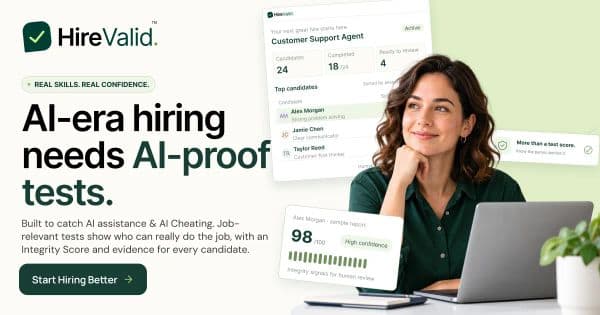
Built to Catch AI Cheating: Rethinking Pre-Employment Assessments with HireValid
Explore how HireValid is rethinking pre-employment assessments with AI-resistant test design, integrity signals, candidate evidence, and human review to address AI-assisted cheating.
AI & ML
AI-Era Hiring Needs AI-Proof Tests: How HireValid Is Redefining Talent Assessment
Explore how HireValid is rethinking talent assessment for the AI era with job-relevant tests, anti-cheating design, integrity signals, and human-reviewed evidence of candidate ability.

AI & ML
Google Launches Gemini 4 Argon: Features and Capabilities
Google has launched Gemini 4 Argon, its flagship AI model for coding, finance, law, cybersecurity and science. Learn its key features, availability, pricing and safety details.
Trending Articles

Top 5 DeFi Platforms
Explore the leading decentralized finance platforms and what makes each one unique in the evolving DeFi landscape.
How Blockchain Secures AI Data
Understand how blockchain technology is being applied to protect the integrity and security of AI training data.
Claude AI Tools for Productivity
Discover Claude AI tools for productivity to streamline tasks, manage workflows, and improve efficiency.