

Conversational AI Design

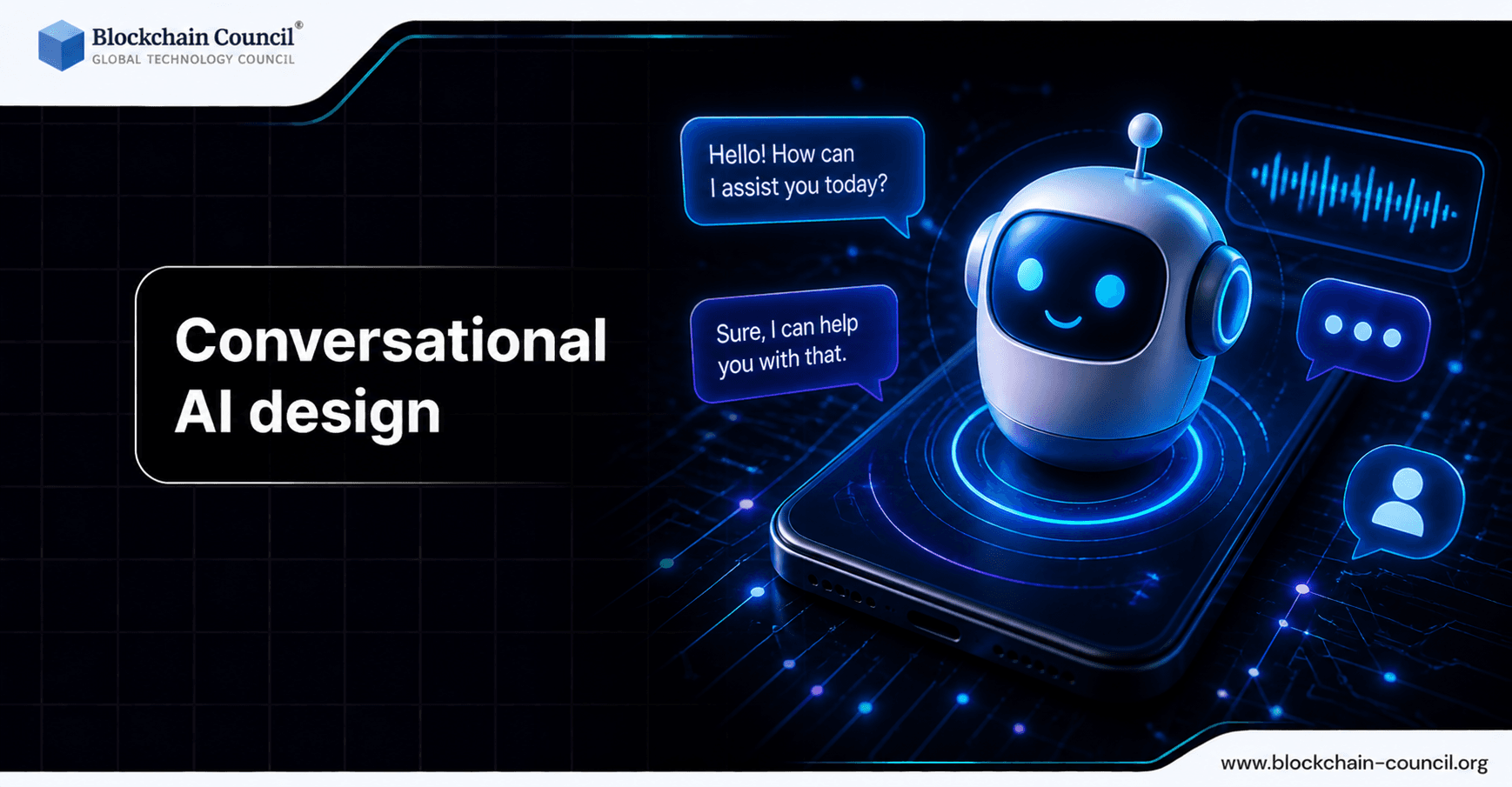
Conversational AI design has become a critical component of modern digital experiences. From chatbots and virtual assistants to customer service automation and AI-driven applications, conversational systems are transforming how humans interact with technology.
Unlike traditional interfaces, conversational AI focuses on natural, human-like communication, making interactions more intuitive and accessible. As businesses and developers increasingly adopt AI-driven solutions, effective conversational design plays a vital role in ensuring usability, engagement, and trust.

This article explores conversational AI design in depth, including its principles, components, real-world applications, recent developments, challenges, and future trends.
What Is Conversational AI Design?
Conversational AI design refers to the process of creating systems that can interact with users through natural language. These systems use artificial intelligence, natural language processing (NLP), and machine learning to understand and respond to user input.
Key elements include:
Dialogue structure
User intent recognition
Context management
Response generation
The goal is to create interactions that feel natural, efficient, and meaningful.
Evolution of Conversational AI
Conversational AI has evolved significantly over time.
Rule-Based Systems
Early chatbots relied on predefined rules and scripts. They could only handle limited scenarios.
Machine Learning Models
Machine learning introduced flexibility, allowing systems to learn from data and improve over time.
Large Language Models
Modern conversational AI uses large language models to generate human-like responses and handle complex queries.
This evolution has transformed conversational AI into a powerful communication tool.
Core Principles of Conversational AI Design
Effective conversational AI design is guided by several principles.
Clarity
Responses should be clear and easy to understand.
Context Awareness
The system must maintain context across interactions.
Efficiency
Users should achieve their goals quickly.
Consistency
The tone and behavior of the AI should remain consistent.
Personalization
Interactions should adapt to user preferences.
These principles ensure a positive user experience.
Key Components of Conversational AI Systems
Conversational AI systems consist of multiple components.
Natural Language Understanding (NLU)
NLU enables the system to interpret user input and identify intent.
Dialogue Management
This component controls the flow of conversation and manages context.
Natural Language Generation (NLG)
NLG generates responses that are coherent and relevant.
Integration Layer
The system connects with databases, APIs, and external services.
Together, these components enable effective communication.
Designing Effective Conversations
Designing conversational AI requires careful planning.
Understanding User Intent
Identifying what users want is essential for meaningful interaction.
Structuring Dialogues
Conversations should follow logical flows with clear pathways.
Handling Errors
The system must gracefully handle misunderstandings and provide helpful responses.
Providing Feedback
Users should receive clear feedback on actions and outcomes.
These practices improve usability and satisfaction.
Real-World Example: Customer Support Chatbots
A global e-commerce company implemented a conversational AI chatbot for customer support.
The system handled common queries such as order tracking and returns. It reduced response time and improved customer satisfaction.
By designing clear conversation flows and integrating with backend systems, the company achieved significant efficiency gains.
This example highlights the practical benefits of conversational AI design.
Conversational AI in Different Industries
Conversational AI is widely used across industries.
Healthcare
AI assists patients with appointment scheduling and health information.
Finance
Banks use AI for customer queries and transaction support.
Retail
Retailers use chatbots for product recommendations and customer service.
Education
AI tutors provide personalized learning experiences.
These applications demonstrate the versatility of conversational AI.
Recent Developments in Conversational AI
The field has seen rapid advancements.
Improved Language Models
Modern AI systems provide more accurate and natural responses.
Multimodal Interaction
Conversational AI now supports voice, text, and visual inputs.
Emotional Intelligence
Some systems can detect and respond to user emotions.
Personalization
AI adapts interactions based on user behavior and preferences.
These developments enhance user experience.
Challenges in Conversational AI Design
Despite progress, challenges remain.
Ambiguity in Language
Human language is complex and context-dependent.
Maintaining Context
Long conversations require accurate context management.
Ethical Concerns
Issues such as bias and privacy must be addressed.
User Expectations
Users expect human-like interactions, which can be difficult to achieve.
Addressing these challenges is essential for success.
Ethical Considerations
Ethics play a crucial role in conversational AI design.
Transparency
Users should know they are interacting with AI.
Privacy
User data must be protected.
Fairness
AI systems should avoid bias.
Responsible design builds trust and credibility.
Skills Required for Conversational AI Design
Designing effective conversational AI systems requires a combination of technical and creative skills.
The AI Expert Certification provides a strong foundation in AI technologies and applications.
For those focusing on conversational systems, the Claude AI Certification offers insights into advanced language models and interaction design.
Developers can enhance their expertise through the AI Powered Coding Expert Course, which focuses on building and optimizing AI-driven systems.
Additionally, professionals in marketing and communication can benefit from the AI Powered Digital Marketing Course, which explores AI-driven engagement strategies.
Conversational AI and User Experience
User experience is central to conversational AI design.
Well-designed systems:
Reduce friction
Improve accessibility
Enhance engagement
Poor design, on the other hand, can frustrate users and reduce trust.
Future Trends in Conversational AI Design
The future of conversational AI includes several trends.
Hyper-Personalization
AI will tailor interactions to individual users.
Voice-First Interfaces
Voice-based interactions will become more common.
Integration with AR and VR
Conversational AI will enhance immersive experiences.
Autonomous AI Agents
AI systems will handle complex tasks independently.
These trends will shape the next generation of conversational AI.
Impact on Businesses
Conversational AI provides significant benefits for businesses.
It improves efficiency, reduces costs, and enhances customer experiences.
Companies that adopt conversational AI gain a competitive advantage.
Conclusion
Conversational AI design is a critical aspect of modern technology, enabling natural and intuitive interactions between humans and machines. By combining advanced AI technologies with thoughtful design principles, organizations can create systems that are efficient, engaging, and user-friendly.
As the field continues to evolve, the importance of effective conversational design will only grow. Businesses and professionals must stay informed and adapt to new developments to remain competitive.
Frequently Asked Questions (FAQs)
1. What is conversational AI design?
Conversational AI design involves creating systems that interact with users through natural language. It focuses on communication. It improves user experience. It uses AI technologies. It is widely used.
2. How does conversational AI work?
It uses NLP and machine learning to understand input and generate responses. The system processes data. It identifies intent. It responds accordingly. It operates efficiently.
3. What are the main components?
Components include NLU, dialogue management, and NLG. They work together. They enable interaction. They improve communication. They are essential.
4. Where is conversational AI used?
It is used in healthcare, finance, retail, and education. Applications vary. Adoption is increasing. Benefits are significant. Impact is broad.
5. What are the benefits?
Benefits include efficiency and engagement. Costs are reduced. Accessibility improves. Productivity increases. It is valuable.
6. What challenges exist?
Challenges include language ambiguity and context management. Ethical concerns exist. Solutions are needed. Challenges persist. Improvement continues.
7. How does AI improve customer service?
AI provides fast responses and automation. Efficiency improves. Customers receive support quickly. Satisfaction increases. It is effective.
8. What skills are needed?
Skills include AI knowledge and design thinking. Technical expertise helps. Learning is ongoing. Adaptability is important. Skills are essential.
9. What is the future of conversational AI?
The future includes personalization and advanced capabilities. Technology will improve. Adoption will increase. Innovation continues. Growth is expected.
10. How does conversational AI impact businesses?
It improves efficiency and customer experience. Costs decrease. Productivity increases. Businesses benefit. It is important.
11. What is NLU?
NLU is natural language understanding. It interprets user input. It identifies intent. It enables communication. It is essential.
12. What is NLG?
NLG is natural language generation. It creates responses. It ensures coherence. It improves interaction. It is important.
13. How does AI handle context?
AI tracks conversation history. It maintains context. It improves responses. Accuracy increases. It is crucial.
14. What are ethical concerns?
Concerns include bias and privacy. Transparency is important. Responsible use is required. Ethics must be addressed. Awareness is necessary.
15. Can conversational AI replace humans?
It supports tasks but does not replace human interaction. Human judgment is important. Collaboration is needed. Balance is essential. It complements humans.
16. How is conversational AI designed?
It involves planning dialogues and training models. Testing is important. Iteration improves performance. Design is complex. It requires expertise.
17. What industries benefit most?
Industries include customer service and healthcare. Applications are diverse. Benefits are significant. Adoption is growing. Impact is global.
18. How does AI improve engagement?
AI provides personalized and interactive responses. Engagement increases. Users feel connected. Experience improves. It is effective.
19. What tools are used?
Tools include NLP frameworks and AI platforms. Integration is important. Systems connect. Efficiency improves. Tools evolve.
20. Why is conversational AI important?
It transforms human-computer interaction. It improves accessibility. It enhances efficiency. It supports innovation. It is essential.
Related Articles
View All
AI & ML
Built to Catch AI Cheating: Rethinking Pre-Employment Assessments with HireValid
Explore how HireValid is rethinking pre-employment assessments with AI-resistant test design, integrity signals, candidate evidence, and human review to address AI-assisted cheating.

AI & ML
AI-Era Hiring Needs AI-Proof Tests: How HireValid Is Redefining Talent Assessment
Explore how HireValid is rethinking talent assessment for the AI era with job-relevant tests, anti-cheating design, integrity signals, and human-reviewed evidence of candidate ability.

AI & ML
Google Launches Gemini 4 Argon: Features and Capabilities
Google has launched Gemini 4 Argon, its flagship AI model for coding, finance, law, cybersecurity and science. Learn its key features, availability, pricing and safety details.
Trending Articles

Top 5 DeFi Platforms
Explore the leading decentralized finance platforms and what makes each one unique in the evolving DeFi landscape.
How Blockchain Secures AI Data
Understand how blockchain technology is being applied to protect the integrity and security of AI training data.
How to Install Claude Code
Learn how to install Claude Code on macOS, Linux, and Windows using the native installer, plus verification, authentication, and troubleshooting tips.