

AI Data Center Power News

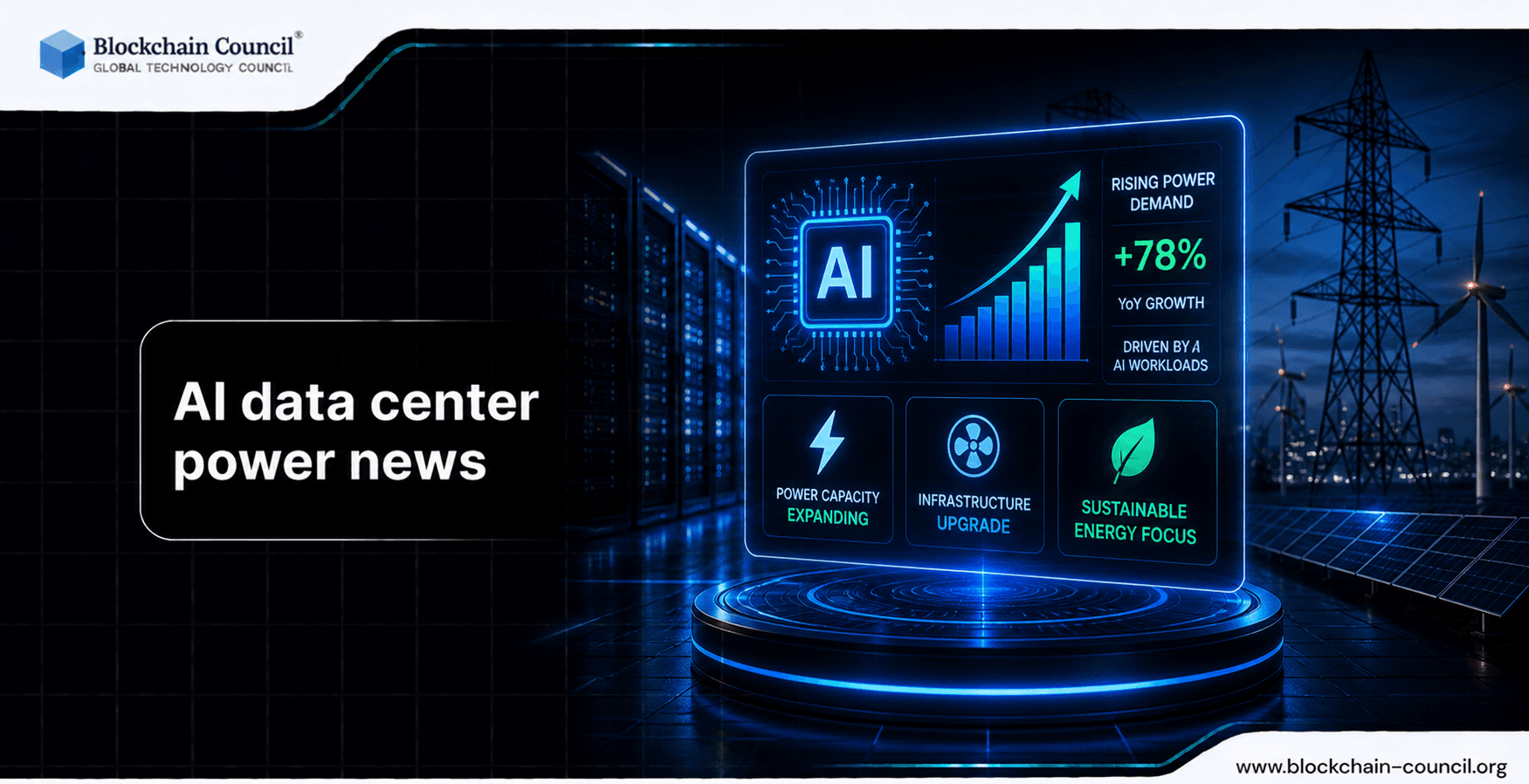
Artificial Intelligence has become a cornerstone of modern technology, driving innovation across industries. However, behind every AI model, chatbot, and automated system lies a vast network of data centers consuming enormous amounts of power. The topic of AI data center power news has gained global attention as energy demands rise alongside AI adoption.
From hyperscale facilities operated by major tech companies to emerging AI infrastructure projects, the need for efficient and sustainable power solutions is more critical than ever. Governments, corporations, and researchers are actively exploring ways to balance performance with environmental responsibility.

This article explores the latest developments in AI data center power, including energy consumption trends, technological innovations, challenges, and future prospects. It also highlights the importance of AI expertise through certifications such as AI expert certification, Claude AI Certification, and ChatGPT Expert certification.
Understanding AI Data Center Power
AI data centers are specialized facilities designed to handle intensive computational workloads. Unlike traditional data centers, they require significantly more power due to:
High-performance GPUs and processors
Continuous training of large AI models
Real-time data processing
Cooling and infrastructure demands
These facilities are essential for powering applications such as machine learning, generative AI, and cloud computing.
Why AI Data Centers Consume So Much Power
High Computational Requirements
AI models, especially large language models, require massive computational resources. Training a single model can consume as much energy as thousands of households.
GPU-Intensive Workloads
Modern AI systems rely heavily on GPUs, which are power-intensive components.
Cooling Systems
Data centers generate significant heat, requiring advanced cooling systems that consume additional energy.
Continuous Operation
AI systems often run 24/7, increasing overall energy consumption.
Recent AI Data Center Power News
Expansion of Hyperscale Data Centers
Major technology companies are investing billions in expanding data center capacity to support AI workloads.
Shift Toward Renewable Energy
Companies are increasingly adopting renewable energy sources such as solar and wind to power data centers.
Energy Efficiency Innovations
New technologies are improving energy efficiency, reducing the environmental impact of AI infrastructure.
Government Regulations
Governments are introducing policies to regulate energy usage and promote sustainability.
Real-World Examples
Tech Giants’ Investments
Companies like Microsoft, Google, and Amazon are building large-scale AI data centers with advanced power management systems.
Renewable Energy Integration
Some data centers are powered entirely by renewable energy, reducing carbon footprints.
Edge Data Centers
Smaller, localized data centers reduce energy consumption by processing data closer to users.
AI in Digital Marketing
AI-powered platforms require data center support for analytics and automation. Professionals can enhance their skills through the AI powered digital marketing course
Software Development
Developers build AI systems that rely on data center infrastructure. Programs like the AI Powered coding expert Course help develop these skills.
Benefits of AI Data Center Expansion
Technological Advancement
Data centers enable the development of advanced AI applications.
Economic Growth
Infrastructure investments create jobs and stimulate economies.
Improved Services
AI-powered services become faster and more reliable.
Scalability
Data centers support large-scale operations.
Challenges and Concerns
Environmental Impact
High energy consumption contributes to carbon emissions.
Infrastructure Costs
Building and maintaining data centers is expensive.
Energy Supply Issues
Increased demand can strain power grids.
Regulatory Pressure
Governments may impose restrictions on energy usage.
Innovations in AI Data Center Power
Liquid Cooling Systems
Advanced cooling technologies reduce energy consumption.
AI-Optimized Hardware
New processors are designed to be more energy-efficient.
Smart Energy Management
AI systems optimize power usage within data centers.
Modular Data Centers
Flexible designs improve efficiency and scalability.
Importance of AI Skills
As AI infrastructure grows, the demand for skilled professionals increases. Certifications such as:
help individuals stay competitive in the job market.
Future Trends in AI Data Center Power
Increased Use of Renewable Energy
Sustainability will become a priority for data center operations.
Edge Computing Growth
Decentralized data centers will reduce energy consumption.
Advanced Cooling Technologies
New methods will improve efficiency and reduce costs.
AI-Driven Optimization
AI will manage energy usage more effectively.
Best Practices for Sustainable Data Centers
Use renewable energy sources
Optimize cooling systems
Implement energy-efficient hardware
Monitor power usage regularly
Ethical Considerations
Organizations must ensure:
Responsible energy consumption
Transparency in environmental impact
Sustainable practices
Conclusion
AI data center power is a critical aspect of the modern technology landscape. As AI adoption grows, so does the need for efficient and sustainable energy solutions. The latest developments highlight the importance of balancing innovation with environmental responsibility.
Understanding these trends is essential for businesses, policymakers, and individuals involved in AI development. With the right strategies and technologies, the future of AI infrastructure can be both powerful and sustainable.
FAQs
1. What is AI data center power?
AI data center power refers to the energy required to run data centers that support artificial intelligence systems. These facilities use electricity to operate servers, GPUs, and cooling systems. The power demand is significantly higher than traditional data centers. This is due to the complexity of AI workloads. Managing this power efficiently is essential. It is a growing concern.
2. Why do AI data centers consume so much energy?
AI data centers consume large amounts of energy due to high computational requirements. Training AI models requires powerful hardware. GPUs and processors use significant electricity. Cooling systems add to the energy demand. Continuous operation increases consumption. Efficiency improvements are needed.
3. What are the latest trends in AI data center power?
Recent trends include the use of renewable energy and energy-efficient technologies. Companies are investing in advanced cooling systems. AI is being used to optimize power usage. Data center designs are evolving. Sustainability is becoming a priority. Innovation is ongoing.
4. How do data centers impact the environment?
Data centers contribute to carbon emissions due to high energy consumption. They require significant resources to operate. Cooling systems also impact the environment. Efforts are being made to reduce their footprint. Renewable energy is being adopted. Sustainability is a key focus.
5. What is renewable energy in data centers?
Renewable energy includes sources like solar and wind power. Data centers use these sources to reduce carbon emissions. It helps improve sustainability. Companies are investing in green energy. Adoption is increasing. It supports environmental goals.
6. How can data centers become more efficient?
Efficiency can be improved through advanced cooling systems and optimized hardware. AI can manage energy usage. Monitoring systems help identify inefficiencies. Renewable energy reduces impact. Design improvements enhance performance. Continuous innovation is needed.
7. What is liquid cooling in data centers?
Liquid cooling is a method used to manage heat in data centers. It is more efficient than traditional air cooling. It reduces energy consumption. It improves performance. Adoption is increasing. It is a key innovation.
8. How does AI help optimize data center power?
AI analyzes power usage and identifies inefficiencies. It can adjust operations in real time. This improves energy efficiency. Costs are reduced. Performance is enhanced. AI plays a critical role.
9. What are edge data centers?
Edge data centers are smaller facilities located closer to users. They reduce latency and energy consumption. Data is processed locally. This improves efficiency. Adoption is growing. They support modern applications.
10. What industries rely on AI data centers?
Industries such as technology, healthcare, and finance rely on AI data centers. They support data processing and analysis. Applications are diverse. Growth is increasing. Impact is significant. They are essential.
11. What skills are needed for AI infrastructure?
Skills include programming, data analysis, and system design. Understanding AI is important. Knowledge of hardware is useful. Continuous learning is necessary. Certifications can help. Skills improve opportunities.
12. How can I learn about AI data centers?
You can learn through courses, certifications, and practical experience. Online resources are available. Hands-on learning is valuable. Staying updated is important. Practice enhances knowledge. Learning is ongoing.
13. What is the future of AI data center power?
The future includes more efficient systems and renewable energy adoption. AI will optimize power usage. Innovations will continue. Sustainability will improve. Demand will grow. Impact will expand.
14. Are AI data centers expensive?
Yes, building and operating data centers is costly. Infrastructure and energy expenses are high. Maintenance adds to costs. However, benefits can outweigh expenses. Efficiency improvements help. Costs may decrease over time.
15. How do governments regulate data centers?
Governments implement policies to manage energy usage and environmental impact. Regulations may include efficiency standards. Incentives for renewable energy are offered. Compliance is required. Policies are evolving. Oversight is increasing.
16. How does AI data center power affect businesses?
Businesses rely on data centers for operations. High energy costs can impact profitability. Efficient systems improve performance. AI enhances decision-making. Scalability increases. It supports growth.
17. What are the challenges of AI data centers?
Challenges include high energy consumption and environmental impact. Infrastructure costs are significant. Managing heat is complex. Regulatory pressure exists. Continuous innovation is needed. Challenges must be addressed.
18. Why is AI data center power important?
It is important because it supports AI systems and applications. Without power, AI cannot function. Efficient energy use is critical. Sustainability is a concern. It impacts industries globally. It is a key issue.
19. Can data centers be fully sustainable?
Data centers can become more sustainable through renewable energy and efficient design. Achieving full sustainability is challenging. Progress is being made. Innovations are improving efficiency. Environmental impact can be reduced. Goals are evolving.
20. How does AI data center power impact the future?
AI data center power will shape the future of technology. Efficient systems will support innovation. Sustainability will be a priority. Demand will increase. Solutions will evolve. Its importance will grow.
Related Articles
View All
AI & ML
Built to Catch AI Cheating: Rethinking Pre-Employment Assessments with HireValid
Explore how HireValid is rethinking pre-employment assessments with AI-resistant test design, integrity signals, candidate evidence, and human review to address AI-assisted cheating.

AI & ML
AI-Era Hiring Needs AI-Proof Tests: How HireValid Is Redefining Talent Assessment
Explore how HireValid is rethinking talent assessment for the AI era with job-relevant tests, anti-cheating design, integrity signals, and human-reviewed evidence of candidate ability.
AI & ML
Google Launches Gemini 4 Argon: Features and Capabilities
Google has launched Gemini 4 Argon, its flagship AI model for coding, finance, law, cybersecurity and science. Learn its key features, availability, pricing and safety details.
Trending Articles
The Role of Blockchain in Ethical AI Development
How blockchain technology is being used to promote transparency and accountability in artificial intelligence systems.
AWS Career Roadmap
A step-by-step guide to building a successful career in Amazon Web Services cloud computing.

Can DeFi 2.0 Bridge the Gap Between Traditional and Decentralized Finance?
The next generation of DeFi protocols aims to connect traditional banking with decentralized finance ecosystems.