

Contact Center AI News

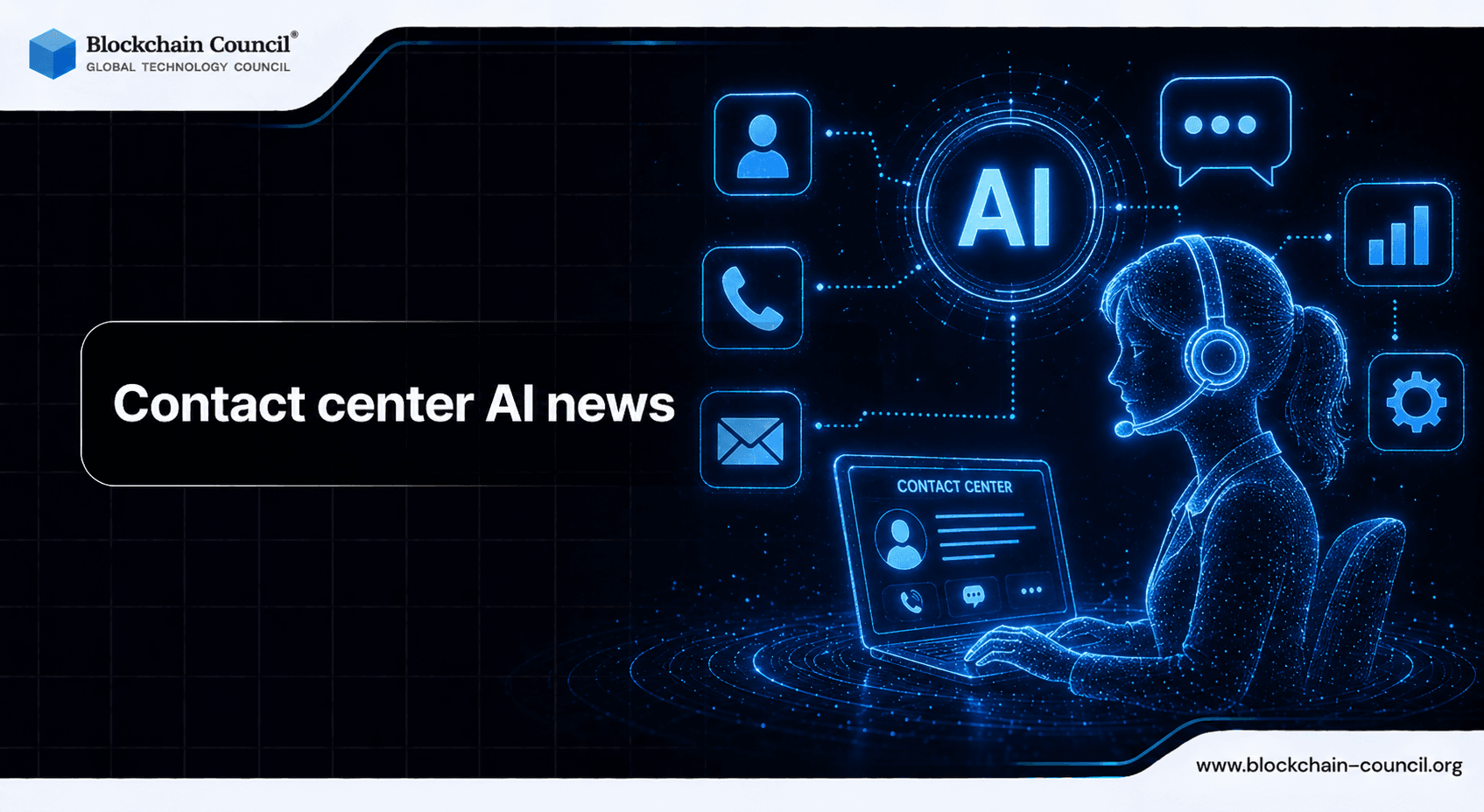
Artificial Intelligence is rapidly reshaping the contact center industry. What was once a labor-intensive environment dependent on human agents is now evolving into a hybrid system where AI plays a central role in managing customer interactions.
From intelligent chatbots to real-time analytics, AI is improving efficiency, reducing costs, and enhancing customer experience. As of 2026, contact center AI is no longer experimental. It is becoming a standard component of modern customer service operations.

This article explores the latest developments in contact center AI, real-world applications, and what businesses should expect moving forward.
What Is Contact Center AI?
Contact center AI refers to the use of artificial intelligence technologies to automate and enhance customer service operations. These systems handle interactions across multiple channels, including voice, chat, email, and social media.
AI tools in contact centers can understand natural language, analyze customer sentiment, and provide real-time responses. They are designed to improve both efficiency and customer satisfaction.
Unlike traditional systems, AI-powered solutions continuously learn and adapt, improving performance over time.
Key Developments in Contact Center AI
The contact center landscape has seen significant changes in recent years. Several trends are shaping the industry.
Rise of Conversational AI
Conversational AI has become more advanced, enabling natural and human-like interactions. Chatbots and virtual assistants can now handle complex queries with improved accuracy.
These systems are capable of understanding context, managing multi-turn conversations, and providing personalized responses.
AI-Powered Voice Assistants
Voice AI is transforming call centers. Intelligent voice assistants can handle customer calls, route queries, and provide solutions without human intervention.
This reduces wait times and improves efficiency.
Real-Time Analytics and Insights
AI systems analyze customer interactions in real time. They can detect sentiment, identify issues, and provide insights to agents.
This allows businesses to respond quickly and improve service quality.
Automation of Routine Tasks
AI automates repetitive tasks such as ticket creation, data entry, and query resolution. This frees up human agents to focus on more complex issues.
Automation is one of the biggest drivers of efficiency in contact centers.
Real-World Example: AI in Customer Support
A global e-commerce company recently implemented AI-powered chatbots to handle customer inquiries. The system resolved over 70 percent of queries without human intervention.
As a result, the company reduced operational costs and improved response times. Customer satisfaction also increased due to faster service.
This example highlights the practical benefits of contact center AI.
Benefits of Contact Center AI
AI offers several advantages for contact centers.
Faster response times
Reduced operational costs
Improved customer satisfaction
Enhanced data analysis
Scalability for high volumes
These benefits make AI an essential tool for modern customer service.
Challenges and Limitations
Despite its advantages, contact center AI faces challenges.
AI systems may struggle with complex or emotional queries. There is also the risk of poor customer experience if AI responses are inaccurate.
Integration with existing systems can be difficult. Data privacy and security concerns must also be addressed.
Businesses need to balance automation with human support.
AI and Human Collaboration
AI is not replacing human agents entirely. Instead, it is transforming their roles.
Agents now focus on complex and high-value interactions. AI handles routine tasks and provides support.
This collaboration improves efficiency and job satisfaction.
Personalization Through AI
AI enables personalized customer experiences. By analyzing data, AI systems can tailor responses and recommendations.
For example, a telecom company can use AI to suggest plans based on customer usage patterns.
Personalization improves engagement and customer loyalty.
The Role of Skills and Certifications
As AI becomes more important in contact centers, professionals need to develop relevant skills.
Programs such as the AI Expert Certification provide a strong foundation in artificial intelligence concepts and applications.
For those working with conversational systems, the Claude AI Certification offers insights into advanced AI models and their use in communication platforms.
Developers can enhance their technical expertise through the AI Powered Coding Expert Course, which focuses on integrating AI into real-world systems.
Additionally, professionals in customer engagement and marketing can benefit from the AI Powered Digital Marketing Course, which explores how AI improves customer interactions and campaign performance.
Future Trends in Contact Center AI
The future of contact center AI is shaped by several key trends.
Increased use of generative AI for responses
Expansion of omnichannel support
Greater focus on emotional intelligence in AI
Integration with CRM and business systems
These trends will continue to enhance customer service capabilities.
Ethical Considerations
AI in contact centers raises ethical questions.
Issues such as data privacy, transparency, and bias must be addressed. Customers should be aware when they are interacting with AI.
Organizations must ensure responsible use of AI technologies.
Contact Center AI and Business Growth
AI is not just a tool for efficiency. It is a driver of business growth.
By improving customer experience, AI helps businesses retain customers and increase revenue. It also provides valuable insights for decision-making.
Companies that adopt AI effectively gain a competitive advantage.
Conclusion
Contact center AI is transforming customer service in significant ways. It improves efficiency, enhances customer experience, and enables businesses to scale operations.
While challenges remain, the benefits of AI are clear. The future of contact centers will involve a combination of AI and human expertise.
Organizations that embrace this transformation will be better positioned to succeed in the evolving digital landscape.
Frequently Asked Questions (FAQs)
1. What is contact center AI?
Contact center AI refers to the use of artificial intelligence in customer service operations. It includes chatbots, voice assistants, and analytics tools. These systems automate interactions and improve efficiency. They enhance customer experience. AI is widely used in modern contact centers.
2. How does AI improve customer service?
AI improves customer service by providing faster responses and accurate information. It automates routine tasks. It allows agents to focus on complex issues. Customer satisfaction increases. Efficiency improves significantly.
3. Are chatbots replacing human agents?
Chatbots are not replacing human agents entirely. They handle routine queries. Human agents manage complex interactions. This creates a balanced system. Both roles are important.
4. What are the benefits of AI in contact centers?
Benefits include cost reduction, faster service, and better insights. AI improves efficiency. It enhances customer experience. It supports scalability. It is a valuable tool.
5. What challenges does contact center AI face?
Challenges include accuracy, integration, and data privacy. AI may struggle with complex queries. Systems require careful implementation. Risks must be managed. Improvement is ongoing.
6. How does AI handle customer data?
AI analyzes customer data to provide personalized responses. It must follow privacy regulations. Data security is important. Proper management is required. Compliance is essential.
7. What is conversational AI?
Conversational AI enables natural interactions between humans and machines. It uses natural language processing. It powers chatbots and voice assistants. It improves communication. It is widely used.
8. Can AI understand emotions?
AI can detect sentiment but does not fully understand emotions. It analyzes patterns in language. It provides appropriate responses. Human agents handle emotional cases. AI support is limited.
9. What industries use contact center AI?
Industries such as retail, finance, healthcare, and telecom use AI. It improves customer service. Applications are diverse. Adoption is growing. It is widely used.
10. How does AI reduce costs?
AI reduces costs by automating tasks and reducing the need for large teams. It improves efficiency. It minimizes errors. Operational expenses decrease. Savings are significant.
11. What is omnichannel support?
Omnichannel support allows customers to interact across multiple channels. AI integrates these channels. It provides consistent service. Customer experience improves. It is important.
12. How do businesses implement AI?
Businesses implement AI through platforms and tools. They integrate systems. Training is required. Monitoring is important. Implementation varies by organization.
13. What skills are needed for AI roles?
Skills include understanding AI, data analysis, and communication. Technical knowledge is important. Continuous learning is required. Certifications help. Adaptability is key.
14. Is AI reliable in customer service?
AI is reliable for routine tasks. It may struggle with complex queries. Human oversight is necessary. Reliability improves with training. It is effective.
15. What is real-time analytics?
Real-time analytics involves analyzing data instantly. AI processes interactions quickly. Insights are generated immediately. This improves decision-making. It enhances service.
16. How does AI personalize experiences?
AI analyzes customer behavior and preferences. It tailors responses and recommendations. Personalization improves engagement. Customers feel valued. It increases loyalty.
17. What is the future of contact center AI?
The future includes more advanced AI systems and better integration. Automation will increase. Customer experience will improve. AI capabilities will expand. Growth is expected.
18. Are small businesses using AI?
Yes, AI tools are becoming accessible to small businesses. They improve efficiency. Costs are decreasing. Adoption is increasing. AI is widely used.
19. What are the risks of AI in contact centers?
Risks include data privacy issues and inaccurate responses. Over-reliance on AI can be problematic. Proper management is needed. Risks must be addressed. Governance is important.
20. Why is AI important for contact centers?
AI improves efficiency and customer experience. It reduces costs. It enables scalability. It supports business growth. It is essential for modern operations.
Related Articles
View All
AI & ML
OpenAI Launches GPT-6.1 Terra: What’s New?
OpenAI has launched GPT-6.1 Terra, a faster and cheaper mid-tier model with stronger computer use, better image understanding and fewer errors. See what is new, what it costs, and who can use it.

AI & ML
Built to Catch AI Cheating: Rethinking Pre-Employment Assessments with HireValid
Explore how HireValid is rethinking pre-employment assessments with AI-resistant test design, integrity signals, candidate evidence, and human review to address AI-assisted cheating.

AI & ML
AI-Era Hiring Needs AI-Proof Tests: How HireValid Is Redefining Talent Assessment
Explore how HireValid is rethinking talent assessment for the AI era with job-relevant tests, anti-cheating design, integrity signals, and human-reviewed evidence of candidate ability.
Trending Articles
The Role of Blockchain in Ethical AI Development
How blockchain technology is being used to promote transparency and accountability in artificial intelligence systems.

Top 5 DeFi Platforms
Explore the leading decentralized finance platforms and what makes each one unique in the evolving DeFi landscape.

Can DeFi 2.0 Bridge the Gap Between Traditional and Decentralized Finance?
The next generation of DeFi protocols aims to connect traditional banking with decentralized finance ecosystems.