

Manufacturing AI News

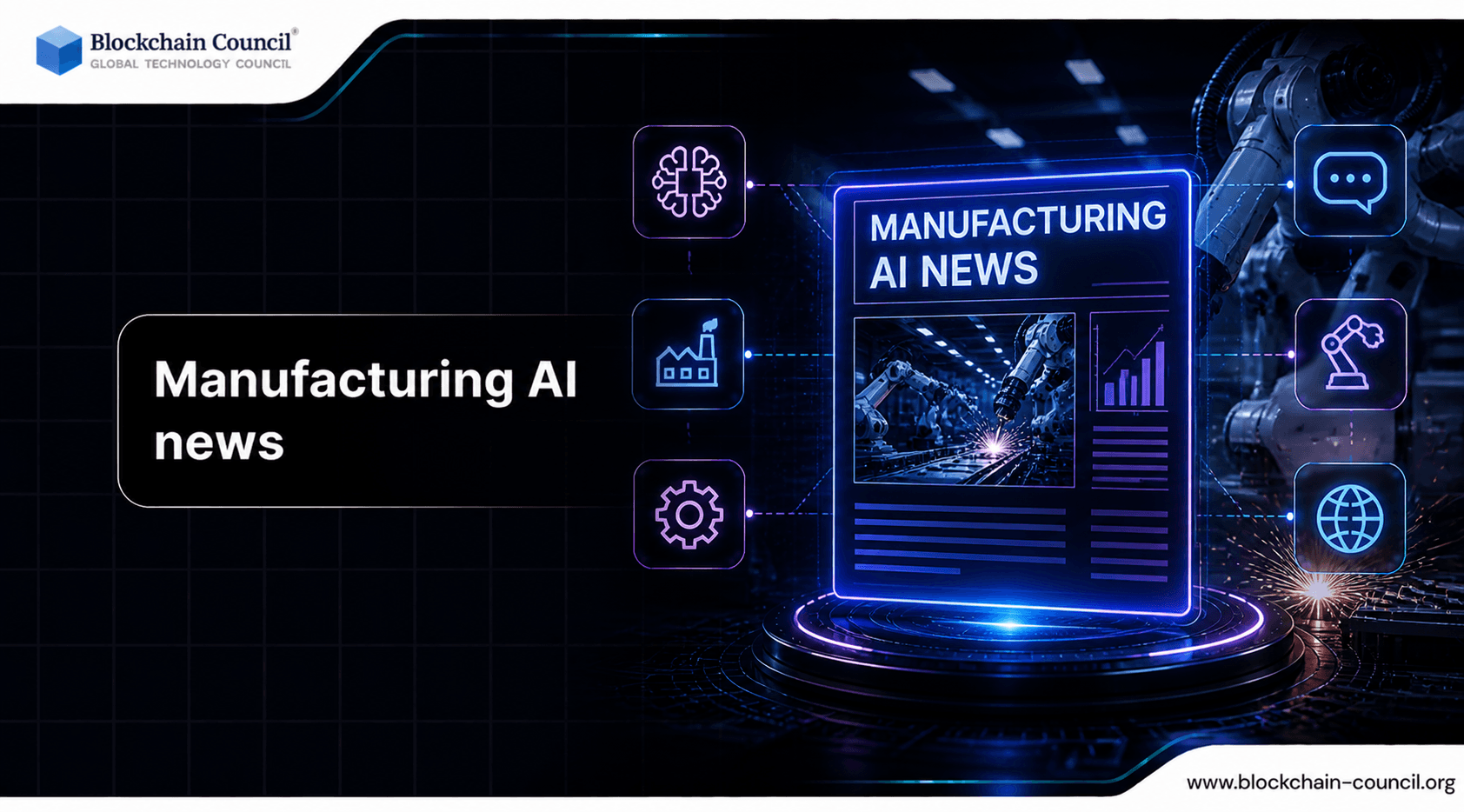
Artificial Intelligence is transforming industries across the globe, but few sectors are experiencing as significant a shift as manufacturing. From predictive maintenance to autonomous production lines, AI is reshaping how factories operate, improving efficiency, reducing costs, and enabling smarter decision-making.
The term “Manufacturing AI News” reflects the growing interest in the latest developments, breakthroughs, and real-world implementations of AI in manufacturing. As companies adopt advanced technologies, staying updated on these trends becomes essential for professionals and organizations alike.

This article explores the latest news and developments in manufacturing AI, key technologies, real-world applications, and future trends. It also highlights the importance of AI expertise through certifications such as AI expert certification, Claude AI Certification, and ChatGPT Expert certification.
What is AI in Manufacturing?
AI in manufacturing refers to the use of artificial intelligence technologies to automate processes, analyze data, and improve operational efficiency. These systems can learn from data, identify patterns, and make decisions with minimal human intervention.
AI applications in manufacturing include:
Predictive maintenance
Quality control
Supply chain optimization
Robotics and automation
Process optimization
These capabilities are driving the evolution of smart factories and Industry 4.0.
Latest Manufacturing AI News and Developments
Rise of Smart Factories
One of the most significant developments is the emergence of smart factories, where machines, systems, and processes are interconnected. AI enables real-time monitoring, predictive analytics, and automated decision-making, leading to improved productivity and reduced downtime.
AI-Powered Predictive Maintenance
Manufacturers are increasingly using AI to predict equipment failures before they occur. By analyzing sensor data, AI systems can identify potential issues and recommend maintenance actions, reducing unexpected breakdowns.
Robotics and Automation Advancements
AI-driven robots are becoming more sophisticated, capable of performing complex tasks with precision. Collaborative robots, or cobots, work alongside humans, enhancing productivity and safety.
Supply Chain Optimization
AI is being used to optimize supply chains by predicting demand, managing inventory, and improving logistics. This helps manufacturers reduce costs and respond quickly to market changes.
Integration of Generative AI
Generative AI tools, including models similar to ChatGPT, are being integrated into manufacturing processes. These tools assist in documentation, process design, and decision-making.
Key Technologies Driving Manufacturing AI
Machine Learning
Machine learning algorithms analyze data and improve over time, enabling accurate predictions and insights.
Computer Vision
Computer vision is used for quality control, defect detection, and monitoring production lines.
Internet of Things (IoT)
IoT devices collect data from machines and systems, which AI analyzes to improve efficiency.
Natural Language Processing
NLP enables communication between humans and machines, improving usability and accessibility.
Real-World Examples
Automotive Industry
Automakers use AI for predictive maintenance, quality control, and autonomous production lines. For example, AI systems detect defects in real time, ensuring high-quality output.
Electronics Manufacturing
AI is used to optimize production processes and improve efficiency in electronics manufacturing. It helps identify defects and reduce waste.
Pharmaceutical Industry
AI assists in drug production and quality assurance, ensuring compliance with regulations.
Digital Marketing in Manufacturing
Manufacturers are also leveraging AI for marketing and customer engagement. Professionals can enhance their skills through the AI powered digital marketing course.
Software Development for Manufacturing AI
Developers play a crucial role in building AI systems for manufacturing. Programs like the AI Powered coding expert Course help professionals develop these skills.
Benefits of AI in Manufacturing
Increased Efficiency
AI automates processes and reduces manual effort, improving productivity.
Cost Reduction
Predictive maintenance and optimization reduce operational costs.
Improved Quality
AI ensures consistent quality by detecting defects early.
Enhanced Decision-Making
Data-driven insights enable better decisions.
Challenges and Limitations
High Implementation Costs
AI systems require significant investment in infrastructure and training.
Data Privacy Concerns
Handling large amounts of data raises privacy issues.
Skill Gap
There is a shortage of skilled professionals in AI and manufacturing.
Integration Complexity
Integrating AI with existing systems can be challenging.
Importance of AI Skills
As manufacturing AI continues to evolve, professionals need to stay updated. Certifications such as:
help individuals gain expertise and remain competitive.
Future of Manufacturing AI
The future of manufacturing AI includes:
Fully autonomous factories
Advanced robotics
Real-time decision-making systems
Greater integration with AI ecosystems
AI will continue to drive innovation and efficiency in manufacturing.
Best Practices for Implementing AI
Start with small projects
Ensure data quality
Train employees
Monitor performance
Ethical Considerations
Organizations must ensure:
Responsible AI use
Data privacy protection
Transparency in decision-making
Conclusion
Manufacturing AI is transforming the industry, enabling smarter, more efficient, and more innovative processes. Staying updated with manufacturing AI news is essential for understanding trends and opportunities.
As AI continues to evolve, it will play a critical role in shaping the future of manufacturing. However, success depends on responsible implementation, skilled professionals, and continuous learning.
FAQs
1. What is manufacturing AI?
Manufacturing AI refers to the use of artificial intelligence technologies in production processes to improve efficiency, quality, and decision-making. It involves analyzing data, automating tasks, and optimizing workflows. AI systems can learn from data and adapt to changing conditions. This makes manufacturing more flexible and efficient. It is a key component of Industry 4.0. Its adoption is increasing globally.
2. How is AI used in manufacturing?
AI is used for predictive maintenance, quality control, and process optimization. It analyzes data from machines to identify patterns and issues. This helps in reducing downtime and improving efficiency. AI also supports automation and robotics. It enables real-time decision-making. Its applications are diverse.
3. What are the benefits of manufacturing AI?
Manufacturing AI improves efficiency, reduces costs, and enhances product quality. It automates repetitive tasks and minimizes errors. Companies can make better decisions using data insights. Productivity increases significantly. It also improves customer satisfaction. These benefits make it valuable.
4. What are the challenges of manufacturing AI?
Challenges include high costs, data privacy concerns, and skill shortages. Implementing AI requires investment and expertise. Integration with existing systems can be complex. There may also be resistance to change. Proper planning is necessary. These challenges must be addressed.
5. How does AI improve quality control?
AI uses computer vision to detect defects in products. It analyzes images and identifies issues quickly. This ensures consistent quality. It reduces human errors. Production efficiency improves. Quality standards are maintained.
6. What is predictive maintenance?
Predictive maintenance uses AI to predict equipment failures before they occur. It analyzes sensor data and identifies potential issues. This helps in scheduling maintenance proactively. It reduces downtime. Costs are minimized. Efficiency improves.
7. How does AI help in supply chain management?
AI analyzes data to optimize inventory and logistics. It predicts demand and improves planning. This reduces delays and costs. It enhances efficiency. Businesses can respond quickly. Supply chains become smarter.
8. Can small manufacturers use AI?
Yes, small manufacturers can use AI tools. Many solutions are affordable and scalable. Cloud-based platforms make it accessible. It helps improve efficiency. Adoption is increasing. It benefits small businesses.
9. What skills are needed for manufacturing AI?
Skills include data analysis, programming, and understanding AI concepts. Knowledge of manufacturing processes is also important. Continuous learning is necessary. Certifications can help. Skills improve effectiveness. Demand is growing.
10. How can I learn manufacturing AI?
You can learn through courses, certifications, and practical experience. Online programs provide structured learning. Hands-on projects are useful. Reading industry news helps. Learning from experts is beneficial. Practice is essential.
11. What industries use manufacturing AI?
Industries such as automotive, electronics, and pharmaceuticals use AI. It improves efficiency and quality. Applications are growing. It supports innovation. Adoption is widespread. It is transforming industries.
12. Is manufacturing AI expensive?
Initial implementation can be costly. However, long-term benefits outweigh costs. Efficiency improvements save money. Scalable solutions are available. Costs are decreasing over time. It is becoming more affordable.
13. How does AI improve productivity?
AI automates tasks and provides insights. It reduces manual effort. Processes become faster. Efficiency increases. Output improves. Productivity is enhanced.
14. What is the future of manufacturing AI?
The future includes autonomous factories and advanced robotics. AI will become more integrated. Innovation will increase. Efficiency will improve. Adoption will grow. It will shape the industry.
15. Can AI replace human workers in manufacturing?
AI can automate tasks but cannot fully replace humans. Human skills are still needed. AI works as a support tool. Collaboration is important. Jobs will evolve. Adaptation is necessary.
16. Is manufacturing AI safe?
AI can be safe with proper measures. Data security is important. Systems must be monitored. Regulations should be followed. Responsible use ensures safety. Awareness is needed.
17. How does AI affect manufacturing jobs?
AI changes job roles and creates new opportunities. Some tasks are automated. Workers need new skills. Training is important. It reshapes the workforce. Adaptation is key.
18. What are the ethical concerns of manufacturing AI?
Concerns include data privacy and fairness. AI decisions must be transparent. Bias should be minimized. Responsible use is important. Regulations are needed. Ethics must be considered.
19. Why is manufacturing AI important?
Manufacturing AI improves efficiency and innovation. It helps businesses stay competitive. It enhances quality and productivity. It reduces costs. Its role is increasing. It is essential for growth.
20. How does AI support smart factories?
AI enables automation and real-time monitoring. It connects systems and processes. Decision-making improves. Efficiency increases. Smart factories become more effective. AI is central to this transformation.
Related Articles
View All
AI & ML
Fable vs GPT: Fable 5.1 vs GPT-6 Astra Compared
A practical Fable vs GPT comparison covering Fable 5.1, GPT-6 Astra, Claude, ChatGPT, benchmarks, pricing, and real enterprise use cases.

AI & ML
GPT 6 Astra: What OpenAI's New Frontier LLM Means for AI, Cybersecurity, and Work
GPT 6 Astra is OpenAI's new frontier LLM, with gated access, Critical cybersecurity capability, and major implications for ChatGPT, developers, and enterprises.
AI & ML
Meet KIMI K3
KIMI K3 is the latest AI model in the Kimi family, designed to deliver stronger reasoning, coding, multilingual capabilities, and agentic workflows. Discover its key features, use cases, and how it compares with other leading AI models.
Trending Articles
The Role of Blockchain in Ethical AI Development
How blockchain technology is being used to promote transparency and accountability in artificial intelligence systems.

Top 5 DeFi Platforms
Explore the leading decentralized finance platforms and what makes each one unique in the evolving DeFi landscape.

Can DeFi 2.0 Bridge the Gap Between Traditional and Decentralized Finance?
The next generation of DeFi protocols aims to connect traditional banking with decentralized finance ecosystems.