
AI Career Paths Explained: Machine Learning Engineer vs Data Scientist vs MLOps Engineer


AI career paths explained is a common search for professionals trying to choose between three high-impact roles: machine learning engineer, data scientist, and MLOps engineer. While they overlap in tools and fundamentals, they differ in daily work, success metrics, and the skills that make you effective. With AI job postings accelerating and AI skills increasingly used as hiring filters, understanding these distinctions can help you choose a path that aligns with your strengths and long-term goals.
Why These AI Roles Are Growing So Fast
Organizations across healthcare, finance, retail, cybersecurity, marketing, logistics, and enterprise operations are integrating AI as a core business capability rather than a niche research activity. Industry hiring data shows consistent year-over-year growth in AI engineering postings, and major job platforms have repeatedly ranked machine learning engineer and data scientist among the most in-demand technical roles. As more companies embed AI into their products and workflows, role clarity becomes essential - specialization matters more when the field itself is maturing.

Role Overview: What Each Job Is Really Responsible For
Machine Learning Engineer
A machine learning engineer designs, trains, validates, and deploys machine learning models that solve concrete business problems. In many organizations, this role sits closer to software engineering than to pure research, particularly as pretrained and foundation models make experimentation more accessible. The differentiator is deep competence in ML methods, model evaluation, and production integration.
Typical responsibilities include:
Building and training ML models using frameworks such as TensorFlow, PyTorch, and scikit-learn
Selecting features, architectures, and objective functions aligned with product goals
Validating performance with robust metrics and testing strategies
Integrating models into applications and services via APIs or embedded inference
Monitoring accuracy and model drift after deployment
Collaborating with data engineers, product managers, and platform teams
Data Scientist
A data scientist focuses on extracting insights from data to improve decisions, measure outcomes, and identify opportunities. Compared with ML engineers, data scientists often spend more time on problem framing, statistical analysis, and communicating results to stakeholders. In some organizations, data scientists also build predictive models, but the emphasis is typically on analytical discovery and business impact rather than productionizing systems.
Typical responsibilities include:
Defining business questions and translating them into analytical hypotheses
Cleaning, exploring, and analyzing structured and unstructured data
Building statistical models and running experiments, including A/B testing where applicable
Creating dashboards and visualizations that inform decisions
Communicating findings, limitations, and recommendations to non-technical stakeholders
MLOps Engineer
An MLOps engineer builds the operational foundation that makes machine learning reliable in production. If the ML engineer builds the model, the MLOps engineer ensures it can be deployed, monitored, governed, scaled, and updated safely. As AI systems mature, MLOps has become a critical specialization because production ML introduces unique challenges including data drift, model performance decay, and complex dependency management.
Typical responsibilities include:
Creating CI/CD workflows for model training and deployment
Packaging models with Docker and orchestrating workloads with Kubernetes
Setting up model registries, feature stores, and reproducible pipelines
Implementing monitoring for latency, errors, drift, and business metrics
Managing access control, auditability, and operational reliability for ML systems
Skills Comparison: What You Need to Be Effective
All three roles commonly require Python and familiarity with major cloud platforms such as AWS, Azure, or Google Cloud. The difference lies in where you go deep: modeling and deployment for ML engineers, statistics and insight for data scientists, or infrastructure and automation for MLOps engineers.
Machine Learning Engineer Skills
Programming: Advanced Python, strong software engineering practices
ML stack: PyTorch, TensorFlow, scikit-learn, cloud AI services
Core knowledge: Model evaluation, hyperparameter tuning, generalization, and drift detection
Modern focus areas: Large language models (LLMs), generative AI, multi-modal systems, and vision-language models
Data Scientist Skills
Programming: Python for analysis, data manipulation, and modeling
Statistics: Probability, statistical inference, experimental design, and uncertainty quantification
Analytics: Feature exploration, segmentation, forecasting, and causal reasoning
Communication: Translating analytical results into business decisions and clearly articulating tradeoffs
MLOps Engineer Skills
DevOps and cloud: CI/CD pipelines, infrastructure as code, cloud services
Containerization and orchestration: Docker, Kubernetes
Operational excellence: Observability, reliability engineering, incident response, cost management
ML lifecycle: Deployment patterns, drift monitoring, and model governance workflows
Day-to-Day Differences: How Work Looks in Practice
If you prefer building systems that ship to production, ML engineering is likely the better fit. If you prefer investigating ambiguity, quantifying outcomes, and shaping business decisions, data science may suit you better. If reliability engineering, automation, and making complex systems repeatable and safe appeal to you, MLOps is the most natural direction.
ML Engineer success metrics: Model quality, production performance, iteration speed, and integration reliability
Data Scientist success metrics: Decision impact, measurable lift, experiment validity, and stakeholder clarity
MLOps Engineer success metrics: Uptime, deployment frequency, monitoring coverage, reproducibility, and time to recovery
Compensation: What to Expect
AI roles command strong compensation due to technical complexity and the scarcity of experienced practitioners. Salary ranges vary significantly by location, industry, company size, and seniority. At senior levels, compensation tends to converge across all three roles, particularly for professionals who develop hybrid skills such as ML combined with platform engineering, or data science combined with product strategy.
Entry Points and Career Paths
You can enter each role from different starting points, but the fastest progress typically comes from building a demonstrable track record through projects and real-world problem solving.
How to Start as a Machine Learning Engineer
Master Python and software engineering fundamentals, including testing, APIs, and packaging.
Build and evaluate models on real datasets, with a focus on clear metrics and error analysis.
Learn deployment fundamentals such as batch inference, online inference, and monitoring.
Gain exposure to modern areas like LLM fine-tuning concepts or multi-modal pipelines where relevant.
Structured certification programs in machine learning or AI engineering can help validate job-ready skills, particularly when paired with portfolio projects that demonstrate end-to-end thinking.
How to Start as a Data Scientist
Strengthen your foundation in statistics, probability, and experimental thinking.
Build analytical projects that answer genuine business questions rather than just optimizing model benchmarks.
Develop data storytelling skills through visualizations and clearly written insights.
Learn how businesses measure success through KPIs, conversion funnels, retention metrics, and risk frameworks.
A formal data science certification pathway, complemented by coursework in AI ethics and governance, can accelerate readiness for enterprise roles.
How to Start as an MLOps Engineer
Learn Docker, Kubernetes, and CI/CD pipeline fundamentals.
Study model deployment patterns and the full ML lifecycle, from training through registry management to rollout and monitoring.
Build a pipeline that retrains and redeploys models with automated quality checks.
Add observability layers covering latency, error rates, drift indicators, and business metrics.
Certification programs covering MLOps, cloud infrastructure, and model deployment practices provide a structured path through what can otherwise be a fragmented set of tools and concepts.
Emerging Specialization: AI and Blockchain Integration
A growing niche combines AI with blockchain, particularly in environments that require verifiability, data provenance, and tamper-resistant audit trails. Titles such as Blockchain AI Engineer and Decentralized AI Architect reflect demand for professionals who can integrate ML systems with smart contracts and distributed ledgers. These roles typically require familiarity with Solidity, Ethereum, or enterprise frameworks such as Hyperledger, alongside standard AI engineering skills.
Professionals targeting AI-blockchain integration can benefit from combining blockchain development and smart contract training with a core AI or ML engineering foundation.
How to Choose the Right Path
Choose Machine Learning Engineer if you enjoy building models that ship to production and working closely with application code.
Choose Data Scientist if you enjoy analysis, experimentation, and translating data into clear decisions and business strategy.
Choose MLOps Engineer if you enjoy infrastructure, automation, and making ML systems repeatable, reliable, and safe at scale.
Conclusion
AI career paths ultimately differ in where you create value: insights through data science, intelligent features through ML engineering, or dependable AI operations through MLOps. Because AI adoption continues to expand across industries and the gap between experimentation and real-world implementation remains significant, all three roles are positioned for strong long-term demand. Identify the path that matches your strengths, then build a portfolio that demonstrates your skills through end-to-end projects, measurable outcomes, and production-minded thinking.
Related Articles
View All
AI & ML
AI Engineer vs Machine Learning Engineer vs Data Scientist
Compare AI Engineer vs Machine Learning Engineer vs Data Scientist roles, skills, tools, salaries, and career paths, plus how to choose and transition in 2025-2026.

AI & ML
How to Start a Career in AI in 2026: Skills, Roles, and a 90-Day Learning Roadmap
Learn how to start a career in AI in 2026 with in-demand skills, key roles, and a practical 90-day roadmap covering ML, GenAI, RAG, agents, and MLOps.

AI & ML
Best Certifications and Learning Paths for High-Paying AI Jobs (With Portfolio Project Ideas)
Explore the best certifications and learning paths for high-paying AI jobs in 2026, plus role-based roadmaps and portfolio project ideas for ML, MLOps, GenAI, and governance.
Trending Articles
The Role of Blockchain in Ethical AI Development
How blockchain technology is being used to promote transparency and accountability in artificial intelligence systems.
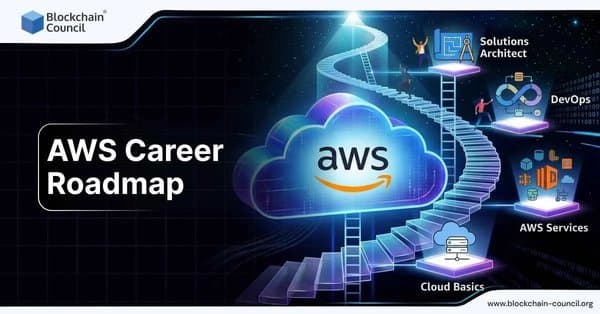
AWS Career Roadmap
A step-by-step guide to building a successful career in Amazon Web Services cloud computing.
Top 5 DeFi Platforms
Explore the leading decentralized finance platforms and what makes each one unique in the evolving DeFi landscape.