

AUKUS to Use AI to Assist in Submarine Tracking

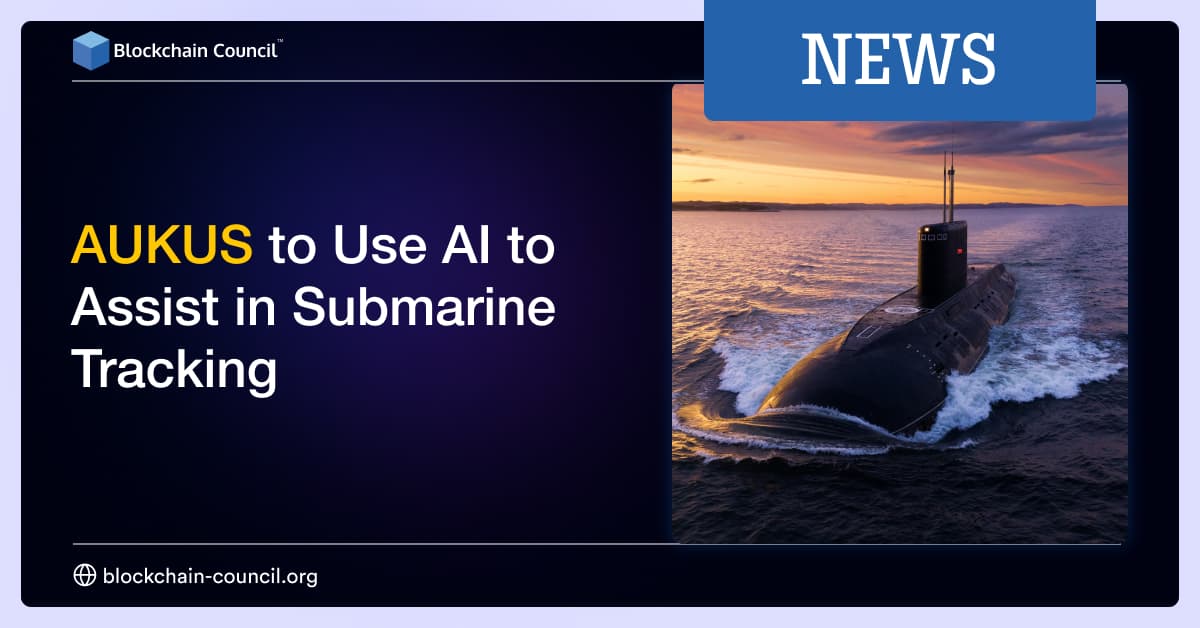
In a groundbreaking move, AUKUS, the trilateral defense alliance comprising Australia, the United States, and the United Kingdom, is set to revolutionize maritime security through the integration of artificial intelligence (AI) in submarine tracking. The announcement, made during a recent meeting in California, unveils a strategic initiative aimed at bolstering anti-submarine warfare capabilities through the innovative use of technology.
The defense ministers of the three nations jointly affirmed their commitment to leveraging AI on maritime patrollers, specifically Australia’s P-8A, to collect and process data from sonobuoys. This collaborative effort is expected to result in timely and high-volume data analysis, significantly enhancing the effectiveness of anti-submarine operations.

A key component of this initiative is the Resilient and Autonomous Artificial Intelligence Technologies (RAAIT) program. Designed to integrate AI and machine learning (ML) into force protection, precision targeting, and intelligence, surveillance, and reconnaissance, RAAIT is slated for operational deployment in 2024.
Australia, recognizing the importance of skilled personnel in supporting these technological advancements, has been actively assembling a team to feed relevant data into AI and ML models. This forward-looking approach underscores the commitment of AUKUS partners to stay at the forefront of technological innovation.
The scope of technological projects outlined in the joint statement goes beyond AI in submarine tracking. It encompasses space surveillance, autonomous maritime vehicles, and quantum navigation. The Harold E Holt radio facility in Exmouth, WA, is set to receive a new deep space radar instrument, facilitating 24-hour all-weather tracking of space debris and potentially hostile objects. This collaborative effort demonstrates the unity of purpose among AUKUS partners in addressing contemporary security challenges.
The decision to employ AI in tracking Chinese submarines in the Pacific comes in response to a Pentagon report warning of the growing threat posed by China’s expanding submarine fleet. A joint statement by the defense chiefs of the US, UK, and Australia emphasizes the use of AI algorithms in interpreting sonar data collected by underwater devices, providing a significant advantage in detecting Chinese submarines with greater speed and accuracy.
The urgency to innovate is underscored by projections indicating a substantial increase in China’s submarine force by 2025. AUKUS allies, flying the Boeing Company’s P-8 Poseidon naval aircraft, acknowledge the role of AI technology in making their operations more robust and precise. The integration of AI aims to counteract the effects of China’s military modernization and assertiveness on the global stage.
Recent incidents, such as the PLA warship allegedly injuring Australian divers, further highlight the need for swift technological advancements. AUKUS initiatives, labeled as Pillar II, focus on extensive technology-sharing, covering quantum technologies, sophisticated cybersecurity, and hypersonic weapons. This collaborative effort aims to enhance capability development and improve interoperability among the partner nations.
In a bid to encourage innovation, AUKUS announced an “innovation challenge series,” inviting private enterprises from the three nations to participate. The first challenge, centered on electronic warfare, is scheduled to be released in early 2024. Additionally, an industry forum will be established to guide policy, technical, and commercial frameworks, fostering the development and delivery of new capabilities.
As AUKUS pioneers AI integration in submarine tracking, the alliance solidifies its commitment to staying ahead in an ever-evolving geopolitical landscape. The utilization of advanced technologies, coupled with collaborative initiatives, positions AUKUS as a formidable force in safeguarding maritime security and countering emerging threats.
Related Articles
View All
News
AI and Blockchain Integration in 2026: Enterprise Use Cases Moving Into Production
AI and blockchain integration in 2026 is moving into production across finance, supply chain, healthcare, identity, and decentralized AI infrastructure.

News
AI and Blockchain Integration in Enterprises: Real-World Use Cases Driving Adoption
AI and blockchain integration in enterprises is moving into production across supply chain, finance, healthcare, identity, compliance, and data infrastructure.

News
AI and Blockchain Integration: Enterprise Use Cases Driving Market Growth
AI and blockchain integration is moving into production across supply chain, finance, identity, compliance, insurance, and healthcare.
Trending Articles
The Role of Blockchain in Ethical AI Development
How blockchain technology is being used to promote transparency and accountability in artificial intelligence systems.
AWS Career Roadmap
A step-by-step guide to building a successful career in Amazon Web Services cloud computing.

Top 5 DeFi Platforms
Explore the leading decentralized finance platforms and what makes each one unique in the evolving DeFi landscape.