

Shopify Web3 Loyalty Programs: Using NFTs to Boost Repeat Purchases and Customer Retention

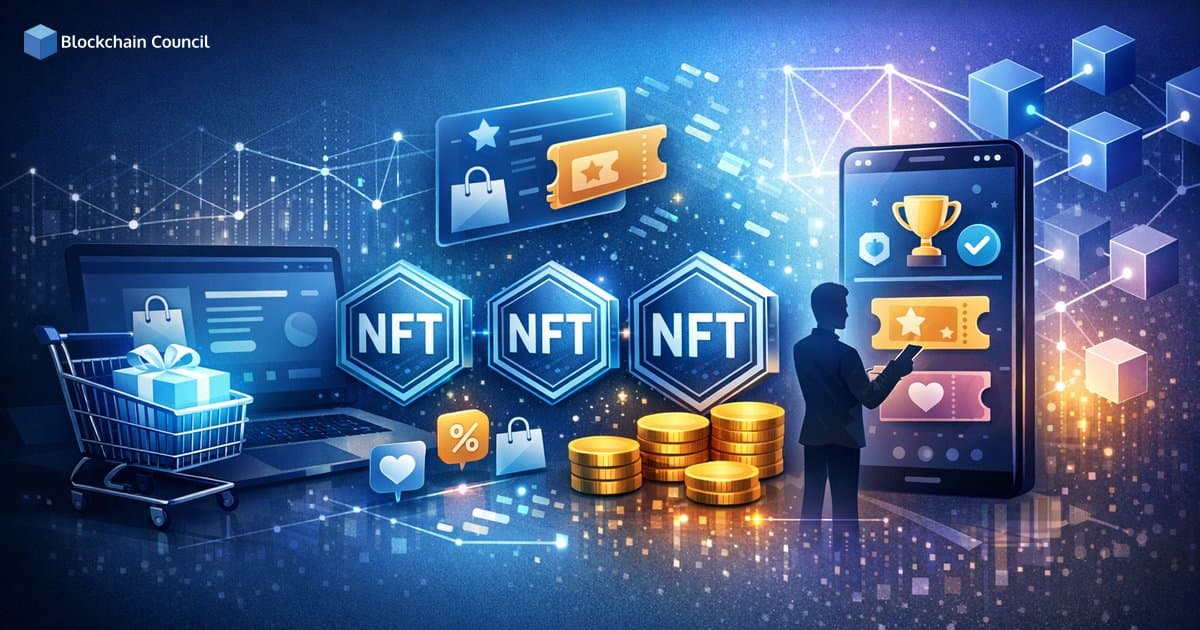
Shopify Web3 loyalty programs are emerging as a practical way for merchants to improve repeat purchases and customer retention by using NFTs as membership credentials, digital collectibles, and token-gated access keys. Unlike the speculative NFT campaigns that defined the 2021-2022 peak, the current direction is utility-first: perks, community, experiences, and better segmentation. Shopify has formalized support for NFT selling, NFT rewards, and tokengated commerce through platform documentation and its app ecosystem, making these programs more operationally realistic for Shopify brands.
This article explains what NFT-based loyalty looks like on Shopify today, where it works best, how to implement it with minimal friction, and what to consider around compliance and measurement.

What Are Shopify Web3 Loyalty Programs?
Shopify Web3 loyalty programs use blockchain-based tokens, most commonly non-fungible tokens (NFTs), to deliver loyalty benefits. In practice, the NFT becomes a customer-owned credential that can unlock ongoing value such as discounts, early access, VIP support, private content, or event entry.
Shopify's own documentation highlights several supported patterns, including selling NFTs, offering free NFTs as rewards, and using NFT ownership for tokengated benefits and customer segmentation. This positions NFTs as a commerce feature with retention outcomes rather than simply as a digital collectible.
NFT Loyalty vs. Traditional Points Programs
Points programs are typically closed systems controlled by the brand, often with expiration rules and limited portability.
NFT loyalty can function as a membership pass, proof of purchase, or access key that a customer holds, potentially across channels and collaborations.
The most effective designs do not replace points by default. They add a new layer of utility where access, identity, and community matter most.
Why NFTs Can Boost Repeat Purchases and Customer Retention
The core business case is retention economics. Research from firms like McKinsey and Bain consistently shows that retention is more cost-effective than acquisition, and that repeat buyers often deliver higher lifetime value than one-time shoppers. NFT loyalty aims to improve those same metrics by making benefits feel more tangible and persistent.
Key Mechanisms That Drive Repeat Purchases
Token-gated benefits: Ongoing access to member-only discounts, exclusive products, or early drops gives customers a clear reason to return.
Scarcity and collectability: Limited editions, set completion, and tier progression can motivate repeat engagement in categories where collecting behavior is natural.
Ownership psychology: An NFT can function as a membership card the customer owns, increasing emotional attachment and perceived value compared with points stored in a brand-controlled account.
Proof of purchase and authenticity: NFTs can act as digital receipts or certificates, particularly relevant for luxury goods, limited-edition products, and resale verification.
Better segmentation: NFT ownership can be used to create customer segments and trigger targeted campaigns for specific tiers or collections.
NFT secondary-market volumes have declined sharply from their peak, as tracked consistently by sources such as DappRadar. For loyalty programs, this shift is beneficial because it pushes design toward utility and customer experience rather than resale narratives.
Shopify Support for NFTs and Tokengated Commerce
Shopify has explicitly documented support for NFT commerce flows and tokengating patterns. Through its documentation and the Shopify App Store's NFT and tokengating category, merchants can build programs that include:
NFT sales directly through a Shopify storefront
Free NFT distribution as a purchase reward or engagement incentive
Tokengated experiences such as gated products, discounts, or events based on NFT ownership
Customer segmentation using NFT ownership signals for retention and acquisition campaigns
A significant implementation improvement is onboarding. Many merchants now use walletless or low-friction claiming, including email or SMS claim links and QR-code flows sometimes backed by embedded or custodial wallets. This reduces the most common blocker: customer wallet setup and education.
Best-Fit Use Cases for Shopify NFT Loyalty
NFT loyalty is not a universal fit. It performs best where the brand already has strong community energy, premium positioning, or collectible behavior. Common high-fit scenarios include fashion drops, streetwear, art-driven brands, sports or entertainment fandom, luxury authenticity, and community-led direct-to-consumer businesses.
Use Case A: Token-Gated Early Access and Exclusive Drops
A sneaker or streetwear brand issues a limited NFT to its top customers. Holders receive 24-hour early access to launches plus a holder-only product page. This rewards repeat buyers while smoothing demand spikes and reducing reliance on broad discounting.
Use Case B: NFT Membership Tiers
Tiered NFTs can mirror traditional loyalty tiers, with the NFT acting as the credential. Typical tier benefits include:
Higher discounts or free shipping
Priority support
VIP events or private community access
Limited products available only to members
Use Case C: NFT Receipt or Certificate of Authenticity
For premium goods, an NFT receipt can serve as a durable proof of purchase. Where resale is part of the category, authenticity credentials can reduce fraud and improve customer trust, provided the brand clearly explains what the NFT does and does not represent.
Use Case D: Referral and Advocacy Rewards
NFTs can function as a loyalty container tied to a customer identity, where actions like referrals or user-generated content participation unlock new perks. In practice, this can simplify program logic: one token can represent membership status plus earned benefits.
Use Case E: Cross-Brand Collaborations
Tokengated collaborations allow one NFT to unlock benefits across multiple partners, such as co-hosted events, shared drops, or reciprocal discounts. This approach can expand brand reach without relying entirely on paid acquisition.
Implementation Models on Shopify
Most Shopify NFT loyalty programs fit into one of four patterns. Choosing the right model is usually what separates a functional retention program from a stalled pilot.
Model 1: Wallet-Based NFT Loyalty
How it works: Customers connect a wallet to claim or use benefits.
Pros: Strong ownership and composability with Web3 ecosystems.
Cons: Higher friction and greater support burden.
Model 2: Walletless NFT Loyalty
How it works: Customers claim via email, SMS, or QR code with an embedded or managed wallet experience.
Pros: Better mainstream conversion and lower drop-off rates.
Cons: Greater dependency on tooling choices and custodial design decisions.
Model 3: NFT as an Access Pass Only
How it works: The NFT unlocks benefits but is not positioned as a collectible or trading asset.
Pros: Brand-safe positioning and simpler customer messaging.
Cons: Less community collecting energy.
Model 4: NFT Tied to Product Purchase (Digital Twin)
How it works: An NFT is issued automatically with a purchase as proof, receipt, or authenticity credential.
Pros: Clear value for premium products and limited editions.
Cons: Requires meaningful post-purchase utility to avoid becoming a novelty.
Compliance and Risk Considerations
NFT loyalty programs are not automatically exempt from legal and regulatory scrutiny. Merchants should treat them as customer rewards and access systems, and avoid framing them as investments.
Consumer protection: Avoid claims that imply guaranteed resale value or appreciation. Describe utility clearly and accurately.
Tax treatment: Rewards may carry tax implications depending on jurisdiction and program structure.
Privacy and data handling: Wallet identifiers, email and SMS delivery, and segmentation practices must align with GDPR, CCPA, and relevant local regulations.
Promotion and contest law: NFT giveaways can trigger sweepstakes requirements depending on how recipients are selected and what value is awarded.
Involve legal counsel early, particularly for cross-border programs or any design that enables transferability and resale.
How to Launch an NFT Loyalty Pilot on Shopify
Pick one primary use case: early access, membership tier, proof of purchase, or event entry.
Design utility before art: define the benefits, redemption flow, and how long perks last before focusing on visual design.
Minimize onboarding friction: prefer walletless claim links or QR-based claiming for mainstream audiences.
Integrate with retention workflows: use NFT ownership for segmentation, lifecycle emails, and targeted offers.
Pilot with your most loyal segment: start with customers who already engage with drops, referrals, or community channels.
Measure outcomes: track repeat purchase rate, claim rate, redemption rate, average order value, lifetime value, churn, and community engagement.
For teams building internal capability, structured training reduces implementation risk and improves program design. Blockchain Council offers relevant certifications including Certified Blockchain Expert, Certified Web3 Professional, and NFT and Metaverse-focused programs, as well as security-oriented tracks for teams handling wallets, token-gating, and customer data.
Conclusion
Shopify Web3 loyalty programs that use NFTs can improve repeat purchases and customer retention when designed as utility-first memberships rather than speculative collectibles. Shopify's support for NFT selling, NFT rewards, and tokengated commerce makes these programs feasible for merchants, but success still depends on reducing UX friction, communicating benefits clearly, and targeting the right customer segment.
The strongest Shopify NFT loyalty strategies resemble modern loyalty architecture more than NFT campaigns: tokenized access, tiered membership, proof of purchase, and community-led experiences, delivered through walletless onboarding where possible and measured like any other retention initiative.
Related Articles
View All
Info
Shopify Security Checklist for 2026: Protect Customer Data, Payments, and Admin Access
Shopify Security Checklist for 2026 covering admin access, app and theme risks, privacy compliance, payments, fraud controls, and incident response steps.

Info
Behind the Curriculum: How Blockchain Council Kept Its Blockchain, AI, and Web3 Programs Industry-Relevant for 10 Years
Explore the curriculum mechanisms that helped Blockchain Council keep blockchain, AI, and Web3 certifications industry-relevant across 10 years of rapid technology change.

Info
Cockroach Janta Party and Web3 Security: Persistence, Attack Surface, Defense-in-Depth
Learn how the Cockroach Janta Party meme movement maps to Web3 security threats, highlighting persistence, attack surfaces, and defense-in-depth best practices.
Trending Articles
How Blockchain Secures AI Data
Understand how blockchain technology is being applied to protect the integrity and security of AI training data.

Can DeFi 2.0 Bridge the Gap Between Traditional and Decentralized Finance?
The next generation of DeFi protocols aims to connect traditional banking with decentralized finance ecosystems.
How to Install Claude Code
Learn how to install Claude Code on macOS, Linux, and Windows using the native installer, plus verification, authentication, and troubleshooting tips.