Ransomware, Data Integrity, and Blockchain: A Cyber Defense Use Case Beyond Cryptocurrencies
 Ini-Mfon Udofia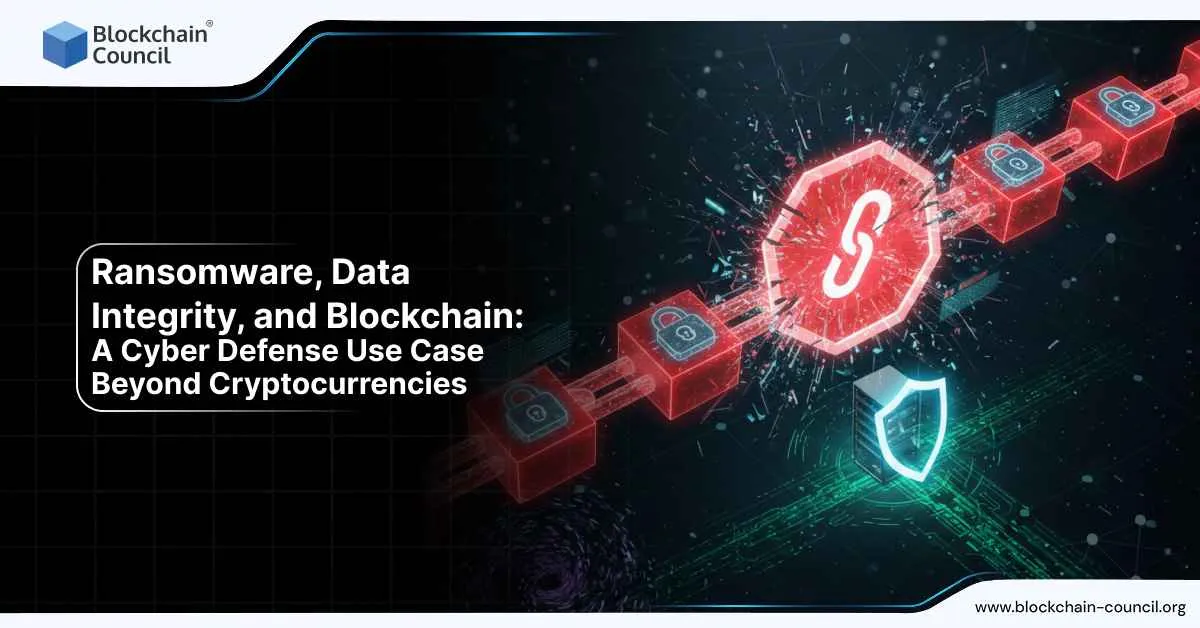
Summary:
- Ransomware attacks disrupt operations by encrypting or corrupting critical organizational data.
- Blockchain technology protects data integrity through immutable, verifiable records.
- Blockchain enables forensic traceability during and after ransomware incidents.
- Organizations use blockchain to build long-term ransomware resilience.
- Blockchain Council provides training and certifications on blockchain-based cyber defense systems.
I. Introduction
Ransomware remains one of the most damaging cybersecurity threats globally.
Attackers target enterprises, governments, and healthcare systems.
Traditional defenses focus on prevention but often fail during recovery.
After attacks, organizations struggle to verify data authenticity.
Blockchain technology introduces immutability, strengthening data integrity assurance.
Cybersecurity professionals develop these defenses through Blockchain Council courses and certifications.

II. Understanding Ransomware Threats
A. How Ransomware Attacks Work
Ransomware typically enters systems through phishing emails or software vulnerabilities.
Attackers exploit weak credentials or unpatched systems.
Attack Lifecycle
Initial access enables malware deployment across connected systems.
Ransomware encrypts files or modifies database records silently.
Post-Attack Damage
Attackers frequently delete backups and alter system logs.
This prevents organizations from understanding what changed.
Trust in restored systems becomes uncertain.
B. Cybersecurity Impact of Ransomware
Ransomware attacks extend beyond data encryption.
They damage trust, operations, and regulatory compliance.
Organizational Consequences
- Prolonged system downtime.
- Financial losses from ransom payments.
- Legal exposure due to compliance failures.
Why Traditional Systems Fail
Centralized storage allows attackers to erase evidence easily.
Log manipulation hides attacker actions completely.
III. Blockchain and Data Integrity Protection
A. What Is Data Integrity?
Data integrity ensures information remains accurate, complete, and unchanged.
It is critical during incident response and recovery.
Importance During Cyber Attacks
Without integrity verification, restored data may still be compromised.
Organizations risk reinfecting systems unknowingly.
Blockchain as an Integrity Anchor
Blockchain stores cryptographic hashes representing original data states.
Hashes act as immutable fingerprints for verification.
B. How Blockchain Preserves Integrity
Blockchain distributes records across multiple nodes.
No single attacker can alter records unnoticed.
Verification Process
- Generate data hashes before storage.
- Anchor hashes on blockchain ledgers.
- Compare hashes during recovery.
Security Benefits
- Immediate detection of unauthorized changes.
- Guaranteed tamper evidence.
- Trusted validation during incident response.
IV. Forensic Traceability Using Blockchain
A. Immutable Audit Trails
Blockchain creates permanent, time-stamped event records.
Once written, records cannot be modified or deleted.
Role in Investigations
Investigators reconstruct attack timelines accurately.
Evidence remains trustworthy throughout investigations.
Forensic Advantages
- Clear attribution of system changes.
- Reliable court-admissible evidence.
- Improved post-incident analysis.
B. Enterprise and Government Applications
Many sectors require reliable forensic records.
Blockchain meets strict audit and compliance requirements.
Use Case Examples
- Healthcare access logging.
- Financial transaction auditing.
- Government record protection.
Skills and Training
Security teams learn forensic blockchain deployment through Blockchain Council certifications.
V. Building Ransomware Resilience with Blockchain
A. Blockchain-Enabled Recovery Validation
Recovery requires certainty that restored data is authentic.
Blockchain provides an independent verification source.
Recovery Validation Workflow
- Restore data from backups.
- Compare hashes with blockchain records.
- Approve recovery only after verification.
Operational Benefits
- Faster recovery decisions.
- Reduced ransom payment pressure.
- Increased executive confidence.
B. Long-Term Resilience Benefits
Blockchain shifts ransomware defense from reactive to proactive.
Integrity assurance exists before attacks occur.
Strategic Advantages
- Improved business continuity planning.
- Reduced downtime costs.
- Stronger cyber insurance posture.
VI. Implementation Considerations
A. Practical Deployment Models
Organizations should avoid storing sensitive data on-chain.
Only hashes and metadata should be recorded.
Architectural Considerations
- Use permissioned blockchains for enterprise environments.
- Integrate with existing SIEM systems.
- Maintain strict access controls.
Governance and Training
Security governance ensures blockchain logs remain trustworthy.
Teams build competence through Blockchain Council courses and certifications.
VII. Conclusion
Blockchain technology extends cyber defense beyond cryptocurrency applications.
It preserves data integrity during ransomware attacks.
Immutable records enable accurate forensic traceability.
Blockchain strengthens recovery confidence and organizational resilience.
Professionals master these defenses through Blockchain Council training and certifications.