
What Is Staking and How Does It Generate Passive Income?

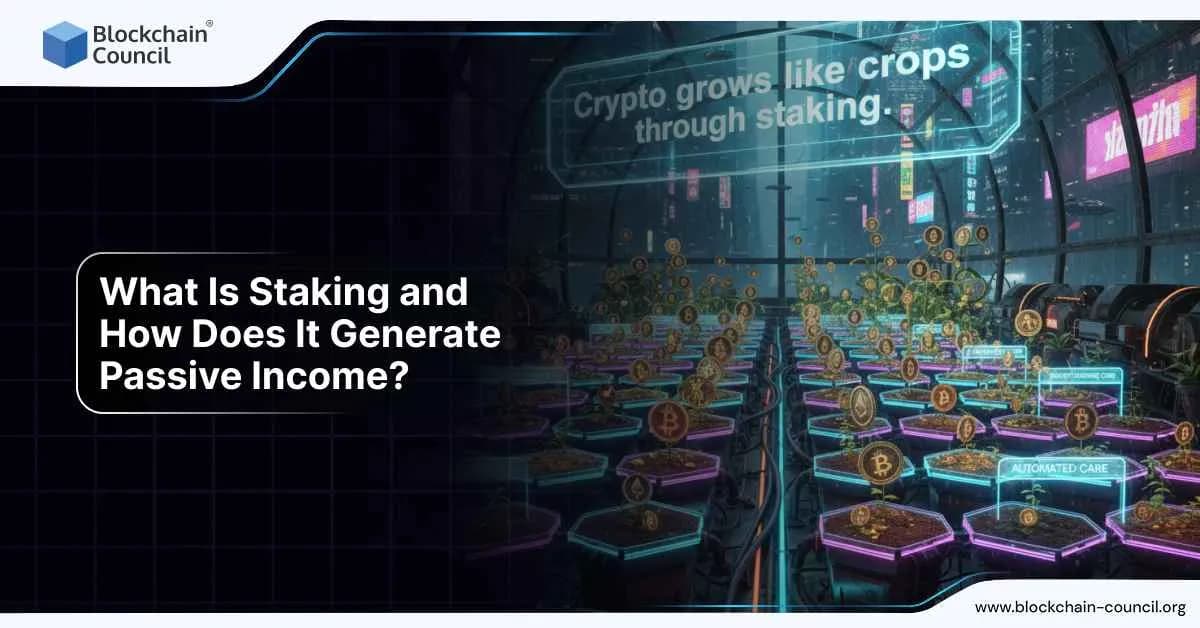
Staking is one of the most popular ways crypto holders earn passive income without trading or mining. Instead of spending money on expensive hardware or constantly watching charts, you can lock up your coins to help secure a blockchain and earn rewards in return. If you’re interested in exploring how staking connects to bigger investment opportunities, the AI powered investing certification is a useful place to start.
What Is Staking
Staking is the act of committing your cryptocurrency to support a blockchain network that runs on Proof of Stake (PoS) or similar systems. When you stake, your tokens are locked up to help confirm transactions and maintain network security. In return, the network rewards you with more tokens. This makes staking an attractive option for long-term holders who want their crypto to work for them instead of just sitting in a wallet.

How Staking Works
Validators and Delegators
There are two main roles in staking. Validators run the infrastructure that checks transactions and adds new blocks to the chain. They need to hold a minimum amount of tokens and maintain reliable hardware. Delegators are everyday holders who don’t want to run a validator themselves. They simply assign their tokens to a validator and share in the rewards.
Lock-Ups and Fees
Some blockchains require you to lock up your tokens for a set period. During this time, you cannot sell or move them. Platforms and validators may also charge a commission on rewards, which reduces your net returns.
Liquid Staking
In 2025, liquid staking has become very popular. This method gives you a token that represents your staked position. You can then use that token in decentralized finance (DeFi) apps while still earning staking rewards. This flexibility makes staking more attractive but also adds extra risk.
How Staking Generates Passive Income
Staking pays rewards, usually in the same cryptocurrency you staked. These rewards come from protocol incentives and transaction fees. Many platforms let you compound your rewards automatically, meaning the coins you earn are restaked to generate even more income.
The actual returns depend on several factors:
- The network and its reward rate.
- How many people are staking. More stakers usually mean smaller rewards per person.
- The amount of time you stake. Longer staking often pays more.
Staking in 2025
More blockchain are adopting Proof of Stake, and institutional interest in staking is rising. Staking-as-a-service platforms make it easier for companies to participate without running their own infrastructure. Liquid staking derivatives like stETH are also common, giving holders more ways to use their staked assets.
This shift means staking is no longer just for tech-savvy users. It’s becoming part of mainstream crypto finance. If you want to develop practical skills for this growing market, a structured Crypto certification can help.
Risks of Staking
Staking is not risk-free. Some of the biggest challenges include:
- Volatility: If the token you stake loses value, rewards may not cover the drop.
- Lock-up periods: You may not be able to access your funds when you need them.
- Slashing: Validators that fail or act dishonestly can lose part of their stake, which also impacts delegators.
- Platform risk: If you use an exchange or staking service, your funds depend on their security and reliability.
- Regulation and taxes: Rules on staking vary across countries, and tax treatment is still developing.
Learning how to manage and analyze risk is important. The Data Science Certification can help you build the skills to make smarter decisions with staking and other investments.
Popular Staking Options
Ethereum, Cardano, Polkadot, and Solana are among the most popular networks for staking. Annual returns typically range from a few percent to the low teens, depending on conditions. Some smaller coins promise higher yields, but they usually carry higher risks too.
For those interested in the bigger business picture, including how staking shapes new opportunities, the Marketing and Business Certification is a strong choice. And if you want to understand the technology behind staking at its foundation, blockchain technology courses are worth exploring.
Staking at a Glance
| Aspect | Key Details | Why It Matters |
| Definition | Locking crypto to support PoS networks | Provides security and earns rewards |
| Roles | Validators run nodes, delegators stake through them | Makes staking accessible to all holders |
| Rewards | Paid in the same token, from fees and incentives | Creates passive income |
| Lock-Ups | Some networks require fixed periods | Limits liquidity |
| Liquid Staking | Derivatives like stETH or wstETH | Allows use of staked assets in DeFi |
| Risk Factors | Price drops, slashing, platform risk | Impact on returns and safety |
| Popular Networks | Ethereum, Cardano, Polkadot, Solana | Widely available staking choices |
| Average Returns | Often 2–15% annually | Helps estimate potential income |
| Trends in 2025 | Institutional staking, restaking, ESG focus | Expanding role of staking in finance |
| Tax & Regulation | Evolving rules worldwide | Affects reporting and compliance |
Conclusion
Staking is a simple way to put your crypto to work. By committing tokens to a Proof of Stake network, you support security while earning rewards. In 2025, staking continues to grow, fueled by new tools like liquid staking and greater institutional participation. At the same time, risks remain, from volatility to regulatory uncertainty. For investors and learners alike, staking is not just about earning passive income — it’s about understanding how the future of blockchain finance is unfolding.
Related Articles
View All
Cryptocurrency
Crypto Bull Run: Why Crypto Needs a Reset Before the Next Rally
Bitcoin is consolidating near $68K-$72K amid fear, macro risks, and whale accumulation. This reset may set the foundation for the next Crypto Bull Run.

Cryptocurrency
Regulation and Ethics of AI Crypto Trading
Explore regulation and ethics of AI crypto trading, including SEC-CFTC updates, manipulation risks, compliance controls, and how to build responsible automation.

Cryptocurrency
AI for Arbitrage in Crypto: Detecting Cross-Exchange Price Gaps and Managing Execution Risk
Learn how AI for arbitrage in crypto finds cross-exchange price gaps, filters spreads after fees and slippage, and controls execution risk across CEX, DEX, and cross-chain routes.
Trending Articles

The Role of Blockchain in Ethical AI Development
How blockchain technology is being used to promote transparency and accountability in artificial intelligence systems.

AWS Career Roadmap
A step-by-step guide to building a successful career in Amazon Web Services cloud computing.
Top 5 DeFi Platforms
Explore the leading decentralized finance platforms and what makes each one unique in the evolving DeFi landscape.