

Trump Administration Rescinds Caution on Crypto in 401(k) Plans
 Michael Willson
The Trump administration has officially withdrawn the cautionary guidance on cryptocurrency investments in 401(k) plans that was put in place during the Biden administration. This shift means that fiduciaries now have the freedom to consider offering crypto assets as part of retirement plans without facing direct government discouragement. Let’s dive into what this change means for investors, plan providers, and the broader financial landscape.
What Led to the Policy Change?
The previous guidance issued in 2022 by the Department of Labor advised fiduciaries to exercise “extreme care” before offering cryptocurrency options in retirement plans due to concerns about market volatility and investor protection. Critics argued that this approach stifled innovation and limited investment choice. Under the Trump administration, this caution has been removed, aligning with its pro-crypto stance and emphasis on deregulation.

Why is Crypto in 401(k) Plans Controversial?
Cryptocurrency remains a volatile and largely unregulated asset class. While Bitcoin and other digital currencies have delivered significant returns in some cases, they have also seen dramatic price swings that can erode investor confidence. This volatility has led many financial advisors to recommend limiting crypto exposure in retirement portfolios to a small percentage of total assets.
Fiduciary Discretion and Investor Autonomy
Under the new approach, the Department of Labor has returned to a neutral stance, leaving it up to plan sponsors to decide whether or not to include crypto investments in their 401(k) offerings. This change is meant to empower fiduciaries to make decisions based on their own assessments of risk, diversification, and investor interests, rather than following strict government mandates.
Advantages and Risks for Investors
Advantages:
- Increased investment choice for retirement portfolios.
- Potential for high returns during bull markets.
- Aligns with the growing mainstream acceptance of crypto assets.
Risks:
- High volatility that can result in significant losses.
- Lack of regulatory oversight compared to traditional assets.
- Complexity of crypto investments may confuse or mislead less experienced investors.
Factors Influencing Decisions on Crypto Investments in the USA

The Role of Major Financial Players
Large financial firms like Fidelity have already started to embrace crypto in retirement plans. Fidelity’s Digital Assets Account allows plan sponsors to include Bitcoin allocations in 401(k) portfolios. With the new policy, companies like Fidelity have fewer regulatory obstacles, which may accelerate crypto adoption among institutional players.
Future of Crypto in Retirement Portfolios
Experts predict that while the policy shift opens the door for crypto in 401(k) plans, actual adoption will be gradual. Fiduciaries must still meet their obligations under ERISA to act in the best interest of plan participants. This includes thorough due diligence, education, and risk assessment.
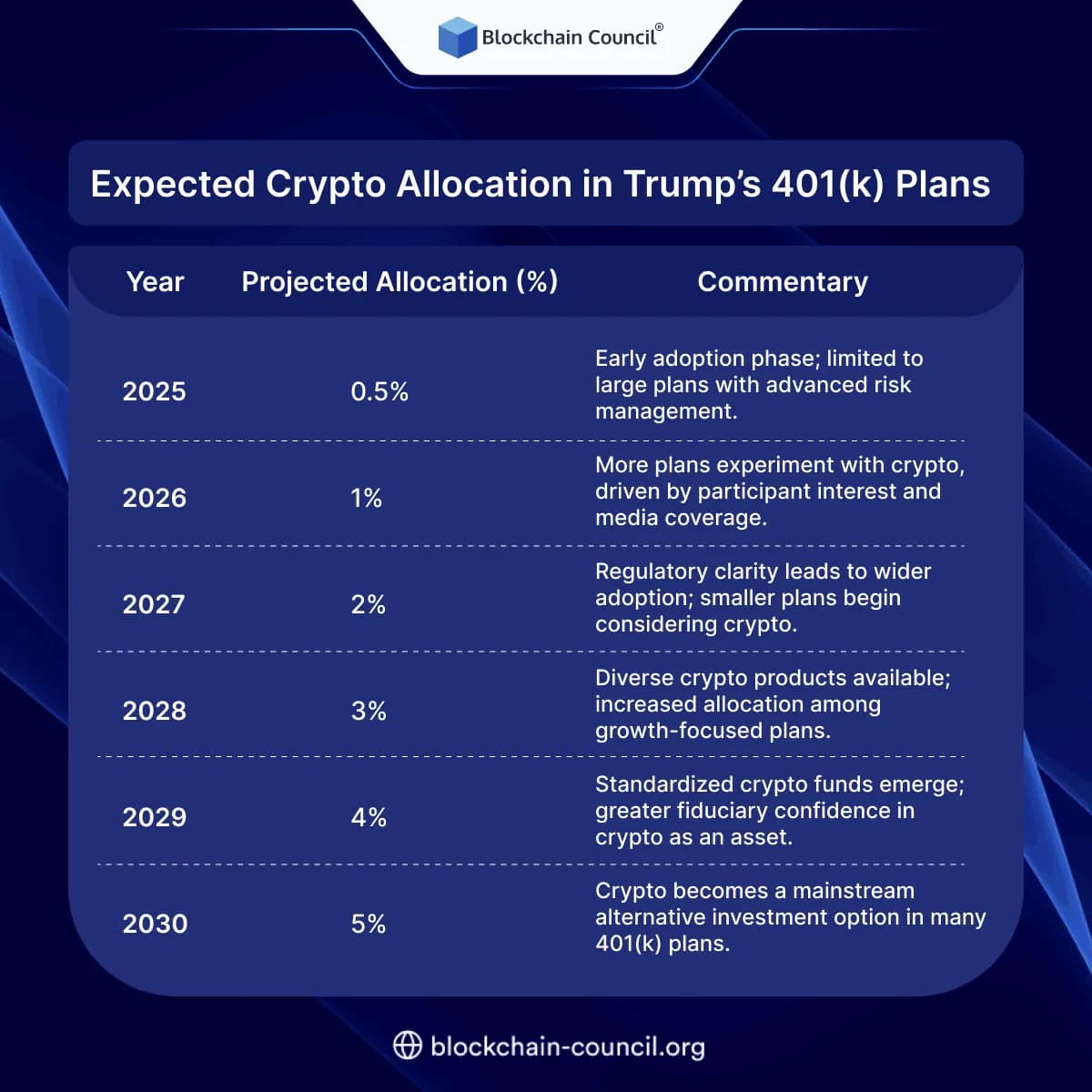
Expected Crypto Allocation in Trump’s 401(k) Plans
Building Knowledge and Skills
As crypto becomes more mainstream, there’s a growing need for professionals who understand the risks and rewards of these investments. The Crypto Certification helps individuals learn the ins and outs of crypto trading, while the Data Science Certification can empower them to analyze blockchain data for better investment decisions. For those looking to navigate the business side of crypto, the Marketing and Business Certification offers valuable insights.
Conclusion
The Trump administration’s decision to rescind cautionary guidance on crypto in 401(k) plans marks a significant shift in US policy. While it empowers fiduciaries with greater discretion, it also places responsibility on them to carefully evaluate the risks and rewards of including crypto in retirement portfolios. As the crypto market evolves, both investors and plan sponsors must stay informed to make wise investment choices.
Related Articles
View All
Cryptocurrency
The Future of Crypto: Regulation, Institutional Adoption & Digital Assets
Explore the Future of Crypto, from regulation and spot ETFs to stablecoin payments, CBDCs, and tokenised assets. A clear, up-to-date guide for beginners and professionals.

Cryptocurrency
Beyond Bitcoin: DeFi, Stablecoins, NFTs & the Expanding Crypto Ecosystem
Go Beyond Bitcoin and explore DeFi, stablecoins, NFTs, DAOs, tokenisation, and Web3. A clear guide to how the expanding crypto ecosystem works and how its parts connect.

Cryptocurrency
Understanding the Crypto Market: Prices, Volatility & What Moves Crypto
Understanding the Crypto Market made simple. Learn how crypto prices are set, what market cap and liquidity mean, why volatility happens, and which factors move prices.
Trending Articles
The Role of Blockchain in Ethical AI Development
How blockchain technology is being used to promote transparency and accountability in artificial intelligence systems.

Top 5 DeFi Platforms
Explore the leading decentralized finance platforms and what makes each one unique in the evolving DeFi landscape.
How Blockchain Secures AI Data
Understand how blockchain technology is being applied to protect the integrity and security of AI training data.