

Prompt Engineering for Claude Mythos
 Suyash Raizada
Prompt engineering for Claude Mythos in 2026 is less about clever hacks and more about reliable, repeatable patterns that help business teams get consistent outcomes. Frontier models like Claude 3.7 Opus support very long context windows (2M+ tokens) and multi-step reasoning chains of 30 or more steps, but business value still depends on how clearly you frame goals, constraints, context, and outputs. When prompting is treated as a structured discipline, teams can unlock significant efficiency gains across strategy analysis, content generation, and workflow automation.
This guide presents 15 high-impact prompt patterns optimized for Claude-style models and tailored to cross-functional business teams spanning marketing, finance, operations, product, and legal. It also covers how to operationalize these patterns using templates, version control, and prompt chaining.

Working on Prompt Engineering for Claude Mythos requires structured thinking, clarity, and advanced prompt design techniques. Using Claude AI effectively depends on how well prompts are crafted and optimized. The Claude Code Certification helps you master these prompt engineering frameworks.
AI-powered threats like NemoClaw demand advanced defense strategies-build your skills with an AI certification, specialize via Cyber security certifications, and understand risk awareness through a Digital marketing course.
Why Prompt Engineering Still Matters for Claude Models in 2026
Many basic prompting techniques are increasingly built into frontier models, which means plain language often produces acceptable results. Structured prompting remains critical, however, in five situations where business teams need dependable performance:
Complex reasoning (strategy, prioritization, trade-offs)
Reliability under uncertainty (forecasting, risk assessment, ambiguous inputs)
Multi-step tasks (research to brief, brief to plan, plan to execution)
Creative ideation (campaigns, naming, positioning alternatives)
Agentic workflows (prompt chaining, semi-autonomous task pipelines)
Demand for prompt engineering skills rose sharply from 2024 to 2025 and continued into 2026, particularly across regulated and high-stakes sectors such as finance and healthcare. Analysts project sustained annual growth through 2030 for prompt engineering services and tooling. Even as models improve, organizations that standardize prompting practices reduce rework, improve compliance, and scale AI usage across teams more effectively.
The 6 Core Elements of Effective Prompts (Claude-Friendly)
Guidance across major model providers converges on a consistent architecture. For prompt engineering for Claude Mythos, these six elements form a durable checklist:
Role assignment: "Act as a business strategist" or "Act as a compliance analyst."
Constraints: word limit, tone, exclusions, time horizon, and assumptions.
Context: paste relevant documents, notes, metrics, transcripts, policies, or customer research. Claude's long context window is a practical advantage when used fully.
Step-by-step instructions: define the stages of work clearly (analyze, propose, validate, finalize).
Output format: tables, JSON, bullet points, structured sections, or decision matrices.
Examples: one to three examples to anchor tone and structure.
Operational tip: Treat high-value prompts like code. Template them, name them, version them, and review changes. This is especially important when prompts are embedded in recurring business processes.
15 High-Impact Prompt Patterns for Business Teams (Claude-Optimized)
The patterns below are most likely to improve outcomes quickly for teams using Claude models. Each includes a compact, business-oriented prompt starter you can adapt directly.
1) Zero-Shot Pattern
Use when: You want speed and can tolerate some variability in output.
Prompt starter: "Act as a CFO. Summarize the Q4 sales data below and flag anomalies, probable drivers, and 3 follow-up questions for the sales VP."
2) Few-Shot Pattern (1 to 3 Examples)
Use when: You need consistency across a team in tone, structure, or scoring.
Prompt starter: "Use the examples to produce a competitive intel brief in the same format. Examples: [insert 1-2 strong briefs]. Now analyze Competitor X using the dataset below."
3) Chain-of-Thought Cue (Explicit Reasoning)
Use when: Planning, sequencing, trade-offs, or multi-constraint decisions are involved.
Prompt starter: "Think step-by-step. Build a 90-day go-to-market plan for Product Y with assumptions, dependencies, and risks."
Note: Claude may not require an explicit chain-of-thought cue for routine tasks, but including it can improve structure on complex planning work.
4) Self-Consistency Pattern (Multiple Solutions, Then Select)
Use when: Forecasting, estimation, or high-uncertainty questions where a single answer may be unreliable.
Prompt starter: "Generate 3 independent approaches to estimating churn risk from the inputs. Compare them and select the most robust method with rationale."
5) Meta Prompting (AI Improves the Prompt)
Use when: Stakeholders provide vague requests and you need a clean brief quickly.
Prompt starter: "Improve my prompt for clarity, constraints, and output format. Ask up to 5 clarifying questions first. Prompt: [paste]."
6) Reverse Prompting (Work Backward from an Ideal Output)
Use when: You have a target artifact such as a memo, plan, or executive brief, and want the best input question to reproduce it reliably.
Prompt starter: "Given this ideal output, write the best prompt that would produce it, including role, constraints, required inputs, and format."
7) Pre-Flight Prompting (Preview, Critique, Iterate Before Final)
Use when: Reports and executive communications where errors carry significant cost.
Prompt starter: "Before answering, create a draft outline. Critique the outline for missing data and weak logic. Propose improvements. Then produce the final report."
8) Tree of Thoughts (Branch Reasoning Paths)
Use when: Risk assessment, scenario planning, and strategic exploration require structured divergent thinking.
Prompt starter: "Create 3 solution branches for entering Market Z: conservative, balanced, aggressive. For each, list assumptions, costs, risks, and success metrics. Recommend one."
9) Role Plus Constraints Pattern
Use when: You need fast, bounded output that matches stakeholder expectations.
Prompt starter: "Act as a B2B marketer. Propose 3 campaign concepts for [ICP] under 120 words each, with channel mix and a single KPI per concept."
10) Multimodal Pattern (Documents, Images, PDFs)
Use when: Teams work from dashboards, screenshots, or PDFs and need rapid interpretation.
Prompt starter: "Review the attached PDF and extract: (1) KPI table, (2) anomalies, (3) 5 executive takeaways, (4) questions to validate data quality."
11) Agentic Chaining Pattern (Pipeline of Prompts)
Use when: You want scalability across research, synthesis, planning, and deliverable production.
Prompt starter: "You are my project agent. Step 1: produce a research plan. Step 2: generate interview questions. Step 3: summarize findings template. Step 4: draft the final memo."
Best practice: Break work into checkpoints so humans can review and approve before each subsequent stage.
12) Output Formatting Pattern (Tables, JSON, Checklists)
Use when: Outputs feed dashboards, tickets, SOPs, or analytics tools.
Prompt starter: "Respond as a table with columns: KPI | Definition | Target | Actual | Gap | Likely cause | Next action."
13) Self-Critique Pattern (Quality, Bias, Compliance Checks)
Use when: High-stakes communications, policy-sensitive content, or regulated workflows require additional scrutiny.
Prompt starter: "Draft the policy summary. Then critique it for ambiguity, missing exceptions, and potential bias. Provide a revised version and a short risk note."
14) Templated Workflows Pattern (Standard Operating Prompts)
Use when: Repeated tasks such as sales follow-ups, weekly business reviews, and customer support triage need standardized handling.
Prompt starter: "Use this template exactly: Context, Key metrics, What changed, Why it changed, Risks, Next actions, Owner, Due date. Input data: [paste]."
Operational tip: Store templates in a shared library and assign owners responsible for keeping them current.
15) Hybrid with Tools Pattern (Claude Plus IDEs and Automation)
Use when: Building internal apps, analytics scripts, or workflow automation.
Prompt starter: "Generate a small prototype for [business app]. Include file structure, code, and a test plan. Assume we will run this in our standard tooling."
For engineering-adjacent teams, this pattern becomes more effective when paired with modern coding environments and structured review steps.
How Business Teams Can Operationalize These Patterns
Prompt patterns deliver their highest value when they move from individual use to consistent team practice. Five steps support that transition:
Create a prompt library: tag prompts by function (marketing, finance, ops) and by pattern type (few-shot, pre-flight, tree of thoughts).
Use version control: track changes, roll back regressions, and document what improved outcomes.
Add evaluation rubrics: define what a quality output looks like in terms of accuracy, completeness, tone, and policy alignment.
Implement prompt chaining with approvals: add human checkpoints before risky steps such as external recommendations or stakeholder communications.
Train teams on repeatable frameworks: structured learning accelerates adoption. Relevant programmes include prompt engineering certification, generative AI certification, and AI governance or compliance-focused training.
To stay ahead of evolving malware, combine AI and cybersecurity expertise with an Agentic AI Course, practical coding via a Python Course, and explore real-world scenarios through an AI powered marketing course.
Conclusion: Prompt Engineering for Claude Mythos Is a Business Capability
Prompt engineering for Claude Mythos is no longer a collection of tricks. In 2026, it is an operational discipline that helps teams use long context windows, advanced reasoning, and agentic workflows to produce reliable business outputs. Start with the highest-leverage patterns: role plus constraints, pre-flight prompting, output formatting, few-shot consistency, and tree of thoughts for decisions under uncertainty. Then formalize what works through templates, chaining, and governance so results scale consistently across the organization.
FAQs
1. What is prompt engineering for Claude Mythos?
Prompt engineering for Claude Mythos refers to designing structured inputs to guide Claude’s responses effectively. It focuses on clarity, context, and output control.
2. What does “Claude Mythos” mean in AI usage?
Claude Mythos is often used informally to describe advanced prompt techniques or patterns. It reflects community-driven methods for improving AI outputs.
3. Why is prompt engineering important for Claude?
Well-structured prompts improve accuracy, relevance, and consistency. They help Claude understand user intent and deliver better results.
4. How can beginners start with Claude prompt engineering?
Beginners should use clear, simple instructions and specify the desired output. Adding context and examples improves response quality.
5. What are the key elements of an effective Claude prompt?
Key elements include clear instructions, context, constraints, and output format. These components guide the AI toward precise responses.
6. How does context improve Claude’s responses?
Context helps Claude understand the purpose and background of a task. This leads to more accurate and relevant outputs.
7. What role does formatting play in prompt engineering?
Formatting instructions like lists or sections improve readability. They also help Claude organize responses more effectively.
8. Can Claude handle multi-step prompts?
Yes, Claude can process multi-step instructions when clearly structured. Breaking tasks into steps improves reliability.
9. What are common mistakes in Claude prompting?
Common mistakes include vague instructions, lack of context, and overly complex prompts. Clear and concise input works best.
10. How can users control tone and style in Claude outputs?
Users can specify tone, such as formal or casual, within the prompt. This helps tailor responses to specific needs.
11. What is role-based prompting in Claude?
Role-based prompting assigns a perspective, such as “act as a teacher.” This helps generate more focused and relevant responses.
12. How does iterative prompting improve results?
Users can refine prompts based on previous outputs. This step-by-step approach enhances accuracy and usefulness.
13. Can Claude generate structured outputs like tables or lists?
Yes, Claude can produce structured outputs when requested. Clear formatting instructions ensure better organization.
14. How does prompt length affect performance?
Longer prompts can provide more context but may reduce clarity if not structured well. Balance is important for effective results.
15. What are advanced techniques in Claude prompt engineering?
Advanced techniques include chaining prompts, adding constraints, and using examples. These methods improve precision and control.
16. How can prompt engineering help with coding tasks?
Clear instructions and examples help Claude generate accurate code. Specifying language and requirements improves results.
17. How does Claude handle ambiguous prompts?
Claude may produce broad or unclear answers. Adding detail and specificity reduces ambiguity.
18. What tools can support Claude prompt engineering?
Tools include prompt libraries, templates, and testing platforms. These help users refine and optimize prompts.
19. How can businesses benefit from Claude prompt engineering?
Businesses can improve productivity and automate workflows. Better prompts lead to more reliable and efficient outputs.
20. What is the future of prompt engineering for Claude?
Prompt engineering will become more standardized and integrated into workflows. Users will rely on structured approaches for consistent results.
Related Articles
View All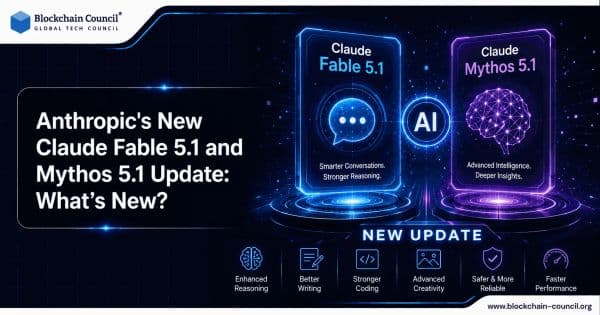
Claude Ai
Anthropic's New Claude Fable 5.1 and Mythos 5.1 Update: What's New?
Anthropic’s Claude Fable 5.1 and Mythos 5.1 update brings stronger coding, long-running agentic workflows, research, vision, and knowledge-work capabilities. Fable 5.1 is generally available and introduces cheaper cache reads, potentially reducing typical workload costs by about 25% and highly agentic workloads by up to 45%. Mythos 5.1 uses the same underlying model but offers expanded cybersecurity and biology capabilities to vetted organizations through trusted-access programs.

Claude Ai
Loop Engineering vs Prompt Engineering: Key Differences, Use Cases, and Future Trends
Loop engineering vs prompt engineering explained with practical differences, AI agent use cases, Claude AI examples, career trends, and learning paths.

Claude Ai
Prompt Loop Engineering: Building Self-Improving Generative AI Workflows
Learn how prompt loop engineering uses maker-checker agents, evals, logging, and CI/CD gates to build safer self-improving AI workflows.
Trending Articles
The Role of Blockchain in Ethical AI Development
How blockchain technology is being used to promote transparency and accountability in artificial intelligence systems.

Top 5 DeFi Platforms
Explore the leading decentralized finance platforms and what makes each one unique in the evolving DeFi landscape.

Can DeFi 2.0 Bridge the Gap Between Traditional and Decentralized Finance?
The next generation of DeFi protocols aims to connect traditional banking with decentralized finance ecosystems.