

Claude in CI/CD: Securing Agentic Pipelines

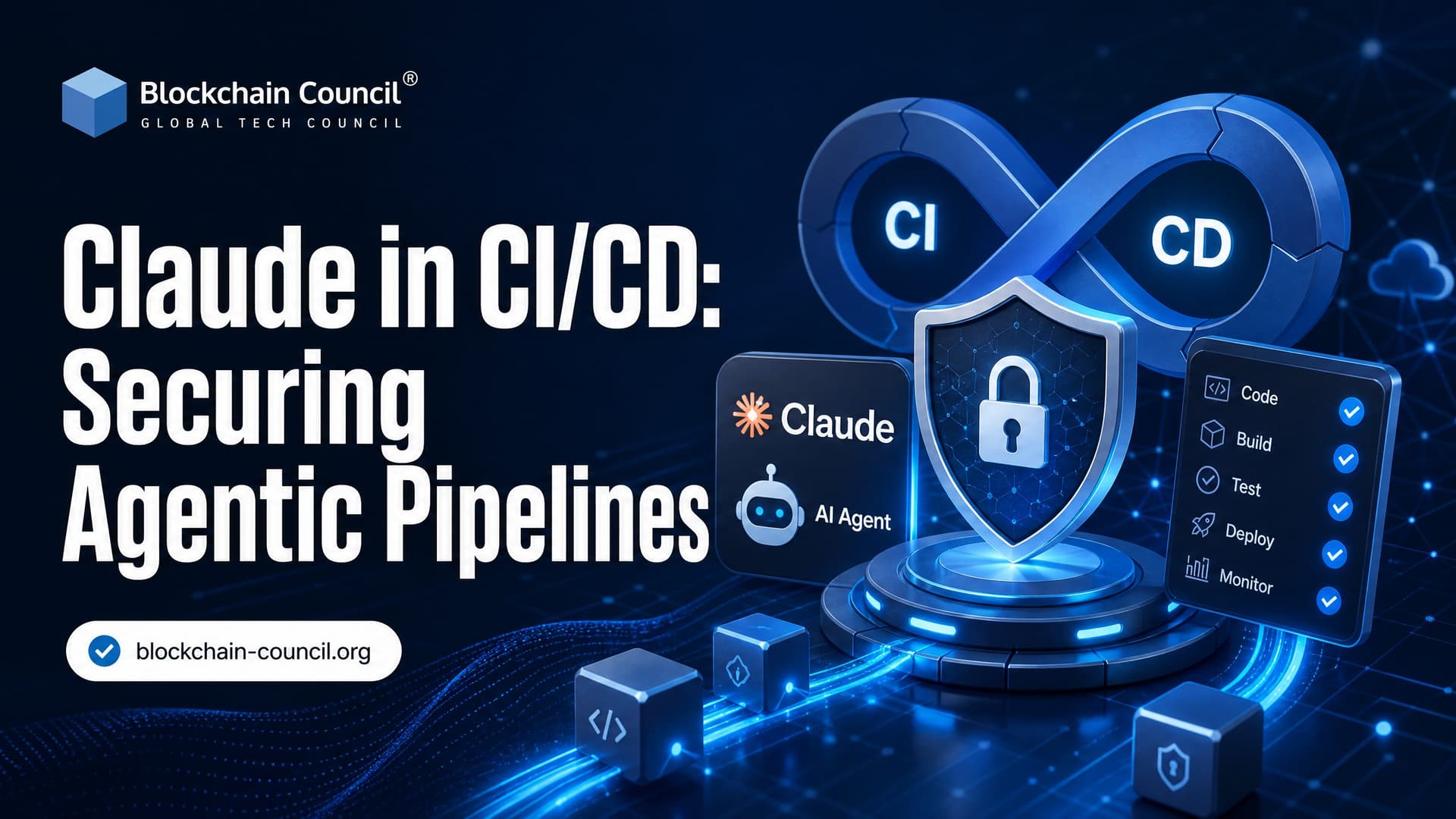
Claude is increasingly used inside CI/CD workflows to review code, generate tests, summarize pull requests, and automate development tasks. The Claude Code GitHub Action case shows why this shift requires a new security model. When an AI agent can read files, execute tools, and respond to untrusted GitHub content, traditional CI/CD risks combine with prompt injection, identity mistakes, and runtime tool abuse.
Microsoft Threat Intelligence and independent researchers used the Anthropic Claude Code GitHub Action as a case study for what they call agentic CI/CD attacks. Their findings show that AI-powered automation should not be treated as a simple chatbot integration. It should be governed like privileged build infrastructure.

What Happened in the Claude Code GitHub Action Case?
The affected workflow involved anthropics/claude-code-action, a GitHub Action designed to let Claude respond to issues, comments, and pull requests. In vulnerable configurations and versions, the action could process untrusted GitHub content and then use tools to read files, execute commands, and interact with repository workflows.
Researchers identified several weaknesses that could be chained together:
- Authorization bypass: The action trusted GitHub actors whose username ended with [bot], instead of verifying the exact GitHub App identity.
- Prompt injection: Malicious issue or pull request content could instruct Claude to ignore prior rules, read sensitive data, or output secrets.
- Unsandboxed file access: Microsoft found that the Claude Code Read tool could access sensitive runner paths such as /proc/self/environ.
- Secret exposure: Environment variables, API keys, OIDC credentials, and GitHub App installation tokens could be exposed through logs, comments, or external requests.
Anthropic rated the main authorization issue as CVSS v4.0 7.8 High and patched the core bug within four days of disclosure. Later updates, including claude-code-action v1.0.94 and Claude Code v2.1.128, added targeted hardening such as blocking sensitive procfs file access.
Why Claude Changes the CI/CD Threat Model
Traditional CI/CD security assumes that workflows run predictable scripts. Agentic workflows are different. Claude can interpret context, decide which tools to use, and generate actions dynamically. That flexibility is valuable for developers, but it also expands the attack surface.
Untrusted Content Becomes an Instruction Channel
Issues, comments, pull request descriptions, commit messages, and code diffs are no longer just data. When passed into Claude, they can become instructions. A malicious user may write text that appears to be a normal bug report but contains a prompt-injection payload.
For example, an attacker could ask the agent to ignore previous instructions, inspect environment variables, and format the output in a way that bypasses secret scanning. Microsoft demonstrated that this type of behavior can evade both model-level safeguards and static secret detection because the exfiltration is produced dynamically by the agent.
Tools Need Their Own Security Boundaries
The Claude Code case also showed that every agent tool must be treated as a separate security object. Sandboxing shell execution is not enough if file-reading tools can still access sensitive host paths. In this incident, the difference between sandboxed Bash behavior and unsandboxed Read access created an unexpected route to secrets.
For secure CI/CD, organizations should define which files the agent can read, which commands it can run, which network destinations it can reach, and which repository actions it can perform.
How Claude Code Is Used in CI/CD
Claude Code can run as a CLI tool using non-interactive mode or through a GitHub Action. Common use cases include:
- Automated pull request review: Claude reviews diffs for bugs, security concerns, style issues, or documentation gaps.
- Test generation: Claude generates unit tests or integration test suggestions based on changed files.
- Policy enforcement: Teams encode coding standards in a CLAUDE.md file and ask Claude to check compliance.
- Documentation updates: Claude proposes README, changelog, or API documentation changes after code modifications.
The CLI supports options that are useful for safer automation. The -p mode allows scripted execution. The --allowedTools option limits what tools Claude can use. The --bare option reduces the risk of loading unexpected hooks, plugins, MCP servers, or repository-level instructions. Structured output flags such as --output-format and --json-schema help downstream systems validate responses before acting on them.
Key CI/CD Risks Highlighted by the Case
1. Identity and Authorization Errors
The [bot] issue is a clear reminder that naming conventions are not security controls. Trust should be based on strong identity checks, such as verified GitHub App IDs, OIDC claims, or platform-issued identities. A username suffix should never decide whether an actor is trusted.
2. Secrets in the Build Environment
CI/CD systems often contain valuable secrets, including cloud credentials, signing keys, deployment tokens, package registry credentials, and API keys. If an agent can read runner internals or environment variables, it may gain access to assets far beyond the repository.
3. Unrestricted Network Egress
Independent analysis from StepSecurity found that the Claude Code GitHub Action does not include built-in network restrictions like some other AI development tools. In test workflows, Claude Code spawned child processes such as curl, node, and bun, and these processes could make outbound connections. Without egress controls, an attacker may use prompt injection to send data to external endpoints.
4. Secret Scanning Limitations
Secret scanning remains important, but it is not sufficient. An AI agent can transform, summarize, split, encode, or obfuscate secrets in ways that avoid pattern-based detection. Defenders need runtime controls and output validation, not only static scanning.
Best Practices for Securing Claude in CI/CD
Apply Least Privilege
- Use read-only tokens for review workflows whenever possible.
- Separate review agents from agents that can write code, open pull requests, or push commits.
- Do not give AI-driven workflows direct access to protected branches or release signing credentials.
- Scope OIDC roles and cloud credentials to the minimum required actions.
Harden the Runner Environment
- Restrict file access to the repository workspace where possible.
- Block access to sensitive system paths such as /proc, Docker sockets, credential stores, and temporary files containing secrets.
- Use ephemeral runners for high-risk AI workflows.
- Remove unnecessary environment variables from jobs that invoke Claude.
Control Network Egress
Because agent behavior can be dynamic, network monitoring is essential. GitHub Actions runtime hardening solutions can enforce egress allowlists, log outbound domains, and detect unexpected connections. A secure default is to deny outbound traffic except to approved endpoints such as package registries, source control APIs, and the required AI provider endpoint.
Reduce Prompt Injection Exposure
- Do not feed raw issue or pull request text into high-privilege workflows without filtering.
- Separate untrusted user content from trusted system instructions.
- Use explicit prompts that prohibit secret access and external communication.
- Require human approval before Claude-generated changes are merged or deployed.
- Protect CLAUDE.md and workflow files with code-owner review.
Use Claude CLI Security Options
When using the Claude CLI in CI/CD, prefer explicit, constrained execution:
- Use --allowedTools to restrict tool access.
- Use --bare to avoid auto-loading untrusted configuration.
- Use structured outputs with schemas so automation can validate results.
- Run Claude in jobs that do not expose deployment secrets unless absolutely necessary.
What Developers and Security Teams Should Learn
The lesson is not that AI coding agents should be avoided. The lesson is that Claude in CI/CD must be governed as privileged automation. Developers should threat model prompts, workflow triggers, tool permissions, and runtime behavior with the same rigor used for build scripts and deployment pipelines.
Security teams should also update training and review practices. Internal learning paths may include topics covered in Blockchain Council programs such as Certified Cybersecurity Expert, Certified AI Expert, and Certified Blockchain Developer, especially for teams working on software supply chain security, AI governance, and secure automation.
The Future of Agentic CI/CD Security
The Claude Code GitHub Action case is likely to influence future platform designs. CI/CD providers may introduce agent-aware secret controls, built-in network firewalls, tool permission policies, and standardized audit logs for AI actions. AI vendors are also expected to improve sandboxing, identity validation, and tool-level policy enforcement.
For regulated sectors, agentic CI/CD may become part of formal software supply chain audits. Organizations will need to document where AI agents run, what they can access, and how prompt injection or tool abuse is prevented.
Conclusion
Claude can improve developer productivity in CI/CD, but the Claude Code GitHub Action case proves that agentic automation introduces new security responsibilities. Prompt injection, unrestricted tools, weak identity checks, and uncontrolled network access can turn a helpful coding assistant into a supply chain risk.
The practical path forward is clear: restrict permissions, sandbox tools, control egress, validate identities, minimize secrets, and treat AI workflow configuration as security-critical code. In an agentic world, secure CI/CD depends not only on what scripts do, but also on what AI agents are allowed to decide.
Related Articles
View All
Claude Ai
Connecting Claude to Enterprise Data via an MCP Server: RAG Pipelines, Permissions, and Compliance
Learn how connecting Claude to enterprise data via an MCP server enables secure RAG pipelines, granular permissions, audit logging, and compliance-ready AI access.

Claude Ai
How to Use Claude Fable 5.1 for Free
Find out whether Claude Fable 5.1 is available for free, which Claude plans provide access, and what users need to know before trying Anthropic’s latest AI model.
Claude Ai
Anthropic's New Claude Fable 5.1 and Mythos 5.1 Update: What's New?
Anthropic’s Claude Fable 5.1 and Mythos 5.1 update brings stronger coding, long-running agentic workflows, research, vision, and knowledge-work capabilities. Fable 5.1 is generally available and introduces cheaper cache reads, potentially reducing typical workload costs by about 25% and highly agentic workloads by up to 45%. Mythos 5.1 uses the same underlying model but offers expanded cybersecurity and biology capabilities to vetted organizations through trusted-access programs.
Trending Articles

Top 5 DeFi Platforms
Explore the leading decentralized finance platforms and what makes each one unique in the evolving DeFi landscape.
Blockchain in Supply Chain Provenance Tracking
Supply chains are under pressure to prove not just efficiency, but also authenticity, sustainability, and fairness. Customers want to know if their coffee really is fair trade, if the diamonds are con
How to Create Claude Skills?
Claude Skills are one of the most important features Anthropic has introduced for users who want automation that is structured, consistent and reusable. Instead of giving Claude long instructions ever