
Claude AI for Technical Documentation

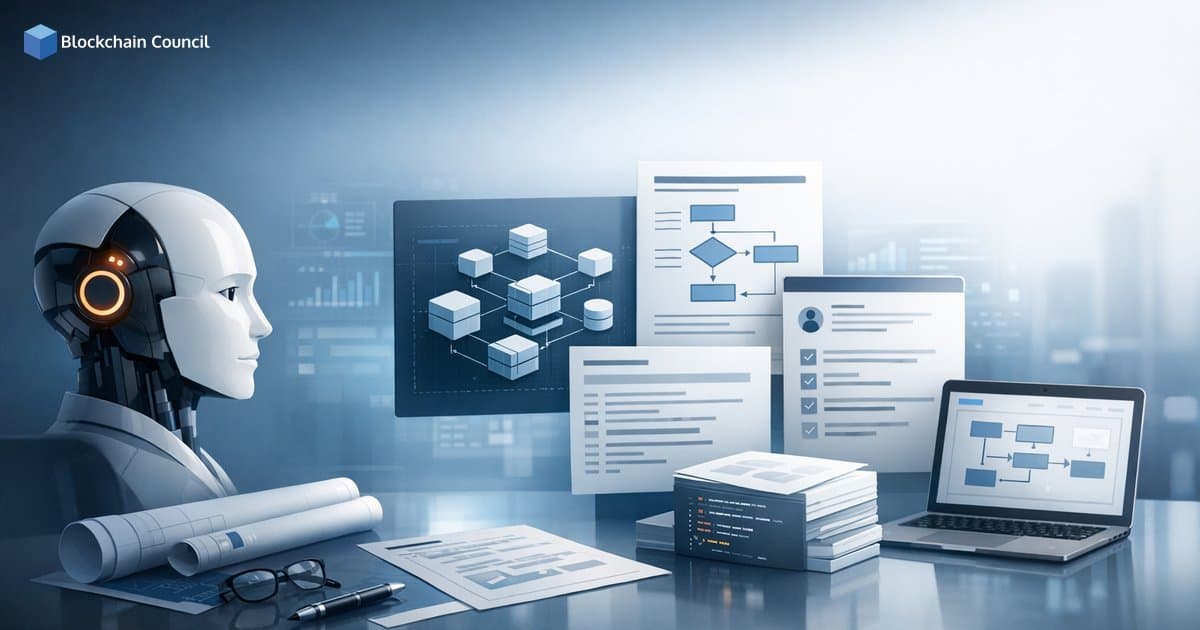
Claude AI for technical documentation is becoming a practical choice for engineering teams that need to create and maintain high-quality architecture docs, Architecture Decision Records (ADRs), and onboarding guides. Documentation consistently falls behind because it competes with feature delivery, yet it is essential for system reliability, security, and onboarding speed. With clear prompts, defined templates, and structured review workflows, Claude AI helps teams draft organized content, standardize language, and keep documentation aligned with actual system behavior.
Why Claude AI fits technical documentation workflows
Technical documentation demands consistency, traceability, and fast updates. Claude AI supports these requirements by turning scattered inputs into coherent drafts and enforcing structure through repeatable prompts. Engineering teams use Claude AI to:

Summarize long threads, meeting notes, and incident write-ups into doc-ready sections
Normalize terminology and style across multiple authors
Generate first drafts for recurring formats like ADRs and onboarding checklists
Refactor existing docs for clarity, completeness, and scannability
The guiding principle is to treat all AI output as a draft that goes through engineering review, the same way code does.
Claude AI for architecture documentation
Architecture docs are most useful when they explain boundaries, dependencies, and operational characteristics clearly. Claude AI can produce structured sections from inputs such as service inventories, runbooks, and design notes. The most effective approach is to specify a template and provide constraints that reflect your environment.
Suggested architecture doc outline
Context: problem space, goals, non-goals
System overview: components, data flows, external dependencies
Key quality attributes: availability, latency, scalability, privacy, security
Deployment model: environments, CI/CD pipeline, release strategy
Operational model: observability, incident response, SLOs
Risk register: failure modes and mitigations
Prompt pattern for architecture docs
Input: service list, API specs, sequence diagrams, infrastructure notes, and known constraints.
Instruction: ask Claude AI to produce a concise, reviewer-friendly architecture doc with explicit assumptions and open questions.
Output control: require bullet points, short paragraphs, and a final section titled "Assumptions and Unknowns".
This pattern reduces missing context and makes it easier for reviewers to identify what is accurate and what requires updates.
Claude AI for ADRs (Architecture Decision Records)
ADRs are most valuable when they capture the decision, the rationale, and the trade-offs involved. Claude AI can draft ADRs from meeting notes or pull requests by extracting the decision narrative and organizing it into a standard format. This is particularly useful when decisions span multiple teams and communication channels.
Recommended ADR structure
Title and Status (Proposed, Accepted, Superseded)
Context: what circumstances forced this decision
Decision: the chosen approach, stated clearly
Alternatives: viable options that were considered
Consequences: operational, security, and maintenance impact
Validation: how success will be measured
How to improve ADR quality with Claude AI
Ask for trade-offs: require at least two alternatives with a clear explanation of why each was not selected.
Force testability: include a section on success metrics or operational checks.
Align to standards: request security and compliance considerations where relevant.
ADRs structured this way are easier to audit over time and reduce repeated debates when team composition changes.
Claude AI for onboarding guides
Onboarding guides frequently fail because they mix informal tribal knowledge with outdated procedural steps. Claude AI can convert real workflows into clear, role-based onboarding paths. Provide your repository structure, local setup steps, and common pitfalls, then ask Claude AI to create:
Day 1 checklist: accounts, access, tooling, security basics
Week 1 learning path: key services, architecture overview, runbooks
First task guide: a low-risk, scoped change with validation steps
Troubleshooting reference: known errors and their resolutions
Onboarding prompt pattern
Specify the target role (backend engineer, SRE, data engineer), the stack (languages, infrastructure, CI tooling), and the team's definition of productive. Then require outputs in checklist format, with each step including:
Owner (new hire, manager, IT, security)
Time estimate
Verification step (how to confirm the task is complete)
This turns onboarding into an executable process rather than a static document that quickly becomes stale.
Governance, accuracy, and security considerations
AI-assisted documentation requires governance to prevent propagating errors or exposing sensitive data. A practical governance checklist includes:
Human review: require code-owner or tech-lead approval for architecture docs and ADRs.
Source grounding: include links to repositories, tickets, runbooks, or diagrams that support factual claims.
Data handling: avoid pasting secrets, customer data, or confidential incident details into prompts.
Change management: treat documentation updates as part of the definition of done for any major change.
For teams formalizing these workflows, internal training on AI usage policies and secure prompting practices is often as important as the tooling itself.
Skills to build for AI-assisted documentation
To operationalize Claude AI for technical documentation effectively, teams benefit from building skills in structured prompting, documentation architecture, and review automation. Organizations looking to develop this capability should consider professional training in AI and prompt engineering. Blockchain Council offers relevant programs including the Certified Prompt Engineer and Certified Artificial Intelligence (AI) Expert certifications, which provide structured foundations for applying AI tools responsibly in technical environments.
Conclusion
Claude AI for technical documentation can significantly reduce the effort required to produce architecture docs, ADRs, and onboarding guides while improving consistency and readability across teams. The highest-value approach is not fully automated documentation, but a disciplined workflow built on structured templates, grounded inputs, explicit assumptions, and mandatory human review. When teams standardize these practices, documentation becomes a living system that supports organizational scale, reduces operational risk, and helps new engineers contribute faster.
Related Articles
View All
Claude Ai
Using Claude AI to Write API Documentation
Learn how to use Claude AI to write API documentation with OpenAPI drafts, runnable examples, and practical SDK notes, plus workflows and validation tips.

Claude Ai
Claude AI for Daily Life Productivity
Learn how Claude AI boosts daily life productivity using Projects, Artifacts, Memory, and Skills to build checklists, meal plans, and smart routines you can reuse.

Claude Ai
The Future of AI Learning with Claude AI
Explore the future of AI learning with Claude AI, from Learning mode and Opus 4.6 to campus deployments and certifications shaping AI-first education.
Trending Articles

The Role of Blockchain in Ethical AI Development
How blockchain technology is being used to promote transparency and accountability in artificial intelligence systems.

AWS Career Roadmap
A step-by-step guide to building a successful career in Amazon Web Services cloud computing.
Top 5 DeFi Platforms
Explore the leading decentralized finance platforms and what makes each one unique in the evolving DeFi landscape.