

Claude AI for Software Engineering Tasks
 Suyash Raizada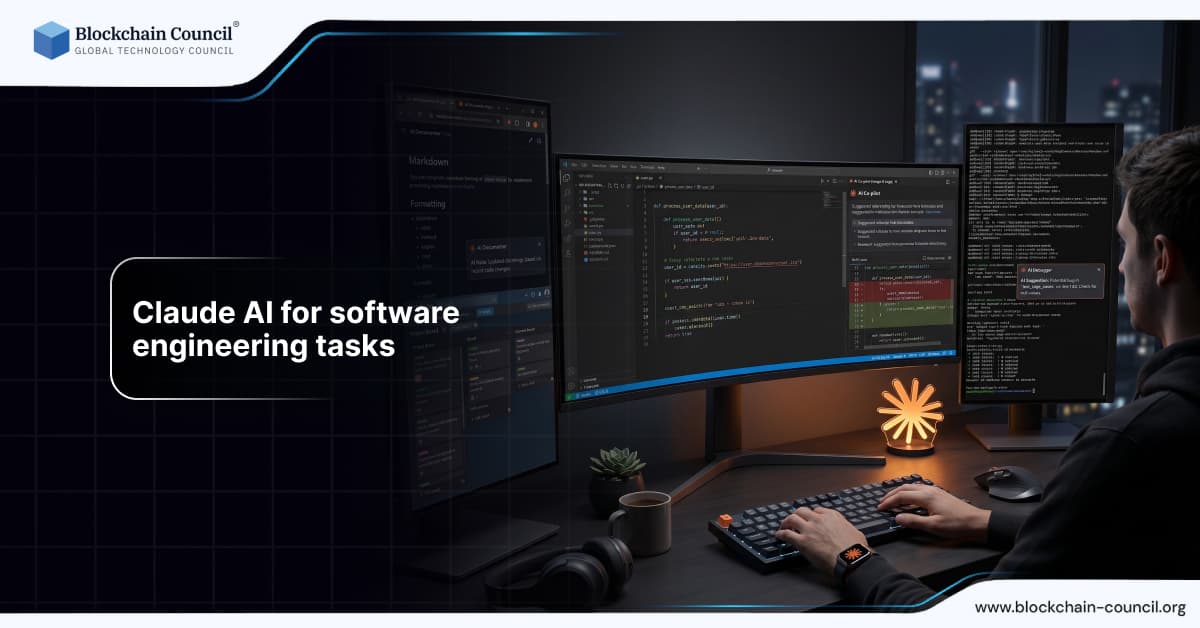
Artificial intelligence is rapidly transforming software engineering, moving beyond simple automation into intelligent collaboration. Among the leading tools in this space is Claude AI, developed by Anthropic, which is designed to assist with complex reasoning, coding, and problem-solving tasks.
Software engineering traditionally involves designing systems, writing code, debugging issues, and maintaining applications. These tasks require time, precision, and expertise. Claude AI is reshaping this process by enabling engineers to perform these tasks faster and more efficiently using natural language instructions.

To build a strong foundation in AI-driven software engineering, professionals often begin with structured learning paths such as AI expert certification and agentic AI certification. These programs introduce core AI concepts and autonomous systems, which are increasingly relevant in modern engineering environments. Handling Claude AI for software engineering tasks allows teams to improve efficiency in design, development, and testing processes. Claude supports documentation, coding, and analysis tasks. However, structured workflows are essential for consistency. The Claude Code Certification helps you apply these practices effectively.
Understanding Claude AI in Software Engineering
Claude AI is a large language model designed to assist developers by interpreting instructions and generating meaningful outputs. Unlike traditional development tools, it focuses on understanding context and intent.
In software engineering, Claude AI can:
Generate code for applications
Debug and fix errors
Refactor and optimize code
Create documentation
Assist with system design
Rather than replacing engineers, it acts as an intelligent assistant that enhances productivity and reduces repetitive work.
Key Software Engineering Tasks Powered by Claude AI
Claude AI supports multiple stages of the software development lifecycle.
Code Generation
Claude can generate code in various programming languages based on user instructions.
Example:
A developer can request a REST API in Python, and Claude will generate endpoints, request handling, and error management logic.
Debugging and Error Resolution
Debugging is one of the most time-consuming tasks in software engineering. Claude AI helps by:
Identifying errors in code
Explaining root causes
Suggesting fixes
Example: A development team used Claude to debug a production issue, reducing resolution time significantly.
Code Refactoring
Claude AI improves code quality by:
Simplifying complex logic
Removing redundancy
Enhancing readability
This is particularly useful when working with legacy systems.
Documentation Generation
Documentation is often overlooked but critical for maintainability.
Claude can generate:
API documentation
Function descriptions
Inline comments
This ensures better collaboration within development teams.
System Design Assistance
Claude AI can assist in designing software systems by:
Suggesting architecture patterns
Explaining trade-offs
Recommending technologies
While it does not replace architectural expertise, it provides valuable guidance.
Programming Languages and Frameworks
Claude AI supports a wide range of programming environments.
Python in Software Engineering
Python is widely used for backend development, automation, and data processing. Claude AI can generate Python scripts for frameworks like Django and Flask.
Developers can strengthen their skills through the Python certification, which provides structured training in Python programming.
JavaScript and Node.js
Node.js is essential for building scalable backend systems. Claude AI can generate JavaScript code for APIs, asynchronous workflows, and server-side logic.
Professionals can enhance their expertise by enrolling in a Node JS Course.
Real-World Applications of Claude AI in Software Engineering
Claude AI is already being used across industries.
1. Web Application Development
Claude helps generate backend APIs, frontend components, and integration logic.
Example: A startup used Claude to build its MVP quickly, reducing development time by 40 percent.
2. DevOps and Automation
Claude can generate scripts for:
Deployment automation
Monitoring systems
CI CD pipelines
This reduces manual intervention in operational tasks.
3. Data Engineering
Claude assists in:
Data pipeline creation
Data transformation scripts
Query optimization
Example: A company automated its data processing workflows using Claude-generated scripts.
4. Marketing Technology Systems
Software engineers working on marketing platforms can use Claude to build backend systems for campaign tracking and analytics. Professionals can deepen their knowledge through an AI powered marketing course.
Benefits of Using Claude AI in Software Engineering
Increased Productivity
Claude reduces the time required for coding and debugging tasks.
Improved Code Quality
It suggests best practices and optimizations.
Faster Learning
Engineers can learn new technologies more quickly.
Reduced Repetition
Claude handles repetitive tasks, allowing engineers to focus on complex problems.
Challenges and Limitations
Despite its capabilities, Claude AI has limitations.
Context Awareness
Claude may not fully understand complex project requirements without detailed input.
Security Risks
AI-generated code must be reviewed for vulnerabilities. Developers should build strong security knowledge through programs like the AI Security Certification.
Performance Optimization
Generated code may require refinement for production use.
Over-Reliance
Excessive dependence on AI can reduce critical thinking and problem-solving skills.
Best Practices for Using Claude AI in Engineering Tasks
Provide Detailed Prompts
Clear instructions lead to better outputs.
Validate Outputs
Always test and review generated code.
Use Iterative Refinement
Improve results through multiple prompts.
Combine AI with Expertise
Use Claude as a tool, not a replacement for engineering knowledge.
Recent Developments in Claude AI
Claude AI continues to evolve with significant improvements.
Enhanced Reasoning
It can handle complex, multi-step engineering tasks.
Better Code Understanding
Claude now interprets large codebases more effectively.
Integration with Tools
Claude is being integrated into development environments and cloud platforms.
Agentic AI Evolution
Claude is moving toward autonomous systems capable of executing entire workflows.
Future of Claude AI in Software Engineering
The future of software engineering will be heavily influenced by AI tools like Claude.
Autonomous Development
AI systems will manage entire development pipelines.
Intelligent Debugging
Error detection and resolution will become more automated.
Personalized Development Assistants
AI tools will adapt to individual developers’ workflows.
Stronger Security Integration
AI will help identify and prevent vulnerabilities in real time.
Conclusion
Claude AI is transforming software engineering by enhancing productivity, improving code quality, and simplifying complex tasks. From code generation to system design, it provides valuable support across the development lifecycle.
However, it is not a replacement for human expertise. Engineers must still understand programming principles, system architecture, and security practices to build reliable systems.
Those who integrate Claude AI into their workflows will gain a competitive advantage. Those who ignore it may find themselves spending more time on repetitive tasks, which is a perfectly valid lifestyle choice, just not an efficient one.
FAQs
1. What is Claude AI?
Claude AI is an advanced AI model designed to assist with coding and software engineering tasks.
2. How does Claude AI help developers?
It generates code, debugs errors, and assists with system design.
3. Can Claude AI replace software engineers?
No, it enhances productivity but requires human oversight.
4. Which languages does Claude support?
Python, JavaScript, and many others.
5. Can Claude debug code?
Yes, it can identify and fix issues.
6. Is Claude AI suitable for beginners?
Yes, it simplifies learning and coding.
7. What are its benefits?
Faster development, improved quality, and efficiency.
8. What are its limitations?
Dependence on input quality and limited context understanding.
9. Can Claude generate full applications?
Yes, but refinement is needed.
10. Is AI-generated code secure?
It can be, but must be reviewed.
11. Can Claude assist in DevOps?
Yes, it can generate automation scripts.
12. Does it support backend development?
Yes, extensively.
13. How does it improve productivity?
By automating repetitive tasks.
14. Can it write documentation?
Yes, including API docs and comments.
15. Is Python important?
Yes, it is widely used in development.
16. Can Claude optimize code?
Yes, through iterative prompts.
17. What industries use Claude AI?
Technology, finance, healthcare, and marketing.
18. What is agentic AI?
AI that can independently plan and execute tasks.
19. What is the future of AI in software engineering?
More automation and intelligent systems.
20. Should developers rely fully on AI?
No, human expertise remains essential.
Related Articles
View All
Claude Ai
How to Use Claude Fable 5.1 for Free
Find out whether Claude Fable 5.1 is available for free, which Claude plans provide access, and what users need to know before trying Anthropic’s latest AI model.
Claude Ai
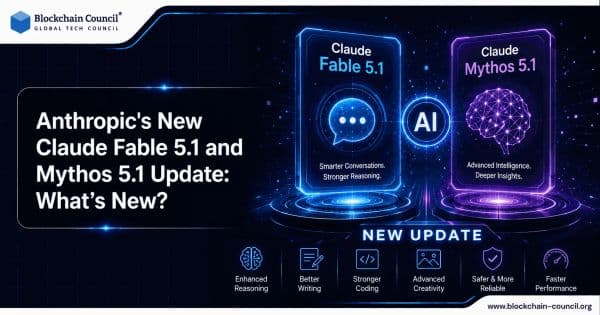
Anthropic's New Claude Fable 5.1 and Mythos 5.1 Update: What's New?
Anthropic’s Claude Fable 5.1 and Mythos 5.1 update brings stronger coding, long-running agentic workflows, research, vision, and knowledge-work capabilities. Fable 5.1 is generally available and introduces cheaper cache reads, potentially reducing typical workload costs by about 25% and highly agentic workloads by up to 45%. Mythos 5.1 uses the same underlying model but offers expanded cybersecurity and biology capabilities to vetted organizations through trusted-access programs.

Claude Ai
How to Use Fable 5 for Summarization Tasks Across Documents and Data
Learn how to use Fable 5 for summarization across documents, PDFs, transcripts, logs, and enterprise data with structured outputs and verification.
Trending Articles
What is AWS? A Beginner's Guide to Cloud Computing
Everything you need to know about Amazon Web Services, cloud computing fundamentals, and career opportunities.
Claude AI Tools for Productivity
Discover Claude AI tools for productivity to streamline tasks, manage workflows, and improve efficiency.
Blockchain in Supply Chain Provenance Tracking
Supply chains are under pressure to prove not just efficiency, but also authenticity, sustainability, and fairness. Customers want to know if their coffee really is fair trade, if the diamonds are con