

Claude AI Agents & Automation
 Suyash Raizada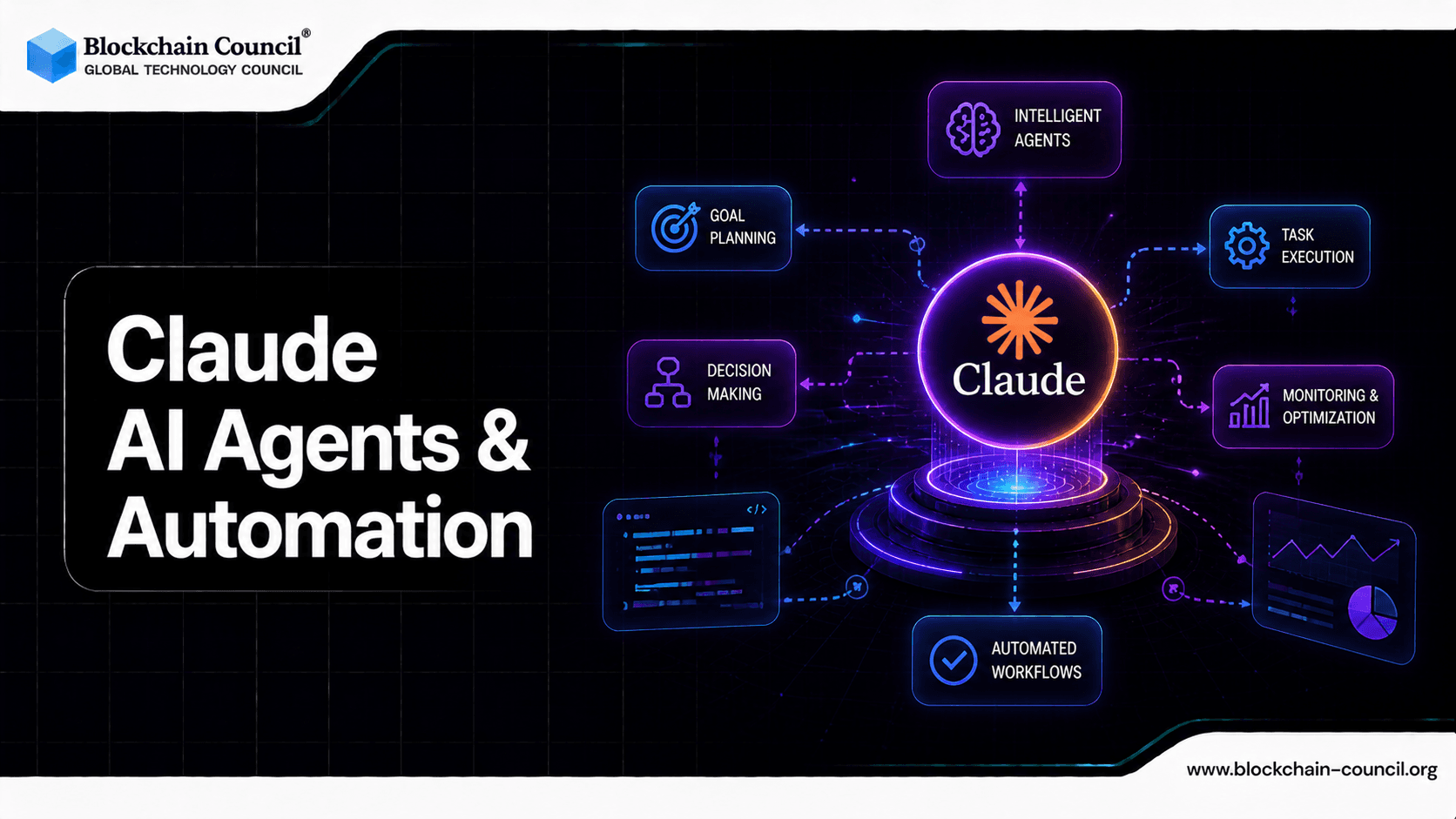
Claude Agents
AI is no longer just about generating text-it’s about taking action.
Welcome to the era of AI agents, where tools like Claude are evolving into systems that don’t just respond-but execute, automate, and optimize workflows independently.

Developed by Anthropic, Claude is now powering a new generation of AI-driven automation systems that can:
Perform multi-step tasks
Chain workflows together
Interact with your computer
Integrate with tools like Zapier and Make
In simple terms:
Claude is becoming your AI operator-not just your assistant.
Let’s break down how Claude AI agents and automation are reshaping productivity and business systems.
What are Claude AI Agents?
Claude AI agents are systems that:
Understand goals
Break them into tasks
Execute those tasks step-by-step
Unlike traditional AI:
Agents don’t just answer-they act.
Core Capabilities
Autonomous execution
Workflow management
Context awareness
Decision-making
Autonomous Workflows: The Future of Work
What are Autonomous Workflows?
Workflows that run with minimal human intervention.
Claude can:
Take a goal
Plan steps
Execute tasks
Deliver results
Example
Goal:
“Create a blog, optimise it for SEO, and publish it.”
Claude can:
Generate content
Optimise keywords
Format structure
Prepare publishing draft
This saves hours of manual work.
Task Chaining: Connecting Multiple Actions
Task chaining allows Claude to:
Link multiple tasks together
Execute them sequentially
Why It’s Powerful
Eliminates manual switching
Ensures consistency
Speeds up workflows
Example Workflow
Research topic
Write content
Generate images
Create social media posts
All connected in one flow.
Multi-Step Reasoning Agents
Claude excels at multi-step reasoning, making it ideal for complex tasks.
What It Means
Claude can:
Analyse problems
Break them into steps
Execute logically
Example
Task:
“Analyse competitors and suggest a marketing strategy.”
Claude will:
Gather insights
Identify patterns
Recommend strategies
This is like having a strategy consultant powered by AI.
Computer Use: Real Automation Power
One of the most exciting advancements is Claude’s ability to interact with your system.
What Claude Can Do
Simulate mouse clicks
Navigate interfaces
Execute commands
Automate repetitive tasks
This turns Claude into a true desktop AI agent.
Use Case
Automating data entry
Managing dashboards
Handling repetitive office work
No-Code + Low-Code Integrations
You don’t need to be a developer to use Claude automation.
No-Code Tools
Drag-and-drop workflows
Easy integrations
Beginner-friendly
Low-Code Options
Custom scripts
API connections
Advanced automation
This makes Claude accessible to:
Beginners
Freelancers
Business owners
Automation with Zapier, Make & APIs
Claude becomes even more powerful when integrated with automation tools.
1. Zapier Integration
Zapier allows you to connect:
Apps
Workflows
Triggers
Example
New lead → Claude writes email → Auto-send
2. Make (Integromat)
Make enables:
Complex workflows
Visual automation
Advanced integrations
Example
Form submission → Claude generates report → Upload to Google Drive
3. API Automation
For advanced users:
What APIs Enable
Custom AI workflows
Integration with apps
Scalable systems
Example
CRM integration
AI chatbot systems
SaaS automation
Real-World Automation Use Cases
For Businesses
Lead generation automation
Customer support systems
Marketing workflows
For Freelancers
Content creation pipelines
Client reporting
Proposal generation
For Creators
Content scheduling
Script writing
Engagement automation
AI Learning Path: Becoming an Automation Expert
To master Claude AI agents, follow this roadmap:
Step 1: Learn AI Basics
Understand how AI works.
Step 2: Master Prompting
Write structured prompts.
Step 3: Learn Automation Tools
Zapier
Make
APIs
Step 4: Build Workflows
Create real-world systems.
Certified Claude AI Expert Program
If you want to master automation, structured learning is key.
A Certified Claude AI Expert Program helps you:
Learn
AI agents & workflows
Automation systems
Business use cases
Benefits
Practical experience
Certification
Income opportunities
This helps you move from:
AI user → Automation expert
Tech Certifications for Future AI Careers
Recommended
Business Certifications for Growth
Top Certifications
Monetization Opportunities
1. Freelancing
Automation setup
Workflow design
2. AI Agency
Offer automation services
3. SaaS Tools
Build AI-powered tools
4. Remote Jobs
Automation specialist
AI consultant
Why Claude AI Agents are the Future
Claude combines:
Reasoning
Execution
Automation
Making it one of the most powerful AI systems available today.
The shift is clear:
From tools → to intelligent systems that work for you
Conclusion: Build Systems, Not Just Skills
AI agents are changing how work gets done.
If you learn:
Automation
Workflow design
AI integration
You can:
Save time
Increase income
Scale faster
Claude is not just a tool-it’s a system builder.
FAQs: Claude AI Agents & Automation
1. What are AI agents in Claude?
AI agents in Claude are systems that use the model to perform multi-step tasks autonomously. They can plan, execute, and refine actions based on goals. Instead of responding once, they operate continuously within a workflow. This makes them powerful for automation.
2. How does Claude enable automation?
Claude enables automation by combining reasoning, memory, and tool usage. It can follow structured instructions to complete repetitive tasks. This reduces manual effort. Automation improves efficiency and consistency.
3. What is an AI agent workflow?
An AI agent workflow is a sequence of steps executed by the agent to complete a task. Claude can manage these steps intelligently. It can adjust actions based on outcomes. This makes workflows dynamic and adaptive.
4. What types of tasks can Claude agents automate?
Claude agents can automate tasks like data processing, content generation, customer support, and research. They handle repetitive and time-consuming activities. This allows humans to focus on strategic work. Automation increases productivity.
5. How do Claude agents use tools?
Claude agents can integrate with APIs, databases, and external tools. They use these tools to perform actions beyond text generation. This expands their capabilities. Tool integration is key to automation.
6. What is the role of memory in AI agents?
Memory allows Claude agents to retain information across tasks. This helps maintain context and continuity. It improves decision-making and efficiency. Memory is essential for complex workflows.
7. Can Claude agents make decisions?
Claude agents can analyze information and make logical decisions within defined parameters. They evaluate options and choose actions. However, they still require human oversight. Decision-making is guided by instructions.
8. How do Claude agents improve productivity?
Claude agents automate repetitive tasks and streamline workflows. They reduce manual effort and errors. This allows users to focus on high-value activities. Productivity increases significantly.
9. What is agentic AI?
Agentic AI refers to systems that act autonomously to achieve goals. Claude supports this approach by enabling multi-step reasoning and execution. It goes beyond simple responses. It represents the future of AI systems.
10. Can Claude agents handle complex workflows?
Yes, Claude agents can manage complex, multi-step workflows. They can break tasks into smaller steps and execute them sequentially. This improves efficiency. It supports advanced use cases.
11. How are Claude agents used in business?
Businesses use Claude agents for automation, customer support, and data analysis. They improve efficiency and reduce costs. Agents can handle large-scale operations. This enhances business performance.
12. Can Claude agents be customized?
Yes, Claude agents can be customized through prompts and system design. Users can define workflows and rules. This allows tailored automation. Customization improves effectiveness.
13. What are the benefits of using Claude agents?
Benefits include increased efficiency, reduced errors, and faster execution. Agents can operate continuously without fatigue. They improve scalability. This makes them valuable for businesses.
14. What are the limitations of Claude agents?
Claude agents may require clear instructions and monitoring. They can make errors if context is unclear. Complex tasks may need human intervention. Understanding limitations is important.
15. How secure are Claude agents?
Claude agents follow safety and security guidelines. However, users must ensure proper data handling and access control. Security depends on implementation. Careful design is essential.
16. Can Claude agents work in real-time?
Yes, Claude agents can operate in real-time applications like chatbots and automation systems. Performance depends on system design. Real-time capabilities improve responsiveness. This is useful for customer-facing tasks.
17. How do Claude agents handle errors?
Claude agents can identify and correct errors during workflows. They can adjust actions based on feedback. However, human oversight may be needed. Error handling improves reliability.
18. What industries use Claude agents?
Industries like finance, healthcare, marketing, and e-commerce use Claude agents. They automate processes and improve efficiency. Adoption is growing across sectors. Use cases continue to expand.
19. How do Claude agents differ from traditional automation?
Traditional automation follows fixed rules, while Claude agents adapt dynamically. They use reasoning to handle complex tasks. This makes them more flexible. They represent a more advanced approach.
20. Why are Claude agents important for the future?
Claude agents represent the shift toward intelligent automation. They combine reasoning with execution. This transforms how tasks are performed. They are key to the future of AI-driven workflows.
Related Articles
View All
Claude Ai
Best Claude Fable Alternatives: Top LLMs for Coding, Automation, Research, and AI Agents
Compare the best Claude Fable alternatives for coding, automation, research, AI agents, IDE workflows, and self-hosted enterprise deployments.

Claude Ai
Fable 5 for AI Agents and Automation: Building Smarter Workflows
Learn how Fable 5 for AI agents supports long-horizon automation, multi-agent workflows, coding tasks, document processing, safety, and cost control.

Claude Ai
Claude Sonnet 5 for Developers: Building Smarter AI Agents and Enterprise Applications
Claude Sonnet 5 for Developers is a practical guide to building AI agents, coding workflows, and enterprise applications with Anthropic's latest Sonnet model.
Trending Articles
How Blockchain Secures AI Data
Understand how blockchain technology is being applied to protect the integrity and security of AI training data.

Can DeFi 2.0 Bridge the Gap Between Traditional and Decentralized Finance?
The next generation of DeFi protocols aims to connect traditional banking with decentralized finance ecosystems.
How to Install Claude Code
Learn how to install Claude Code on macOS, Linux, and Windows using the native installer, plus verification, authentication, and troubleshooting tips.