
Automating Developer Workflows with Claude AI

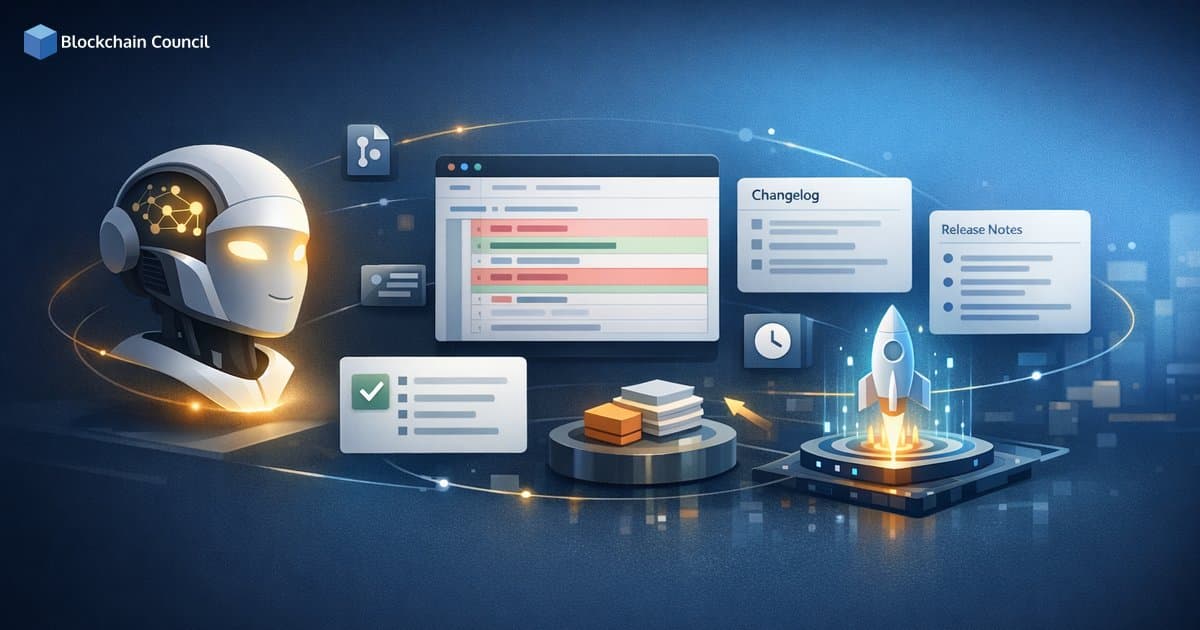
Automating developer workflows with Claude AI is a practical way to reduce time spent on repetitive engineering tasks like pull request reviews, changelog drafting, and release note preparation. Rather than functioning as a simple code completion tool, Claude operates as a context-aware development partner that can read across multiple files, follow team conventions, and help standardize release management outputs.
Why Claude AI Fits Workflow Automation in Modern Engineering
Developer workflow automation depends on two things: context and consistency. Claude is designed to handle both, particularly when integrated into tools developers already use. Claude Code, Anthropic's developer-focused tool, runs in terminals, IDEs like VS Code and JetBrains, Slack, and the web. It can also pick up project instructions from a CLAUDE.md file in the repository root, which helps teams enforce review and documentation standards without re-prompting on every task.

Context length is another important differentiator. Claude supports large context windows, which matters for PR reviews and release documentation where understanding the full scope of changes is essential. In practice, this allows Claude to connect changes across modules, identify architectural mismatches, and describe impact in language appropriate for engineers or business stakeholders.
Evidence of Impact: Adoption and Productivity Signals
Claude adoption is no longer experimental in many organizations. Publicly reported figures include 70% of Fortune 100 companies using Claude, along with large-scale deployments at major professional services firms. Reported productivity signals help explain why workflow automation has become a priority:
Users have reported significant task speedups, with one widely cited metric showing 14.8 minutes with AI versus 3.8 hours without on certain tasks.
Enterprise case studies across AI coding tools commonly report 26% to 55% productivity improvements, with larger gains often observed among experienced developers.
Developers report spending 30% to 40% less time on routine coding tasks, freeing capacity for design and problem-solving work.
These figures vary by workflow maturity and engineering discipline, but they align with the use case of automating documentation and review steps that are often manual, inconsistent, and time-consuming.
PR Reviews with Claude AI: Faster Feedback, Better Consistency
PR review automation is not about replacing human code review. The high-value pattern is using Claude as a first-pass reviewer that flags risks, summarizes change intent, and checks adherence to team conventions. With large context and multi-file awareness, Claude can:
Summarize the PR in plain language, covering what changed, why it changed, and what reviewers should verify.
Spot inconsistencies across files, such as mismatched naming patterns, duplicated logic, or broken architectural layering.
Highlight risk areas like error handling gaps, edge cases, backward compatibility concerns, and missing tests.
Suggest review checklists aligned with your architecture, security requirements, or performance constraints.
A practical implementation approach is to standardize review behavior in CLAUDE.md with items like required test coverage thresholds, acceptable dependency changes, and the expected tone for review comments. This creates consistent PR review feedback across multiple teams without manual coordination.
Changelog Generation: Turning Code Changes into Structured History
Changelogs often fail because they are written late, written inconsistently, or written for the wrong audience. Claude can generate a structured changelog draft directly from PR descriptions, commit messages, and code diffs, leaving humans to edit for accuracy and emphasis.
Teams can instruct Claude to follow formats such as Keep a Changelog style sections, for example:
Added: new features, endpoints, UI flows
Changed: refactors, behavior changes, dependency updates
Fixed: bug fixes and regressions
Security: vulnerability fixes and permission changes
Because Claude can maintain broader repository context, it can also group related changes across multiple PRs into a coherent release narrative. This is particularly helpful when work is split across several incremental merges that individually lack obvious thematic structure.
Release Notes: Adapting Technical Changes for Stakeholders
Release notes are distinct from changelogs. A changelog serves as a detailed historical record for technical audiences, while release notes should explain what matters to customers, internal teams, or leadership. Claude can help draft release notes at multiple levels:
Customer-facing notes: benefits, new capabilities, and migration guidance
Internal operational notes: rollout steps, feature flags, and monitoring signals
Engineering notes: breaking changes, API contract changes, and deprecations
This is where Claude's collaborative approach is most useful. Developers can iterate with Claude on phrasing and prioritization rather than fully automating the final output. Reported usage patterns show many developers prefer this collaboration model over pure automation, which aligns with the release note workflow where editorial judgment matters significantly.
Best Practices for Reliable Automation
Workflow automation quality is driven more by process design than prompt quality alone. The most effective teams follow repeatable patterns:
Provide sufficient context: Include architecture decisions, coding standards, and clear definitions of what constitutes a breaking change.
Iterate incrementally: Request small drafts, verify accuracy, then refine rather than generating everything in a single pass.
Combine tools intentionally: Use Claude Code for planning and standardized automation, and IDE-native tools like Cursor for implementation where they fit your workflow.
For enterprise teams, a lightweight governance layer is worth establishing. Define what Claude can automate, what requires human approval, and how outputs are audited, especially for security-sensitive and compliance-related tasks.
Learning Pathways for Teams
To operationalize these workflows, teams typically need to build skills across AI tooling, secure development practices, and release management. Relevant learning paths from Blockchain Council include AI certifications covering applied LLM workflows, DevOps-related training for release automation, and cybersecurity certifications that support the development of secure review checklists and policy-driven release processes.
Conclusion
Automating developer workflows with Claude AI is most effective when Claude functions as a consistent collaborator - one that performs first-pass PR reviews, drafts changelogs from real engineering artifacts, and translates technical changes into stakeholder-friendly release notes. With clear repository instructions, incremental verification, and well-defined team standards, Claude can reduce routine overhead while improving consistency across reviews and releases. The outcome is not just faster output, but stronger operational discipline in how software changes are communicated and validated.
Related Articles
View All
Claude Ai
Automating Daily Business Tasks with Claude AI
Learn how automating daily business tasks with Claude AI improves email triage, on-brand drafting, and follow-ups using long context, RAG, and agentic workflows.

Claude Ai
Automating Data Preparation With Claude AI
Learn how automating data preparation with Claude AI improves missing value handling, outlier detection, and feature engineering using long-context processing and agentic coding.

Claude Ai
Claude Code Hacks: Practical Workflows, Context Tricks, and Secure Agentic Coding
Learn practical Claude Code Hacks for context budgeting, reusable Claude Skills, subagents, decision logs, and security-first agentic coding workflows in 2026.
Trending Articles

The Role of Blockchain in Ethical AI Development
How blockchain technology is being used to promote transparency and accountability in artificial intelligence systems.

AWS Career Roadmap
A step-by-step guide to building a successful career in Amazon Web Services cloud computing.

Top 5 DeFi Platforms
Explore the leading decentralized finance platforms and what makes each one unique in the evolving DeFi landscape.