
Real-World AI Blockchain Applications: Security, Compliance, and Enterprise Innovation

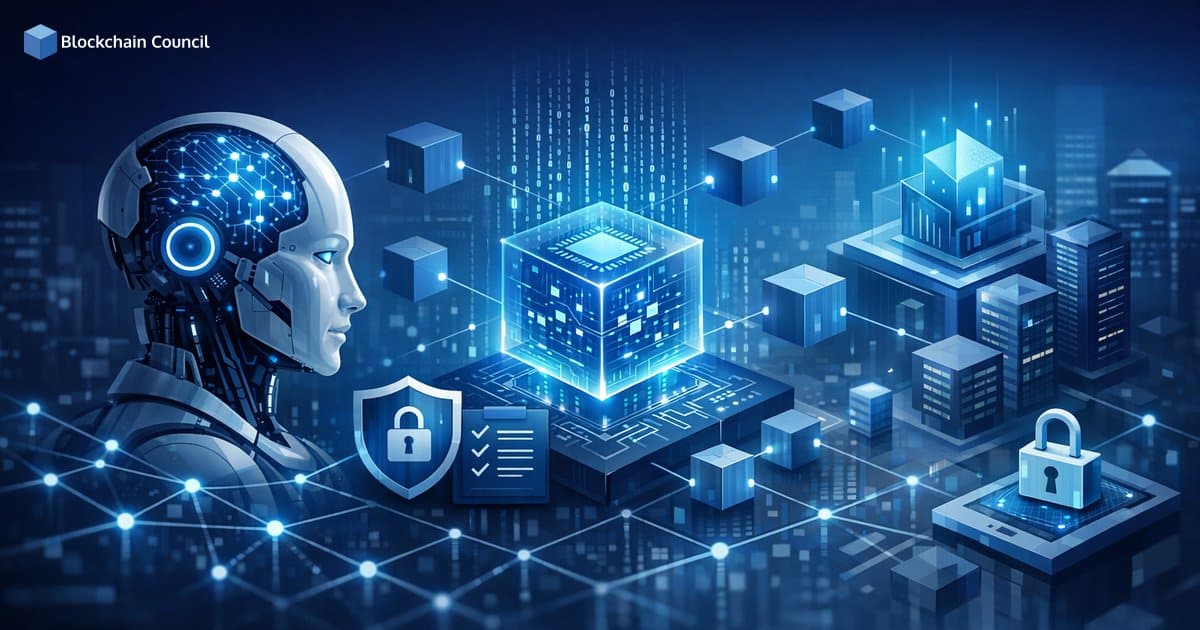
AI blockchain applications are moving from experimentation to production, helping organizations strengthen security, automate compliance, and improve decision-making across blockchain networks. By combining machine learning with tamper-resistant ledgers, teams can detect fraud in real time, audit smart contracts faster, and create reliable data pipelines for analytics and reporting. For business leaders and blockchain practitioners, the value is practical: fewer losses from illicit activity, less downtime from vulnerabilities, and clearer operational visibility across complex ecosystems.
Why AI Blockchain Applications Matter in the Real World
Blockchains provide integrity and transparency, but they also introduce challenges such as scalability constraints, complex on-chain data, and security vulnerabilities in smart contracts. AI adds intelligence on top of blockchain data and operations, including:

Real-time anomaly detection across transaction graphs, wallets, and protocol activity
Automated auditing for smart contracts and infrastructure configurations
Predictive analytics for liquidity risk, operational capacity, and sustainability targets
Decision automation for compliance workflows like KYC/AML and proof-of-reserves monitoring
The core value of combining blockchain and AI is this: immutable records improve data reliability for AI models, while AI makes blockchain systems safer and easier to operate at enterprise scale.
Current State of AI and Blockchain Integration
AI is increasingly embedded into blockchain operations rather than added as a separate analytics layer. Machine learning models can analyze transaction graphs to identify fraud patterns in DeFi, while predictive models help forecast sustainable mining operations by optimizing resource use.
Widely used ecosystems like Ethereum and Hyperledger Fabric support integration patterns where AI services consume on-chain events and produce outputs such as risk scores, alerts, or automated approvals in decentralized applications. Secure data sharing tools such as Ocean Protocol enable privacy-aware data access, allowing AI systems to analyze sensitive datasets without compromising governance controls.
In finance, AI is increasingly applied to automate compliance and reporting for tokenized assets. This includes operational checks around stablecoin reserves and tokenized bond issuance workflows, where monitoring and reconciliation must remain consistent across issuers, custodians, and regulators.
Measurable Impact on Fraud Detection
One of the most cited enterprise outcomes for AI blockchain applications is improved detection of illicit activity. Elliptic reported that its AI models, trained on more than 200 million crypto transactions in collaboration with MIT and IBM, increased money laundering detection from 0.1% to over 27%. This level of improvement matters because on-chain ecosystems generate high-volume, high-velocity data where manual review does not scale.
AI-based analytics can also reduce the burden on security teams by prioritizing alerts, clustering related addresses, and identifying behavior-based anomalies that rules-based monitoring typically misses.
Real-World AI Blockchain Applications by Industry
1. Fraud Detection and Security Monitoring
Security is a foundational enterprise use case. AI can learn patterns of normal behavior and flag deviations in near real time, helping exchanges, custodians, and DeFi platforms respond faster to threats.
Elliptic uses machine learning to identify anomalies across exchanges and DeFi activity to support AML compliance.
AWS AI agents can monitor wallet behavior patterns associated with money laundering risk.
CertiK applies automated scanning to detect vulnerabilities and risky behavior across blockchain networks, particularly in finance-related protocols.
These systems combine the blockchain ledger as a source of truth with AI models that score risk, detect abnormal flows, and help teams triage incidents. The result is not just faster detection, but shorter investigation cycles and more consistent compliance evidence.
2. Smart Contract Auditing and Automated Assurance
Smart contracts are powerful but unforgiving. Errors such as integer overflows, access-control issues, and re-entrancy vulnerabilities can cause outages or significant financial losses. AI augments traditional audit methods by:
Scanning codebases to predict likely flaw patterns before deployment
Generating prioritized findings for security engineers and auditors
Integrating into CI/CD pipelines to provide real-time alerts as code changes
In high-volume ecosystems, automation reduces manual review effort and helps catch issues earlier in the development cycle. This is especially relevant for teams shipping frequent upgrades, where continuous assurance is more practical than periodic audits alone.
3. DeFi and Financial Services: Compliance, Risk, and Automation
DeFi platforms and tokenized finance require constant monitoring of liquidity, collateral, and exposure. The combination of AI and blockchain enables automated decision-making systems where tamper-proof records support reliable, auditable outputs.
Examples include:
Figure using AI for mortgage automation supported by blockchain-based records.
AI-driven compliance for tokenized assets, including operational checks for stablecoin reserves and bond issuance workflows.
SettleMint applying automation across KYC/AML and custody for digital assets, improving onboarding speed and ongoing compliance consistency.
The business case for financial services organizations typically centers on reducing onboarding friction, improving auditability, and lowering operational costs while maintaining consistent controls.
4. Supply Chain Transparency and Sustainability Reporting
Supply chains produce fragmented data across suppliers, logistics providers, and distributors. AI can predict disruptions and identify inefficiencies, while blockchain provides tamper-resistant provenance and event histories.
Common patterns for AI blockchain integration in supply chains include:
IoT and sensor integration where telemetry is analyzed by AI and key events are recorded on-chain
ESG and compliance reporting supported by verifiable, time-stamped supply chain milestones
Predictive risk management for delays, spoilage, or quality deviations
This combination helps organizations improve traceability, reduce disputes, and support sustainability claims with verifiable evidence.
5. Healthcare Data Management and Secure AI Analytics
Healthcare and life sciences face strict privacy requirements and high stakes for data integrity. Blockchain can verify identity attributes and data provenance for clinical and operational datasets, improving trust in downstream AI analysis. Tools like Ocean Protocol enable secure data sharing models where access can be governed while still permitting analysis.
Enterprise outcomes include more reliable datasets for research and trials, improved audit trails for data access, and stronger governance around sensitive patient information.
6. Digital Asset Management and Tokenized Instruments
As tokenization expands to bonds, funds, and regulated digital assets, AI helps automate onboarding, monitoring, and exception handling. Standards such as ERC-3643 are used in enterprise contexts for permissioned tokenization, and AI can assist with continuous checks including eligibility validation, transaction monitoring, and regulatory reporting.
This supports scalable operations for issuers and service providers while preserving a consistent compliance posture.
Practical Enterprise Adoption Blueprint
For organizations exploring AI blockchain use cases, adoption typically succeeds when teams align business goals, data flows, and governance early. A practical sequence looks like this:
Pick a measurable problem such as fraud losses, audit cycle time, or supply chain disputes.
Define the data boundary by deciding what belongs on-chain, what stays off-chain, and what must be encrypted or access-controlled.
Choose an integration pattern where AI consumes on-chain events and publishes risk scores, alerts, or automated actions back to applications.
Establish model governance including monitoring for drift, bias, and explainability requirements.
Operationalize controls with logs, audit trails, and incident response playbooks that use blockchain evidence.
Cross-functional upskilling across blockchain architecture, AI fundamentals, and security strengthens delivery teams throughout this process. Relevant Blockchain Council certification paths include Certified Blockchain Expert, Certified Smart Contract Developer, Certified Artificial Intelligence Expert, and Certified DeFi Expert.
Challenges and What to Watch Next
Despite strong momentum, AI blockchain applications face technical and governance challenges:
Explainability: regulated environments may require interpretable risk scores and traceable decision logic.
Cross-system compatibility: integrating models across chains, languages, and toolchains adds architectural complexity.
Data privacy: immutable ledgers must be designed carefully to avoid storing sensitive data directly on-chain.
Operational risk: AI outputs can be unreliable or manipulated if training data quality and model monitoring are insufficient.
Looking ahead, the convergence of AI and blockchain is expected to drive broader automated compliance, secure data exchanges, and AI-assisted smart contract development. Organizations exploring this space anticipate lower operational costs for scaled decentralized applications, improved ESG reporting through verifiable telemetry, and wider enterprise adoption as AI-driven risk analysis matures on major platforms.
Conclusion: From Innovation to Operational Infrastructure
AI blockchain applications are already delivering tangible outcomes in fraud detection, smart contract assurance, financial compliance, supply chain transparency, and secure data analytics. The most successful deployments treat blockchain as a trust layer and AI as an intelligence layer, then design governance and integration so both work reliably under real-world constraints.
For enterprises and practitioners, the opportunity is to identify a high-impact use case, build a controlled pilot, and scale with clear metrics, security practices, and model governance. That is how real-world blockchain AI moves from innovation to dependable infrastructure.
Related Articles
View All
Blockchain
AI Blockchain Benefits for Enterprises: Security, Automation, and ROI
Explore AI blockchain benefits for enterprises, including stronger security, transparent governance, scalable automation, and improved ROI through fraud reduction and efficiency.

Blockchain
Top AI Tools for Blockchain Development: Code, Security, and Debugging
Explore leading AI tools for blockchain development, including code generation, smart contract security, gas optimization, and debugging tools used across Web3 teams.

Blockchain
How Machine Learning Is Transforming Blockchain Applications for AI Engineers and Blockchain Developers
Machine learning in blockchain is improving smart contract security, fraud detection, predictive analytics, and autonomous agents - creating growing demand for professionals who combine AI and blockchain skills.
Trending Articles
The Role of Blockchain in Ethical AI Development
How blockchain technology is being used to promote transparency and accountability in artificial intelligence systems.
AWS Career Roadmap
A step-by-step guide to building a successful career in Amazon Web Services cloud computing.
Top 5 DeFi Platforms
Explore the leading decentralized finance platforms and what makes each one unique in the evolving DeFi landscape.