
Crypto Better

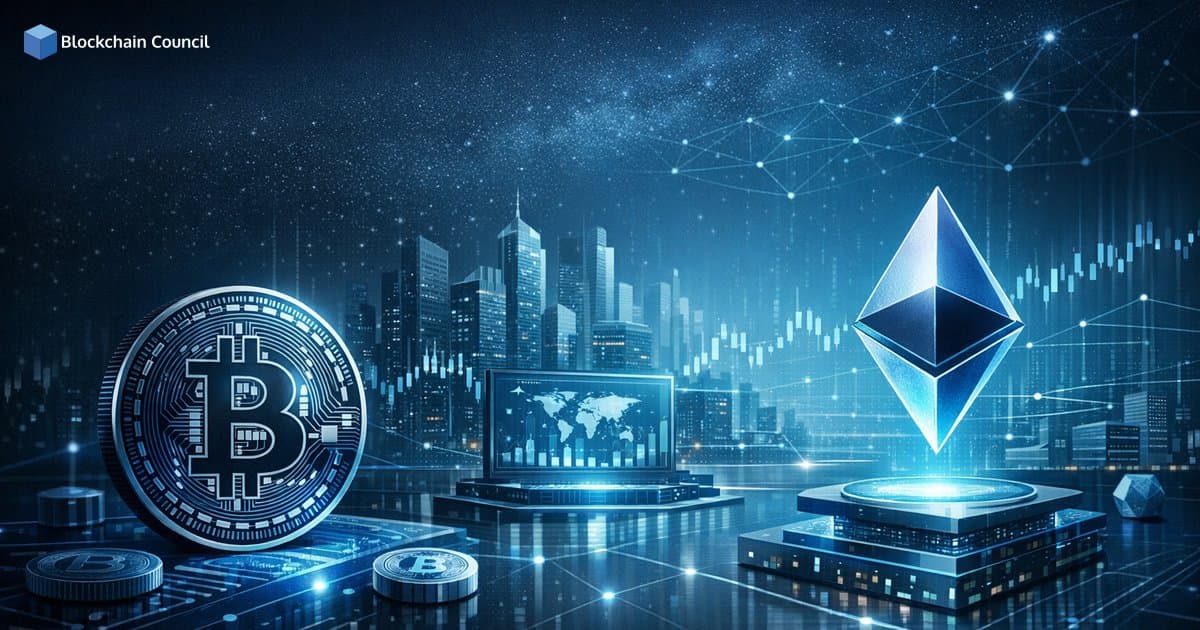
Crypto better is no longer just a slogan tied to price charts. In 2026, crypto is increasingly evaluated like infrastructure: regulated payment rails, institutional-grade custody, tokenized assets, and applications that function like mainstream fintech. Instead of asking whether crypto will survive, markets and policymakers are focusing on how digital assets integrate into everyday finance, commerce, and treasury operations.
This article breaks down what is changing, why it matters for those exploring crypto, and how to think about BTC, Bitcoin, stablecoins, and tokenization in a more utility-driven market.

What "Crypto Better" Means in 2026
For years, "better" in crypto was framed as faster gains, new tokens, or the next market cycle. In 2026, crypto better increasingly means:
Regulatory clarity that reduces policy risk and enables institutional participation
Stablecoins as payments infrastructure for settlement, remittances, and business-to-business transfers
Tokenization of real-world assets (RWA) moving from pilots to broader deployment
Improved interoperability across networks so assets can move with less friction
User experience that reduces blockchain complexity and feels like modern fintech
Users who search "crypto batter" - a common misspelling of crypto better - are often trying to understand whether crypto is actually improving. The 2026 answer is largely yes, but the improvements are structural rather than purely speculative.
The Biggest Shift: From Speculation to Financial Infrastructure
The crypto market is crossing maturity thresholds in 2026 that make it behave more like a parallel financial system than a retail-driven speculative arena. Enterprise deployments are more common, late-stage funding has grown more prominent than early-stage hype cycles, and compliance requirements have become a baseline expectation.
Institutional Adoption Is Changing the Market's Center of Gravity
Institutional capital is not only growing - it is becoming more selective. Rather than funding many experimental projects, investors and enterprises are prioritizing products that work at scale: custody, compliance, settlement, and tokenized-asset distribution. This is one reason the ecosystem feels less fragmented than earlier cycles, even during periods of active trading.
Regulation Is Increasingly an Enabler, Not Only a Constraint
Regulatory frameworks are becoming clearer, particularly around payments. Stablecoins have shifted from a crypto-specific narrative to a payments narrative, with regulators and central banks engaging with frameworks rather than pursuing blanket restrictions. For users, this tends to show up as better access, more reliable on-ramps and off-ramps, and stronger consumer protections where applicable.
Stablecoins: Why Payments Are a Core "Crypto Better" Story
Stablecoins are positioned as a foundational layer for digital payments and global settlement. Unlike volatile assets, stablecoins are designed to maintain a stable value, which supports predictable pricing and accounting.
Where Stablecoins Deliver Real Utility
Cross-border payments: Faster settlement and potentially lower costs than traditional correspondent banking routes
Treasury operations: Businesses can move value between entities and jurisdictions with less friction
Commerce integration: Digital payments can be embedded into applications without users needing to understand the underlying blockchain mechanics
For enterprises, the appeal is not only speed - it is auditability, programmability, and compatibility with modern software stacks. For individuals, it can mean simpler transfers and fewer intermediaries, depending on the service provider and region.
RWA Tokenization: Bringing Real-World Finance On-Chain
Real-world asset tokenization is shifting from experimentation to broader deployment. The concept is straightforward: represent ownership claims to off-chain assets with on-chain tokens, enabling improved transferability and fractional ownership.
Why Tokenization Matters
Fractional access: Potentially smaller minimum investment sizes for assets such as real estate or bonds
Liquidity improvements: Tokenized representations can be easier to trade than traditional structures, depending on compliance requirements and trading venues
Operational efficiency: Programmable settlement and lifecycle management can reduce reconciliation complexity
Tokenization does not automatically remove legal and compliance requirements. The credible version of tokenization is the one aligned with established compliance frameworks, verified custody, and transparent disclosures.
Bitcoin and BTC in 2026: Store of Value Meets Institutional Expectations
Bitcoin and BTC remain central to how people engage with crypto. In 2026, the conversation is increasingly split into two tracks:
BTC as a macro-sensitive asset: Influenced by liquidity conditions, risk appetite, and monetary policy expectations
BTC as a long-term allocation: Benefiting from greater institutional comfort with custody, market structure, and regulated access
Some market analysts have projected Bitcoin trading ranges of $130,000 to $200,000 by end-2026, often tying that outlook to institutional confidence and macro conditions such as potential shifts in monetary policy. These projections are not guarantees, but they reflect how BTC is increasingly discussed alongside other institutional assets: with defined scenarios, time horizons, liquidity considerations, and risk management frameworks.
AI and Autonomous Commerce: A Developing Frontier for Crypto
The convergence of AI and crypto is one of the more significant developments in 2026. The core idea is that software agents can transact, verify, and coordinate economic activity with reduced manual oversight.
Practical Examples Already Emerging
Autonomous portfolio management: Agents can rebalance across crypto and tokenized assets using real-time signals and predefined rules
Market analysis workflows: AI-assisted research tools aggregate data across networks and venues to reduce information fragmentation
Operational optimization: Infrastructure monitoring, risk checks, and compliance workflows are becoming more automated
Many consumer-facing applications in this area prioritize seamless user experience over explicit blockchain branding. The strongest products in 2026 often resemble fintech applications, while crypto infrastructure runs in the background.
Infrastructure Improvements That Make Crypto More Reliable
Most users are not concerned with consensus mechanisms or technical architecture. They care about reliability, speed, cost, and support. Several infrastructure trends are improving these outcomes.
Interoperability and Settlement
Cross-chain communication and settlement mechanisms are improving, reducing fragmentation across networks. Better interoperability supports easier movement of assets and more flexible application design, though security and standardization remain critical considerations.
User Experience and Abstraction
Wallet and application design is increasingly focused on minimizing errors and removing unnecessary complexity. This includes clearer transaction previews, simplified recovery options, and embedded compliance where required. In practical terms, this translates into fewer confusing steps and fewer irreversible mistakes for end users.
How to Evaluate Whether Crypto Is Right for You
Assessing crypto utility and risk is easier with a structured approach:
Use case clarity: Are you using crypto for payments, long-term holding, access to tokenized assets, or learning?
Regulatory fit: Does your region have clear rules for exchanges, stablecoins, and taxation?
Custody and security: Do you understand self-custody risks, or are you using institutional custody through regulated providers?
Transparency: Are fees, spreads, and settlement times clearly disclosed?
Liquidity: Can you enter and exit positions without excessive slippage?
For professionals seeking structured skill validation, Blockchain Council offers certifications including the Certified Cryptocurrency Expert, Certified Bitcoin Professional, Certified Blockchain Developer, and specialized training in stablecoins and DeFi. These programmes provide a recognized framework for building and demonstrating expertise in digital assets.
Conclusion: Crypto Better Is About Integration, Compliance, and Usability
Crypto better in 2026 is less about speculation and more about infrastructure. Stablecoins are becoming a serious payments layer, tokenization is moving toward mainstream deployment, AI is reshaping how economic activity is coordinated, and regulatory clarity is enabling larger institutions to participate with greater confidence.
For everyday users, the most important takeaway is that the strongest crypto experiences will increasingly resemble reliable fintech: compliant, fast, and straightforward to use. For builders and professionals, the opportunity lies in focusing on the foundational work that makes digital assets function at scale - custody, settlement, interoperability, and security.
Related Articles
View All
Blockchain
Crypto Batter
Crypto batter can mean market volatility battering traders or SIM security tools for OTP verification. Learn the risks, best practices, and 2025 trends.

Blockchain
AI Governance and Compliance for Security Teams: Mapping NIST AI RMF and ISO 27001 to AI Controls
Learn how security teams can map NIST AI RMF and ISO 27001 into practical AI controls for inventory, data governance, SecDevOps, vendors, and auditability.

Blockchain
Interoperability for AI Agents: Using Blockchain for Cross-Platform Payments and Permissions
Interoperability for AI agents uses blockchain standards like ERC-4337 and ERC-8004 to enable cross-platform payments, permissions, and secure agent coordination.
Trending Articles

The Role of Blockchain in Ethical AI Development
How blockchain technology is being used to promote transparency and accountability in artificial intelligence systems.
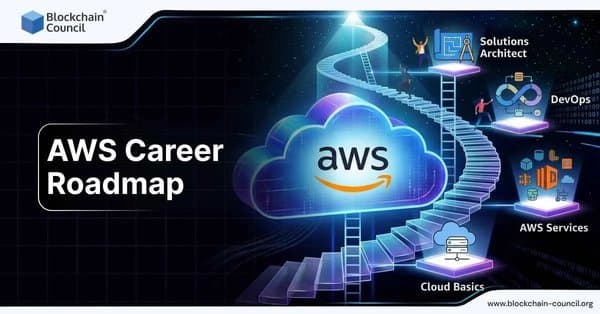
AWS Career Roadmap
A step-by-step guide to building a successful career in Amazon Web Services cloud computing.
Top 5 DeFi Platforms
Explore the leading decentralized finance platforms and what makes each one unique in the evolving DeFi landscape.