

Blockchain Product Management Frameworks for Web3 Startups

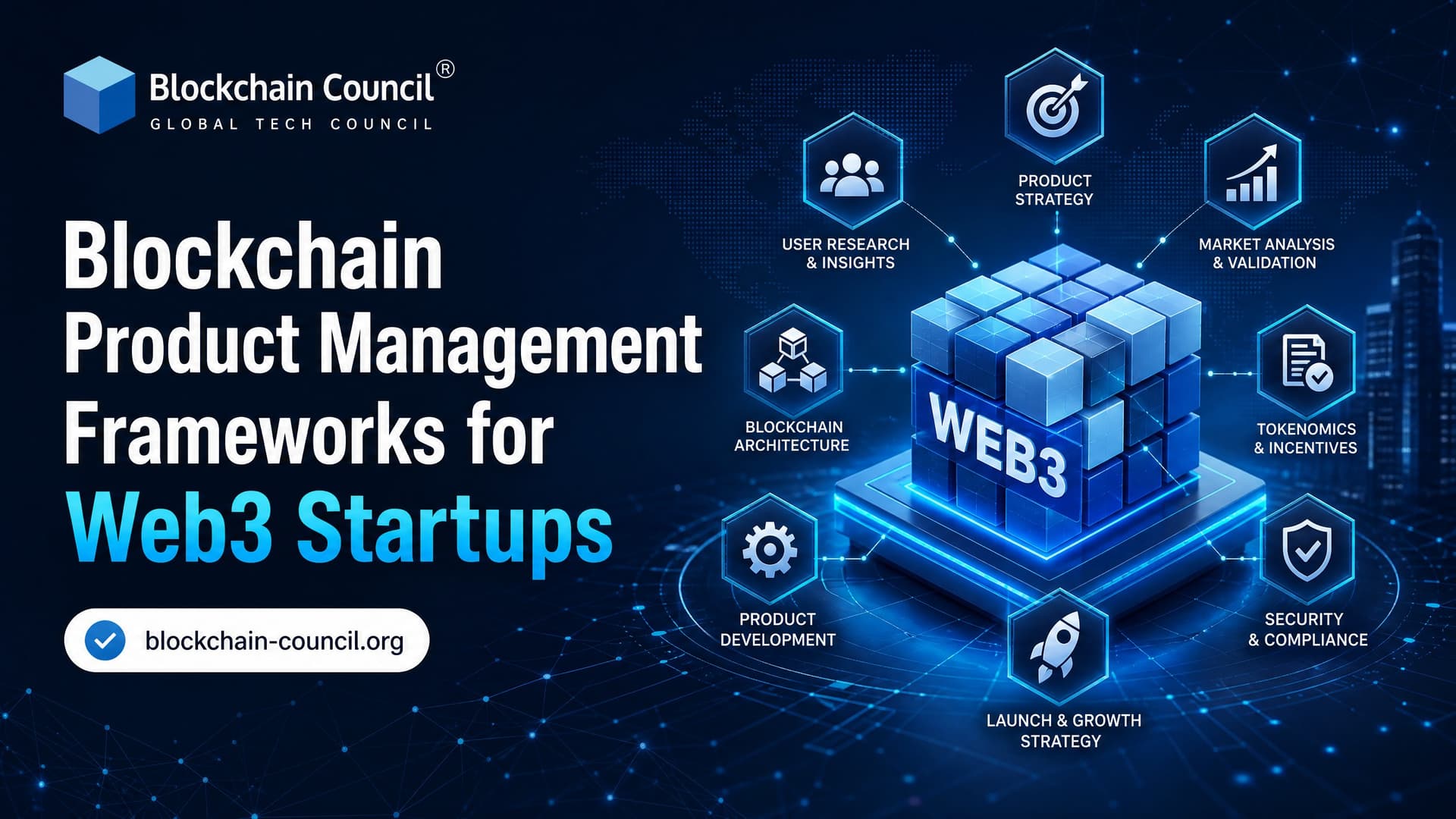
Blockchain product management for Web3 startups is not classic product management with a token bolted on at the end. You still need discovery, positioning, roadmaps, and metrics. But you also manage wallets, gas costs, governance, smart contract risk, token incentives, and a community that can challenge your roadmap in public.
That changes the job. A good Web3 product manager has to think like a PM, a protocol designer, a security reviewer, and a community operator. Not all at once every day, thankfully. But enough to know when a product decision creates a technical or economic risk.

What Makes Blockchain Product Management Different?
In a Web2 product, you can often test a feature, hide the messy parts, and ship a fix later. In Web3, some decisions are hard to undo. A deployed smart contract may control user funds. A token distribution may shape user behavior for years. A governance vote may happen in public before the team is ready.
Three differences matter most for Web3 startups:
- The role is broader: You may own token utility, incentives, partnerships, governance process, and community feedback, not only feature delivery.
- The data is uneven: On-chain data is public, but user intent is hard to read. A wallet address tells you what happened, not why.
- The work is public: Roadmap debates often play out on Discord, Farcaster, X, Telegram, Snapshot, or DAO forums.
There is another hard truth. The addressable market is smaller than a comparable Web2 product if users must hold crypto or NFTs to take part. That does not mean the market is weak. It means your first segment has to be precise. "Everyone with a phone" is not a Web3 go-to-market plan.
A Practical Framework for Web3 Startup Product Teams
The strongest blockchain product management frameworks combine standard PM discipline with crypto-native checks. Use the following model when you build or assess a Web3 product.
1. Define the User by Wallet Behavior, Not Just Persona
Traditional personas still help, but they are not enough. In Web3, segment users by what they actually do on-chain.
- Do they use MetaMask, Rabby, Coinbase Wallet, or embedded wallets?
- Are they active on Ethereum mainnet, Solana, Polygon, Base, Arbitrum, or another network?
- Do they hold stablecoins, governance tokens, NFTs, liquid staking tokens, or no assets yet?
- Have they used DeFi protocols, NFT marketplaces, DAOs, or bridges?
This wallet-centric view prevents vague targeting. A DeFi power user who understands slippage and approvals has different needs from a creator minting a first NFT. Treat them differently from day one.
2. Validate the Problem Before Adding a Token
A token is not a product requirement. It is an incentive and coordination mechanism. Sometimes it helps. Often it adds regulatory, economic, and user-experience complexity.
Before you propose a token, ask:
- What user behavior are we trying to encourage?
- Can the product work without a token?
- Does the token provide access, governance, payments, staking, rewards, or some combination?
- Who receives supply at launch, and on what vesting schedule?
- What happens when users can freely sell or move the asset?
To be blunt, many startup token models confuse attention with utility. If users only hold the token because they expect price appreciation, you do not have product-market fit. You have market sentiment.
3. Build Tokenomics Around Incentive Alignment
Tokenomics should sit inside the product framework, not outside it. Product managers need to understand supply, distribution, emissions, vesting, governance rights, rewards, and long-term utility.
A simple tokenomics review should cover:
- Supply: Fixed, inflationary, or dynamically adjusted?
- Distribution: Team, investors, community, treasury, ecosystem partners.
- Utility: Access, payments, governance, staking, reputation, rewards.
- Vesting: Does insider supply enter the market too quickly?
- Security: Can incentives be gamed by bots, Sybil wallets, or flash loans?
This is where classic pricing and growth skills meet protocol economics. If you want a structured learning path, Blockchain Council's Certified Blockchain Expert and Certified Web3 Expert cover the business and technical foundations behind token-based products.
Roadmapping for Smart Contracts and Protocol Releases
Web3 roadmaps need more caution than SaaS roadmaps. You can change a button label tomorrow. You cannot casually change a smart contract that already holds funds unless you designed upgradeability, governance permissions, and migration paths up front.
A practical Web3 roadmap should include:
- Prototype: Validate flows with testnet contracts and a small user group.
- Threat model: Identify economic, contract, oracle, wallet, and bridge risks.
- Internal test: Use tools such as Hardhat, Foundry, Slither, and OpenZeppelin libraries.
- Audit: Schedule the review before mainnet, not after marketing has announced a launch date.
- Staged launch: Cap deposits, limit permissions, or use allowlists where appropriate.
- Monitoring: Track contract events, failed transactions, abnormal token flows, and governance activity.
Here is a detail that catches beginners. MetaMask network methods expect chain IDs as hexadecimal strings. Ethereum mainnet is 0x1, not 1. Sepolia is 0xaa36a7, not just 11155111. A PM does not need to write every integration, but you should know enough to spot why onboarding breaks during QA.
Security and Trust Are Product Requirements
Security is not only an engineering checklist. In blockchain product management, it is part of the user promise. Users cannot audit every contract they connect to. Most will not understand token approvals, upgradeable proxies, bridge assumptions, or oracle manipulation.
Build safety into the product experience:
- Show clear transaction previews before wallet signing.
- Explain approvals, spending limits, and revocation options.
- Avoid unlimited token approvals unless there is a strong reason.
- Publish audit reports and known limitations in plain language.
- Create an incident response plan before launch.
- Use bug bounty programs when the risk profile justifies it.
Security also shapes positioning. A DeFi product handling deposits needs a stricter launch process than an NFT membership badge. Do not copy a framework from a lower-risk product and apply it to financial infrastructure.
Governance and Community as Product Surface
For DAOs and tokenized communities, governance is part of the product. Users may vote on grants, fees, upgrades, treasury allocations, or roadmap priorities. So the PM has to design decision flows, not only app screens.
A governance framework should define:
- Which decisions stay with the core team?
- Which decisions go to token holders?
- Are votes binding or signaling only?
- What quorum and proposal thresholds apply?
- Will voting happen on-chain or through tools such as Snapshot?
- How are delegates selected and reviewed?
Start narrow. Early-stage startups that decentralize every small decision usually slow themselves down. A better path is progressive decentralization: keep execution tight while making the roadmap, risks, and governance plan visible.
Choosing the Right Chain and Infrastructure
Chain selection is a product decision. It affects cost, latency, wallet support, liquidity, security assumptions, developer hiring, and user trust.
Work through this decision matrix:
- User location: Where do your target wallets already transact?
- Cost: Will gas fees block frequent use?
- Security: How mature is the network and its bridge model?
- Tooling: Are Hardhat, Foundry, Alchemy, Infura, QuickNode, The Graph, and block explorers well supported?
- Liquidity: Does your product need deep DeFi markets?
- Compliance exposure: Are there jurisdictional issues tied to the asset or protocol design?
Ethereum mainnet offers deep liquidity and strong security, but gas can hurt consumer use cases. Layer 2 networks such as Arbitrum, Optimism, Base, and Polygon can cut costs, but each adds ecosystem and bridge considerations. There is no universal best chain. Pick the one that fits the user job.
Metrics for Blockchain Product Management
Web3 metrics need a hybrid dashboard. Mix product analytics, on-chain analytics, and community signals.
- Product metrics: Activation, retention, feature usage, support tickets, conversion.
- Protocol metrics: Transaction count, active wallets, total value locked, staking participation, gas spend, failed transaction rate.
- Community metrics: Proposal participation, delegate activity, forum quality, Discord support load, sentiment trends.
- Economic metrics: Token velocity, holder concentration, emissions, treasury runway, liquidity depth.
Be careful with vanity metrics. Active wallets can be inflated. TVL can leave quickly. Discord size does not equal trust. Look for repeated value creation: users returning because the product helps them do something better with assets they already own.
Career Skills for Web3 Product Managers
Glassdoor data cited in industry analysis puts the average US blockchain product manager salary near 167,000 USD per year, with higher compensation possible in senior roles or startups that add equity or tokens. Pay is high because the skill set is rare.
If you want to build competence, focus on five areas:
- Blockchain fundamentals, including consensus, wallets, smart contracts, and cryptography basics.
- Solidity 0.8.x concepts, ERC-20, ERC-721, ERC-1155, and upgradeability risks.
- Tokenomics and incentive design.
- Governance operations and community communication.
- Security, compliance, and launch risk management.
For structured learning, look at Blockchain Council certifications such as Certified Blockchain Developer, Certified Smart Contract Developer, and Certified Blockchain Architect, depending on whether your goal is product leadership, technical execution, or architecture review.
What Web3 Startups Should Do Next
Start with a one-page product framework before you write the whitepaper. Define the user, the on-chain behavior, the problem, the token's purpose, the governance scope, the security plan, the chain choice, and the metrics that prove value. If any section feels vague, do not hide it behind token language.
Your next step is practical. Map one feature from discovery to mainnet release, including contract audit, wallet QA, community review, and post-launch monitoring. If you are building the skills to lead that process, begin with Certified Web3 Expert or Certified Blockchain Expert, then add developer-focused training if you need to work closer to smart contract teams.
Related Articles
View All
Blockchain
Product Discovery for Blockchain Products: A Step-by-Step Guide for Web3 Product Managers
A practical Web3 product discovery guide covering wallet behavior, token validation, governance, security, metrics, and testnet pilots.

Blockchain
Agile for Blockchain Product Managers: Managing Iterative Web3 Development
Learn how agile for blockchain product managers adapts sprint planning, audits, governance, compliance, and Web3 metrics for safer iterative delivery.

Blockchain
Blockchain Product Manager Interview Tips to Land Your Next Web3 Role
Practical blockchain product manager interview tips for Web3 roles, covering technical literacy, security, community, metrics, and PM tradeoffs.
Trending Articles
How Blockchain Secures AI Data
Understand how blockchain technology is being applied to protect the integrity and security of AI training data.
What is AWS? A Beginner's Guide to Cloud Computing
Everything you need to know about Amazon Web Services, cloud computing fundamentals, and career opportunities.

Can DeFi 2.0 Bridge the Gap Between Traditional and Decentralized Finance?
The next generation of DeFi protocols aims to connect traditional banking with decentralized finance ecosystems.