
Blockchain Private Key QR Code: How Air-Gapped QR Wallets Protect Your Keys in 2026
 Suyash Raizada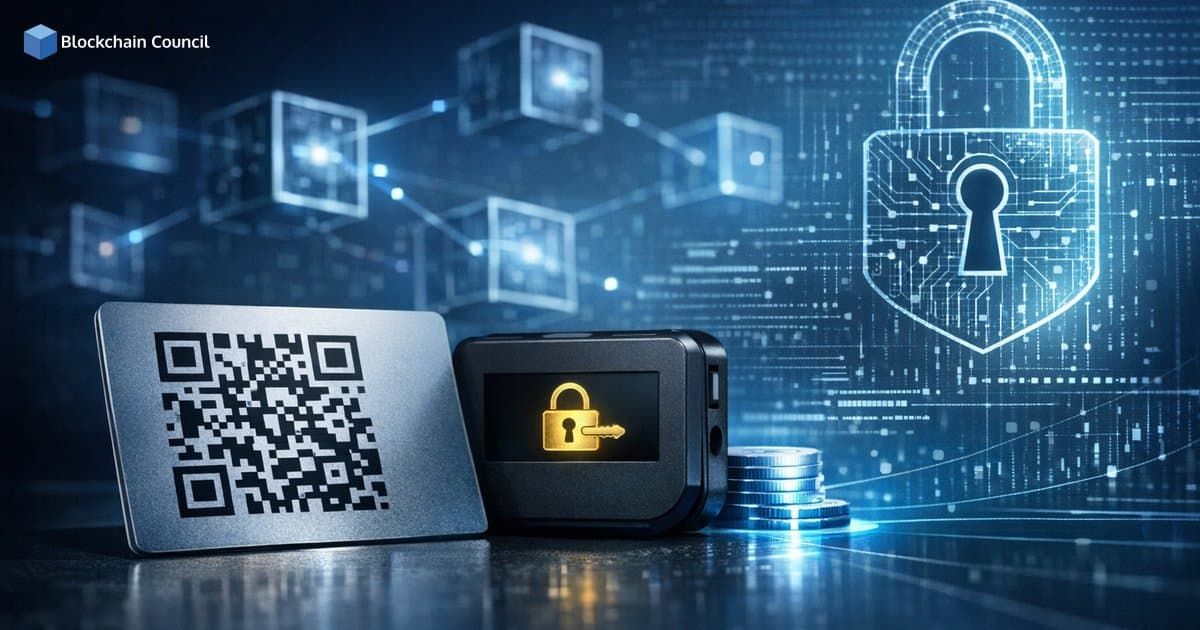
Blockchain private key QR code workflows are becoming a practical standard for self-custody users who want stronger protection against malware, phishing, and remote wallet drainers. Instead of connecting a signer device to the internet or to a computer over USB, Bluetooth, or Wi-Fi, an air-gapped wallet uses QR codes to pass transaction data back and forth while keeping private keys offline. This design reduces the attack surface at the exact point attackers target most: key exposure and signing operations.
In 2026, rising Web3 losses and increasingly sophisticated social engineering have pushed the industry toward isolation-first custody. Threat reports consistently identify operational compromises and key custody failures as dominant drivers of illicit crypto outcomes. Because blockchain transactions are generally irreversible, a leaked private key often means permanent loss. That is why blockchain private key QR code patterns are frequently recommended for maximum isolation in advanced self-custody setups.

If you are learning through a Certified Blockchain Expert, pursuing an AI certification, or becoming a Cryptocurrency Expert, this concept will help you understand secure key management in crypto systems.
What a Blockchain Private Key QR Code Actually Is
A QR code can represent many different things in crypto. The phrase blockchain private key QR code typically refers to one of the following:
A QR code that encodes a private key directly - generally unsafe unless the key is strongly encrypted and handled entirely offline.
A QR code that encodes an encrypted secret or credential that can be unlocked only through a secure process, such as a biometric-gated encrypted identity or protected key material.
A QR code that encodes transaction data to be signed by an offline device, where the private key never leaves the secure environment.
Modern air-gapped hardware wallets use QR codes for the third category: passing unsigned and signed transaction payloads between an online companion app and an offline signer device. This approach protects the private key by ensuring it never touches an internet-connected system.
Why QR-Based Key Isolation Matters in 2026
Attackers rarely need to break cryptography. They target the environment surrounding keys: compromised browsers, clipboard hijackers, malicious extensions, phishing pages, and fake wallet prompts. Private key compromise remains central to advanced attacks because it bypasses every other security layer.
QR-based air-gapping addresses this by doing three things:
Reducing remote attack vectors by eliminating data connections commonly abused by malware, such as USB stacks, Bluetooth pairing, and Wi-Fi channels.
Moving signing to an offline device where the private key is generated and remains isolated.
Improving human verification by giving users a dedicated screen to review transaction details before signing.
This aligns with the foundational self-custody principle: not your keys, not your coins. Controlling the signing key in a hardened, isolated environment reduces dependency on third parties and lowers exposure to common online threats.
How QR Signing Works
A typical air-gapped QR wallet flow follows these steps:
Create an unsigned transaction in an online companion app on a phone or desktop.
Display the unsigned transaction as a QR code on the online device.
Scan the QR code with the offline signer - the hardware wallet.
Verify details on the offline signer, including recipient, amount, fees, and network.
Sign the transaction offline using the private key stored in the device.
Display the signed transaction as a QR code on the offline signer.
Scan the signed QR code back into the online app to broadcast to the network.
In this model, the blockchain private key never becomes a QR code. The QR codes carry transaction data, not raw secrets.
Three Real-World Models Using Blockchain Private Key QR Code Patterns
1. Ellipal-Style Fully Air-Gapped QR Signing
Air-gapped wallets such as Ellipal use QR codes exclusively for transaction signing. Private keys are generated offline and the device stays isolated from all networks. Users approve actions by scanning and displaying QR codes, which prevents malware on an online phone from directly extracting key material.
Trade-off: Frequent scanning can feel slower than wired workflows, particularly for active DeFi users. The benefit is maximum online isolation.
2. CoolWallet Go-Style Tap-to-Sign with Secure Element and QR-Compatible Recovery
Some wallets prioritize daily usability while still hardening the signing process. CoolWallet Go uses an EAL6+ secure element and tap-to-sign NFC, while also supporting QR-compatible methods alongside seedless backup concepts designed to reduce social engineering pressure around traditional seed phrases.
Trade-off: Convenience features reduce friction, but strong operational habits remain essential, particularly when interacting with unfamiliar DApps.
3. ZELF-Style Encrypted Credential QR Retrieval with Decentralized Storage
ZELF advances the concept by encoding fully encrypted private keys or credentials into QR-compatible binaries stored on decentralized networks such as IPFS or on-chain storage. Access is gated by biometric liveness checks without storing raw biometrics or static keys in plaintext.
Trade-off: This model shifts part of the security boundary toward the authentication design and encrypted storage integrity. It offers a compelling approach for device-independent recovery, but users should clearly understand the recovery assumptions and trust model before adopting it.
Security Benefits and Risks
Key Benefits
Air-gapped isolation lowers exposure to malware that targets connected signers.
Reduced phishing impact during signing when users verify transaction details on the offline device screen.
Strong fit for high-value custody where minimizing remote compromise risk is the top priority.
Common Risks and Mistakes
Encoding raw private keys into a QR code and storing it like a password. If someone scans or photographs it, funds can be drained immediately.
Screenshot leakage. Displaying sensitive QR codes on an internet-connected device risks exposure through screenshots, cloud backups, or automatic sync.
Blind signing. Approving a transaction without confirming the recipient and contract details is a leading cause of wallet drain incidents.
Physical theft. Air-gapped does not mean theft-proof. Hardware protections such as tamper resistance and self-destruct mechanisms remain important.
Best Practices for Using a Blockchain Private Key QR Code Safely
Apply these controls to strengthen QR-based custody:
Use QR for transaction transfer, not for raw keys. If you must store secrets in QR format, use strong encryption and handle everything offline.
Verify on the secure screen. Always check address, amount, chain, and contract interaction details on the signer display before approving.
Harden your online device. Even when keys stay offline, malware can alter destination addresses before you scan. Verification on the offline device is critical.
Use secure element-backed devices where possible. Industry practice increasingly favors combining QR air-gapping with secure elements and physical tamper protections.
Plan recovery carefully. Understand whether you rely on a seed phrase, seedless recovery, encrypted backups, or decentralized credential storage. Document your recovery steps and test them safely before you need them.
Segment risk. Consider separate wallets for high-value cold storage and daily DeFi activity, with different limits and policies for each.
Where This Is Heading: QR Plus Biometrics and MPC
The trajectory through late 2026 points toward hybrid models that combine QR isolation with biometric-gated access and MPC-based signing. The goal is to reduce reliance on static secrets that can be phished while still supporting multi-chain DeFi and NFT usage. Developments to watch include:
Decentralized encrypted storage for recovery artifacts, reducing single points of failure.
Authentication patterns designed to counter deepfake-driven scams and social engineering attempts.
Stronger physical hardening such as tamper-resistant casings, signer velocity controls, and robust anti-exfiltration defaults.
If you are learning through a Certified Blockchain Expert, an AI certification, or training as a Cyber Security Expert, this approach shows how air-gapped wallets protect private keys from online threats.
Conclusion
A blockchain private key QR code approach, when implemented as QR-based air-gapped signing or encrypted credential handling, directly addresses the core custody problem facing users in 2026: keeping private keys out of reach of online attackers. The most effective designs use QR codes to transfer transaction data while private keys remain isolated in secure hardware, reinforced by secure elements and physical tamper protections. If you adopt QR-based custody, prioritize verification discipline, thorough recovery planning, and consistent operational security. Those habits, more than any single tool, determine whether self-custody remains safe at scale.
Related Articles
View All
Blockchain
Blockchain in Intellectual Property: Ownership, Provenance, and Licensing in 2026
Learn how blockchain in intellectual property improves ownership proof, provenance, anti-counterfeiting, and smart licensing, plus what to expect in 2026.

Blockchain
Top Blockchain Platforms of 2026
If you are new to Blockchain Technology, this article will help you gain a clear understanding of top Blockchain platforms and decide the best platform for your project.

Blockchain
Blockchain: Why You Need it in 2026?
Continuous technological advancements have transformed business and society, and blockchain is poised to reshape the global economy. By the end of 2021, the total market value of cryptocurrencies reached nearly $3 trillion, highlighting its rapid growth.
Trending Articles

The Role of Blockchain in Ethical AI Development
How blockchain technology is being used to promote transparency and accountability in artificial intelligence systems.

AWS Career Roadmap
A step-by-step guide to building a successful career in Amazon Web Services cloud computing.

Top 5 DeFi Platforms
Explore the leading decentralized finance platforms and what makes each one unique in the evolving DeFi landscape.