

Blockchain and ERP Integration: Connecting SAP and Oracle with Distributed Ledgers

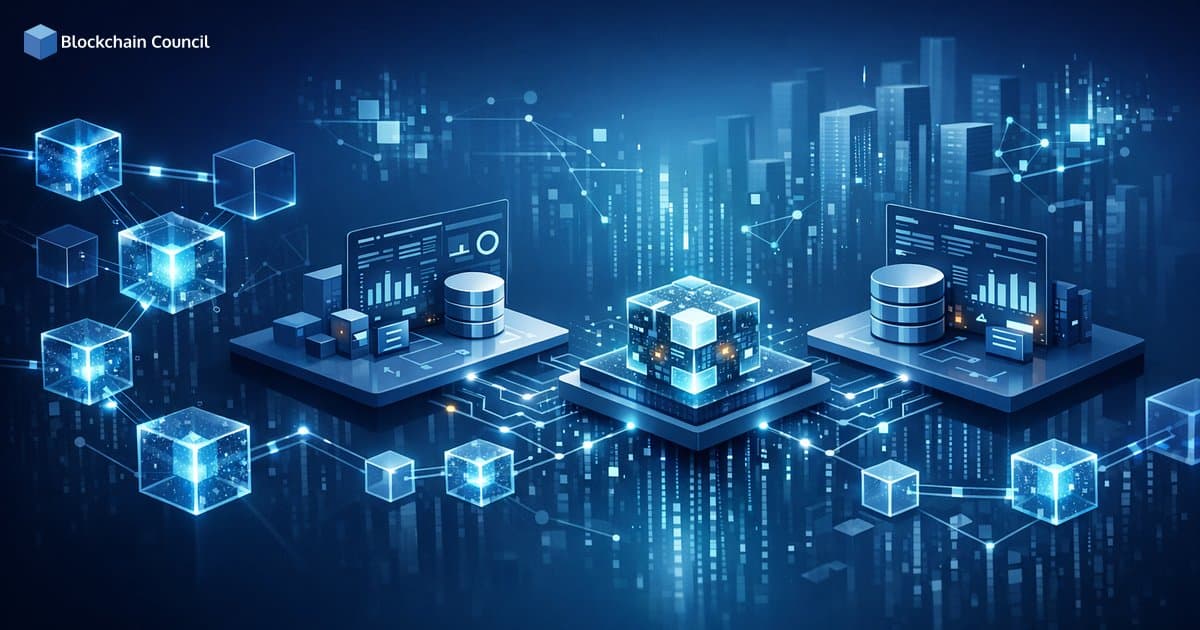
Blockchain and ERP integration is becoming a practical approach to connecting systems of record like SAP and Oracle with shared, tamper-resistant ledgers across multiple organizations. Rather than replacing ERP, distributed ledgers typically function as a cross-company trust layer: selected transactions are anchored on-chain, and verified blockchain events are pushed back into ERP workflows for automation, auditability, and reduced reconciliation.
As enterprise platforms expand blockchain tooling, often through permissioned networks like Hyperledger Fabric, the question is shifting from "Should we use blockchain?" to "Where does blockchain add measurable value to SAP and Oracle processes?" This article covers the current state of blockchain-ERP integration, common architectures, benefits and risks, real use cases, and an implementation roadmap for enterprise teams.

What Blockchain-Enabled ERP Means in Practice
In most SAP and Oracle implementations, blockchain is added as a complementary layer rather than a replacement. Typical characteristics include:
- Writing selected ERP events to a distributed ledger - often as hashes, proofs, or summaries - to improve integrity and cross-company trust.
- Subscribing to blockchain events inside ERP workflows, such as triggering goods receipt, releasing payments, or updating supply chain status when on-chain conditions are met.
- Using smart contracts to encode multi-party rules, such as delivery-confirmation logic shared by a buyer, supplier, and logistics provider.
The core principle: ERP remains the internal system of record, while blockchain creates a shared and verifiable history of critical events across company boundaries.
How SAP and Oracle Position Blockchain for ERP
SAP: Blockchain Services and Integration Patterns
SAP supports enterprise blockchain through SAP Business Technology Platform (BTP) blockchain services and integration patterns that connect SAP ERP (ECC or S/4HANA) to external networks through APIs or middleware. A consistent design principle in SAP-oriented guidance is that blockchain complements ERP - strengthening data integrity, transparency, and automation while keeping ERP as the system of record.
A recurring requirement in SAP blockchain projects is strong master data governance. If material IDs, supplier IDs, batch numbers, or location codes are inconsistent across parties, blockchain will preserve those inconsistencies immutably, which can amplify operational friction rather than reduce it.
Oracle: Blockchain Platform Integrated with ERP and SCM
Oracle provides Oracle Blockchain Platform, built largely on Hyperledger Fabric, with integration accelerators and API-based connectivity into Oracle ERP Cloud and Oracle SCM Cloud. Oracle's primary focus has been supply chain traceability and shared visibility across trading partners - areas that align well with blockchain's strengths in multi-party provenance and auditability.
Common Architectural Patterns for Blockchain and ERP Integration
Across SAP and Oracle ecosystems, several repeatable patterns have emerged.
1) ERP-Native Blockchain Modules and Services
This approach uses vendor-provided blockchain services and adapters:
- SAP BTP blockchain services and integration content that connects S/4HANA processes to enterprise ledgers.
- Oracle Blockchain Platform with SDKs, REST APIs, and ERP and SCM integration accelerators.
When it fits: when your organization prefers vendor-aligned tooling, supportability, and standardized integration assets.
2) Middleware or iPaaS Integration Layers
Here, ERP sends business events to an integration layer that translates them into blockchain transactions and consumes blockchain events back into ERP. Some enterprise implementations use a blockchain-agnostic integrator pattern, where the same ERP integration can support multiple ledger technologies.
When it fits: when you expect a multi-ledger environment (consortia running different stacks) or want to avoid tight coupling to a single blockchain implementation.
3) Sidecar or Shadow Ledger Architecture
In many production-oriented designs, ERP posts the full transaction internally while only a subset of fields is written to blockchain. This typically includes:
- Document identifiers (PO, ASN, invoice IDs)
- Event timestamps
- Batch, serial, or lot identifiers
- Cryptographic hashes of off-chain documents
This approach creates a shared provenance and audit trail without pushing high-volume ERP data onto the ledger.
Where Blockchain-ERP Integration Delivers Value
Enterprise interest is driven by use cases where traditional integration falls short: multi-party trust, disputes, audit complexity, and fragmented visibility across supply chain tiers.
1) Transparency, Traceability, and Auditability
ERP is strong at internal control but weaker at establishing shared truth across organizations. A distributed ledger can provide:
- End-to-end traceability across handoffs (manufacture, ship, receive, inspect, transfer ownership)
- Tamper-resistant audit trails for compliance and investigations
- Faster dispute resolution when all parties reference the same timeline of events
2) Stronger Data Integrity and Resilience
Blockchain's cryptographic linking and consensus mechanisms make it difficult to rewrite history without detection. For ERP processes, this is valuable when the record itself is a control, for example:
- Batch genealogy and serialization data
- Proofs of delivery or custody
- Commitments and approvals that must remain verifiable over time
Enterprise architecture discussions increasingly include the role of cryptographic protections and the need to plan for crypto agility as standards evolve.
3) Automation via Smart Contracts
Smart contracts can automate shared rules that span organizational boundaries, such as:
- Releasing payment after on-chain delivery confirmation
- Applying compliance checks before transferring custody
- Automating intercompany settlement and reconciliation logic
In practice, enterprises typically use smart contracts for well-scoped logic with clear exception handling, not as a wholesale replacement for business rules managed within ERP.
4) Operational Efficiency and Reduced Reconciliation
When trading partners share the same ledger, it can reduce duplicative data entry and improve cycle times for:
- Goods receipt and inventory updates
- Invoice matching and dispute handling
- Intercompany postings and eliminations
Real-World Use Cases Connecting SAP or Oracle to Distributed Ledgers
SAP and Pharma Track-and-Trace
Pharmaceutical traceability is a well-established use case, where multiple parties must share serialized product movement data to meet regulatory requirements and reduce counterfeit risk. In implementations integrating SAP ERP with a permissioned ledger such as Hyperledger Fabric, logistics and serialization events are mirrored on-chain while SAP maintains operational and financial postings.
SAP Supply Chain and Asset Tracking
In SAP-centric supply chain scenarios, each custody handover can be written to a shared ledger and reflected back into SAP inventory and logistics tables. When combined with verified delivery signals, conditional payment logic becomes feasible with stronger auditability.
Oracle ERP Implementations for Intercompany Settlement and Provenance
Oracle-oriented implementations developed by systems integrators have focused on:
- Automated intercompany settlements recorded on a shared ledger to reduce reconciliation effort and disputes.
- Supply chain provenance where item creation, shipping, receiving, and quality checks are captured on-chain and cross-referenced with Oracle SCM and financial modules.
Tokenization and ERP Reconciliation
Early financial services implementations link on-chain tokenized assets (such as tokenized securities) with ERP accounting. The on-chain ledger represents positions and transfers, while SAP or Oracle manages general ledger entries, controls, and compliance reporting. The integration focus becomes two-way reconciliation, valuation, and audit evidence across on-chain and off-chain records.
Key Challenges and Risks to Plan For
Integration Complexity and Total Cost
Blockchain adds new layers to your ERP landscape: node operations or managed services, identity and key management, middleware, smart contract development, and consortium governance. Skilled teams are required across security, integration, and platform engineering.
Master Data Quality and Process Harmonization
Blockchain does not fix incorrect data. If partners disagree on item identifiers or process definitions, a shared ledger can preserve those disagreements rather than resolve them. Master data management and process alignment must be core components of any program plan.
Governance, Privacy, and Data Residency
Multi-party networks must define:
- Who operates nodes and who holds administrative rights
- How smart contracts are upgraded and versioned
- What data is stored on-chain versus off-chain
Many enterprises store only hashes or proofs on-chain and retain sensitive content in ERP or document management systems, balancing verifiability with confidentiality requirements.
Scalability and Performance Constraints
ERP transaction volumes can exceed typical ledger throughput. Most successful designs are selective: they record critical milestones and proofs, not every ERP posting or sensor event.
A Practical Roadmap for SAP and Oracle Teams
- Start with a problem-first use case such as reconciliation bottlenecks, counterfeit risk, recall latency, or intercompany disputes.
- Select the right blockchain model (permissioned, consortium, or hybrid) based on privacy and governance requirements.
- Choose an integration strategy: vendor-native services, middleware, or a blockchain-agnostic layer for multi-ledger scenarios.
- Design smart contracts with controls, including exception handling, legal alignment, and audit requirements.
- Fix master data and harmonize processes across partners before scaling.
- Pilot with measurable KPIs such as dispute frequency, reconciliation time, recall response time, and working capital impact.
- Train teams and operationalize monitoring, incident response, key management, and change management processes.
For organizations building internal capability, role-based learning paths covering integration architecture, smart contract development, and platform operations can accelerate delivery. Blockchain Council offers programmes including Certified Blockchain Professional, Certified Smart Contract Developer, and Certified Hyperledger Fabric Developer for teams responsible for these disciplines.
Conclusion: Treat Blockchain as a Trust Layer, Not a Replacement for ERP
Blockchain and ERP integration is advancing from experimentation to targeted production deployment in industries where multi-party trust, compliance, and traceability are core requirements. SAP and Oracle commonly implement blockchain as a sidecar trust layer: ERP remains the system of record, while a permissioned ledger provides shared provenance, tamper-resistant audit trails, and automation through smart contracts.
The strongest outcomes come from tight scoping, selective on-chain data design, disciplined master data governance, and clear consortium rules. For SAP and Oracle practitioners, this approach turns distributed ledgers from a conceptual technology into an operational capability that improves auditability, reduces disputes, and enables cross-company automation at scale.
Related Articles
View All
Blockchain
How Blockchain Was Introduced: Bitcoin and the Birth of Decentralized Ledgers
Learn how blockchain was introduced through Bitcoin, from timestamping research and digital cash to proof-of-work, mining, and decentralized ledgers.

Blockchain
Blockchain Distributed Systems Engineering: A Practical Guide
Learn how Blockchain Distributed Systems Engineering combines consensus, fault tolerance, smart contracts, security, and software process for real-world systems.

Blockchain
Blockchain Byzantine Fault Tolerance Systems: How BFT Keeps Ledgers Honest
Blockchain Byzantine Fault Tolerance Systems help ledgers stay correct when validators fail or act maliciously. Learn how BFT works, where it fits, and its trade-offs.
Trending Articles
The Role of Blockchain in Ethical AI Development
How blockchain technology is being used to promote transparency and accountability in artificial intelligence systems.

Top 5 DeFi Platforms
Explore the leading decentralized finance platforms and what makes each one unique in the evolving DeFi landscape.

Can DeFi 2.0 Bridge the Gap Between Traditional and Decentralized Finance?
The next generation of DeFi protocols aims to connect traditional banking with decentralized finance ecosystems.