What Is the Difference Between a Coin and a Token?

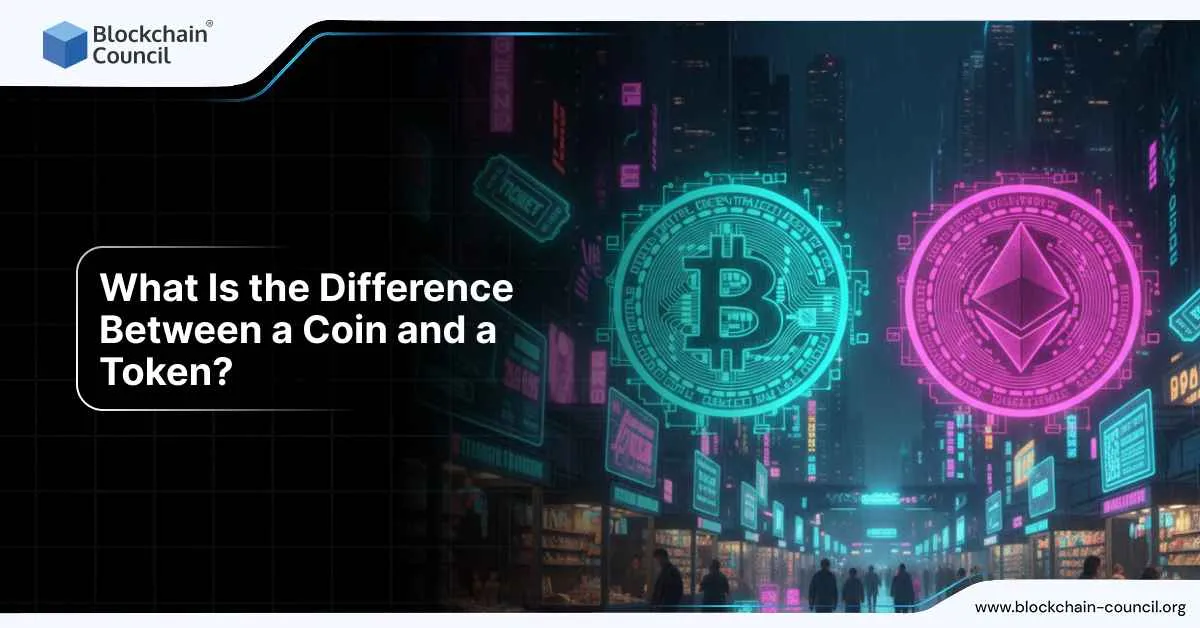
Coins and tokens are two words you’ll hear often in the world of cryptocurrency, but they are not the same thing. The difference is simple: a coin is the native digital currency of its own blockchain, while a token is created on top of an existing blockchain. This distinction affects how each is used, how secure it is, and even how it may be regulated. If you’d like to understand these concepts in depth, structured blockchain technology courses are a great way to build strong foundations.
What Is a Coin?
A coin is the built-in currency of a blockchain. Bitcoin (BTC) is the coin of the Bitcoin network, and Ether (ETH) is the coin of the Ethereum network. These coins keep their networks running by paying miners or validators, covering transaction fees, and often acting as stores of value.

Coins are crucial because they secure the blockchain itself. When you send Bitcoin, for example, you are using a system where thousands of nodes verify your transaction. This makes coins like BTC and ETH independent and highly secure.
Key Features of Coins
- Native to their own blockchain.
- Used for transaction fees, mining, staking, and network security.
- Examples: Bitcoin, Ether, Solana (SOL), Avalanche (AVAX).
What Is a Token?
A token, by contrast, does not have its own blockchain. Instead, it’s built using smart contracts on another blockchain. For example, Tether (USDT) and Shiba Inu (SHIB) both live on Ethereum as ERC-20 tokens.
Tokens are flexible and can represent almost anything: digital assets, governance rights, access to services, or even ownership of real-world items. They are easier to create than coins because developers don’t need to build an entirely new blockchain.
Types of Tokens
- Utility Tokens: Give access to services or products, like in-app currencies.
- Governance Tokens: Let holders vote on protocol changes or updates.
- Security Tokens: Represent real-world assets like equity or property.
- NFTs (Non-Fungible Tokens): Unique digital assets such as collectibles or artwork.
Tokens depend on the host blockchain for security and speed. If the host network is congested or expensive to use, tokens are affected too.
Coins vs Tokens: Main Differences
The most practical way to understand the distinction is to compare them directly.
Comparison Between Coins and Tokens
| Aspect | Coins | Tokens |
| Blockchain Ownership | Have their own blockchain (e.g., Bitcoin, Ethereum) | Built on existing blockchains (e.g., Ethereum, BNB Chain) |
| Function | Secure network, pay fees, act as digital money | Represent assets, provide utility, enable governance |
| Creation | Requires building a blockchain | Created through smart contracts |
| Examples | Bitcoin (BTC), Ether (ETH), Solana (SOL) | Tether (USDT), Shiba Inu (SHIB), Chainlink (LINK) |
| Security | Secured by their own network of validators/miners | Depend on the host blockchain’s security |
| Regulation | Often viewed like commodities (e.g., Bitcoin) | May face securities or consumer asset regulations |
| Adoption | Used broadly as currency or store of value | Used for specific ecosystems, services, or governance |
| Cost/Speed | Depends on native blockchain design | Depends on host blockchain congestion and fees |
| Use Cases | Payments, investment, staking | DeFi apps, NFTs, tokenization of assets |
| Future Trends | Digital money and store of value | Governance, tokenized real-world assets, cross-chain utility |
Why the Difference Matters
Coins and tokens may look similar to newcomers, but they play different roles. Coins secure and fuel entire blockchains. Tokens bring flexibility and allow rapid innovation without building a new chain.
For data professionals, understanding how coins and tokens behave is also part of analyzing transactions and ecosystems. This is where a Data Science Certification can be valuable, helping you connect crypto concepts with analytics and big data.
Current Trends in 2025
- Tokenization of Real-World Assets: Companies are creating security tokens that represent real estate, stocks, or bonds.
- Multi-Chain Tokens: Many tokens are now designed to exist across multiple blockchains, improving access and reducing reliance on a single network.
- Ease of Creation: Projects are launching tokens for governance and utilities instead of building new blockchains, as it’s cheaper and faster.
- Regulatory Focus: Tokens are increasingly under the microscope of regulators, especially when they resemble securities.
For those focused on strategy and business opportunities, the Marketing and Business Certification can help you see how blockchain assets—coins and tokens—fit into growth and consumer engagement strategies.
Conclusion
Coins and tokens are both critical to the cryptocurrency ecosystem, but they serve different purposes. Coins are the backbone of their own blockchains, while tokens bring versatility by running on top of existing ones. Understanding this difference helps investors, developers, and businesses make informed choices.
As the crypto space continues to evolve, the line between coins and tokens will remain important for regulation, innovation, and adoption. By learning how they work, you can better navigate the digital economy and spot opportunities where others might see confusion.