What Programming Languages Are Best for Building Agentic AI?
 Michael Willson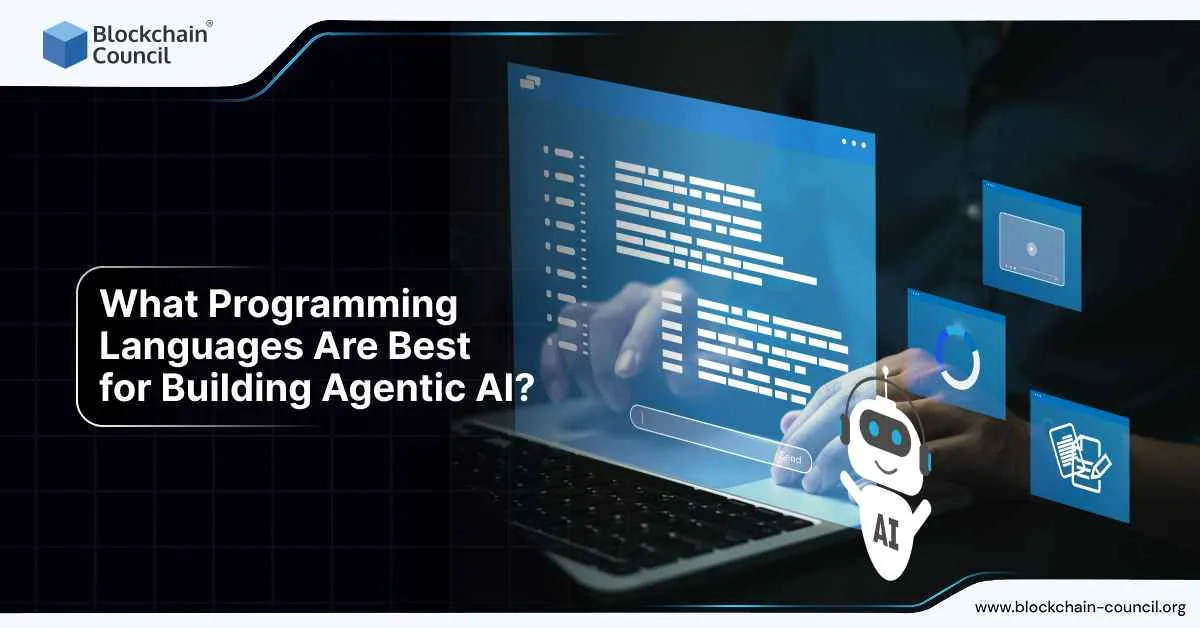
Agentic AI is reshaping how software is built. Unlike traditional AI models that wait for instructions, agentic systems act on their own: they reason, make decisions, and adapt in real time. Building such systems requires languages that balance speed, safety, flexibility, & integration with modern AI frameworks. The choice of programming language can determine how effective, scalable, and secure an agentic AI becomes. For developers preparing to enter this field, an AI certification is a valuable step toward building the expertise needed to choose wisely.
Why the Language Matters
Agentic AI is complex. It doesn’t just run machine learning models; it orchestrates multiple tasks, connects to APIs, manages memory, and interacts with humans or other agents. The language you select defines not only performance but also safety, reliability, and ease of integration. In a world where security and compliance are critical, features like type safety, concurrency models, and runtime governance make a big difference.

Latest Trends in Programming for Agentic AI
Python and Its Ecosystem
Python remains the leader because of frameworks like LangChain and LangGraph. It’s easy to prototype with, has the largest AI library ecosystem, and is supported by almost every agentic AI framework today. However, its slower execution speed can be a limitation for low-latency or high-performance applications.
Mojo for Performance and Scale
Mojo is gaining attention as a next-generation language that combines Python’s simplicity with C-level performance. It offers static typing and memory safety, making it suitable for agentic AI systems that need fast, reliable execution without giving up developer productivity.
Pel for Orchestration
Pel is a new language created specifically for AI agents. Inspired by Lisp, Elixir, and Haskell, it introduces safer control flow and natural language conditions that can be evaluated by large language models. While early in adoption, Pel reflects the growing demand for domain-specific languages designed for agentic workflows.
C++ and HPC Environments
High-performance and scientific computing use cases still rely on C++ pipelines. Agentic systems are even being tasked with rewriting legacy Fortran into optimized C++ using libraries like Kokkos. This shows how agentic AI is reaching into long-established domains of engineering and research.
JavaScript and TypeScript
Web-based agents and customer-facing applications often lean on JavaScript or TypeScript. Their ability to connect with APIs, run in browsers, and support interactive experiences makes them practical choices for lightweight agents.
Security and Reliability Factors
Recent studies highlight that not all languages are equal when it comes to safe AI development. Languages with modern safety features, like strong type systems or better compiler checks, reduce vulnerabilities in auto-generated code. This makes language selection not just a matter of performance but also trustworthiness.
Benefits of Each Language for Agentic AI
| Language | Best Fit |
| Python | Prototyping and rich AI framework ecosystem |
| Mojo | High-performance applications with memory safety |
| Pel | Agent orchestration with safe control flow |
| C++ | Scientific and HPC workloads, optimized pipelines |
| JavaScript / TypeScript | Web-based agents and API integration |
| Fortran → C++ (via Kokkos) | Modernizing legacy scientific code with agents |
| Rust | Memory safety and concurrency for secure agents |
| Julia | Heavy math and scientific computing agents |
| Java / Scala | Distributed multi-agent systems with concurrency |
| C# / .NET | Enterprise-scale workflows using Semantic Kernel |
Challenges Developers Face
Even with the right language, agentic AI comes with risks. The autonomy of agents means errors can cascade quickly if not controlled. Poorly chosen languages or frameworks may lack the safety features needed for secure deployment. Privacy and regulatory requirements also raise the stakes, since agentic AI often handles sensitive data. For data professionals addressing these challenges, a Data Science Certification can provide the analytical skills needed to build robust systems.
Preparing for the Future
Agentic AI development is moving fast, with new tools and languages emerging every year. Business leaders will need to decide which technologies align with their long-term goals. For those focused on leadership and growth, a Marketing and Business Certification can help translate technical capabilities into strategic impact. Developers who want to dive deeper into the agent-driven future can sharpen their expertise with an agentic AI certification.
Beyond Programming Choices
Programming is only one piece of the puzzle. The wider shift in technology involves governance, observability, and security. Decentralized systems are increasingly being paired with AI, which is why blockchain technology courses are becoming an important complement to agentic AI training.
Conclusion
Agentic AI is rewriting the rules of automation, and the languages behind it matter more than ever. Python dominates the present, Mojo and Pel are shaping the future, and C++ remains vital for high-performance environments. JavaScript and TypeScript keep agents close to the user, while Rust, Julia, and others bring specialized advantages. The most reliable approach is not about chasing the latest trend but choosing the language that matches your project’s needs and security requirements. For professionals, building skills across both established and emerging languages—and validating that knowledge through certifications—will ensure they are ready for the next generation of AI development.