AI at CES 2026

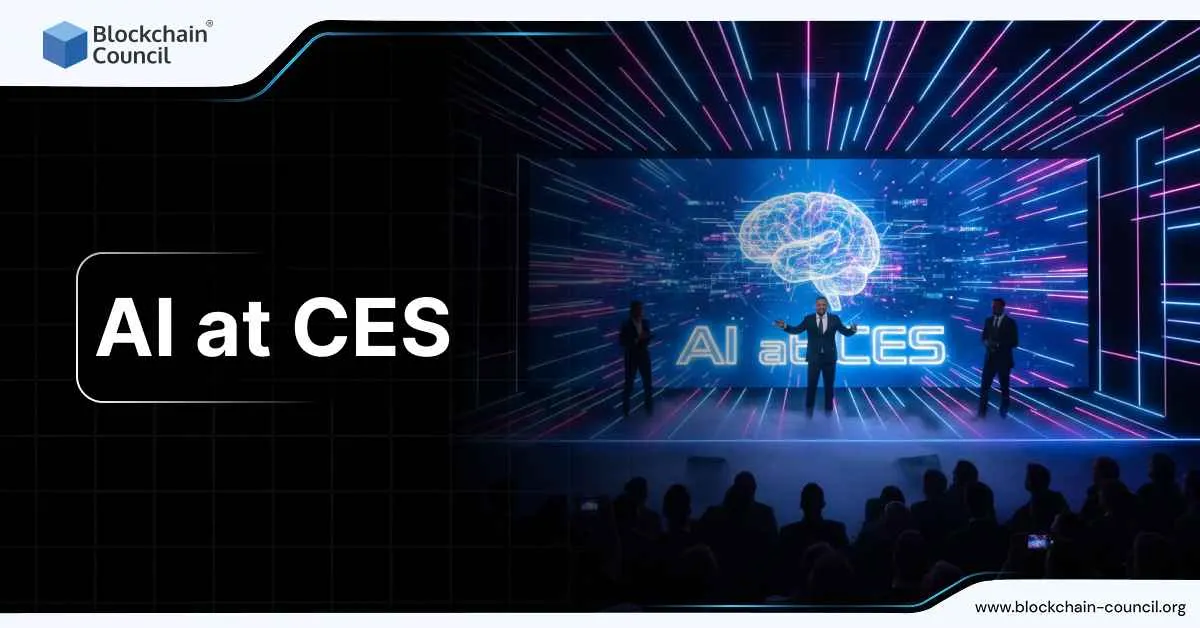
CES 2026 made one thing obvious very quickly. Artificial intelligence is no longer being presented as a separate layer that lives inside apps or chat windows. It is being built directly into machines, devices, and everyday consumer products. Across Las Vegas, AI was shown as something that sees, listens, decides, and acts in the physical world.
This shift matters because it changes how people understand AI. It is no longer only about prompts, models, or cloud APIs. It is about systems that work under real constraints like power, safety, latency, and reliability. Anyone trying to understand this transition properly usually needs structured grounding, which is why many professionals start with an AI Course before moving into specialized areas like robotics, edge computing, or embedded systems.

Physical AI takes center stage
The phrase heard most often at CES 2026 was Physical AI. This was not marketing fluff. It described a clear industry direction.
Physical AI refers to systems that interact with the real world through sensors and actuators. These systems do not just generate text or images. They power robots, vehicles, industrial machines, and smart devices that must react instantly and safely.
Arm formalizes Physical AI
Arm used CES 2026 to announce a major internal reorganization. The company is now structured around three core business lines:
- Cloud and AI
- Edge, including mobile and PC
- Physical AI
The new Physical AI unit combines Arm’s automotive and robotics efforts. This decision reflects a simple technical reality. Cars and robots share the same requirements: energy efficiency, long product lifecycles, real time decision making, and strong safety guarantees. Arm’s move signals that AI systems embedded in physical environments are no longer experimental. They are a core growth strategy.
This is also why many engineers now combine AI knowledge with systems thinking and hardware awareness, skills that align closely with modern Blockchain Technology and distributed system education, where reliability and trust matter as much as raw performance.
NVIDIA reinforces the same direction
NVIDIA’s CES presence echoed the same theme. Robotics, industrial automation, and physical world AI dominated its messaging. The company emphasized platforms that make it easier to build, deploy, and scale robots rather than just showcasing isolated demos.
The combined signal from Arm and NVIDIA was strong. AI is becoming infrastructure for machines, not just software for screens.
AI PCs face a reality check
AI PCs were everywhere at CES, but the conversation became more honest.
Dell publicly acknowledged that consumers are not buying laptops primarily because of AI features. That admission changed the tone across the show floor. Instead of selling AI as a headline feature, companies began positioning it as a background capability that improves everyday experiences.
What AI PCs are really about now
The updated AI PC narrative focuses on:
- Local AI processing for better battery life
- Faster responses without cloud round trips
- Privacy from keeping data on the device
- Productivity gains through automation
Qualcomm leaned heavily into this message with its Snapdragon X series, highlighting efficiency and on device inference. HP positioned AI PCs as tools for business workflows rather than consumer novelty.
This shift explains why AI education is increasingly paired with practical deployment skills. Understanding how AI runs locally on CPUs and NPUs is now part of real product development, not an advanced edge case.
Assistants evolve into agents
Another pattern repeated across CES 2026 was the evolution from assistants to agents.
An assistant answers questions. An agent takes initiative, works across apps, and maintains context over time.
Cross device agents become visible
Lenovo introduced Qira as a cross device voice assistant designed to operate across PCs, phones, and other devices. The system blends cloud intelligence with local processing to maintain continuity and responsiveness.
Many companies showcased similar ideas under different names. AI companions, personal agents, and smart coordinators all pointed toward the same goal. AI that understands context across devices and over time.
This is also where AI intersects with broader digital ecosystems, governance, and business workflows. Professionals exploring this space often connect AI knowledge with Marketing and Business Certification to understand how intelligent systems fit into real organizational processes.
AI moves into TVs and the home
Televisions and home devices remained a major AI showcase at CES 2026.
Samsung emphasized AI driven personalization, voice interaction, and real time translation as part of its broader smart living strategy. LG continued pushing AI powered TVs as adaptive platforms rather than passive screens.
Across CES coverage, AI was presented as the interface itself. Voice, vision, and contextual understanding are becoming the default way people interact with devices in their living spaces.
Chips become the AI distribution layer
Semiconductors quietly tied the entire CES AI story together.
NVIDIA highlighted its next generation platform roadmap and open models for healthcare, robotics, and autonomous systems. Qualcomm connected its PC chip strategy with robotics and embedded AI, reinforcing the idea that AI compute is spreading everywhere.
At CES 2026, chips were no longer discussed only in terms of performance. They were framed as enablers of AI everywhere, from laptops to robots to home devices.
Conclusion
CES 2026 did not present a future vision. It showed a transition already underway.
AI is moving out of the cloud and into devices. It is becoming physical, local, and system driven. The companies shaping this shift are focusing on efficiency, safety, and real world reliability, not just model size or benchmark scores.
For anyone trying to understand AI in 2026, this context matters more than isolated announcements. AI is no longer just software. It is becoming part of how the physical world works.