

The Rise of AI Ethics: How Institutions Are Responding
 Suyash Raizada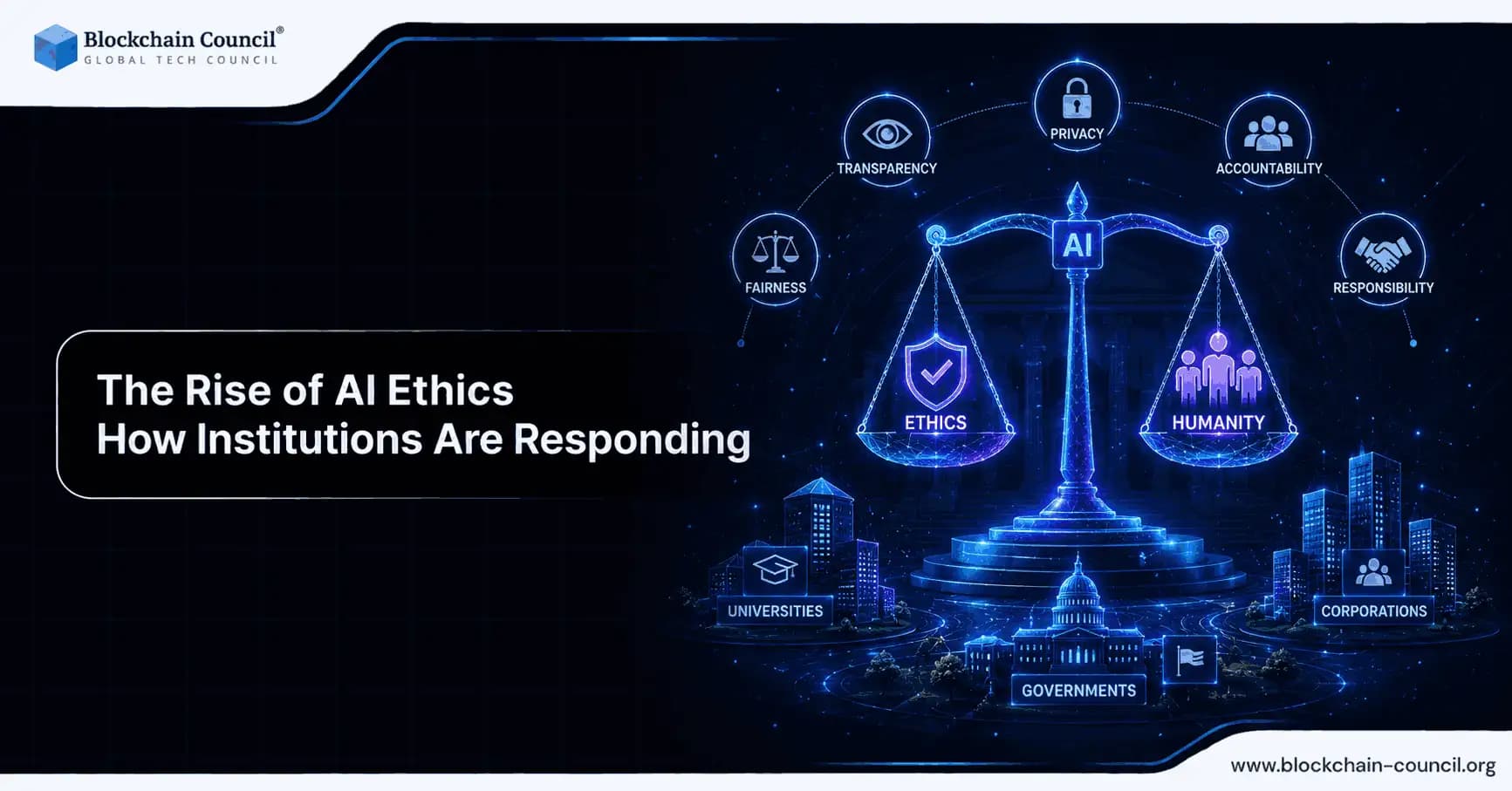
Artificial intelligence is transforming nearly every sector of modern society. Businesses use AI to automate workflows, governments rely on AI for public services, healthcare providers use AI for diagnostics, and educational institutions increasingly integrate AI-powered systems into learning environments. While these technologies create enormous opportunities for innovation and efficiency, they also raise serious ethical concerns.
Questions about bias, privacy, transparency, accountability, misinformation, surveillance, and workforce disruption are becoming central to global conversations around AI deployment. As AI systems grow more powerful and autonomous, institutions across the world are realizing that technological advancement without ethical oversight creates significant risks for businesses, governments, and society itself.

In 2026, AI ethics is no longer a niche academic discussion. It has become a major strategic priority for enterprises, educational institutions, regulators, technology providers, and policymakers. Organizations are actively building governance frameworks, ethics committees, compliance standards, workforce training systems, and certification pathways designed to ensure responsible AI development and deployment.
Humanity spent decades creating machines capable of making increasingly intelligent decisions and only afterward paused to ask whether those decisions might occasionally be discriminatory, manipulative, invasive, or catastrophically wrong. An impressive demonstration of optimism masquerading as innovation.
What Is AI Ethics?
AI ethics refers to the principles, standards, and governance practices designed to ensure artificial intelligence systems operate responsibly, fairly, transparently, and safely.
AI ethics focuses on several major concerns, including:
Bias and discrimination
Data privacy
Transparency
Accountability
Security
Human oversight
Fairness
Responsible automation
The goal is not to slow technological innovation but to ensure AI systems benefit society while minimizing harm.
Why AI Ethics Is Becoming More Important
Several recent developments have accelerated global attention toward AI ethics.
The Rise of Generative AI
Generative AI systems can now create:
Text
Images
Videos
Audio
Code
Marketing content
While these systems improve productivity, they also raise ethical concerns regarding:
Deepfakes
Misinformation
Copyright issues
Data misuse
Manipulative content
Institutions increasingly recognize that ethical oversight must evolve alongside technological capability.
Autonomous AI Systems
Modern AI agents can increasingly perform tasks independently without direct human supervision.
These systems can:
Analyze data
Make recommendations
Manage workflows
Interact with customers
Execute operational decisions
Programs such as the Agentic ai expert course are becoming increasingly relevant because organizations need professionals who understand responsible deployment of autonomous AI systems.
The rise of intelligent automation has intensified debates around accountability and human oversight.
Governments Are Expanding AI Ethics Regulations
Governments worldwide are responding to AI ethics concerns through new regulations and governance frameworks.
Countries increasingly focus on:
AI transparency requirements
Risk management standards
Consumer protection laws
Ethical AI guidelines
Data governance policies
The European Union’s AI Act is one of the most significant examples of this trend, introducing a risk-based framework for AI systems.
Many governments now view AI ethics as essential for:
National security
Economic stability
Public trust
Democratic integrity
Consumer protection
Why Educational Institutions Are Prioritizing AI Ethics
Universities and training providers are rapidly integrating AI ethics into curriculum and workforce development programs.
Educational institutions recognize that future professionals must understand both technical AI skills and ethical responsibilities.
This shift is increasing demand for practical AI learning pathways and industry-recognized certifications.
Programs such as the AI Expert certification help professionals develop practical AI implementation skills while supporting responsible technology deployment.
Educational systems increasingly understand that teaching students how to build AI without discussing ethics is similar to teaching someone to fly a helicopter while avoiding the topic of gravity.
The Role of Deeptech Education in Ethical AI
AI ethics is closely connected to broader deep technology education.
Organizations focused on Deeptech certification programs help professionals build expertise in advanced technologies such as:
Artificial intelligence
Blockchain
Cybersecurity
Cloud computing
Automation
Data science
As these technologies become more integrated into society, ethical awareness becomes increasingly important for workforce development.
Enterprises Are Creating AI Governance Systems
Large organizations increasingly establish formal AI governance frameworks to reduce operational and reputational risks.
Businesses now create:
AI ethics committees
Governance policies
Risk assessment systems
Transparency standards
Human oversight processes
Responsible AI guidelines
This governance shift reflects growing concern around the long-term societal and legal impact of AI deployment.
Why Bias and Fairness Matter in AI Ethics
One of the most widely discussed ethical concerns involves AI bias.
AI systems learn from data, and biased datasets can produce discriminatory outcomes.
Examples include:
Hiring algorithms favoring certain demographics
Biased facial recognition systems
Unequal financial approval decisions
Healthcare disparities in AI diagnostics
Institutions increasingly invest in fairness testing and bias mitigation strategies to reduce these risks.
Data Privacy Is a Growing Ethical Concern
AI systems often depend on massive amounts of personal and behavioral data.
This creates concerns regarding:
User consent
Surveillance
Data ownership
Cross-border data usage
Privacy violations
Governments and institutions increasingly require organizations to strengthen data governance and transparency practices.
AI Ethics and Software Development
Software engineering is evolving rapidly because of AI-powered coding systems.
Developers increasingly use AI tools for:
Code generation
Testing automation
Documentation
Workflow optimization
However, ethical concerns also emerge around:
Security vulnerabilities
AI-generated code accountability
Intellectual property rights
Transparency in software systems
The AI Powered coding expert Course helps developers understand practical AI integration while supporting responsible engineering practices.
Why Marketing Institutions Are Focusing on AI Ethics
Marketing and advertising industries increasingly use AI-powered systems for:
Personalized advertising
Predictive analytics
Customer targeting
Automated content creation
Consumer behavior analysis
These technologies improve efficiency but also raise concerns regarding:
Manipulative targeting
Data misuse
Misinformation
Lack of transparency
Professional Marketing certification programs increasingly incorporate AI ethics awareness into business education.
Similarly, the AI powered digital marketing course helps marketers understand responsible AI-driven marketing strategies aligned with modern digital governance standards.
Technology Certification Ecosystems Are Becoming Important
Technology certification ecosystems now play a major role in AI ethics education and workforce validation.
Organizations such as Global Tech Council help provide structured technology learning frameworks aligned with enterprise governance and workforce development needs.
These ecosystems support:
Industry-recognized certifications
Ethical AI education
Continuous workforce learning
Enterprise accountability
Standardized technology training
This improves organizational trust and professional credibility.
AI Ethics in Healthcare
Healthcare is one of the most sensitive sectors affected by AI ethics.
AI-powered healthcare systems can improve:
Diagnostics
Patient monitoring
Predictive care
Medical imaging
Administrative efficiency
However, ethical concerns include:
Biased medical datasets
Patient privacy
Accountability for AI errors
Transparency in medical decisions
Healthcare institutions increasingly establish ethical review systems for AI deployment.
AI Ethics in Financial Services
Banks and financial institutions increasingly use AI for:
Fraud detection
Credit scoring
Risk analysis
Customer support automation
However, AI-driven financial systems may unintentionally discriminate or create unfair lending outcomes.
Regulators increasingly demand transparency and explainability within financial AI systems.
Why Public Trust Matters
Public trust is becoming one of the most important factors shaping AI adoption.
Consumers increasingly expect businesses and institutions to use AI responsibly and transparently.
Organizations that fail to address ethical concerns risk:
Reputational damage
Regulatory penalties
Consumer distrust
Legal challenges
Responsible AI practices are increasingly viewed as competitive advantages rather than simply compliance obligations.
The Rise of Responsible AI Teams
Many organizations now create dedicated responsible AI teams focused on:
Ethics review
Bias testing
Governance oversight
Regulatory compliance
Transparency auditing
This reflects the growing institutionalization of AI ethics across industries.
Challenges Institutions Face in Implementing AI Ethics
Despite growing awareness, implementing AI ethics remains difficult.
Rapid Technology Evolution
AI systems evolve faster than governance frameworks.
Global Regulatory Differences
Different countries maintain different AI governance standards.
Balancing Innovation and Oversight
Organizations struggle to innovate while maintaining ethical safeguards.
Limited Skilled Professionals
There remains a shortage of professionals trained in both AI technology and governance principles.
Humanity has effectively created an entirely new professional category: people whose job is to explain to executives why their exciting AI product might accidentally violate ethics laws, privacy standards, or basic common sense.
Future Trends in AI Ethics
Several major trends will shape the future of AI ethics globally.
Stronger AI Regulations
Governments will likely expand AI governance frameworks further.
Continuous Ethical Auditing
Organizations may increasingly conduct real-time monitoring of AI systems.
AI Transparency Requirements
Businesses may need to explain AI decisions more clearly to users and regulators.
Workforce Ethics Certification
Ethical AI competency may become a standard workforce requirement in many industries.
Global AI Governance Standards
International collaboration around ethical AI frameworks may increase significantly.
Why AI Education Will Be Central to Ethical AI
As AI systems become more powerful, ethical education will become increasingly important across industries.
Professionals need practical understanding related to:
Responsible AI deployment
Bias mitigation
Transparency standards
Data privacy
Governance systems
Human oversight
This is driving strong global demand for practical AI education and certification pathways.
How Institutions Can Build Ethical AI Strategies
Organizations seeking stronger ethical AI practices should focus on several priorities.
Establish Governance Policies
Clear ethical guidelines reduce operational risks.
Invest in Workforce Training
Employees need technical and ethical AI knowledge.
Prioritize Transparency
Organizations should explain AI usage clearly to users and stakeholders.
Conduct Regular Audits
Continuous monitoring helps identify ethical risks early.
Maintain Human Oversight
Critical AI decisions should involve appropriate human review mechanisms.
Conclusion
The rise of AI ethics reflects a global recognition that artificial intelligence is not simply a technical issue. It is a societal, economic, legal, and human issue affecting industries, governments, institutions, and individuals worldwide.
As AI systems become more powerful and autonomous, institutions increasingly prioritize governance frameworks, workforce training, transparency standards, and ethical oversight mechanisms designed to ensure responsible AI deployment.
Governments are expanding regulations, enterprises are building governance systems, universities are integrating ethics into education, and certification ecosystems are helping professionals develop practical and responsible AI competencies.
In 2026, ethical AI will no longer be an optional discussion reserved for academic conferences and policy papers. It is becoming a central requirement for organizations seeking long-term trust, regulatory readiness, and sustainable innovation in an increasingly AI-driven world.
The future of artificial intelligence will not depend solely on how intelligent machines become. It will also depend on whether the institutions building and deploying those systems can remain intelligent enough to govern them responsibly.
FAQs
1. What is AI ethics?
AI ethics refers to the principles, policies, and governance frameworks designed to ensure artificial intelligence systems operate responsibly, fairly, and transparently. It focuses on reducing risks such as bias, privacy violations, discrimination, and misuse of automated technologies across industries and public systems.
2. Why is AI ethics becoming more important?
AI ethics is becoming more important because AI systems now influence critical decisions in healthcare, finance, hiring, education, and public services. As organizations depend more on automation and intelligent systems, governments and institutions want to ensure these technologies remain safe, accountable, and aligned with human values.
3. What are the biggest ethical concerns related to AI?
The biggest ethical concerns related to AI include bias in decision-making, misuse of personal data, lack of transparency, misinformation, and autonomous systems operating without sufficient human oversight. These issues can impact public trust, legal compliance, and the fairness of business and government operations.
4. Why are governments regulating AI ethics?
Governments are regulating AI ethics to protect consumers, strengthen digital trust, and reduce societal risks associated with advanced technologies. Regulations also help ensure organizations deploy AI systems responsibly while maintaining accountability, privacy protection, and transparency standards.
5. How does AI bias occur?
AI bias occurs when algorithms learn from incomplete, unbalanced, or discriminatory datasets that reflect human prejudices or historical inequalities. As a result, AI systems may produce unfair outcomes in areas such as hiring, financial approvals, healthcare recommendations, or law enforcement applications.
6. Why is transparency important in AI systems?
Transparency is important because users and regulators need to understand how AI systems make decisions and process information. Transparent AI systems improve accountability, reduce distrust, and help organizations identify errors, bias, or unethical behavior more effectively.
7. How does AI affect data privacy?
AI systems often rely on massive amounts of personal and behavioral data to improve performance and accuracy. This creates concerns around user consent, surveillance, data ownership, and cross-border information sharing, making privacy protection a major ethical priority.
8. Why are enterprises building AI governance systems?
Enterprises are building AI governance systems to manage operational, ethical, legal, and reputational risks associated with AI deployment. These frameworks help organizations monitor compliance, improve accountability, and ensure responsible use of intelligent technologies across departments.
9. What role do certifications play in ethical AI?
Certifications help professionals validate their technical AI skills while also demonstrating awareness of governance, ethics, and compliance standards. Businesses increasingly prefer certified professionals because certifications provide measurable proof of workforce readiness and responsible AI competency.
10. How is AI changing software development?
AI is transforming software development by automating coding tasks, improving testing processes, accelerating debugging, and increasing developer productivity. At the same time, organizations must address ethical concerns related to AI-generated code, security vulnerabilities, and intellectual property management.
11. Why is AI ethics important in healthcare?
Healthcare AI systems directly impact patient care, diagnostics, treatment recommendations, and medical decision-making. Ethical oversight is essential to ensure fairness, accuracy, patient privacy protection, and accountability in healthcare-related AI deployments.
12. How does AI impact financial services ethics?
AI affects financial services by automating credit scoring, fraud detection, customer service, and risk analysis. However, biased algorithms or poorly governed systems may create unfair lending decisions or discriminatory financial practices, increasing the need for ethical oversight.
13. Why are marketing institutions focusing on AI ethics?
Marketing organizations increasingly use AI for customer targeting, predictive analytics, personalized advertising, and automated content generation. Ethical AI practices help reduce concerns around consumer manipulation, misinformation, privacy violations, and lack of transparency in digital marketing strategies.
14. What are responsible AI teams?
Responsible AI teams are specialized groups within organizations that oversee AI governance, ethics review, compliance monitoring, and bias testing. These teams help businesses identify risks early and ensure AI systems align with legal, operational, and ethical standards.
15. Why is workforce AI education becoming important?
As AI adoption grows across industries, employees increasingly need technical knowledge combined with ethical awareness and governance understanding. Workforce education helps organizations deploy AI systems more responsibly while improving employee adaptability and long-term digital readiness.
16. What challenges do institutions face in implementing AI ethics?
Institutions face challenges such as rapidly evolving technologies, limited skilled professionals, global regulatory differences, and balancing innovation with oversight. Many organizations struggle to create governance systems capable of adapting quickly enough to emerging AI risks and operational changes.
17. What future trends will shape AI ethics?
Future AI ethics trends will likely include stronger regulations, continuous AI auditing, workforce certification standards, and greater transparency requirements. Governments and enterprises are also expected to collaborate more closely on global ethical AI governance frameworks.
18. Why is public trust important for AI adoption?
Public trust is essential because consumers increasingly expect organizations to use AI responsibly, fairly, and transparently. Businesses that fail to address ethical concerns risk reputational damage, legal scrutiny, and reduced customer confidence in their AI-driven services.
19. How can businesses improve ethical AI practices?
Businesses can improve ethical AI practices by creating governance policies, training employees, conducting regular audits, and maintaining human oversight in critical decision-making systems. Transparent communication and responsible data management also play major roles in building trustworthy AI environments.
20. Why is AI ethics becoming a strategic business priority?
AI ethics is becoming a strategic priority because responsible AI practices improve trust, reduce legal and operational risks, and support long-term business sustainability. Organizations increasingly understand that ethical AI governance is not only about compliance but also about maintaining competitiveness and customer confidence in the digital economy.
Related Articles
View All
AI & ML
The Rise of Decision-Centric AI
Explore the rise of decision-centric AI, including how models built for prediction, scoring, optimization, and structured decisions are reshaping automation and intelligent software.

AI & ML
Built to Catch AI Cheating: Rethinking Pre-Employment Assessments with HireValid
Explore how HireValid is rethinking pre-employment assessments with AI-resistant test design, integrity signals, candidate evidence, and human review to address AI-assisted cheating.

AI & ML
AI-Era Hiring Needs AI-Proof Tests: How HireValid Is Redefining Talent Assessment
Explore how HireValid is rethinking talent assessment for the AI era with job-relevant tests, anti-cheating design, integrity signals, and human-reviewed evidence of candidate ability.
Trending Articles
The Role of Blockchain in Ethical AI Development
How blockchain technology is being used to promote transparency and accountability in artificial intelligence systems.
AWS Career Roadmap
A step-by-step guide to building a successful career in Amazon Web Services cloud computing.
Claude AI Tools for Productivity
Discover Claude AI tools for productivity to streamline tasks, manage workflows, and improve efficiency.