
NVIDIA Omniverse and Generative AI: Creating Digital Twins for Industry and Robotics

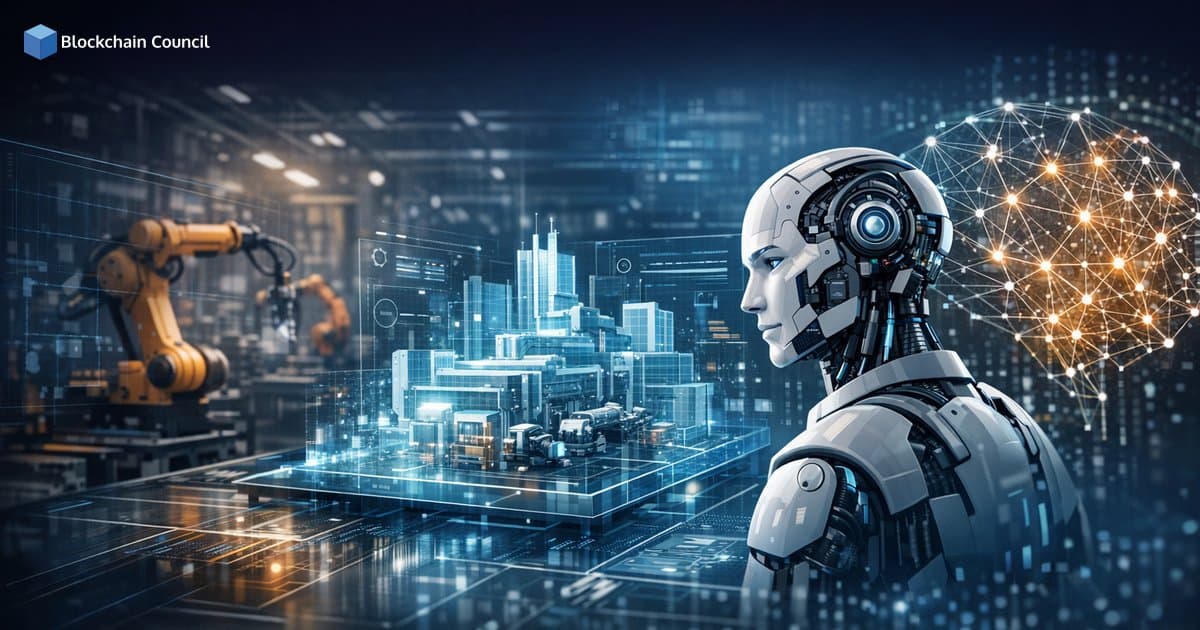
NVIDIA Omniverse and generative AI are reshaping how industries design factories, deploy robots, and operate buildings by enabling high-fidelity digital twins that replicate real-world behavior. Rather than relying on static 3D models or spreadsheet-based planning, teams can simulate physics, sensor data, robot behavior, and operational constraints in one shared environment. The result is a practical path to test, optimize, and validate decisions before committing to expensive physical changes.
At the center of this shift is Omniverse, a suite of libraries and microservices built for physical AI applications such as industrial digital twins and robotics simulation. It uses OpenUSD for data interoperability and SimReady assets to accelerate scene creation and ensure consistency across tools and teams.

Why NVIDIA Omniverse and Generative AI Matter for Digital Twins
Traditional digital twins often stop at visualization. NVIDIA Omniverse and generative AI shift the focus to actionable digital twins that support operational decisions, training, and validation in physics-accurate environments. This approach reflects a broader industry direction: modern facilities and robotic systems should be designed and proven in simulation before physical deployment.
Three capabilities are driving adoption:
Physics accuracy: Simulations incorporate realistic interactions including collisions, friction, lighting, and sensor noise, which is critical for robotics and facility planning.
Generative AI for scale: Generative models help create variations of environments, tasks, and edge cases to improve system robustness.
Accelerated computing: GPU-accelerated pipelines enable faster iteration, supporting more experiments and deeper optimization cycles.
What Omniverse Is Today: Libraries, Microservices, OpenUSD, and SimReady Assets
NVIDIA Omniverse functions as a platform for building physical AI applications rather than a single monolithic product. It is delivered as libraries and microservices that teams can compose into workflows for:
Industrial digital twins for factories, warehouses, and smart buildings
Robotics simulation and training pipelines
AI factory and data center validation
Two foundational elements are especially relevant to enterprise adoption:
OpenUSD interoperability: OpenUSD enables teams to connect data from CAD, simulation, robotics, and content pipelines while reducing tool lock-in and file translation friction.
SimReady assets: Pre-validated assets speed up the construction of high-fidelity scenes and ensure consistent behavior across simulations.
Latest Developments: Blueprints and Physical AI Models
NVIDIA's recent announcements point toward a clear direction: industrial-grade digital twins and robotics simulations that are easier to deploy at scale.
Mega Omniverse Blueprint for Robot Fleets and AI Agents
The Mega Omniverse Blueprint helps organizations build physically accurate facility digital twins where they can design, test, and optimize robot fleets and AI agents before deployment. This is most relevant in logistics and manufacturing, where small layout changes can significantly affect throughput, safety, and energy consumption.
Physical AI Data Factory Blueprint for World Modeling and Autonomy
The Physical AI Data Factory Blueprint addresses the data side of physical AI: improving world models and skills for humanoid robots, and accelerating development for autonomous driving and general robotics. Physical-world data collection is costly for most enterprises. Simulation-based data factories reduce that burden by generating diverse scenarios and corner cases at scale.
Omniverse DSX Blueprint for AI Factory and Data Center Simulation
The Omniverse DSX Blueprint focuses on AI factory simulation, helping teams validate energy, cooling, and layout decisions before construction begins. With over 100 AI factories forecast to be operating worldwide by 2027, simulation-based validation is positioned as a key method to reduce risk and rework in these capital-intensive projects.
Key Physical AI Models
Models highlighted for physical AI include NVIDIA Cosmos 3, Isaac GR00T N1.7, and Alpamayo 1.5. These models contribute to generating behaviors, improving control policies, and expanding the realism and variety of simulated training environments.
Industry Partnerships Accelerating Adoption
Omniverse adoption is further driven by partnerships that connect simulation to engineering workflows and cloud operations:
Dassault Systèmes: Collaboration to support virtual twins using AI physics models and CUDA-X libraries, aligning engineering design with simulation-driven validation.
Microsoft: An open-sourced Azure Physical AI Toolchain integrates Omniverse with GitHub Copilot and Azure IoT, supporting cloud-native development and operational integration.
Accenture and KION: Work on physical AI digital twins for large-scale systems design and manufacturing engineering workflows.
For teams building internal expertise, these workflows call for skills across AI, simulation, and automation. Relevant Blockchain Council certifications include the Certified AI Professional, Certified Generative AI Expert, Certified Metaverse Expert, and Certified Robotics Professional programs.
Real-World Results: Energy Savings and Robotics Efficiency
Digital twins justify investment through measurable outcomes. Several deployments illustrate the value of simulation-driven decision-making.
Smart Buildings: Up to 20% Energy Savings
Delta used Omniverse-based AI digital twins for building automation by simulating HVAC, lighting, shading, and sensors in real time. Reported results included up to 20% energy savings at Delta's Taipei headquarters, supported by what-if analyses that improved resilience and reduced deployment time.
Warehouse Robotics: 40% Picking Efficiency Improvement
In warehouse automation, robot performance depends on layout, navigation policy, task assignment, and edge-case handling. Using Isaac and Omniverse simulations, warehouse automation robots achieved 40% picking efficiency gains by optimizing paths and behaviors before physical build-out and deployment.
Factory and Logistics Planning at Scale
From robot fleets to AI factories, the value proposition is consistent: validate assumptions in simulation, identify constraints early, and reduce operational risk. Modern factories and autonomous systems increasingly begin development in simulation rather than on the shop floor.
How to Build a Digital Twin Pipeline with NVIDIA Omniverse and Generative AI
While implementations vary by industry, an enterprise-ready approach typically follows a repeatable pipeline:
Unify data in OpenUSD: Bring CAD files, facility layouts, and asset libraries into a consistent scene representation.
Construct a SimReady environment: Use validated assets and physics settings that reflect real constraints such as materials, friction, and sensor placement.
Connect real-time signals: Integrate IoT and operational telemetry to align the twin with live conditions and support anomaly detection.
Generate scenarios with AI: Use generative AI to expand scenario coverage, create environment variations, and stress-test policies against rare or hazardous events.
Train and validate in simulation: For robotics, iteratively train and evaluate control policies, fleet behaviors, and safety constraints.
Deploy with continuous feedback: Use real-world outcomes to recalibrate the twin, update parameters, and improve models over time.
Skills for these steps span simulation fundamentals, AI and machine learning, data engineering, and security. Relevant Blockchain Council learning paths include the Certified Data Scientist, Certified Machine Learning Expert, and Certified Cybersecurity Expert programs, particularly for practitioners connecting digital twins to production IoT systems.
Future Outlook: Blackwell Ultra, AI Factories, and Broader Robotics Adoption
Several trends suggest digital twins will shift from specialized projects to standard operating practice:
More AI factories by 2027: NVIDIA expects over 100 AI factories worldwide by 2027, with simulation workflows like Omniverse DSX used for energy, cooling, and layout validation.
Hardware optimized for physical AI: The Blackwell Ultra architecture, expected in late 2026, is designed to accelerate physical AI workloads, enabling faster and richer simulation cycles.
Robotics growth through Isaac GR00T advancements: As physical AI models mature, more capabilities can be developed and tested in simulation, reducing the cost of field iteration.
Open-source toolchains: The Azure Physical AI Toolchain lowers friction for teams already standardized on Azure, GitHub, and IoT services.
Sustainability and resilience: Virtual twins that model real-time building and factory systems can support energy optimization, scenario planning, and anomaly detection tied to operational telemetry.
Conclusion: Digital Twins as a Practical Path to Safer, Faster Deployment
NVIDIA Omniverse and generative AI are moving digital twins beyond visualization into operational systems that help organizations design, test, and optimize industrial facilities and robotics before physical implementation. Evidence from real deployments points to tangible gains including up to 20% energy savings in smart buildings and 40% improvements in warehouse picking efficiency when robots are trained and optimized in simulation.
As blueprint-driven workflows mature and partnerships connect Omniverse to engineering and cloud ecosystems, high-fidelity digital twins are likely to become a default step for factories, warehouses, and AI infrastructure projects. For professionals, building expertise in generative AI, robotics simulation, and digital twin architecture is a direct career advantage as enterprises standardize on simulation-first validation for physical AI systems.
Related Articles
View All
AI & ML
NVIDIA AI Enterprise Explained: Deploying Production-Grade AI on Hybrid and Multi-Cloud
NVIDIA AI Enterprise enables production-grade AI across hybrid and multi-cloud, combining NeMo, NIM microservices, and NemoClaw for secure, scalable agentic AI.

AI & ML
How NVIDIA GPUs Accelerate Modern AI Training and Inference
Learn how NVIDIA GPUs accelerate AI training and inference using tensor cores, HBM, and disaggregated inference that splits prefill and decode for better cost efficiency and lower latency.

AI & ML
NVIDIA Jetson for Edge AI
Learn how NVIDIA Jetson for edge AI runs computer vision and LLMs on embedded devices, with Orin and Thor enabling low-latency robotics and multimodal apps.
Trending Articles

The Role of Blockchain in Ethical AI Development
How blockchain technology is being used to promote transparency and accountability in artificial intelligence systems.
AWS Career Roadmap
A step-by-step guide to building a successful career in Amazon Web Services cloud computing.
Top 5 DeFi Platforms
Explore the leading decentralized finance platforms and what makes each one unique in the evolving DeFi landscape.