

Google I/O 2026: Agentic Gemini Era and Google New Updates Explained

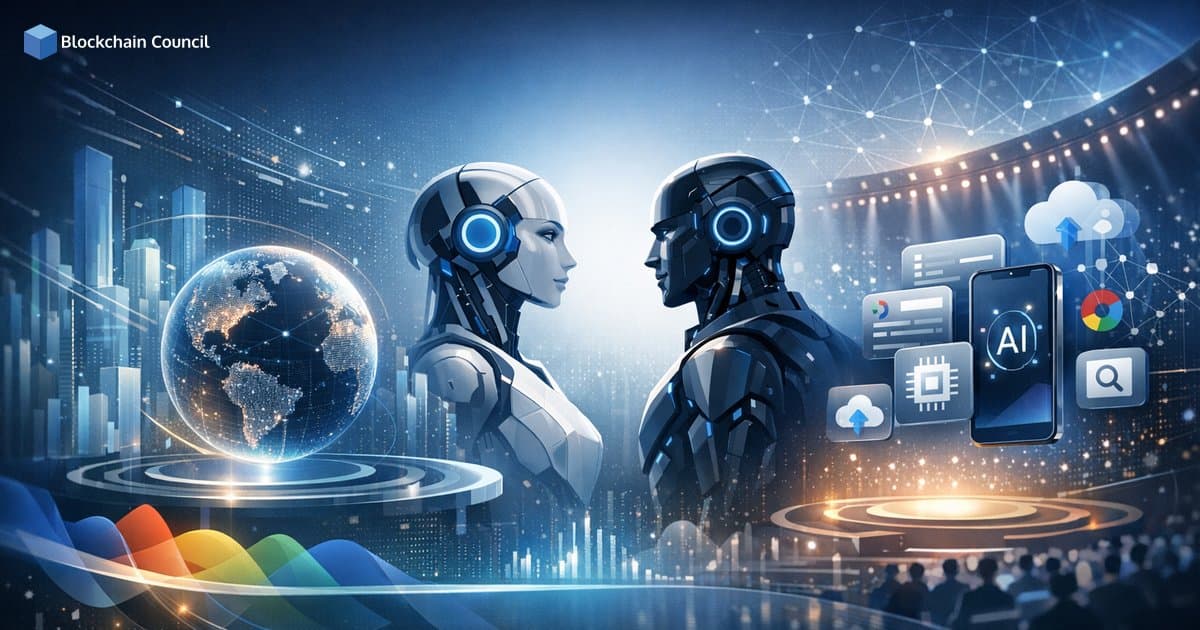
Google I/O 2026 marked a clear shift in Google's AI roadmap: away from static assistants and toward what Google repeatedly called the agentic Gemini era. Across keynotes and developer sessions, the message was consistent - Gemini is becoming a layer of task-completing agents embedded in Search, Maps, YouTube, the Gemini app, new devices, and a new developer platform designed for agent workflows.
This article breaks down the most significant announcements from Google I/O 2026, focusing on Google new updates that matter to developers, enterprises, and AI practitioners - including new Gemini models, agent experiences like Gemini Spark, Search upgrades, and the Antigravity developer stack.

1) What Happened at Google I/O 2026?
Google I/O 2026 ran May 19-20, 2026 in a largely online, globally accessible format, continuing the hybrid model Google has used in recent years. The official recap positioned the event around a single theme: "Welcome to the agentic Gemini era." In practical terms, that meant three major pillars:
New foundation models (Gemini Omni and the Gemini 3.5 family)
Agents embedded into products (Search, Gemini app, Maps, YouTube, shopping, and creative tools)
A developer platform for agents (Antigravity, plus DevTools and web guidance for closed-loop building)
2) Gemini Omni and Gemini 3.5 Flash: The Model Layer Behind the Agent Shift
At the model layer, Google introduced two headline directions: a new Omni family optimized for multimodality and editing, and a Gemini 3.5 family framed around "frontier intelligence with action."
Gemini Omni: Multimodal Creation and Editing from Any Input
Gemini Omni was described as a model family that can "create anything from any input, starting with video," emphasizing world understanding, multimodality, and editing. The core implication is that Omni is built not just to interpret mixed inputs (video, audio, images, text), but also to generate and edit media outputs as first-class tasks.
For teams building AI products, Omni suggests a more unified approach to multimodal workflows - fewer handoffs between separate models and more direct interaction loops where the model can both understand content and transform it.
Gemini Omni Flash: Low-Latency Multimodal Performance
Gemini Omni Flash was presented as the first Omni model and described as available across Google products. The emphasis was on real-time interactivity, low latency, and high throughput. According to expert recaps summarizing Google's onstage claims, Omni Flash produces output tokens roughly four times faster than other frontier models on Google internal benchmarks, while also outperforming Gemini 3.1 Pro on many public benchmarks.
Without full public benchmark detail disclosed on stage, the direction is still clear: Google is optimizing flagship multimodal models for interactive agent experiences, not only offline generation.
Gemini 3.5 Flash: "Frontier Intelligence with Action"
Gemini 3.5 Flash was framed as the first in a new family combining intelligence with action. The distinction is practical: tool calling, workflow orchestration, and agent-like execution were highlighted as primary design goals.
In demos, the "agentic coding" narrative featured models generating code, running it, debugging, and iterating. For developers, this signals that Google wants Gemini evaluated not only on response quality, but also on reliable completion of multi-step tasks in real systems.
3) Gemini Spark and Google AI Ultra: Agents as a Product Tier
Two announcements made the agent push tangible to consumers and professionals: Gemini Spark and a new premium subscription tier called Google AI Ultra.
Gemini Spark: A Persistent Personal Agent
Gemini Spark was introduced as a "24/7 personal AI agent" designed to navigate a user's digital life by taking actions on their behalf under user direction. Early descriptions emphasize cross-app and cross-device continuity, with the ability to work across Google services like Gmail, Calendar, Drive, Docs, and Photos, plus third-party integrations.
From an AI operations perspective, Spark implies a persistent memory and context model that can manage queues, follow-ups, and scheduling. It also raises immediate governance questions for organizations: how access, permissions, audit logs, and data boundaries are defined when the AI is actively executing tasks.
Google AI Ultra: $100 Per Month Tier for Advanced Access
Google AI Ultra was reported as a new plan priced at $100 per month, aimed at creators, developers, and power users, with access to advanced models and premium features including Spark in some configurations. This follows an industry pattern where vendors separate casual AI usage from high-rate-limit, high-capability tiers designed for heavy workflows and professional adoption.
4) Search Becomes Agentic: The Intelligent Search Box and In-Search Coding
Among the most significant Google new updates was Search. Google characterized the changes as the biggest upgrade since Search launched more than 25 years ago, focusing on an AI-powered query experience and deeper agentic capabilities.
Intelligent Search Box: Suggestions Beyond Autocomplete
The intelligent search box goes past traditional autocomplete by adding query nuance and helping users formulate multi-step questions. This changes the front door of information retrieval: instead of waiting for users to craft expert prompts, Search begins to co-author the query.
Agentic Search: Gemini 3.5 Flash Inside Search Workflows
Google also highlighted agentic capabilities embedded in Search, including coding workflows that can generate, test, and iterate. This positions Search as more than a discovery layer - it becomes a task execution surface, particularly for developer tasks where iterative refinement is essential.
Generative Search UI: From Experiment to Permanent Experience
Building on previous generative search experiments, Google presented a more refined generative UI with richer summaries and planning-style answers. Google's blog also described "information agents in Search," suggesting modular agent units specialized in retrieval and synthesis.
5) Ask Maps and Ask YouTube: Conversational Understanding for Location and Video
Two product integrations illustrate Google's broader thesis: if Gemini can understand complex inputs, it should help users act in context where they already spend time.
Ask Maps: Itinerary Planning and Preference-Aware Exploration
Ask Maps is a conversational interface inside Google Maps that can handle composite questions like planning a weekend trip with specific constraints. The key technical promise is synthesis - combining local business data, geography, time constraints, and user preferences into a structured plan that can be adjusted interactively.
Ask YouTube: Semantic Video Search and Q&A with Timestamps
Ask YouTube was described as a reimagined way to find and interact with videos, including semantic search, direct Q&A about video content, and timestamped explanations or summaries. For learning and enablement, this reduces the friction of long tutorials by making them queryable like documentation.
6) Gemini App Updates: Neural Expressive and Daily Brief
Google also reported significant usage growth for the Gemini app, with expert recaps citing an increase from about 400 million monthly active users at I/O 2025 to over 900 million by I/O 2026, along with more than 7x growth in daily requests.
Neural Expressive: A UX Layer for Multimodal Agent Interactions
The Gemini app is being rebuilt with a design approach called Neural Expressive, which appears to be a user experience framework rather than a model architecture. The focus is dynamic multimodal responses, interactive elements, and more adaptive conversational presentation.
Daily Brief: Summaries Plus Suggested Actions
Daily Brief is positioned as an agentic briefing that summarizes calendars, important communications, and relevant updates, while also recommending next actions such as responding, scheduling, or following up.
7) Hardware and Form Factors: Audio Glasses and Android XR
Google's agent strategy also extended to devices that reduce screen dependence.
Audio glasses were announced for fall as a way to access private, spoken Gemini assistance throughout the day without a display.
Intelligent eyewear from Samsung was announced as Gemini-integrated hardware shipping in fall.
Android XR was demonstrated as a platform for extended reality devices, with fall launches indicated. Gemini Omni and agent workflows are expected to power multimodal interactions in XR through voice and contextual overlays.
8) Antigravity: Google's Agent-First Developer Platform
For builders, the most consequential launch may be Antigravity, a developer platform built around managed agents, orchestration, and closed-loop iteration.
Managed Agents in the Gemini API and Antigravity SDK
Google described managed agents where developers define an agent by adding instructions, tools, and data via a single Gemini API call. The Antigravity SDK reportedly provides the same agent harness used internally at Google, with flexibility to run locally or across different environments.
Antigravity 2.0 Desktop App and CLI
Antigravity 2.0 was presented as an "agent first" desktop app for local orchestration and workflow building. The Antigravity CLI also became available to Gemini CLI users, enabling agent workflows from terminals and developer environments.
Android Support and AI Studio Prototyping
Official Android support emphasized speed from idea to prototype - building an Android app directly in AI Studio without managing local SDK installations, then transitioning to production work in Android Studio with dedicated tooling support.
Modern Web Guidance and Chrome DevTools for Agents
Two additions stand out for engineering rigor:
Modern Web Guidance: an expert-vetted skill blueprint for agents building modern web features and patterns.
Chrome DevTools for agents: a feedback loop where agents inspect runtime behavior, diagnose issues, and adjust code based on errors and performance signals.
This is a direct attempt to make agentic coding more reliable by grounding it in observable execution rather than static generation alone.
9) Scale and Adoption: Token Volume Signals Production Maturity
In expert recaps of onstage metrics, Google stated that model APIs grew from about 480 trillion tokens per month to about 3.2 quadrillion tokens per month, with around 19 billion tokens processed per minute. The same recaps cited more than 8.5 million developers building monthly with Google models and more than 375 customers each processing over one trillion tokens in the past year.
For enterprises evaluating providers, these figures matter because they indicate large-scale inference operations and meaningful production usage - not only pilot projects.
10) What Google I/O 2026 Means for Professionals and Enterprises
Google I/O 2026 can be read as a move from AI as a feature to AI as an execution layer. That shift changes how teams should plan:
Architecture: prepare for tool calling, agent orchestration, and human-in-the-loop approvals.
Governance: define permissions, logging, data boundaries, and safe action policies for autonomous workflows.
Skills: invest in agent design, evaluation, and secure integration with APIs and internal systems.
For professionals building expertise in this direction, learning paths should cover agent-building fundamentals, model evaluation, and secure AI integration. Relevant programs on Blockchain Council include certifications such as Certified AI Professional (CAIP), Certified Machine Learning Professional, and role-focused programs in AI for Developers and AI Security, particularly as agents become more connected to sensitive systems.
Conclusion
Google I/O 2026 was less about a single model release and more about a platform-level transition to agentic computing. With Gemini Omni for multimodal creation, Gemini 3.5 Flash for tool-driven action, Spark for persistent personal automation, agentic Search, and Antigravity for developer-grade orchestration and debugging, Google is pushing toward AI systems that can plan and execute across products and devices.
The opportunity is substantial: faster workflows, richer multimodal understanding, and more capable developer automation. The challenges are equally real - agent safety, privacy, auditability, and ecosystem dependence will become first-order engineering concerns. Teams that treat agentic AI as a disciplined engineering practice rather than a chatbot extension will be best positioned to benefit from the Google new updates introduced at I/O 2026.
Related Articles
View All
AI & ML
Can Gemini Improve Itself? Google AI and Recursive Self-Improvement Explained
Can Gemini improve itself? Learn why Google AI does not self-rewrite its model today, but can power controlled recursive self-improvement loops.
AI & ML
Google Launches Gemini 4 Argon: Features and Capabilities
Google has launched Gemini 4 Argon, its flagship AI model for coding, finance, law, cybersecurity and science. Learn its key features, availability, pricing and safety details.
AI & ML
Meta Launches Muse Wonder: Its New AI Model Explained
Meta has launched Muse Wonder and Muse Wonder Full, new AI models built for personal and professional agents. Learn the features, pricing, access options and how they compare with rivals.
Trending Articles
The Role of Blockchain in Ethical AI Development
How blockchain technology is being used to promote transparency and accountability in artificial intelligence systems.

Top 5 DeFi Platforms
Explore the leading decentralized finance platforms and what makes each one unique in the evolving DeFi landscape.
How Blockchain Secures AI Data
Understand how blockchain technology is being applied to protect the integrity and security of AI training data.