

Gemini Spark Explained: How Google's Multimodal AI Transforms Real-Time Reasoning and Content Creation


Gemini Spark is shaping up to be Google's clearest move from a prompt-driven chatbot to a persistent, multimodal AI agent that can monitor context, reason continuously, and take multi-step actions across Google apps and the open web. Spark is not yet fully launched, but multiple independent teardowns and leaked onboarding screens point to a new "Agent" mode inside the Gemini experience - one with an always-on task runner that can plan, execute, and generate content in real time.
This article explains what Gemini Spark is believed to be, how its multimodal and agentic architecture works, what it could change for real-time reasoning and content creation, and what professionals should consider around privacy, security, and governance.

What is Gemini Spark (and Why It Matters for Agentic AI)?
Based on app teardowns and onboarding prompts observed by early testers, Gemini Spark appears to be an experimental agent layer embedded into the Gemini app and potentially other Google surfaces. The key shift is not just better answers, but delegated execution:
Always-on behavior: Spark is described as "ready around the clock," monitoring signals like inbox, calendar, tasks, location, and browsing sessions.
Proactive multi-step work: Spark can initiate workflows, maintain a task list, and run scheduled or ongoing tasks.
Cross-app and web execution: It can act through Google services (Workspace, Maps, and others) and may also interact with websites via Chrome-like autonomous actions.
In practical terms, Spark represents the agentic AI pattern many enterprises are evaluating: an AI system that can observe context, plan steps, use tools, and execute actions with varying levels of supervision.
How Gemini Spark Works: Multimodal Reasoning Plus Agent Control
Google has not published a dedicated technical specification for Spark as a product. However, the leaked descriptions align closely with capabilities already documented in Gemini and Gemini for Google Workspace materials. Spark can be understood as an orchestrator built on three foundations.
1) Multimodal Gemini Models with Long Context
Gemini 1.5-class models are designed for multimodal inputs - text, code, images, audio, and video - within a unified architecture, with large context windows. Google and DeepMind materials describe contexts up to 1 million tokens in Gemini 1.5 Pro and Flash, with experimental previews extending further in select cases. This matters because an agent is only as capable as the context it can reliably interpret.
For Spark-style workflows, long context enables reasoning across:
Large email threads and inbox patterns
Multiple Drive documents and meeting notes
Screenshots or UI states when performing tasks
Long-running project histories without constant re-prompting
2) Connected Apps and Tool Use
Gemini already supports connected apps in Workspace contexts, and the mobile Gemini app integrates with services like Maps and YouTube. Spark appears to extend this from reactive tool calling to continuous monitoring plus proactive tool invocation. Rather than summarizing an email on demand, the agent can detect a trigger, infer intent, and prepare an action.
3) Browser and App Execution Layer (Autonomous Actions)
Multiple analyses describe a capability for autonomous web actions, where Gemini can scroll, click, fill forms, and interact with websites. If that execution layer is real, it changes Spark from a planner into an operator that can complete tasks in environments where no API is available. For agentic systems, this is the step from producing recommendations to delivering outcomes.
Key Gemini Spark Capabilities for Real-Time Reasoning
Real-time reasoning in an agent context is less about processing speed and more about continuous interpretation of changing signals, followed by planning and action. Leaked onboarding language points to several categories of inputs, including connected apps, chat history, tasks, websites the user is signed into, personal context signals, and location.
Always-On Contextual Monitoring
With continuous monitoring, Spark can detect events such as:
A flight confirmation or gate change email arriving
A calendar meeting being moved, creating schedule conflicts
A subscription renewal notice appearing in the inbox
A project thread resurfacing with an urgent request
From there, it can reason about implications: what should be updated, who should be notified, and what content needs to be created - briefs, replies, itineraries, or task lists.
Proactive Multi-Step Task Automation
Reports and UI strings suggest Spark can maintain an active task list and run tasks over time. Common examples include:
Inbox triage: summarizing newsletters, archiving low-value messages, and unsubscribing from recurring mail.
Meeting preparation: compiling a brief that includes recent relevant emails, key Drive files, open issues, and next decisions.
Custom digests: tracking topics and generating evolving summaries from multiple sources.
Web actions: logging in, navigating, filling forms, applying coupon codes, reordering items, or booking services.
These workflows require reliable decomposition into steps, handling of exceptions, and adaptation to dynamic web pages. That is why agentic design differs fundamentally from chat: it must reconcile goals, constraints, and execution safety simultaneously.
How Gemini Spark Changes Content Creation Across Apps and the Web
Gemini Spark is positioned to generate content not only on request, but in anticipation of need. In a work setting, that can mean preparing drafts and summaries before the user asks, drawing on ongoing context.
Proactive Drafting and Rewriting
Commentary around Spark emphasizes email drafting that reflects thread context and user style. When combined with continuous monitoring, Spark could draft:
Status updates after a meeting
Routine confirmations and follow-ups
Suggested replies to unblock a stalled project thread
Structured Knowledge Outputs (Briefs, Reports, Dashboards)
Spark-style agents can turn dispersed information into structured artifacts such as:
Meeting briefs and debriefs
Weekly project summaries with action items and owners
Travel itineraries built from confirmations and calendar context
Research summaries that include sources visited during browsing
Multimodal Artifacts in Workspace
Because Gemini models can reason across modalities, Spark's outputs can extend beyond text into Workspace-native assets - for example, outlines in Slides, structured tables in Sheets, and annotated summaries in Docs. For professionals building skills in AI-assisted workflows, this overlaps with practical competencies covered in programs such as Blockchain Council's Certified Artificial Intelligence (AI) Expert and Certified Prompt Engineer certifications.
Privacy, Data Sharing, and Safety: What Professionals Should Watch
The most consequential aspect of Gemini Spark is not just capability, but the combination of scope of access and autonomous authority. Leaked onboarding text indicates Spark may draw from connected apps, chat history, location, and websites the user is signed into. It also warns that the agent may share information with third parties when required to complete tasks.
Why the Risk Profile is Higher Than a Chatbot
Continuous processing: always-on monitoring increases the volume and sensitivity of data processed over time.
Delegated authority: if Spark can act without confirmation every time, mistakes can translate into transactions, cancellations, or unintended disclosures.
Third-party routing: completing a task may require sending user data beyond Google-controlled services.
Permission Models and Human-in-the-Loop Controls
Reports describe Spark as experimental and note that it may make purchases or share information without asking in every case, depending on permissions. For safe adoption, individuals and organizations should expect to need:
Granular scopes: separate permissions for inbox triage, travel, subscriptions, and web actions.
Confirmations for high-risk actions: purchases, account changes, external sharing, and irreversible deletions.
Audit logs: clear records of what Spark did, what data it used, and which tool or site it acted through.
Governance and Compliance Considerations
In regulated environments, an always-on agent intersects with GDPR principles covering lawful basis, transparency, and data minimization, as well as emerging AI governance norms that emphasize oversight and accountability. Enterprises evaluating Spark-like agents inside Workspace contexts should map requirements to:
Identity and access management (IAM) and least-privilege policies
Data loss prevention (DLP) and retention rules
Approval workflows for sensitive actions
Vendor risk management for third-party tool calls
For teams building competence in AI governance and security, Blockchain Council's Certified Cybersecurity Expert and Certified AI Governance Professional programs offer directly relevant training pathways.
Use Cases: Where Gemini Spark Could Deliver the Most Value
Even without a public release, the intended use cases are clear: reduce the overhead of email, scheduling, context switching, and multi-step web tasks. This aligns with productivity research consistently showing that knowledge workers spend substantial portions of their week on email management and information retrieval.
Workplace Productivity
Inbox triage at scale: classify newsletters, prioritize action items, and draft replies for approval.
Meeting intelligence: generate a brief before a call, produce action items afterward, and create Tasks entries automatically.
Project dashboards: maintain an evolving summary across email threads, documents, and tasks to surface blockers early.
Personal Operations
Travel management: detect confirmations, update Calendar, build an itinerary, and draft notifications when changes occur.
Subscriptions and renewals: identify free trials nearing expiry, alert on price increases, and initiate cancellation flows with appropriate safeguards.
Location-aware reminders: prompt relevant tasks when context changes, such as being near a specific store or arriving at an appointment.
Competitive Context: Why Spark's Integration Could Be a Differentiator
Analysts frequently compare Spark to agent efforts elsewhere in the industry, including Microsoft Copilot and OpenAI's tool-enabled assistants. Spark's potential advantage is platform depth: Google controls major surfaces where work happens, including Android, Chrome, Gmail, Maps, and Workspace. If Spark can reliably orchestrate across these layers, it could reduce friction compared to agents that operate primarily within a single application.
Conclusion: Gemini Spark Signals the Shift from Assistants to Operators
Gemini Spark is best understood as an early preview of agentic computing - persistent context, multimodal reasoning, tool use, and real execution across apps and the web. If the behavior documented in leaked onboarding materials holds through launch, Spark could materially change how professionals manage inboxes, prepare for meetings, conduct research, and produce content across Workspace and Chrome.
At the same time, always-on access combined with delegated authority raises serious requirements around permissions, auditability, and governance. For developers, enterprises, and technology leaders, the central question is not whether agents can generate text, but whether they can be trusted to act, explain, and comply. Spark will likely become a significant case study in how to deploy multimodal AI agents safely at both consumer and enterprise scale.
Related Articles
View All
Agentic AI
Agentic AI Explained: The Evolution From Chatbots to Autonomous AI
Agentic AI is AI that plans, uses tools, and acts toward a goal with limited supervision. Learn how it differs from chatbots and generative AI, how it reasons and decides, and where it is used today.
Agentic AI
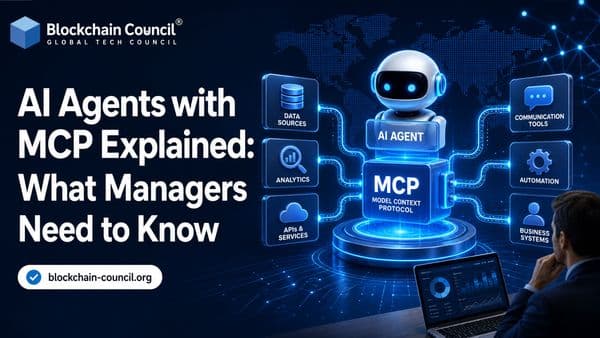
AI Agents with MCP Explained: What Managers Need to Know
A manager-focused guide to AI agents with MCP, covering architecture, benefits, risks, governance, use cases, and practical next steps.

Agentic AI
AI Agent Lifecycle Explained: From Design to Monitoring and Optimization
Learn the AI agent lifecycle from design to deployment, monitoring, optimization, AgentOps, governance, and retirement for reliable enterprise agents.
Trending Articles

Top 5 DeFi Platforms
Explore the leading decentralized finance platforms and what makes each one unique in the evolving DeFi landscape.

Can DeFi 2.0 Bridge the Gap Between Traditional and Decentralized Finance?
The next generation of DeFi protocols aims to connect traditional banking with decentralized finance ecosystems.
How to Create Claude Skills?
Claude Skills are one of the most important features Anthropic has introduced for users who want automation that is structured, consistent and reusable. Instead of giving Claude long instructions ever