

Stablecoin KYC and AML Compliance

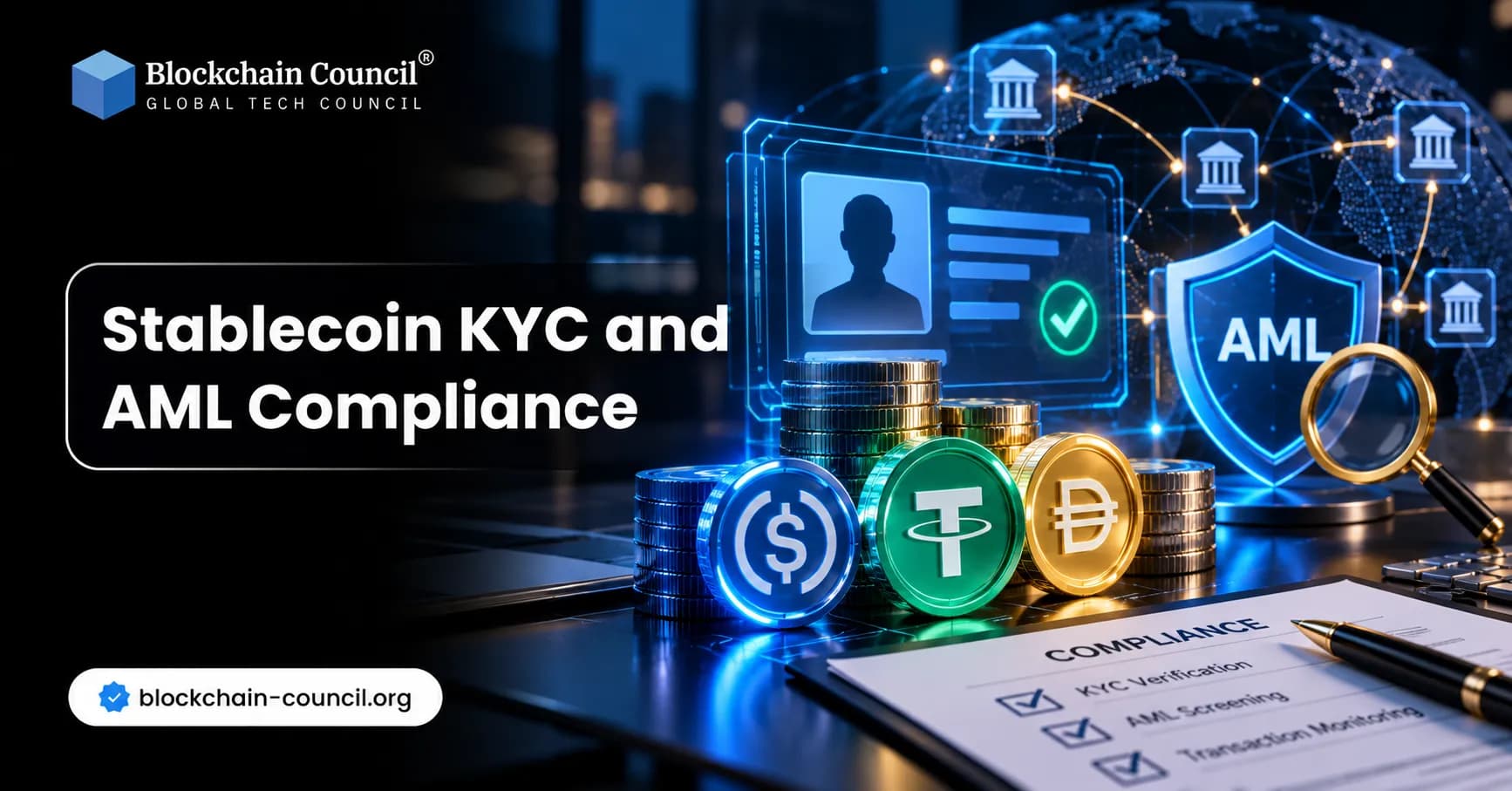
Stablecoins move money across borders in minutes, at any hour, for very low cost. That speed is exactly why regulators, banks, and payment firms pay close attention to them. Fast, cheap transfers are useful for families, freelancers, and businesses. They can also be misused by criminals who want to hide the source of illegal funds or avoid sanctions. This is where Stablecoin KYC and AML Compliance becomes essential.
KYC means "know your customer" and AML means "anti-money laundering." Together they are the checks and controls that confirm who is using a service and watch for suspicious behavior. This guide explains the topic from first principles, then covers the practical steps compliance teams use every day. Beginners will get plain definitions, and professionals will find a framework they can adapt. Those who want a structured path into this field can also explore the Certified Stablecoin Payments Professional program, which covers how stablecoin payment systems operate and how compliance fits inside them.

Why KYC and AML Matter in Stablecoin Payments
Money laundering is the process of making illegal money look legitimate. It usually happens in three stages. Criminals first place dirty funds into the financial system. They then layer the funds through many transfers to hide their origin. Finally, they integrate the money back into normal life as seemingly clean wealth. Stablecoins can be used at each stage, so providers must put guardrails in place.
The Risks That Compliance Controls
Compliance teams focus on several risks. Money laundering is the best known. Terrorist financing, which uses small and large amounts to fund violence, is another. Sanctions evasion, where people or countries under legal restrictions try to move money, is a third. Fraud, scams, and ransomware payments also create heavy pressure on providers.
Why Stablecoins Get Special Attention
Stablecoins combine blockchain features with familiar value. Transfers settle quickly, work around the clock, and can move across borders without a traditional bank in the middle. On public blockchains, transactions are visible, which helps investigators. But wallet addresses do not carry names, so a link between a wallet and a real person must come from the service provider that onboarded the user.
Who Has to Comply
In many regions, issuers, exchanges, custodians, and payment firms that handle stablecoins are treated as regulated financial businesses. They must register or obtain a licence, run an AML programme, and follow reporting rules. Global standards from the Financial Action Task Force, known as FATF, guide most national laws. Newer laws such as the European Union's MiCA framework and the United States GENIUS Act also place compliance expectations on stablecoin issuers, though details vary by region and business type.
Customer Identification and Due Diligence
The first line of defense is knowing who your customer is before they use the service.
The Customer Identification Process
For an individual, a provider usually collects full name, date of birth, address, and a government-issued ID. The provider then checks that the document is real and that the person holding it is the same person, often through a selfie or live video check. For a business, the provider collects registration papers, business address, and details about what the company does.
Beneficial Ownership
Companies can be used to hide the real people behind them. For this reason, providers must identify the beneficial owners, meaning the individuals who ultimately own or control the business. Many rules point to anyone holding a significant share, often 25 percent, though thresholds differ by country. Layered ownership structures need extra care.
Customer Due Diligence
Customer due diligence, often shortened to CDD, goes beyond identity. The provider also asks why the customer wants the account, what kind of activity to expect, and where the money comes from. These answers create a baseline. If later behavior differs sharply from the baseline, it becomes easier to spot.
Screening at Onboarding
At sign-up, providers screen customers against sanctions lists, lists of politically exposed persons, and negative news sources. A politically exposed person is someone who holds or has held a senior public role, and who may face a higher risk of bribery or corruption. Matches do not always mean wrongdoing, but they call for a closer look.
For professionals who need broader grounding in how exchanges, wallets, and digital assets work, the Certified Cryptocurrency Expert certification offers helpful background that supports compliance decisions.
Risk-Based Customer Reviews
Not every customer carries the same level of risk. A risk-based approach means effort is matched to risk, so more care goes where danger is higher.
Factors That Shape Risk
Providers usually score customers using several factors. These include the country of residence, the type of customer, the products used, the expected size and speed of payments, and the channels used to sign up. A small local shop paying a few suppliers looks different from a new company moving large sums to many countries within days.
Low, Medium, and High Risk
Most programmes sort customers into tiers. Low-risk customers get standard checks. Medium-risk customers may need extra documents or periodic reviews. High-risk customers face enhanced due diligence.
Enhanced Due Diligence
Enhanced due diligence, or EDD, means deeper questions and stronger proof. A provider may ask for evidence of source of funds, such as pay slips, sale contracts, or tax records. Senior managers often need to approve high-risk relationships. Ongoing monitoring becomes tighter, and reviews happen more often.
Keeping Profiles Fresh
Risk changes over time. A customer may move countries, change business lines, or start sending larger amounts. Programmes should refresh customer information regularly and also after triggering events, such as a sudden jump in activity or a new sanctions designation.
Transaction Monitoring and Escalation
Onboarding checks only show a customer at one point in time. Monitoring watches behavior across the whole relationship.
What Monitoring Looks For
Monitoring systems flag patterns that may suggest laundering or fraud. Common red flags include rapid movement of funds in and out with little purpose, many small transfers just under a reporting limit, use of many wallets without clear reason, sudden activity from a dormant account, and links to mixers or high-risk services. Payments to or from sanctioned regions also raise alerts.
Rules, Scores, and Analytics
Basic systems use fixed rules, such as an alert when daily volume passes a set amount. More advanced systems add behavioral analytics and blockchain tracing, which follow funds across addresses to see where they came from and where they go. Good systems balance sensitivity and noise, because too many false alerts bury real cases.
The Escalation Path
When an alert fires, an analyst reviews it. They check customer history, expected activity, and related transactions. If the alert is a false alarm, they close it and note why. If it looks suspicious, they escalate it to a senior compliance officer, who decides whether to file a report with authorities. Clear timelines and written reasons protect the firm and speed up action.
Holding or Freezing Funds
Sometimes a provider must pause a transfer while they investigate, or freeze funds when a sanctions match is confirmed. Stablecoin issuers may also have technical tools to block certain addresses. Policies should explain when and how these steps are used, and how customers can appeal.
Recordkeeping and Reporting Duties
If a check is not recorded, regulators may treat it as if it never happened. Good records are the evidence of a working programme.
What Records to Keep
Providers keep identity documents, verification results, risk scores, transaction histories, alert reviews, and reasons for decisions. They also keep policy documents and training logs. Retention periods vary by country, though five years or more after the relationship ends is common.
Suspicious Activity Reports
When a provider suspects that funds are tied to crime, they must usually file a suspicious activity report, also called a suspicious transaction report, with the financial intelligence unit in their country. These reports are confidential. Providers are generally barred from telling the customer, a rule known as tipping off.
Large Transaction and Sanctions Reports
Some countries require reports on large cash-like transactions. Providers must also report sanctions matches and freeze assets where the law demands it. Missing a deadline can bring fines, so calendars and workflows should track every duty.
The Travel Rule
The Travel Rule requires providers to share certain sender and receiver details when they move funds on behalf of customers. Originator and beneficiary names, account or wallet details, and sometimes addresses travel along with the payment between regulated firms. Thresholds and scope differ by region. In the European Union, for instance, crypto transfers fall under rules that cover transfers regardless of size, while other regions use set limits.
Teams building the systems that capture and store all this data can sharpen their engineering base through the Tech Certification programs, which cover blockchain, security, and system design skills.
Wallet Screening and Third-Party Tools
Because blockchain addresses do not show names, extra screening is needed.
What Wallet Screening Does
Wallet screening checks an address against known risk data. It can reveal links to sanctioned entities, darknet markets, scams, stolen funds, or mixers. Providers screen both the addresses customers deposit from and the addresses they withdraw to.
Blockchain Analytics Providers
Many firms use specialist vendors that map clusters of addresses and label them with risk scores. These tools save time, and they follow funds across several hops. No tool is perfect, so staff should treat scores as a guide and not as a final verdict.
Self-Hosted Wallets
Transfers to or from wallets that customers control themselves, often called unhosted wallets, bring added risk because no regulated firm sits on the other side. Programmes may ask customers to prove they control the wallet, limit transfer sizes, or apply extra review.
Choosing Tools Carefully
When picking a vendor, check coverage of the blockchains you support, update speed, accuracy, data privacy, and how well the tool connects to your systems. Keep records of how you tested the tool and how often you review results, because regulators may ask.
Jurisdiction and Business-Model Differences
There is no single global rulebook, so the same activity can face different rules in different places.
Regional Approaches
The United States treats many stablecoin businesses as money services businesses or financial institutions under its anti-money laundering laws, and it also enforces sanctions through the Treasury's sanctions office. The European Union applies MiCA together with its anti-money laundering rules and the transfer-of-funds rules. Other regions, such as Singapore, Hong Kong, the United Kingdom, and the United Arab Emirates, run their own licensing regimes. Always confirm current laws before launching in a new market.
Business Model Matters
An issuer that creates and redeems coins has different duties from an exchange, a wallet app, or a payment processor. A business that only offers software may fall outside some rules, while one that holds customer funds or controls transfers usually falls inside them. Mapping each activity to the right rule is a core early task.
Cross-Border Complexity
A payment may touch several countries and several regulated firms. Each one has its own duties, and gaps appear when information fails to travel with the payment. Strong partnerships, shared data standards, and clear contracts reduce these gaps.
Staying Current
Stablecoin rules are changing fast. Assign a person or team to track new laws, regulator statements, and sanctions updates, and to translate them into policy changes.
Building a Compliance Programme
A strong programme is a living system with people, process, and technology working together.
The Core Pillars
Most programmes rest on a few pillars. These are a written policy, a named compliance officer, a documented risk assessment, customer due diligence, ongoing monitoring, reporting procedures, staff training, and independent testing.
Start With a Risk Assessment
Before writing procedures, study your own business. List your products, customer types, countries, and payment channels. Judge where criminals could exploit each one, then design controls to fit. This assessment should be reviewed at least once a year and whenever the business changes.
Technology and Automation
Automation handles volume. Identity verification, sanctions screening, wallet screening, monitoring, and case management can all be connected. Still, humans must review serious cases and make judgment calls, so keep a balance between automated checks and expert oversight.
Training and Hiring
Stablecoin infrastructure connects digital assets with payment systems, financial services, and blockchain networks. Organisations working in this space need talent with the right mix of technical, financial, and operational knowledge. HireValid's candidate assessment platform is worth exploring for teams looking to evaluate role-specific skills during recruitment.
Culture and Testing
Compliance succeeds when leaders support it and staff feel safe raising concerns. Run regular training, test the programme through internal checks or outside audits, and fix gaps quickly. Clear, honest messaging to customers about why checks exist also builds trust, and the Marketing Certification programs can help teams present onboarding steps and security practices in a way that users understand.
Final Thoughts
Stablecoin KYC and AML Compliance protects customers, businesses, and the wider financial system. Know who you serve, match effort to risk, watch activity over time, keep strong records, screen wallets, and adapt to each jurisdiction. Teams that treat compliance as a core part of product design, not an afterthought, can grow faster and with greater trust from users, partners, and regulators.
FAQs
1. What Is KYC in Stablecoin Compliance?
Know Your Customer (KYC) is a process used by financial institutions and relevant service providers to verify customer identities and understand their relationships with financial services. In the stablecoin ecosystem, KYC may apply to exchanges, wallet providers, payment platforms, and other regulated intermediaries, depending on their activities and jurisdiction.
2. What Is AML Compliance in the Stablecoin Industry?
Anti-Money Laundering (AML) compliance involves policies, procedures, and controls designed to prevent and detect money laundering and related financial crimes. For stablecoin businesses, AML measures can include transaction monitoring, customer due diligence, suspicious activity reporting, and recordkeeping.
3. Why Are KYC and AML Important for Stablecoins?
KYC and AML controls help reduce the risk of stablecoins being used for money laundering, terrorist financing, fraud, sanctions evasion, and other illicit activities. They also support regulatory compliance, improve accountability, and help businesses establish trust with customers and financial partners.
4. Do All Stablecoin Transactions Require KYC Verification?
No. KYC requirements depend on the jurisdiction, transaction type, service provider, and applicable regulations. A regulated exchange or payment intermediary may need to verify customers, while a self-custody wallet or direct blockchain transfer may operate differently. However, certain transactions can still trigger legal or compliance obligations.
5. How Does KYC Work for Stablecoin Users?
A typical KYC process may involve the following steps:
Collecting personal or business information.
Verifying identity documents or other approved evidence.
Confirming relevant details, such as residential address or business ownership.
Screening customers against applicable sanctions and risk databases.
Assessing risk and requesting additional information when necessary.
The exact process varies by provider and jurisdiction.
6. What Is Customer Due Diligence (CDD) in Stablecoin Compliance?
Customer Due Diligence involves gathering and evaluating information to understand a customer's identity, business activities, and potential financial crime risks. Stablecoin service providers may use CDD to determine the appropriate level of monitoring and whether a customer requires enhanced scrutiny.
7. What Is Enhanced Due Diligence (EDD) for Stablecoin Transactions?
Enhanced Due Diligence is a more detailed review applied to customers or transactions that present higher risks. It may involve verifying the source of funds or wealth, examining business relationships, reviewing transaction patterns, and obtaining additional approvals. The required measures depend on applicable regulations and the assessed risk.
8. How Does AML Transaction Monitoring Work for Stablecoins?
AML transaction monitoring examines transaction activity to identify patterns that may indicate suspicious behavior. Monitoring systems can evaluate transaction values, frequency, wallet relationships, geographic exposure, and connections to known illicit addresses. Alerts generally require further investigation before a business determines whether reporting is necessary.
9. Can Blockchain Analytics Help With Stablecoin AML Compliance?
Yes. Blockchain analytics tools can examine publicly available transaction data, trace fund movements, and identify connections with wallets associated with known risks. These tools can help compliance teams investigate suspicious activity, but blockchain analytics does not automatically establish a person's identity or prove that a transaction is illegal.
10. What Is Wallet Screening in Stablecoin Compliance?
Wallet screening involves checking blockchain addresses against risk indicators, sanctions-related data, and other relevant intelligence. Businesses may use screening before accepting deposits, processing withdrawals, or completing payments. Effective screening should account for data quality, risk thresholds, false positives, and applicable legal requirements.
11. How Do Stablecoin Businesses Handle Sanctions Compliance?
Stablecoin businesses may need to screen customers, wallet addresses, counterparties, and transactions against applicable sanctions lists. Depending on the law and the service provided, they may be required to block or freeze certain assets, reject transactions, report matches, or take other prescribed actions. Obligations differ across jurisdictions.
12. What Is the Travel Rule in Stablecoin Transactions?
The Travel Rule is a regulatory requirement in certain jurisdictions for covered virtual asset or financial service providers to collect and transmit specified information about the originator and beneficiary of qualifying transfers. It may apply to some stablecoin transactions handled by regulated providers, subject to local laws, thresholds, and exemptions.
13. Are Stablecoin Issuers Required to Follow KYC and AML Rules?
Requirements depend on the issuer's activities, legal classification, and jurisdiction. An issuer may have obligations relating to customer verification, sanctions screening, suspicious transaction reporting, or other controls. Exchanges, custodians, and payment providers supporting the same stablecoin may have separate obligations.
14. How Do Businesses Implement KYC and AML for Stablecoin Payments?
Businesses can build a compliance framework by identifying applicable laws, assessing customer and transaction risks, selecting appropriate verification and monitoring tools, establishing escalation procedures, and maintaining audit-ready records. They should also define responsibility across internal teams and external payment providers.
15. What Are the Main KYC and AML Challenges for Stablecoin Businesses?
Common challenges include cross-border regulatory differences, pseudonymous blockchain addresses, high transaction volumes, complex wallet relationships, rapidly changing risk indicators, and false-positive alerts. Businesses must also balance effective controls with customer privacy, operational efficiency, and a smooth payment experience.
16. How Can Stablecoin Businesses Detect Suspicious Transactions?
Businesses can combine automated monitoring with human investigation. Warning indicators may include unusual transaction patterns, rapid movement of funds through multiple wallets, activity involving high-risk addresses, or transactions inconsistent with a customer's known profile. These indicators are not proof of wrongdoing and should be assessed in context.
17. What Is Suspicious Activity Reporting in Stablecoin Compliance?
Suspicious activity reporting involves submitting information about transactions or behavior that meets the applicable legal reporting threshold to the designated authority. Reporting rules, deadlines, confidentiality requirements, and terminology vary by jurisdiction. Businesses should follow local requirements and avoid alerting customers when prohibited by law.
18. How Does KYC and AML Compliance Affect Stablecoin Payment Speed?
Identity verification, sanctions screening, and transaction monitoring can add steps to onboarding and payment processing. Automated systems and well-designed workflows can reduce unnecessary delays, but high-risk alerts or incomplete documentation may require manual review. Businesses should not bypass legally required checks merely to accelerate transactions.
19. How Can Businesses Protect Customer Privacy While Meeting KYC and AML Requirements?
Businesses should collect only the information needed for legitimate compliance purposes, restrict access to authorized personnel, protect records through appropriate security controls, and follow applicable data-retention and privacy laws. They should also establish clear procedures for handling customer information and responding to data incidents.
20. What Is the Future of KYC and AML Compliance for Stablecoins?
Stablecoin compliance is likely to evolve alongside digital asset regulation, blockchain analytics, privacy-enhancing technologies, and automated risk detection. Businesses may adopt more integrated monitoring systems and standardized information-sharing processes. However, technology will continue to require appropriate governance, human oversight, and compliance with jurisdiction-specific laws.
Related Articles
View All
Stablecoin
Stablecoin Travel Rule Compliance
The FATF Travel Rule concerns the transmission of specified originator and beneficiary information for certain virtual-asset transfers. This guide explains the general concept, implementation challenges, and the need to check local rules and thresholds.

Stablecoin
Stablecoin Compliance: Rules, Risks, and Best Practices for Issuers
Stablecoin compliance now demands licensing, 1:1 liquid reserves, redemption rights, AML/CFT controls, transparent reporting, and cyber resilience for issuers.

Stablecoin
Stablecoin Payment Risk Management Framework
Stablecoin payment risk spans the issuer, reserve assets, blockchain network, wallets, service providers, compliance obligations, and business operations. Learn how organisations can identify exposures, assign controls, and prepare for incidents.
Trending Articles
The Role of Blockchain in Ethical AI Development
How blockchain technology is being used to promote transparency and accountability in artificial intelligence systems.
Top 5 DeFi Platforms
Explore the leading decentralized finance platforms and what makes each one unique in the evolving DeFi landscape.
What is AWS? A Beginner's Guide to Cloud Computing
Everything you need to know about Amazon Web Services, cloud computing fundamentals, and career opportunities.