

Nouriel Roubini's Blockchain-Based Investment Token: A New Chapter for Tokenized Finance

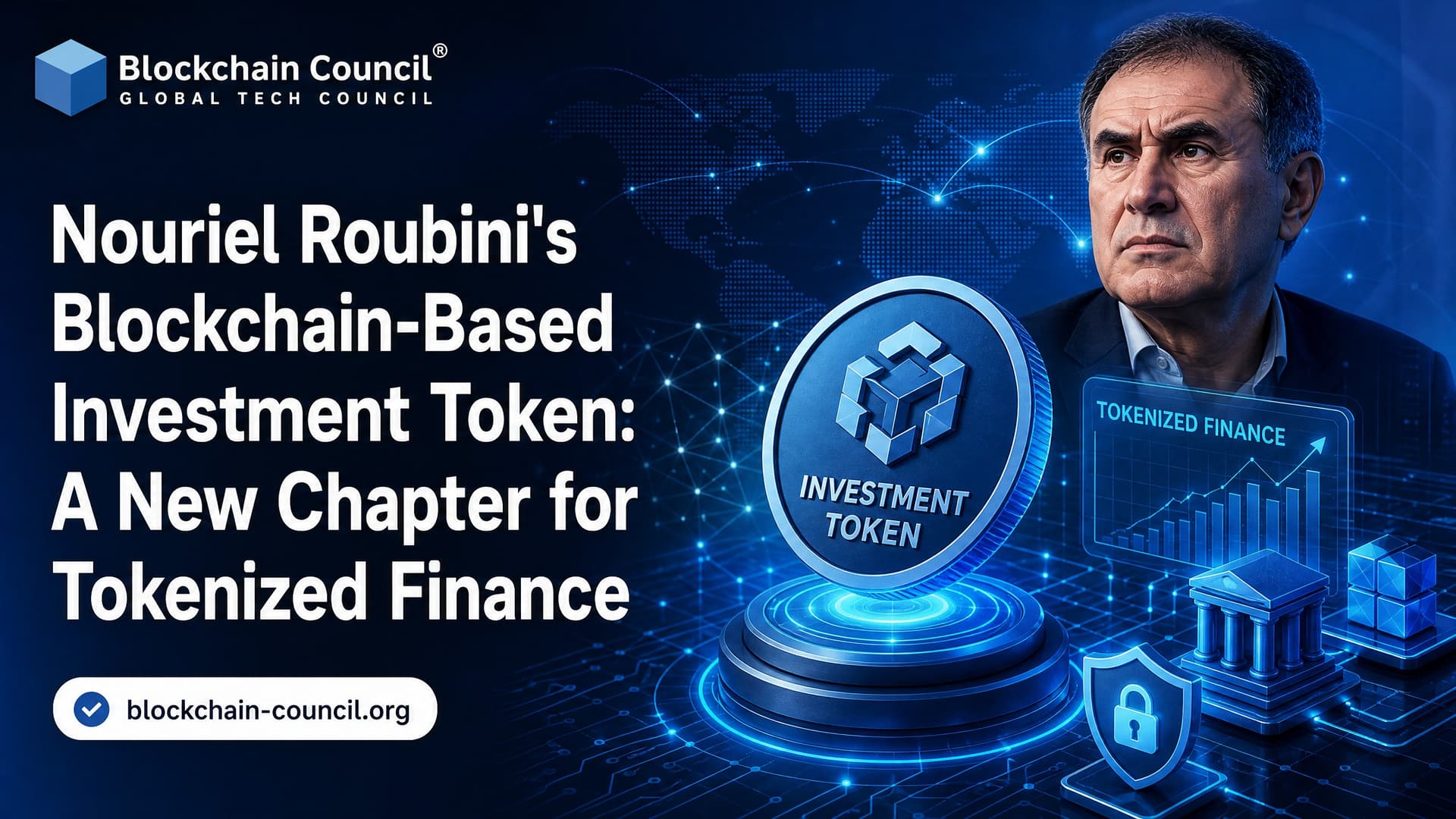
Tokenized finance just picked up an unlikely name. Nouriel Roubini, the economist famous for tearing into Bitcoin and speculative crypto, is backing USAFi, also reported as USAF+, a blockchain-based investment token tied to the Atlas America Fund ETF. The product is built as a regulated, asset-backed digital security. It is not another free-floating crypto token.
That distinction matters. USAFi is not trying to imitate Bitcoin. Think of it as a tokenized wrapper around a real-world asset portfolio, with the Atlas America Fund as its sole backing asset. For anyone watching real-world asset tokenization, this is a clean case study: an SEC-registered ETF, an Ethereum ERC-20 token, Dubai VARA oversight, and institutional issuance infrastructure from Securitize.

Who Is Behind USAFi?
Nouriel Roubini, often called "Dr Doom" after warning about the risks that preceded the 2008 financial crisis, has spent years attacking the crypto market. He has criticized Bitcoin, unregulated exchanges, speculative tokens, and stablecoins that simply track fiat currencies. So his move into tokenized finance is not a sudden embrace of crypto culture. It is more specific than that.
Roubini is co-founder and Chief Economist of Atlas Capital and Atlas AI Labs, a fintech group focused on macroeconomic risk, geopolitics, climate risk, AI, machine learning, and blockchain-based financial infrastructure. The firm's view is that blockchain can serve as a settlement and distribution rail for regulated assets. That is a long way from endorsing unbacked tokens.
What Is the Atlas America Fund?
The Atlas America Fund, ticker USAF, is an actively managed ETF listed on Nasdaq and registered with the U.S. Securities and Exchange Commission. It is the underlying asset backing the USAFi token.
The fund holds a diversified mix of assets picked for inflation protection, income, and macro resilience. Reported holdings and exposures include:
- U.S. Treasuries, including short-term government debt
- Gold and other commodity-linked exposures
- Real estate investment trusts, or REITs
- Agricultural and food commodities
- Defense, cybersecurity, and AI-linked industries
Public reports place the fund's assets under management at about 17 million dollars. Reported performance includes an 11.11 percent return since launch over 19 months, volatility of 5.47 percent, and a Sharpe ratio of 0.55. Business Insider has also reported the fund up roughly 9 percent since November 2024 with an annual dividend yield of 2.45 percent.
Those numbers are modest in scale, but they matter. USAFi is not backed by a vague promise. It points to a live, regulated fund with published risk and return characteristics.
How USAFi Works as a Tokenized Security
USAFi, described in some reports as USAF+, is structured as an ERC-20 digital security on Ethereum. In plain terms, each token is meant to represent economic exposure to shares of the Atlas America Fund ETF. Reports describe the token as fully backed by units of USAF.
Atlas describes the product as a "Technodollar" style reserve asset. The pitch is simple: instead of holding a stablecoin that tracks the U.S. dollar, hold a token backed by a basket of income-producing and inflation-sensitive assets.
That does not make USAFi risk-free. It also does not make it a stablecoin in the usual sense. A dollar stablecoin aims to hold a 1 dollar value. A portfolio-backed token moves with the net asset value of the underlying holdings. If Treasuries, gold, REITs, or equity-linked sectors fall, the token's value can fall too.
Key Design Features
- Token standard: ERC-20 digital security on Ethereum
- Backing asset: Units of the Atlas America Fund ETF
- Regulatory path: Dubai Virtual Assets Regulatory Authority, known as VARA, for the token framework
- Underlying fund status: Nasdaq-listed and SEC-registered ETF
- Issuance partner: Securitize, a digital securities platform backed by BlackRock
- Market structure: Designed for 24/7 trading and settlement on blockchain infrastructure
Here is the practitioner point many newcomers miss. "ERC-20" does not automatically mean "freely tradable like USDC on any decentralized exchange." Security tokens usually bake in compliance layers, transfer checks, investor eligibility rules, and jurisdictional restrictions. If you have ever tested a permissioned token in Hardhat or Foundry, the first surprise is usually a failed transfer, not a gas issue. A plain execution reverted can hide a compliance rule, such as an unapproved recipient. Treating a regulated digital security like a memecoin is the wrong mental model.
Why Roubini Calls It a Stablecoin Alternative
Roubini's case against fiat-pegged stablecoins is macroeconomic. A stablecoin tracking the U.S. dollar may preserve nominal value, but it does nothing for purchasing power if inflation erodes the dollar. USAFi is meant to address that by giving on-chain users exposure to assets that may generate income or hedge inflation.
The framing is useful, but be precise. USAFi is a stablecoin alternative, not a stablecoin replacement in every use case.
It may fit:
- Investors seeking on-chain exposure to a diversified ETF portfolio
- Crypto-native funds looking for a reserve asset beyond fiat stablecoins
- International investors who can access the product under the relevant regulatory framework
- Institutions studying tokenized ETF settlement and distribution
It may not fit:
- Traders who need a token that reliably holds a 1 dollar peg
- Users who require deep stablecoin liquidity across DeFi protocols today
- Investors who do not understand ETF market risk, NAV movement, or jurisdictional limits
- Projects that need unrestricted peer-to-peer transferability
To be blunt, the "digital reserve asset" label should not distract from the basics. This is still an investment product. It carries market risk, regulatory risk, smart contract risk, and liquidity risk.
Why This Matters for Real-World Asset Tokenization
USAFi is part of the wider move toward real-world asset tokenization, often shortened to RWA tokenization. The idea is to represent claims on traditional assets, such as government bonds, funds, credit, commodities, or real estate, on blockchain networks.
The USAFi model is worth watching because it pulls together four things enterprises actually care about:
- A regulated underlying asset: The Atlas America Fund is an SEC-registered ETF listed on Nasdaq.
- A public blockchain standard: ERC-20 remains the most widely understood token interface in Ethereum-based markets.
- A dedicated virtual asset regulator: Dubai VARA provides the token's operating framework.
- Institutional issuance infrastructure: Securitize brings compliance and digital securities experience.
This is the direction tokenized finance is heading at the serious end of the market. Not anonymous tokens. Not vague yield boxes. Regulated instruments, known issuers, defined backing assets, and compliance-aware transfer logic.
What Are the Real Use Cases?
On-Chain Portfolio Diversification
For crypto-native investors, USAFi offers a route into Treasuries, gold, REITs, commodities, and selected strategic sectors without moving fully back into a traditional brokerage workflow. That could suit funds or sophisticated individuals who already manage assets on-chain.
Treasury Management
DAOs, trading firms, and digital asset businesses often park large balances in fiat stablecoins. A tokenized ETF-backed asset could serve as an alternative reserve allocation. The trade-off is clear: you may gain income and diversification, but you lose the clean 1 dollar behavior of a conventional stablecoin.
24/7 Digital Securities Markets
Traditional ETFs trade during exchange hours. A tokenized version can, in theory, trade around the clock. This does not magically create infinite liquidity, but it does change settlement expectations. If regulated secondary markets develop, tokenized ETFs could become part of a larger programmable finance stack.
What Professionals Should Watch Next
A few open questions matter more than the headline:
- Liquidity: A 17 million dollar ETF is small. Token demand and secondary market depth will matter.
- Redemption mechanics: Investors need clarity on how tokens map to ETF units and how redemptions work.
- Compliance rules: Transferability, KYC, jurisdictional access, and market venue approvals will shape adoption.
- DeFi compatibility: A regulated security token may not plug neatly into open DeFi protocols.
- NAV transparency: Investors will expect clear reporting between token value and underlying ETF value.
If these pieces work, USAFi could become a reference model for tokenized ETFs. If they do not, it may stay an interesting but limited experiment.
Learning Path for Blockchain and Finance Professionals
For developers, compliance teams, and product leaders, USAFi is a useful blueprint for studying tokenized finance architecture. You need to understand ERC-20 mechanics, securities regulation, custody, settlement, investor onboarding, and RWA valuation.
If you are building expertise here, use this case alongside Blockchain Council learning paths such as the Certified Blockchain Expert, Certified Blockchain Developer, and Certified Web3 Expert. Each maps to a different side of this story: infrastructure, smart contracts, and Web3 business models.
Your next step should be practical. Map the USAFi structure on paper. Identify the issuer, backing asset, regulator, token standard, transfer rules, custody model, and investor access flow. That exercise will teach you more about tokenized finance than another broad prediction about the future of crypto.
Related Articles
View All
News
Nouriel Roubini Blockchain-Based Investment Token: What USAFi Means for Tokenized Finance
Nouriel Roubini's USAFi token brings ETF-backed real world assets on-chain, offering a regulated alternative to stablecoins.

News
Nouriel Roubini Launches Blockchain-Based Investment Token Backed by Atlas ETF
Nouriel Roubini is backing a blockchain-based investment token tied to the Atlas America Fund ETF, marking a regulated RWA shift from a noted crypto critic.

News
Institutional Tokenized Asset Adoption Hits New Milestones in 2026
Institutional tokenized asset adoption is moving from pilots to production, led by tokenized treasuries, stablecoins, private credit, and real estate.
Trending Articles
AWS Career Roadmap
A step-by-step guide to building a successful career in Amazon Web Services cloud computing.
How to Install Claude Code
Learn how to install Claude Code on macOS, Linux, and Windows using the native installer, plus verification, authentication, and troubleshooting tips.
Claude Code Vs Cursor
Claude Code vs Cursor compares two AI coding tools based on features, automation, and developer workflows.