
AI Regulation 2026: Why the US Federal Government Is Moving to Override California

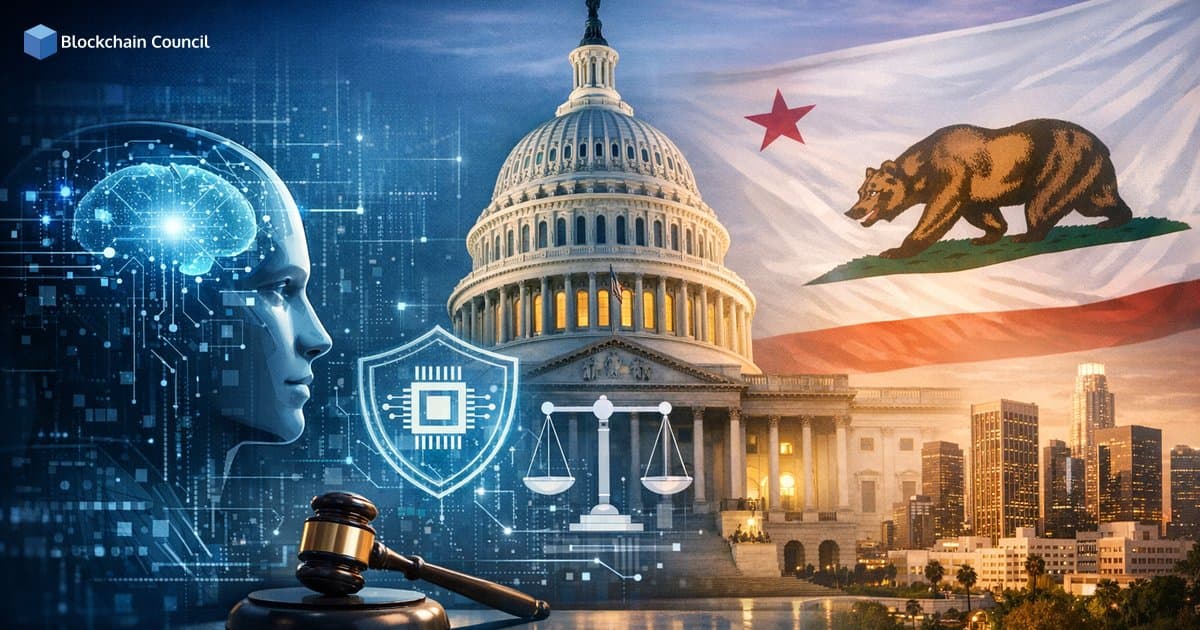
AI regulation 2026 is becoming a defining policy battle in the United States. The core story is straightforward: California has enacted multiple AI laws effective January 1, 2026, while the federal government is pushing to stop states from creating independent AI rulebooks. This is not purely a political dispute. The outcome will shape how AI tools are built, labeled, audited, and deployed across healthcare, education, media, and consumer applications.
Public searches often frame this as "AI banned?" or the "AI dangerous truth" narrative. The actual legal trend is more precise: targeted controls on high-risk AI, transparency obligations, and safety reporting requirements. This debate is about governance, not an outright shutdown of AI development.

What Does AI Regulation 2026 Actually Mean in the US?
As of early 2026, the US does not have one comprehensive nationwide AI law. Instead, multiple states have passed AI-related legislation taking effect this year. California is the most prominent example, with several laws effective January 1, 2026 covering generative AI, frontier models, chatbots, healthcare communications, and algorithmic pricing.
At the same time, the federal government under President Trump has signaled a strong preference for unified national standards. A December 2025 executive order aims to preempt or block state-level AI rules, with the argument that a patchwork of state laws could stifle innovation and weaken US AI leadership globally.
Why Is the Federal Government Trying to Preempt State AI Laws?
The federal argument draws on a familiar principle in US policy: if each state creates its own compliance requirements, companies may face 50 different regulatory regimes simultaneously. White House AI advisor David Sacks has publicly emphasized the need to avoid regulatory fragmentation that could jeopardize US competitiveness in AI development.
How Preemption Affects Companies and Users
Preemption is not only a legal question. It determines how quickly protections reach real products and users. If federal standards replace state laws, the practical outcome depends on what those federal standards include and how they are enforced.
For companies: fewer conflicting rules, but uncertainty during the transition period and possible litigation between states and the federal government.
For users: protections could become uniform nationwide, or they could be delayed if federal legislation takes time to pass.
For policy students: this is a textbook federalism conflict - states act as policy laboratories, then the federal government attempts to unify the approach.
California AI Regulation 2026: What Changed on January 1?
California's 2026 framework focuses on transparency, harm prevention, and oversight of high-risk AI systems. It encompasses multiple laws, each targeting a specific risk area. Together, they form one of the most detailed state-level AI governance packages in the US.
1) Frontier AI Safety Reporting and Risk Frameworks (SB 53 / TFAIA)
The Transparency in Frontier Artificial Intelligence Act requires large AI developers to publish risk-management frameworks and report catastrophic safety incidents. The intent is to ensure developers building powerful general-purpose models document their safeguards and disclose major failures to regulators.
Reportable incidents include scenarios such as unauthorized access to a model leading to severe harm, or loss-of-control events that create large-scale risk. Governor Gavin Newsom described this as a "trust but verify" approach, positioning it as frontier AI safety legislation designed to balance protection with continued innovation.
2) Generative AI Training Data Transparency (AB 2013)
The Generative AI Training Data Transparency Act requires certain generative AI developers to disclose high-level information about the training data used in their systems. The goal is not to publish proprietary datasets, but to establish baseline transparency so researchers, regulators, and the public can better evaluate risk areas including bias, copyright exposure, and safety limitations.
3) AI Content Detection, Watermarking, and Transparency (SB 942, Delayed to August 2, 2026)
The AI Transparency Act targets large AI platforms, including those with more than 1 million monthly users. It requires free AI-content detection tools, watermarking capabilities, and transparency disclosures. Its effective date was pushed to August 2, 2026 by AB 853, reflecting the complexity of implementing these requirements at scale.
For those following misinformation concerns, this law is directly relevant to deepfakes and synthetic content distribution, as it pushes platforms to help users identify AI-generated media.
4) Companion Chatbots and User Safety (SB 243)
The Companion Chatbots Act places disclosure and safety obligations on companion-style chatbot applications. It includes protections for minors and protocols to reduce harmful content. This is a direct legislative response to documented behavioral and mental health concerns linked to persuasive AI conversations.
5) Preventing AI from Impersonating Healthcare Professionals (AB 489)
The Health Care Professions: Deceptive Terms or Letters: AI Act prohibits AI systems from falsely claiming healthcare licenses and requires patient disclosures. In practical terms, it prevents chatbots or automated tools from presenting themselves as doctors, nurses, or licensed clinicians to patients.
6) Algorithmic Pricing and Antitrust (AB 325)
The Preventing Algorithmic Price Fixing Act updates antitrust rules to ban shared pricing algorithms among competitors. This addresses a concrete modern risk: companies using similar AI pricing tools can coordinate market outcomes without explicit human collusion, potentially harming consumers in ways existing antitrust law did not anticipate.
Texas vs California vs Federal Push: Why the US Looks Fragmented in 2026
California is not acting alone. Texas has introduced its own framework through the Responsible AI Governance Act, effective in 2026, emphasizing enterprise AI transparency, documentation requirements, and red-teaming. This creates a layered compliance challenge for companies operating across multiple states.
The broad picture breaks down as follows:
California: transparency, harm prevention, and high-risk oversight covering frontier AI, generative AI, and consumer-facing chatbots.
Texas: enterprise governance with documentation and red-teaming requirements.
Federal: unified national standards, with stated priorities including child protection, intellectual property rights, and anti-censorship concerns.
Is AI Banned in 2026? Addressing the Fear Questions
AI banned? No credible signals in the 2026 US policy landscape indicate a blanket AI ban. The laws described here are targeted controls, not prohibitions. They focus on disclosure, reporting, safety protocols, and governance requirements for higher-risk deployment contexts.
AI dangerous truth: The "danger" framing reflects genuine risks - including misinformation, unsafe medical guidance, and potential catastrophic misuse - but is also amplified by online narratives that outpace actual policy developments. Legislative texts and policy statements in this debate emphasize measurable risk management rather than claims of inevitable harm.
Future of AI control: A more accurate phrase is future of AI governance. The mechanisms in play include audits, risk frameworks, incident reporting, content labeling, and limits on deceptive impersonation. These represent structured oversight, not centralized command over all AI systems.
What Students, Beginners, and Policy Aspirants Should Take From AI Regulation 2026
For those studying governance, technology policy, or ethics, this situation provides a high-value case study in regulatory development. Key takeaways include:
Federalism in action: states move quickly when federal law is slow, but the central government may later consolidate the rules.
Risk-based regulation: governments concentrate on high-impact AI applications in healthcare, large platforms, and frontier models rather than regulating all AI uniformly.
Transparency is becoming mandatory: disclosure of AI usage, training data summaries, and detection tools are transitioning from best practices to legal requirements.
Compliance will be layered: until the legal landscape settles, organizations face multiple overlapping requirements across jurisdictions.
Practical Implications for Developers and Enterprises
For professionals building AI products, 2026 demands greater operational maturity. Requirements around documentation, incident response, and user disclosures are becoming more specific and enforceable.
Model governance: maintain risk frameworks, testing records, red-team results, and update logs as standard practice.
Transparency-by-design: plan for labeling, watermarking, and detection tooling where regulations require it.
Sector-specific rules: healthcare and child-facing products face heightened scrutiny under multiple frameworks.
Cross-state readiness: build compliance programs capable of mapping requirements by jurisdiction and adapting as federal legislation develops.
Professionals seeking structured learning in this area can explore certifications such as the Certified Artificial Intelligence (AI) Expert, Certified Machine Learning Expert, Certified Generative AI Expert, and governance-focused programs like the Certified Blockchain and Law Professional or cybersecurity pathways that support AI risk management.
What Happens Next in 2026?
Two timelines are worth tracking. First, California's SB 942 major platform transparency obligations are scheduled to take effect by August 2, 2026. Second, federal action may move from executive direction to congressional legislation, potentially overriding portions of existing state frameworks. States are expected to challenge federal preemption in court, which could extend the period of legal uncertainty considerably.
California also has additional privacy and AI-related measures in progress, including opt-out signals, faster breach notification requirements, and pending bills proposing impact assessments for high-risk AI systems. This suggests that even under federal pressure, states will continue developing AI oversight frameworks independently.
Conclusion
AI regulation 2026 is not about banning AI. It is about determining who sets the rules and which safeguards become non-negotiable when AI systems scale to millions of users or enter high-risk sectors like healthcare. California has moved first with a broad set of targeted laws, while the federal government is pursuing national standards to prevent a fragmented compliance environment.
The most relevant conclusion for students and policy observers is this: AI governance is shifting from voluntary ethics commitments to enforceable policy requirements, driven by practical risks including deception, unsafe automated advice, market manipulation, and mass misinformation. The future of AI control looks less like a shutdown and more like compliance, transparency, and accountability becoming built-in requirements for how AI is developed and deployed.
Related Articles
View All
News
Meta AI Push: Engineers Asked to Write 75%+ of Code With AI Tools by 2026
Meta AI targets 75%+ AI-generated committed code for select teams by 2026, reshaping workflows, reviews, and hiring with Vibe Coding and agent-assisted development.

News
Meta Launched TRIBE v2: What the Tri-Modal Brain AI Model Means for Meta Ads Users
Meta launched TRIBE v2, a tri-modal brain AI model predicting neural responses to vision, audio, and language. Learn what this Meta update signals for Ads users.

News
Axios just got attacked? What JavaScript Users Should Know Before You Panic
Axios just got attacked is unverified based on current research. Learn how to validate security claims, avoid risky npm installs, and harden JavaScript supply chains.
Trending Articles

The Role of Blockchain in Ethical AI Development
How blockchain technology is being used to promote transparency and accountability in artificial intelligence systems.

AWS Career Roadmap
A step-by-step guide to building a successful career in Amazon Web Services cloud computing.

Top 5 DeFi Platforms
Explore the leading decentralized finance platforms and what makes each one unique in the evolving DeFi landscape.