
AI Energy Consumption Is Triggering a Data Center Backlash: Power, Water, and the AI vs Environment Debate

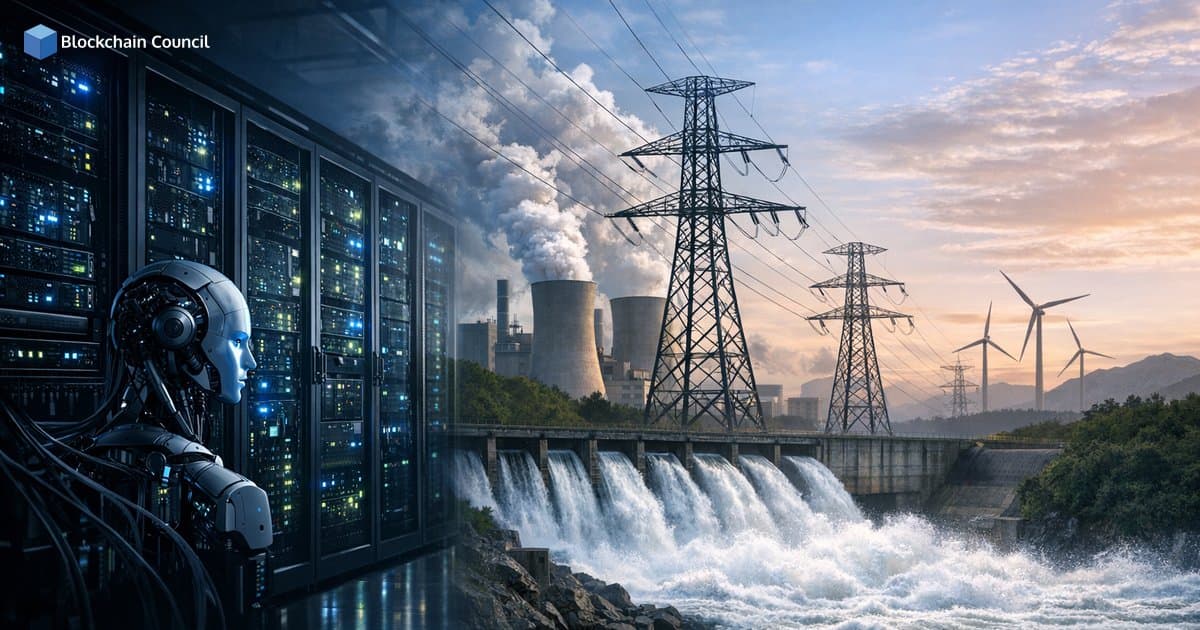
AI energy consumption has moved from an abstract concern to a visible infrastructure problem. As AI workloads surge, the data centers that train and run models are consuming more electricity, drawing more water for cooling, and pushing local grids into uncomfortable territory. The result is a growing backlash rooted less in opposition to AI itself and more in demands for reliability, transparency, and environmental accountability.
The real shock is not that data centers use energy. It is the pace. In the U.S., data centers consumed about 183 TWh in 2024, exceeding 4% of national electricity use. Globally, data centers represented about 1.5% of electricity demand in 2024, with consumption rising roughly 12% per year since 2017, a trend closely tied to AI investment and hyperscale expansion.

Why AI Data Centers Are a Political and Environmental Flashpoint
Traditional cloud workloads grew steadily and were partially offset by efficiency improvements. AI changed the curve. Training and inference workloads are compute-dense, GPU-heavy, and power-hungry. The International Energy Agency has described AI as the most important driver of data center growth, warning that in high-growth scenarios, data centers could account for a significant share of global electricity demand growth, complicating net-zero planning.
In the U.S., overall electricity demand is forecast to hit record levels in 2025 and 2026, with AI data centers dominating incremental growth and representing a large share of demand increases through 2030. This is where the hidden cost of AI becomes tangible: grid congestion, delayed interconnections, community resistance, and mounting environmental scrutiny.
The Electricity Reality: AI Workloads Are Straining Grids
Data center power usage is no longer a rounding error in several regions. The headline numbers are already large, but geographic concentration is the real accelerant for backlash.
Concentrated Load Creates Localized Grid Stress
In 2023, data centers consumed about 26% of Virginia's electricity supply, with other states including North Dakota, Nebraska, Iowa, and Oregon also seeing notable shares. These figures explain why local regulators and utilities are being pressed to answer hard questions about reliability, pricing, and who pays for infrastructure upgrades.
AI Chips Pull More Power Than Traditional Servers
Within a data center, servers account for the majority of energy consumption. AI chips used for training and serving large models can be 2 to 4 times more power-intensive than conventional server loads. That power density translates into higher electricity demand and more heat, which in turn increases cooling requirements.
Forecasts Vary Widely, and Uncertainty Complicates Planning
U.S. data center electricity usage is projected to rise sharply, with some base-case scenarios pointing to about 426 TWh by 2030, more than double current levels. Projections for U.S. and global totals vary considerably, partly because data center operations and AI workloads are often opaque. Lawrence Berkeley National Laboratory has emphasized that estimation challenges and limited transparency complicate utility forecasting and grid planning.
This uncertainty is a central reason backlash is intensifying. Communities and regulators are being asked to approve projects that may lock in decades of energy and water demand, while public data about load profiles, flexibility, and peak usage often remains limited.
The Environmental Ledger: AI's Impact Goes Beyond Carbon
The AI environmental impact conversation is frequently framed around carbon emissions, but the footprint also includes electricity sourcing, backup generation, land use, and water consumption. Many of these impacts are externalized to local communities.
AI Carbon Footprint Depends on the Grid Mix, Which Remains Fossil-Heavy
Even when companies procure renewable energy, the real-time grid mix determines actual emissions. In the U.S. in 2024, data center electricity came from a mix that included significant natural gas and coal alongside nuclear and renewables. When AI loads are added quickly and renewables and transmission capacity do not scale at the same pace, the marginal generation is often fossil-based, increasing emissions and reinforcing the AI vs environment narrative.
Water Use Is Becoming the Next Wave of Backlash
Cooling is not merely an engineering detail. It is a resource issue. U.S. data centers used about 17 billion gallons of water in 2023, and projections suggest hyperscale demand could reach 16 to 33 billion gallons annually by 2028. A large share of reported water usage is concentrated among hyperscalers and colocation facilities.
These figures can also exclude indirect water use tied to power generation. In water-stressed regions, this raises direct questions: Who gets priority during drought conditions? Should certain cooling designs be restricted? Should water reporting be mandatory?
Why the Backlash Is Intensifying: Economics, Infrastructure, and Trust
The pushback is not only environmental. It is also economic and procedural.
Grid upgrade costs are rising: Estimates for U.S. transmission and grid investments required by 2030 are substantial. When upgrades are delayed, new projects stack up in interconnection queues and reliability concerns grow.
Ratepayer concerns: Communities worry that industrial-scale loads will raise electricity prices or require public investment while benefits flow elsewhere.
Permitting and transparency gaps: When load forecasts are uncertain and operators do not disclose expected utilization, peak demand, or flexibility, trust erodes.
Local quality-of-life impacts: Noise from cooling systems and backup generators, construction disruption, and land use changes can turn public hearings into contested forums.
This is the practical core of AI's hidden cost: not just energy consumption, but the second-order consequences across planning, public finance, and local ecosystems.
Can AI Reduce Emissions Enough to Justify the Surge?
There is a legitimate counterpoint: AI could help optimize energy systems, improve industrial efficiency, and accelerate research. The IEA has noted that such benefits remain exploratory and depend on deployment quality and governance. The potential upside is real, but it does not automatically offset the direct growth in AI electricity usage from data centers.
For enterprises, this implies a more rigorous standard. If AI projects create new baseline demand, organizations may need to demonstrate measurable net benefits rather than rely on aspirational claims.
What Responsible AI Compute Looks Like in 2026
Reducing the AI carbon footprint and broader environmental burden without halting innovation requires concrete action. Several interventions are already emerging as decision points for boards, regulators, and technical leaders.
1) Measure and Disclose AI Energy Consumption
What gets measured gets managed. The industry needs clearer reporting of model training and inference energy, plus facility-level disclosures covering:
Peak and average load profiles
Power usage effectiveness and cooling approach
Water usage effectiveness and seasonal water risk
Hourly carbon intensity alignment, not just annual certificates
2) Build for Flexibility, Not Just Scale
Without demand flexibility standards, data centers function as inflexible baseload blocks. Further backlash is likely unless operators can provide credible load-shifting and curtailment capabilities during grid stress events.
3) Prioritize Efficiency at the Model and Infrastructure Layers
Efficiency is not only a facility-level challenge. It includes:
Model optimization and right-sizing
Hardware selection aligned to workloads
Smarter scheduling of training runs to lower-carbon hours
Cooling design choices that reduce water intensity
4) Treat Water as a First-Class Constraint
In many regions, water constraints will arrive before carbon constraints do. A credible AI program should include water-risk assessment, public reporting, and cooling strategies matched to local conditions.
Skills Gap: Why This Issue Is Now Part of Professional Competency
As organizations adopt AI at scale, professionals are increasingly expected to understand not only model performance but operational externalities. Relevant learning paths include Blockchain Council programs such as the Certified AI Professional (CAIP), Certified Data Science Professional, and cybersecurity-focused certifications that cover infrastructure risk and resilience. For sustainability-minded leaders, pairing AI education with governance and risk frameworks is becoming a baseline expectation rather than an optional addition.
Conclusion: The Backlash Is a Signal, Not a Fad
The backlash against AI data centers is not anti-technology sentiment. It is a response to the speed and scale of AI energy consumption colliding with slow-to-upgrade grids, fossil-heavy marginal generation, and rising water stress. With projections pointing to rapid growth in data center power usage through 2030, the burden of proof is shifting. Communities want transparency. Utilities want predictability. Regulators want accountability. Enterprises should expect the AI vs environment debate to intensify unless the industry can show credible, measurable progress on electricity, carbon, and water impacts.
If AI is going to be a defining tool of this decade, its infrastructure must be engineered and governed like critical infrastructure. Otherwise, the environmental costs of AI will not remain a talking point. They will become policy.
Related Articles
View All
News
Starcloud and the Rise of Data Centre Infrastructure in Space: What We Know About Funding, Tech, and the $1.1Bn Claim
Starcloud is building orbital data centres and has demonstrated in-orbit AI compute, but the widely circulated $1.1Bn valuation claim remains unverified as of early 2026.

News
AI News: Airtel's Nxtra Raises $1 Bn to Build AI Data Centres in India
Airtel's Nxtra is raising $1B in primary capital to scale AI-ready data centres toward 1 GW, backed by Alpha Wave Global, Airtel, and Carlyle.

News
Apple is Developing Its Own AI Chips in Data Centres
In recent news, Apple Inc. has taken a significant step in the field of technology by embarking on the development of its own artificial intelligence (AI) chips intended for use in data centers. This move, which has caught the attention of industry observers, reflects Apple’s commitment to…
Trending Articles

The Role of Blockchain in Ethical AI Development
How blockchain technology is being used to promote transparency and accountability in artificial intelligence systems.

AWS Career Roadmap
A step-by-step guide to building a successful career in Amazon Web Services cloud computing.

Top 5 DeFi Platforms
Explore the leading decentralized finance platforms and what makes each one unique in the evolving DeFi landscape.