

Risk Management Frameworks

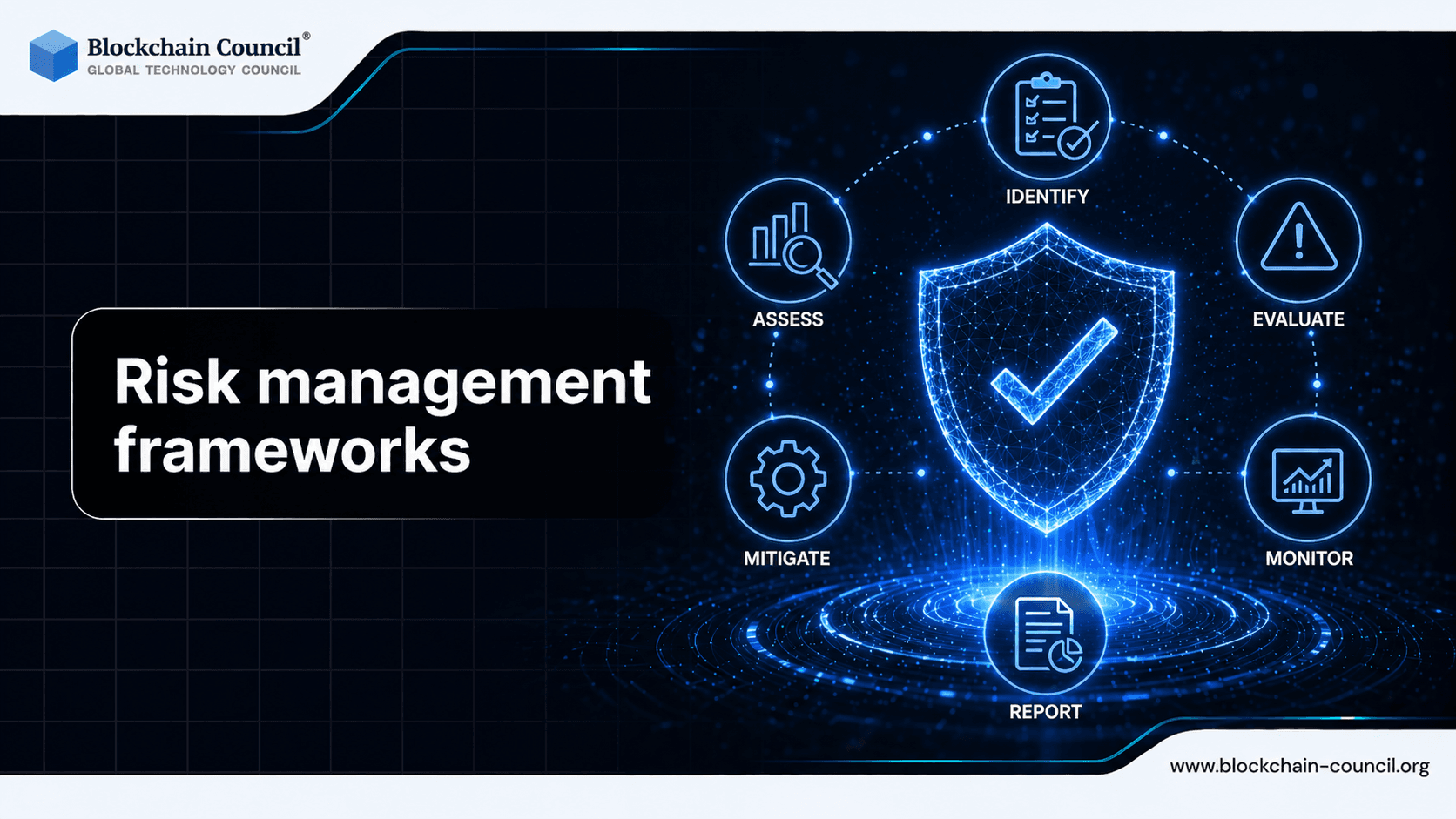
Risk management frameworks are essential tools that organizations use to identify, assess, mitigate, and monitor risks. In an increasingly complex and digital world, businesses face a wide range of risks, including financial, operational, cybersecurity, and regulatory challenges. A structured framework helps organizations manage uncertainty effectively and make informed decisions.
This article explores risk management frameworks in detail, covering their importance, types, real world applications, recent developments, and future trends. It also highlights how professionals can build expertise in risk management and related technologies.

For those looking to enhance their understanding of AI driven risk analysis, programs such as the Claude Code Certification and the AI expert certification provide valuable knowledge and practical skills.
What is a Risk Management Framework
A risk management framework is a structured approach used to identify, evaluate, and manage risks within an organization. It provides guidelines, processes, and tools that help organizations minimize potential threats and maximize opportunities.
Key Components
Risk identification
Risk assessment
Risk mitigation
Risk monitoring
Risk reporting
These components work together to create a comprehensive system for managing uncertainty.
Importance of Risk Management Frameworks
Decision Making
Frameworks provide data driven insights that support informed decision making, allowing organizations to evaluate potential risks and opportunities before making strategic choices.
Regulatory Compliance
Organizations must comply with laws and standards, and frameworks help ensure adherence by providing structured processes and documentation.
Business Continuity
Effective risk management minimizes disruptions and ensures that organizations can continue operations even in challenging circumstances.
Reputation Protection
Managing risks effectively helps maintain trust and credibility among stakeholders, customers, and partners.
Types of Risk Management Frameworks
Enterprise Risk Management
Enterprise risk management focuses on identifying and managing risks across the entire organization, aligning risk management with strategic objectives.
NIST Risk Management Framework
Developed by the National Institute of Standards and Technology, this framework is widely used for managing cybersecurity risks and improving system security.
ISO 31000
ISO 31000 provides international standards for risk management practices, offering guidelines that can be applied across industries.
COSO Framework
The COSO framework focuses on internal controls and risk management, helping organizations improve governance and financial reporting.
How Risk Management Frameworks Work
Risk Identification
Organizations identify potential risks that could impact operations, finances, or reputation by analyzing internal and external factors.
Risk Analysis
Risks are analyzed to determine their likelihood and potential impact, helping organizations understand their significance.
Risk Evaluation
Risks are prioritized based on severity, enabling organizations to focus on the most critical issues.
Risk Treatment
Strategies are implemented to mitigate, transfer, avoid, or accept risks depending on their nature and impact.
Monitoring and Review
Continuous monitoring ensures that risks are managed effectively and that strategies remain relevant over time.
Real World Example
A financial institution implemented an enterprise risk management framework to address cybersecurity threats. By identifying vulnerabilities and implementing robust security measures, the organization reduced incidents by 30 percent and improved compliance with regulatory requirements, demonstrating the effectiveness of structured risk management.
Risk Management in the Digital Age
Cybersecurity Risks
Organizations face increasing threats from cyber attacks, making it essential to implement strong frameworks to protect systems and data.
Data Privacy
Protecting sensitive data is a critical aspect of risk management, especially with growing regulatory requirements.
AI and Automation Risks
The use of AI introduces new risks related to bias, transparency, and system reliability, requiring careful management.
Role of AI in Risk Management
Artificial intelligence is transforming risk management by enabling predictive analytics, real time monitoring, and improved decision making through advanced data analysis.
Professionals interested in developing AI driven risk systems can explore the AI Powered coding expert Course.
Risk Management in Marketing
Marketing strategies involve risks related to brand reputation, customer data, and campaign effectiveness, requiring careful planning and monitoring.
For deeper insights, the AI powered marketing course provides valuable knowledge.
Benefits of Risk Management Frameworks
Proactive Risk Handling
Frameworks help organizations anticipate and address risks before they escalate into major issues.
Improved Efficiency
Structured processes streamline risk management activities, reducing confusion and improving coordination.
Better Resource Allocation
Organizations can allocate resources more effectively by focusing on high priority risks.
Enhanced Resilience
Effective frameworks strengthen the ability to withstand and recover from disruptions.
Challenges in Risk Management
Complexity
Managing multiple risks across different areas can be complex and resource intensive.
Changing Risk Landscape
New risks emerge as technology and markets evolve, requiring continuous adaptation.
Data Limitations
Incomplete or inaccurate data can affect the quality of risk analysis and decision making.
Implementation Costs
Developing and maintaining frameworks requires investment in time, technology, and expertise.
Ethical Considerations
Transparency
Organizations must be transparent about their risk management practices to build trust.
Accountability
Clear responsibility for risk management ensures effective implementation and oversight.
Fairness
Decisions should consider the impact on all stakeholders and avoid unintended harm.
Recent Developments in Risk Management
Integration with AI
AI tools are enhancing risk prediction and analysis, making frameworks more effective.
Real Time Monitoring
Advanced systems provide continuous monitoring of risks, enabling faster responses.
Regulatory Changes
Governments are introducing stricter regulations, increasing the importance of compliance.
Future Trends
Digital Transformation
Technology will continue to shape risk management practices and improve efficiency.
Increased Automation
Automation will streamline processes and reduce human error.
Global Collaboration
Organizations will work together to address global risks such as cybersecurity and climate change.
Preparing for Risk Management
Develop Skills
Understanding risk management concepts is essential for professionals in various industries.
Use Technology
Leveraging tools and platforms improves analysis and monitoring capabilities.
Stay Informed
Keeping up with industry trends and regulations ensures effective risk management.
Conclusion
Risk management frameworks are essential for navigating uncertainty and ensuring organizational success. By providing structured approaches to identifying and mitigating risks, these frameworks help organizations make informed decisions and maintain resilience.
As the business environment continues to evolve, risk management frameworks will play a critical role in addressing emerging challenges and opportunities.
FAQs
1. What is a risk management framework?
A risk management framework is a structured system that organizations use to identify, assess, and manage risks effectively. It includes a set of processes, tools, and guidelines designed to minimize potential threats while maximizing opportunities. These frameworks help organizations maintain stability, improve decision making, and achieve long term objectives by systematically addressing uncertainty.
2. Why are risk management frameworks important?
Risk management frameworks are important because they provide a structured approach to identifying and addressing risks before they escalate into major problems. They help organizations comply with regulations, protect their reputation, ensure business continuity, and make informed decisions. Without such frameworks, organizations may struggle to manage uncertainty effectively.
3. What are the main components of a risk management framework?
The main components include risk identification, risk assessment, risk mitigation, risk monitoring, and risk reporting. Each component plays a crucial role in ensuring that risks are properly managed, from recognizing potential threats to implementing strategies and continuously monitoring outcomes.
4. What is enterprise risk management?
Enterprise risk management is a comprehensive approach that focuses on identifying and managing risks across the entire organization. It aligns risk management with strategic objectives and ensures that all departments work together to address potential threats and opportunities.
5. What is the NIST framework?
The NIST framework is a widely used cybersecurity framework developed by the National Institute of Standards and Technology. It provides guidelines and best practices for managing and reducing cyber risks, helping organizations improve their security posture.
6. What is ISO 31000?
ISO 31000 is an international standard that provides principles and guidelines for effective risk management. It can be applied across industries and helps organizations establish consistent and reliable risk management practices.
7. How does AI help in risk management?
AI helps in risk management by enabling predictive analytics, real time monitoring, and advanced data analysis. It allows organizations to identify patterns, predict potential risks, and respond more quickly and effectively to emerging threats.
8. What are common risks in organizations?
Common risks include financial risks, operational risks, cybersecurity threats, and reputational risks. Each type of risk can impact an organization differently and requires specific strategies to manage effectively.
9. How can businesses implement risk management frameworks?
Businesses can implement risk management frameworks by identifying potential risks, analyzing their impact, developing mitigation strategies, and continuously monitoring outcomes. It also involves training employees and integrating risk management into daily operations.
10. What are the benefits of risk management frameworks?
Benefits include improved decision making, enhanced efficiency, better resource allocation, increased resilience, and the ability to anticipate and address risks proactively.
11. What challenges do organizations face?
Organizations face challenges such as managing complex risk environments, adapting to rapidly changing risks, dealing with data limitations, and investing resources in implementing and maintaining frameworks.
12. What is risk assessment?
Risk assessment is the process of analyzing risks to determine their likelihood and potential impact. It helps organizations prioritize risks and decide on appropriate mitigation strategies.
13. What is risk mitigation?
Risk mitigation involves implementing strategies to reduce or eliminate risks. This may include adopting new technologies, improving processes, or transferring risks through insurance.
14. What is risk monitoring?
Risk monitoring involves continuously tracking risks and evaluating the effectiveness of mitigation strategies. It ensures that organizations remain prepared for potential changes.
15. How does risk management affect businesses?
Risk management improves stability, ensures compliance, enhances decision making, and protects the organization’s reputation, ultimately contributing to long term success.
16. What is ethical risk management?
Ethical risk management involves ensuring that decisions are fair, transparent, and accountable, considering the impact on all stakeholders.
17. What are future trends in risk management?
Future trends include the integration of AI, increased automation, real time monitoring, and greater global collaboration to address complex risks.
18. How can professionals learn risk management?
Professionals can learn risk management through certifications, training programs, and practical experience in implementing frameworks.
19. What industries use risk management frameworks?
All industries use risk management frameworks, including finance, healthcare, manufacturing, and technology, as they all face various types of risks.
20. Why is risk management important today?
Risk management is important today due to increasing complexity, rapid technological changes, and the growing number of risks organizations face in a globalized and digital environment.
Related Articles
View All
Info
VeChain Price Prediction: Supply Chain Adoption and What It Means for VET
VeChain's future price potential depends on enterprise adoption, supply chain activity, and developments in its dual-token ecosystem. Explore VET's tokenomics, StarGate staking, Galactica upgrades, technical price levels, and the key factors that could influence its long-term outlook.

Info
Most Accessible Crypto Exchange VIP Programs for Derivatives Traders in 2026
Compare the most accessible crypto exchange VIP programs for derivatives traders, including VIP qualification requirements, maker and taker fees, asset thresholds, leverage, and trading cost advantages across leading exchanges.

Info
How Spinbet NZ Is Bringing Blockchain into Faster and More Transparent Casino Play
One platform that shows how those benefits can work for casino payments is Spinbet NZ. Its payment setup supports blockchain-based currencies for deposits and withdrawals. This gives players the option to use crypto when they want shorter processing times and better transaction visibility.
Trending Articles
AWS Career Roadmap
A step-by-step guide to building a successful career in Amazon Web Services cloud computing.
What is AWS? A Beginner's Guide to Cloud Computing
Everything you need to know about Amazon Web Services, cloud computing fundamentals, and career opportunities.
How to Install Claude Code
Learn how to install Claude Code on macOS, Linux, and Windows using the native installer, plus verification, authentication, and troubleshooting tips.