

Judge Claude Frollo

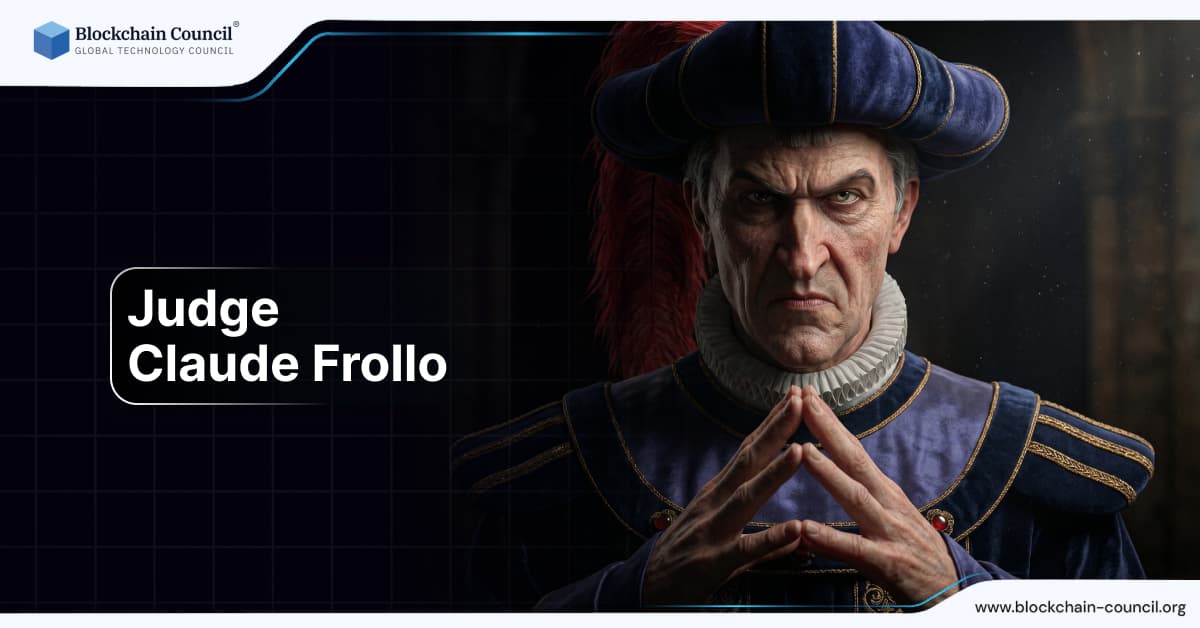
Judge Claude Frollo is one of the most complex and unsettling antagonists in literary and cinematic history. Originally introduced in Victor Hugo’s novel The Hunchback of Notre Dame and later reimagined in Disney’s animated adaptation, Frollo represents the dangers of unchecked authority, moral hypocrisy, and obsessive control.
This article explores Judge Claude Frollo in depth, examining his origins, psychological profile, thematic significance, and enduring cultural relevance. It also connects his character to broader discussions about power, ethics, and human behavior.

For readers interested in understanding complex systems of reasoning and ethical frameworks in modern contexts, structured learning paths such as the Claude Code Certification and the AI expert certification provide valuable insights into analytical thinking and responsible decision making.
Origins of Judge Claude Frollo
Victor Hugo’s Novel
In Victor Hugo’s 1831 novel, Claude Frollo is portrayed as a scholarly archdeacon rather than a judge. He is intelligent, introspective, and deeply conflicted, embodying the tension between reason and passion.
Disney Adaptation
Disney’s version transforms Frollo into a judge, emphasizing his role as a figure of authority and law. This change amplifies his authoritarian nature and makes him a more direct symbol of institutional power.
Character Overview
Judge Claude Frollo is defined by a combination of traits that make him both compelling and disturbing.
Key Traits
Authoritarian and controlling
Morally rigid yet hypocritical
Intellectually driven but emotionally unstable
Obsessed with purity and order
These traits create a character who believes he is righteous, even when committing acts of cruelty.
Psychological Analysis
Internal Conflict
Frollo’s character is built around internal contradiction. He views himself as morally superior, yet struggles with desires he cannot reconcile with his beliefs.
Obsession
His fixation on Esmeralda represents a loss of control. This obsession drives much of his destructive behavior.
Projection of Guilt
Instead of acknowledging his own flaws, Frollo projects blame onto others, reinforcing his sense of righteousness.
Themes Represented by Frollo
Abuse of Power
Frollo uses his position to enforce his personal beliefs, demonstrating how authority can be misused.
Moral Hypocrisy
He condemns others while excusing his own actions, highlighting the dangers of self righteousness.
Fear of Difference
Frollo’s hostility toward those who are different reflects broader social fears and prejudices.
Real World Relevance
Although fictional, Frollo’s character mirrors real world issues.
Authority and Ethics
Leaders who prioritize control over compassion can create harmful systems.
Bias and Discrimination
Frollo’s actions illustrate how prejudice can lead to injustice.
Psychological Complexity
His internal struggles reflect the complexity of human behavior.
Role in The Hunchback of Notre Dame
Relationship with Quasimodo
Frollo raises Quasimodo but treats him as a tool rather than a person. This dynamic highlights themes of control and dependency.
Conflict with Esmeralda
His obsession with Esmeralda drives the narrative and reveals his inability to reconcile desire with morality.
Antagonistic Force
Frollo serves as the central antagonist, representing systemic oppression.
Disney’s Interpretation
Visual Representation
Disney portrays Frollo with dark, imposing visuals that emphasize his authority and menace.
Musical Themes
Songs like Hellfire provide insight into his internal conflict and obsession.
Simplified Narrative
While still complex, Disney’s version focuses more on clear moral contrasts.
Cultural Impact
Literary Significance
Frollo remains one of the most studied characters in Gothic literature.
Film Legacy
Disney’s portrayal introduced him to a global audience.
Symbolism
He is often used as a symbol of authoritarianism and moral corruption.
Comparison with Other Villains
Unique Complexity
Unlike many villains, Frollo is driven by internal conflict rather than simple ambition.
Psychological Depth
His motivations are rooted in belief systems rather than external goals.
Realistic Traits
His flaws are human, making him more unsettling.
Lessons from Frollo’s Character
Dangers of Extremism
Rigid belief systems can lead to harmful actions.
Importance of Self Awareness
Ignoring personal flaws can result in destructive behavior.
Balance Between Authority and Compassion
Power must be exercised responsibly.
Modern professionals can apply structured thinking and ethical reasoning through programs like the AI Powered coding expert Course.
Marketing and Storytelling Insights
Memorable Character Design
Frollo’s complexity makes him memorable.
Emotional Engagement
His internal conflict creates strong emotional reactions.
Narrative Depth
Well developed antagonists enhance storytelling.
For those interested in storytelling and audience engagement, the AI powered marketing course provides valuable strategies.
Recent Developments
Renewed Interest
Modern audiences continue to analyze Frollo’s character.
Academic Studies
Scholars explore his psychological and ethical dimensions.
Adaptations
New interpretations continue to emerge in various media.
Future Relevance
Timeless Themes
Issues of power, morality, and prejudice remain relevant.
Continued Analysis
Frollo will likely remain a subject of study.
Influence on Storytelling
His character sets a standard for complex antagonists.
Conclusion
Judge Claude Frollo is a character that transcends his fictional origins. His complexity, moral contradictions, and psychological depth make him one of the most compelling antagonists in literature and film.
By examining his character, audiences gain insight into broader themes of power, ethics, and human behavior. His story serves as a reminder of the importance of balance, self awareness, and compassion in positions of authority.
FAQs
1. Who is Judge Claude Frollo?
Judge Claude Frollo is a fictional character from The Hunchback of Notre Dame, originally created by Victor Hugo and later adapted by Disney. In the Disney version, he is portrayed as a powerful judge who enforces strict moral and social rules. His character represents authority taken to an extreme, where personal beliefs override fairness and compassion. He is widely regarded as one of the most complex and psychologically intense villains in literature and animation.
2. What makes Frollo a unique villain?
Frollo is unique because his actions are driven by a distorted sense of morality rather than simple greed or ambition. He genuinely believes he is doing the right thing, which makes his behavior more disturbing. His internal conflict between desire and duty adds depth to his character, making him more realistic and psychologically complex than many traditional villains.
3. What are his main traits?
His main traits include authoritarianism, strict moral judgment, emotional instability, and obsession with control. He is also highly intelligent and disciplined, which makes his actions more calculated. These traits combine to create a character who is both powerful and deeply flawed.
4. What role does he play in the story?
Frollo serves as the central antagonist, driving the conflict and shaping the narrative. His actions directly affect the lives of Quasimodo and Esmeralda, creating tension and emotional depth in the story. He represents the oppressive forces that the protagonists must overcome.
5. Why is he obsessed with Esmeralda?
His obsession stems from his inability to reconcile his strict moral beliefs with his human desires. Instead of accepting his feelings, he views them as a weakness and projects blame onto Esmeralda. This leads to destructive behavior fueled by denial and frustration.
6. How does he treat Quasimodo?
Frollo raises Quasimodo but treats him as a subordinate rather than an individual with autonomy. He uses manipulation and control to maintain authority over him. This relationship highlights themes of dependency, control, and emotional abuse.
7. What themes does he represent?
He represents themes such as abuse of power, moral hypocrisy, fear of difference, and the dangers of rigid belief systems. These themes are central to understanding his character and the story as a whole.
8. Is Frollo realistic?
Yes, his behavior reflects real human tendencies such as denial, projection, and moral justification. This realism makes him more unsettling, as his actions are not entirely fictional but rooted in recognizable psychological patterns.
9. How does Disney portray him?
Disney portrays him as a strict and imposing judge with a strong sense of authority. His character is visually dark and intimidating, and his actions are more explicitly villainous compared to the original novel.
10. What is the significance of Hellfire?
The song provides a deep insight into Frollo’s internal conflict, showing his struggle between desire and morality. It reveals his mindset and justifications, making it one of the most powerful moments in the film.
11. Why is he considered dangerous?
He is dangerous because he believes his actions are justified, which allows him to commit harmful acts without remorse. His authority amplifies the impact of his decisions.
12. What lessons can be learned from him?
His story teaches the importance of self awareness, empathy, and ethical responsibility. It shows how ignoring personal flaws can lead to destructive outcomes.
13. How does he abuse power?
He uses his position to enforce personal beliefs and control others rather than uphold justice. This misuse of power leads to injustice and suffering.
14. What is his legacy?
He is remembered as one of the most complex villains in literature and film. His character continues to be analyzed and discussed.
15. How does he compare to other villains?
He is more psychologically complex and less driven by simple motives. This makes him more realistic and impactful.
16. Is he purely evil?
He is not purely evil but deeply flawed. His internal struggles add depth and complexity to his character.
17. Why is he still relevant?
The themes he represents remain relevant in modern society. His character continues to resonate with audiences.
18. Can his character be analyzed academically?
Yes, he is often studied in literature and psychology for his complex personality and themes.
19. What makes his story impactful?
His internal conflict and moral contradictions create a compelling narrative that resonates with audiences.
20. Why is he memorable?
His complexity, authority, and emotional depth make him a lasting figure in storytelling.
Related Articles
View All
Info
VeChain Price Prediction: Supply Chain Adoption and What It Means for VET
VeChain's future price potential depends on enterprise adoption, supply chain activity, and developments in its dual-token ecosystem. Explore VET's tokenomics, StarGate staking, Galactica upgrades, technical price levels, and the key factors that could influence its long-term outlook.

Info
Most Accessible Crypto Exchange VIP Programs for Derivatives Traders in 2026
Compare the most accessible crypto exchange VIP programs for derivatives traders, including VIP qualification requirements, maker and taker fees, asset thresholds, leverage, and trading cost advantages across leading exchanges.

Info
How Spinbet NZ Is Bringing Blockchain into Faster and More Transparent Casino Play
One platform that shows how those benefits can work for casino payments is Spinbet NZ. Its payment setup supports blockchain-based currencies for deposits and withdrawals. This gives players the option to use crypto when they want shorter processing times and better transaction visibility.
Trending Articles
AWS Career Roadmap
A step-by-step guide to building a successful career in Amazon Web Services cloud computing.
How Blockchain Secures AI Data
Understand how blockchain technology is being applied to protect the integrity and security of AI training data.
Blockchain in Supply Chain Provenance Tracking
Supply chains are under pressure to prove not just efficiency, but also authenticity, sustainability, and fairness. Customers want to know if their coffee really is fair trade, if the diamonds are con