

Jobs in Blockchain
 Toshendra Kumar Sharma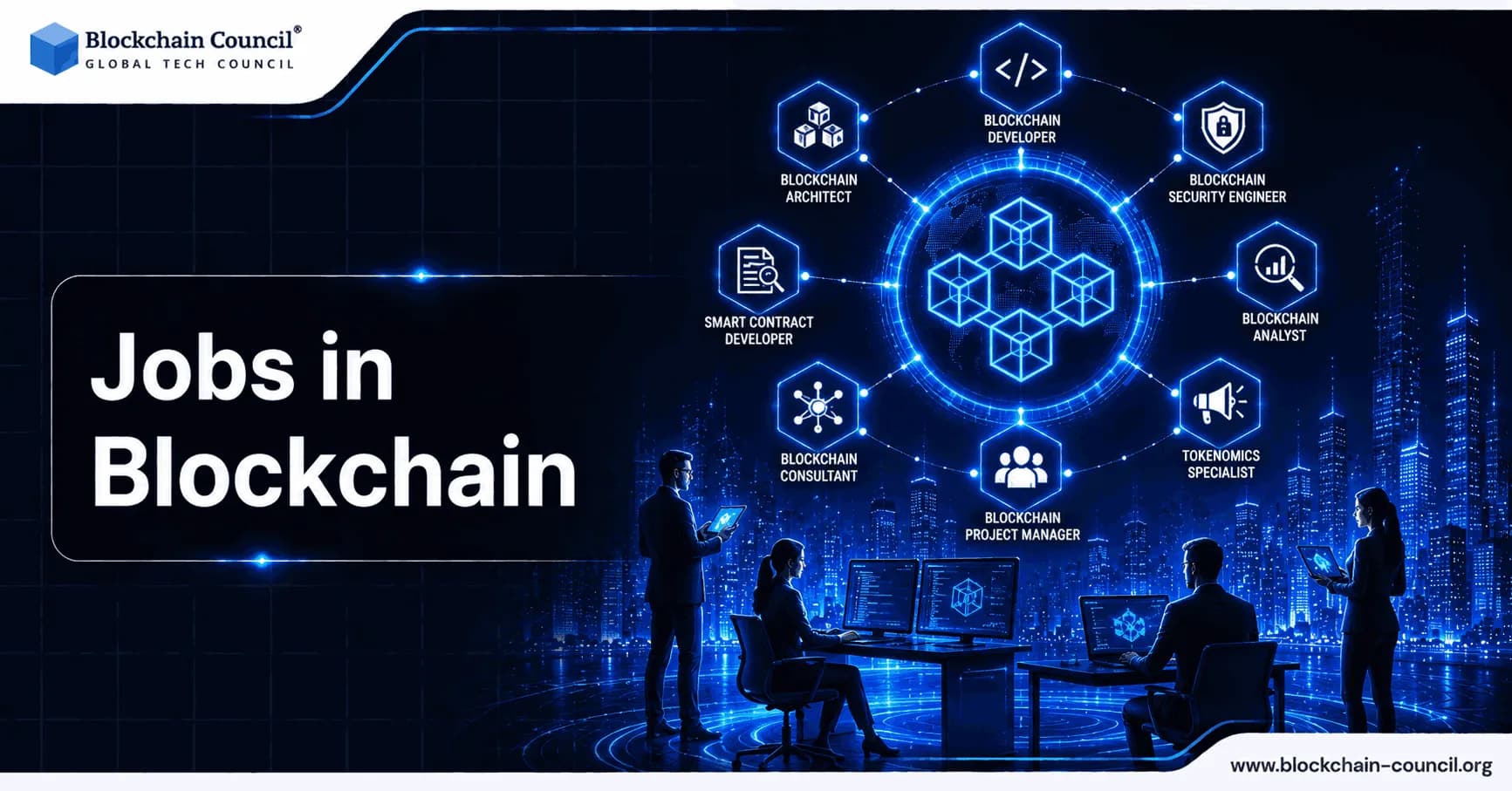
The blockchain job market in 2026 looks genuinely different from the speculative hiring waves of 2021 and 2022. According to Grand View Research, the global blockchain technology market reached $57.7 billion in 2025 and is projected to grow to $108.3 billion in 2026, while separate industry data from Blockchain Staffing Ninja projects the broader market reaching $163 billion by year end, expanding at a compound annual growth rate of 56.3 percent. This growth is translating into real hiring activity, LinkedIn's blockchain related postings have stabilized at roughly 18,000 active global listings, while Indeed shows around 12,000 crypto specific openings spanning technical, compliance, and business roles. Many people entering this field start with a Certified Blockchain Expert credential to build a genuine, structured foundation before pursuing these opportunities.
In this article, we will walk through the specific roles available across the blockchain job market, what current 2026 salary data actually shows, and the skills genuinely driving hiring decisions this year.

How the Blockchain Job Market Has Changed in 2026
The nature of blockchain hiring has shifted meaningfully compared to earlier years. A 2026 fintech careers analysis notes that speculative roles built around a single project's token launch have decreased, while infrastructure and governance roles have increased, with hiring now driven by regulatory clarity and institutional adoption rather than token price cycles. Practically, this means fewer positions tied to a single volatile project and more roles connected to supply chain tracking, tokenized assets, cross border payments, and digital identity systems, applications that remain valuable regardless of short term price movements.
Regulatory developments have also reshaped the hiring landscape considerably. The implementation of frameworks like MiCA in Europe and the GENIUS Act in the United States has created genuinely new compliance focused job categories, with 84 percent of executives reportedly now actively deploying blockchain solutions within their organizations, according to Blockchain Staffing Ninja's 2026 data. This mainstream enterprise adoption has broadened the job market considerably beyond its earlier crypto native origins, which is why many candidates now pair blockchain specific learning with a Certified Blockchain Developer credential, validating the practical, production ready coding skills that employers across both crypto native companies and traditional enterprises are actively screening for.
Core Job Categories in the Blockchain Market
Smart Contract Developers
This remains the most common technical entry point, involving writing, testing, and deploying smart contracts, most commonly in Solidity, across Ethereum and other EVM compatible networks.
Blockchain Engineers and Protocol Specialists
These roles focus on core infrastructure, consensus mechanisms, and the underlying protocol layer itself, commanding some of the highest compensation in the field given the deep specialization required.
DeFi Protocol Engineers
According to 2026 hiring data, experience with automated market makers, lending markets, and derivatives protocols translates directly into premium compensation offers, reflecting sustained demand for developers who understand decentralized finance's specific technical and economic mechanics.
Cross Chain and Interoperability Engineers
Bridge and messaging layer engineers are reportedly in acute demand in 2026, as the blockchain ecosystem continues fragmenting across multiple networks that increasingly need to communicate securely with one another.
Smart Contract Auditors and Security Specialists
Given how costly smart contract vulnerabilities have proven historically, security focused roles, including zero knowledge proof engineers and dedicated auditors, consistently command compensation at the top end of the market.
Compliance and Regulatory Roles
A genuinely fast growing category in 2026, spanning blockchain transaction analysis, suspicious activity detection, wallet risk scoring, and cross chain tracking, driven directly by the regulatory frameworks now governing crypto operations in major markets like London, Dubai, and Singapore.
Non Technical Roles
The blockchain job market also supports genuinely substantial non technical career paths, including community managers, who can earn up to $90,000 according to industry salary data, alongside marketing specialists capable of explaining complex concepts like hash rates in accessible language, roles reportedly paying between $67,000 and $128,000 depending on experience and platform.
What 2026 Salary Data Actually Shows
Compensation figures for blockchain roles vary considerably depending on the specific data source, reflecting genuinely different sample sizes and methodologies rather than one figure simply being more accurate than another. Levels.fyi and Glassdoor aggregated data places median total compensation for a mid-level blockchain developer in the United States between $140,000 and $185,000 annually. Glassdoor's own broader data shows average base salaries ranging from $98,000 to $149,000, compared to roughly $92,000 for a typical general software developer. Blockchain Staffing Ninja's February 2026 market data reports a wider range, between $130,000 and $230,000 or more for senior level roles depending on specialization and location, with highly technical positions like zero knowledge proof engineers and smart contract auditors commanding the top of that range.
Understanding exactly which specific skills and specializations drive these premiums requires genuine, current technical literacy. This is why many candidates pursue a broader Tech Certification alongside blockchain specific training, building well rounded expertise across networking, security, and modern development practices that make core blockchain skills considerably more competitive across this genuinely wide compensation range.
The Skills Genuinely Driving Hiring in 2026
Programming language expertise has become a genuinely strategic asset rather than a general skill, with Web3.career reporting specialist smart contract and Solidity roles averaging between $125,000 and $150,000, notably above broader developer averages. Layer 2 and rollup development remains one of the hottest areas of active investment, reflecting the industry's sustained focus on blockchain scalability. Perhaps most significantly, 2026 has introduced a genuinely new driver of compensation, AI fluency, as autonomous AI agents increasingly execute transactions and interact with decentralized systems without continuous human oversight, creating strong demand for talent who understand both blockchain systems and AI integration simultaneously.
Future-Ready Skills
As technology becomes increasingly important across industries, students need opportunities to develop future-ready skills early in their education. A Tech Olympiad can introduce students to areas such as artificial intelligence, coding, cybersecurity, robotics, and computational thinking while encouraging curiosity and continuous learning.
Building this kind of early technical foundation gives students a genuine head start toward eventually pursuing the kind of specialized, well compensated blockchain careers now shaping this rapidly evolving global market.
Where the Strongest Demand Is Concentrated Geographically
Blockchain hiring in 2026 remains genuinely global and remote first, with more than 60 percent of blockchain roles structured as fully remote or hybrid flexible according to Blockchain Staffing Ninja's data, allowing companies to compete for talent regardless of location. That said, structured regulatory hubs including London, Dubai, Singapore, Berlin, and emerging Asian technology centers continue showing particularly strong, sustained demand, especially for roles combining technical blockchain knowledge with genuine regulatory awareness.
Building a Genuine Career in Blockchain
Real world hiring patterns show that demonstrated, shippable experience consistently matters more than years listed on a resume. Junior developers completing focused, practical bootcamp style training have landed first roles in the $70,000 to $90,000 range, while engineers with several years of genuine Solidity experience and an actual security audit track record have pulled offers exceeding $160,000 in base salary alone, before any token or equity component is added. This pattern holds across the market, practical, demonstrable skill consistently outperforms purely theoretical credentials when it comes to actual hiring decisions and compensation offers.
Communicating Your Blockchain Expertise Effectively
Technical skill alone rarely tells the complete story to employers evaluating candidates across a genuinely global, competitive talent pool. Clearly explaining your specific expertise, whether in a resume, technical interview, or professional portfolio, matters considerably for translating real skill into an actual job offer. This is why many professionals building blockchain careers also pursue a Marketing Certification, strengthening their ability to communicate complex technical work persuasively to hiring managers and clients who need to understand the value of that expertise clearly.
Final Thoughts
Jobs in blockchain span a genuinely wide range in 2026, from smart contract development and protocol engineering to compliance, security auditing, and non technical roles in community management and marketing, all supported by a global market growing at a genuinely rapid pace. Compensation varies considerably depending on specialization, experience, and geography, but the clearest pattern across every data source remains consistent, demonstrated, practical skill continues to command the strongest premiums in a market that has matured well beyond its earlier, more speculative hiring cycles.
For anyone considering this career path, building genuine technical or compliance expertise, staying current with how the market continues evolving around AI integration and regulatory change, and clearly communicating that expertise to potential employers together provide the strongest foundation for a genuinely successful blockchain career.
FAQs
1. What are blockchain jobs?
Blockchain jobs are career opportunities involving blockchain technology, distributed ledger technology (DLT), smart contracts, Web3, digital assets, DeFi, tokenization, and blockchain infrastructure. Roles range from technical positions such as blockchain developers and security engineers to non-technical positions in marketing, research, compliance, product management, and business development. Current job listings show opportunities across development, engineering, marketing, product, data, and Solidity-related roles.
2. What types of blockchain jobs are available?
Common blockchain career opportunities include:
Blockchain Developer
Blockchain Engineer
Smart Contract Developer
Web3 Developer
Blockchain Architect
Blockchain Security Engineer
Blockchain Analyst
DeFi Developer
Blockchain Researcher
Product Manager
Blockchain Consultant
Crypto Compliance Specialist
Blockchain Marketing Specialist
Community Manager
Business Development Manager
3. What skills are required for blockchain jobs?
Technical blockchain roles commonly require programming, blockchain architecture, smart contracts, cryptography, distributed systems, APIs, Git, and cybersecurity. Depending on the ecosystem, useful programming languages include Solidity, Rust, Go, JavaScript/TypeScript, Python, Java, and C++.
4. Can freshers get blockchain jobs?
Yes. Freshers can enter blockchain through internships, junior developer roles, trainee positions, research roles, blockchain support, marketing, and other entry-level opportunities. Current listings include both blockchain internships and fresher blockchain developer positions.
5. Is blockchain a good career option?
Blockchain can be a promising career specialization for people interested in software development, financial technology, cybersecurity, digital assets, and decentralized applications. The industry is also expanding into areas such as tokenization, institutional digital assets, and blockchain infrastructure.
However, candidates should develop transferable skills rather than relying only on blockchain-specific knowledge.
6. What does a blockchain developer do?
A blockchain developer can design, develop, test, and maintain blockchain applications, smart contracts, decentralized applications, wallets, APIs, and blockchain integrations. Some developers work on blockchain protocols and infrastructure, while others build applications on existing networks.
Current job descriptions commonly request smart-contract development, EVM experience, Web3 libraries, wallet integrations, testing, and blockchain security knowledge.
7. Which programming languages are used in blockchain development?
The language depends on the blockchain and job role. Common options include:
Solidity for Ethereum and EVM smart contracts
Rust for various blockchain protocols and applications
Go for blockchain infrastructure
C++ for certain protocol-level systems
JavaScript/TypeScript for Web3 applications
Python for automation, analysis, and tooling
Java for some enterprise blockchain applications
Learning one language deeply and understanding blockchain fundamentals can be more useful than trying to learn every language at once.
8. What is the salary for blockchain jobs?
Blockchain salaries vary according to experience, location, technical specialization, employer, and seniority. For example, current Indian job listings range from fresher and internship positions to senior blockchain engineering roles.
Candidates should compare compensation based on the specific role rather than assuming a single industry-wide blockchain salary.
9. Are blockchain jobs available for freshers without experience?
Yes. Some employers advertise fresher blockchain developer and blockchain internship positions. Candidates without professional experience can improve their chances by building projects, contributing to open-source repositories, learning smart contracts, and creating a GitHub portfolio.
10. Can blockchain jobs be done remotely?
Yes. Many blockchain and Web3 organizations operate with distributed teams. Current blockchain job platforms list opportunities across remote engineering, marketing, product, data, DeFi, and Solidity roles.
Remote eligibility can still depend on the employer's location, employment structure, and local regulations.
11. What are the best blockchain jobs for beginners?
Beginners can consider:
Blockchain Intern
Junior Blockchain Developer
Web3 Developer Intern
Blockchain Research Assistant
Blockchain Content Writer
Crypto Marketing Associate
Community Associate
Blockchain QA Tester
Junior Business Development Associate
Blockchain Support Associate
Technical candidates should gradually progress toward smart contracts, blockchain development, security, or infrastructure.
12. Is Solidity necessary for blockchain jobs?
No. Solidity is important for Ethereum and EVM smart-contract development, but blockchain careers extend far beyond smart contracts.
Professionals can work in Rust-based development, blockchain infrastructure, research, cybersecurity, compliance, marketing, product management, analytics, and business development.
13. What industries hire blockchain professionals?
Blockchain skills can be applied across:
Financial services
Fintech
Cryptocurrency
Supply-chain management
Healthcare
Insurance
Gaming
Real estate
Digital identity
Government
Digital assets
RWA tokenization
Enterprise technology
The growing range of use cases means blockchain careers are no longer limited to cryptocurrency companies.
14. Can non-technical professionals get blockchain jobs?
Yes. Blockchain organizations also need professionals in SEO, content marketing, social media, community management, sales, finance, compliance, research, operations, customer success, and product management.
Understanding basic blockchain concepts can make a non-technical candidate more competitive for these positions.
15. What certifications can help with blockchain careers?
Blockchain certifications can demonstrate structured knowledge of blockchain fundamentals, cryptocurrency, smart contracts, Web3, digital assets, or related technologies.
However, certification is most effective when combined with practical projects, professional experience, technical skills, or a strong portfolio.
16. How can I start a career in blockchain?
A practical blockchain career path is:
Learn blockchain fundamentals.
Choose a specialization.
Learn the relevant technical or professional skills.
Study a blockchain ecosystem such as Ethereum.
Build practical projects.
Create a GitHub or professional portfolio.
Complete relevant certifications if useful.
Contribute to open-source projects.
Network with blockchain professionals.
Apply for internships and entry-level roles.
Continue learning as the industry evolves.
17. What projects should a blockchain developer build?
Good portfolio projects include:
ERC-20 token
NFT marketplace
DAO voting application
DeFi lending prototype
Blockchain explorer
Digital identity application
Multichain wallet
Supply-chain tracking platform
RWA tokenization prototype
Smart-contract security testing project
A strong portfolio should explain the problem, technology stack, architecture, testing, security considerations, and results.
18. Where can I find blockchain jobs?
You can search LinkedIn, Indeed, Wellfound, specialist Web3 job boards, blockchain recruitment platforms, and company career pages.
Useful search terms include:
"Blockchain Developer," "Blockchain Engineer," "Smart Contract Developer," "Web3 Developer," "Blockchain Security Engineer," "Blockchain Analyst," and "Blockchain Jobs Remote."
Current job platforms show thousands of blockchain-related listings across different experience levels and locations.
19. Are blockchain jobs available in India?
Yes. India has an active blockchain employment market, with opportunities appearing across Bengaluru, Hyderabad, Pune, Gurugram, Chennai, Noida, Mumbai, and other locations. Current listings include blockchain developer, blockchain engineer, Web3, and related positions.
20. What is the future of blockchain jobs?
The blockchain job market is increasingly expanding beyond cryptocurrency into RWA tokenization, DeFi, stablecoins, digital securities, blockchain infrastructure, cybersecurity, institutional digital assets, AI, and enterprise applications.
Current job listings already show demand spanning blockchain engineering, Web3, Solidity, DeFi, product, marketing, and data roles.
Professionals who combine blockchain knowledge with software development, cybersecurity, finance, compliance, AI, data analytics, or digital marketing can build broader and more resilient career opportunities.
Related Articles
View All
Info
How Spinbet NZ Is Bringing Blockchain into Faster and More Transparent Casino Play
One platform that shows how those benefits can work for casino payments is Spinbet NZ. Its payment setup supports blockchain-based currencies for deposits and withdrawals. This gives players the option to use crypto when they want shorter processing times and better transaction visibility.
Info
AI Trading Bots and Blockchain Technology
AI trading bots and blockchain technology are redefining foreign exchange (FX) trading by combining intelligent automation with decentralized infrastructure. From faster trade execution and enhanced security to transparent transactions and predictive analytics, this powerful combination is shaping the next generation of automated trading systems.

Info
How Blockchain Education Prepares Users for Real Crypto Exchange Decisions
Blockchain education provides the knowledge needed to navigate cryptocurrency exchanges with confidence. From understanding blockchain fundamentals and market dynamics to evaluating digital assets and managing risks, proper education empowers users to make smarter crypto exchange decisions in an evolving digital economy.
Trending Articles

Top 5 DeFi Platforms
Explore the leading decentralized finance platforms and what makes each one unique in the evolving DeFi landscape.
What is AWS? A Beginner's Guide to Cloud Computing
Everything you need to know about Amazon Web Services, cloud computing fundamentals, and career opportunities.
Claude AI Tools for Productivity
Discover Claude AI tools for productivity to streamline tasks, manage workflows, and improve efficiency.