

How to Secure Your Digital Wallet?
 Council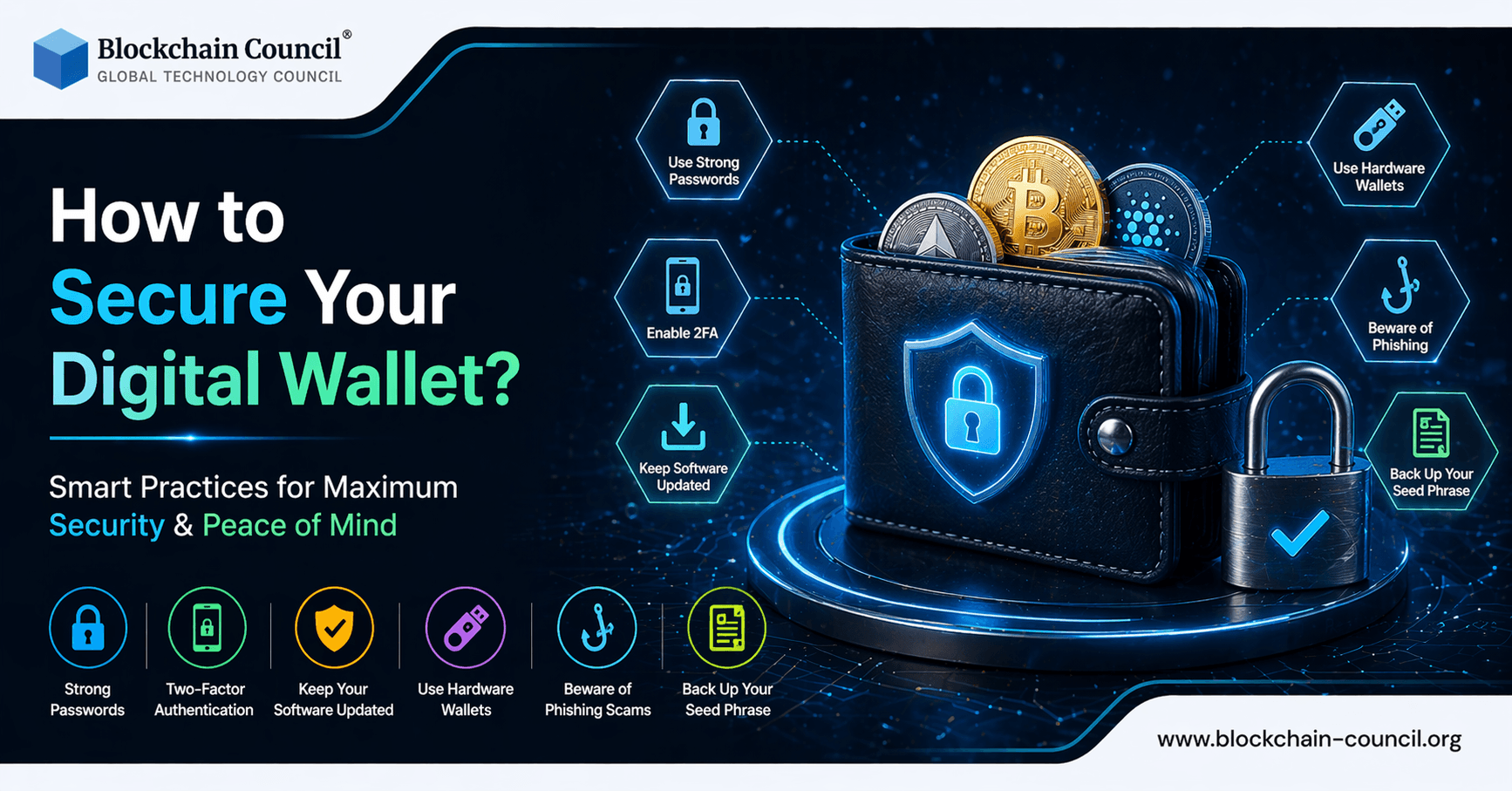
As a crypto investor, nothing is as terrifying as opening your wallet to see that your assets have been wiped. To prevent this, you must take the necessary precautions to secure your digital wallet and its holdings.
Crypto wallets are vulnerable to hacking, phishing, and malware, which can lead to asset loss or theft. To safeguard yourself from these threats, protect your information and stay updated on the best practices. Read on to learn the best tips to follow.

1. Only Use Reliable Wallet Providers
To ensure the safety of your digital assets, such as Bitcoin and World Coin, only use wallets from secure and reliable providers. Browse customer reviews and study the platform’s security protocols to make informed choices.
Go for well-known providers and avoid the urge to use unfamiliar options. Since many reputable and secure wallets are available, your options are endless. Also, choose platforms with insured coverage for stored assets.
2. Use Unique and Solid Passwords
To secure your crypto wallets better, create strong and unique passwords. Strong passwords are at least 12 characters long and contain uppercase and lowercase letters, special characters, and numbers.
When using strong passwords, store them in reliable password managers. Options like 1Password or LastPass are helpful for saving and managing your security information. This way, you can protect your assets from unauthorized access.
3. Enable Two-Factor Authentication
Two-factor authentication, a multi-factor authentication feature, adds an extra layer of security to your crypto wallet. This method requires two forms of verification: passwords and temporary codes from apps like Google authenticator and Athly. Enabling two-factor authentication on your wallet will prevent unauthorized access, boost your blockchain security, and protect your assets from theft.
4. Use Secure Internet Connections
To keep your digital wallet safe, always use secure internet connections. Preferably, only use private internet when your wallet is open. Do not use public Wi-Fi, since hackers can easily target your wallet. Consider using a virtual private network (VPN) to encrypt your activity and protect your details from malicious players.
5. Update Your Software Regularly
Frequently update your wallet software, exchange apps, and devices to maintain high-level security. Wallet providers stay ahead of hackers by adding features and fixing bugs to remove weak links. Updates often come with security patches and reinforcement against vulnerabilities. By installing them, you protect yourself against these emerging threats.
6. Backup Your Wallet
Backing up your wallet is an excellent way to safeguard your assets against device loss. Backups also come in handy if your account is compromised or your wallet becomes corrupted. Consider storing these backups in multiple offline locations to prevent unauthorized access. Create a backup schedule to maintain recent copies of your information. This is a helpful practice regardless of the type of crypto wallet you use.
7. Secure Your Recovery Phrase
Keep your recovery phrase secure and avoid sharing it with others. While others memorize this information, there are chances they may forget. Preferably, write your recovery phrase on a piece of paper. Do not take photos or keep screenshots since hackers can access them.
Endnote
To secure your digital wallet and protect your crypto investments, use reliable platforms and add strong passwords. Enable two-factor authentication, only use secure internet connections, and regularly update your software. Finally, back up your wallet and secure your recovery phrase.
FAQs
1. What is a digital wallet and why does it need security?
A digital wallet is a software or hardware tool used to store cryptocurrencies, private keys, and digital assets. Unlike traditional banking systems, users have full control over their funds. This also means they are fully responsible for security. Without proper protection, wallets can be targeted by hackers, phishing attacks, or malware, leading to irreversible loss of assets.
2. What are the biggest threats to digital wallets?
The most common threats include phishing attacks, malware, fake apps, and social engineering scams. Attackers often trick users into revealing their private keys or seed phrases. Additionally, unsecured devices and public Wi-Fi can expose wallets to risks. Understanding these threats is the first step toward protecting your assets effectively.
3. How does a private key protect your wallet?
A private key is the most critical element of your digital wallet, acting as the password that gives access to your funds. Whoever controls the private key controls the assets. If it is exposed, stolen, or shared, your funds can be transferred without your consent. Keeping private keys offline and confidential is essential for wallet security.
4. What is a seed phrase and how should it be stored?
A seed phrase is a backup of your wallet that allows you to recover access if your device is lost or damaged. It typically consists of 12-24 words. It should never be stored digitally or shared online. The safest approach is to write it down and store it securely in multiple offline locations.
5. Are hardware wallets safer than software wallets?
Yes, hardware wallets are generally considered more secure because they store private keys offline. This makes them resistant to online attacks and malware. Software wallets are more convenient but are connected to the internet, increasing exposure. Many users combine both for security and usability.
6. What is two-factor authentication (2FA) in wallet security?
Two-factor authentication adds an extra layer of protection by requiring a second verification step, such as a code sent to your phone. Even if your password is compromised, attackers cannot access your wallet without the second factor. It significantly reduces unauthorized access risks.
7. How can phishing attacks affect your wallet?
Phishing attacks trick users into entering their wallet credentials on fake websites or apps. These sites often look identical to legitimate platforms. Once information is entered, attackers gain access to funds. Always verify URLs and avoid clicking suspicious links.
8. Is it safe to use digital wallets on mobile devices?
Mobile wallets are convenient but can be vulnerable if the device is compromised. Installing apps from trusted sources and keeping the device updated improves security. Avoid using public Wi-Fi for transactions. Adding biometric locks can further enhance protection.
9. What role does encryption play in wallet security?
Encryption protects wallet data by converting it into unreadable code. Only authorized users with the correct credentials can access it. Strong encryption ensures that even if data is intercepted, it cannot be easily used. It is a fundamental layer of security.
10. Should you store all funds in one wallet?
No, it is safer to diversify storage. Keeping large funds in a hardware wallet and smaller amounts in a hot wallet reduces risk. This strategy limits potential losses in case of a breach. It is similar to not carrying all cash in one place.
11. What is a cold wallet?
A cold wallet is a wallet that is not connected to the internet. Examples include hardware wallets and paper wallets. They are highly secure against online attacks. They are best suited for long-term storage.
12. What is a hot wallet?
A hot wallet is connected to the internet and used for frequent transactions. It is convenient but more vulnerable to attacks. Users should only keep limited funds in hot wallets. Security measures are essential.
13. Can malware steal crypto from wallets?
Yes, malware can capture keystrokes, access files, or manipulate transactions. It can replace wallet addresses during transfers. Using antivirus software and avoiding unknown downloads helps prevent this. Device security is crucial.
14. How often should you update your wallet software?
Regular updates are important as they fix vulnerabilities and improve security. Outdated software may be exploited by attackers. Always use the latest version from official sources. Updates ensure better protection.
15. What are secure backup practices for wallets?
Backups should be stored offline and in multiple secure locations. Avoid cloud storage for sensitive data. Use fireproof and waterproof storage if possible. Redundant backups prevent loss.
16. Is it safe to share wallet addresses?
Sharing a public wallet address is generally safe for receiving funds. However, it can expose transaction history. Avoid sharing private keys or sensitive details. Privacy awareness is important.
17. What is multi-signature wallet security?
Multi-signature wallets require multiple approvals for transactions. This reduces the risk of unauthorized access. Even if one key is compromised, funds remain protected. It is widely used in organizations.
18. How can you detect a compromised wallet?
Signs include unauthorized transactions or unusual activity. If detected, transfer funds immediately to a secure wallet. Investigate the cause and strengthen security. Quick action is critical.
19. What is the safest way to manage crypto wallets?
Use a combination of hardware wallets, strong passwords, and 2FA. Avoid risky behavior like clicking unknown links. Stay updated on security practices. Consistency is key.
20. Why is user awareness the most important security factor?
Most wallet breaches happen due to human error rather than technical flaws. Awareness helps prevent scams and mistakes. Educated users are less likely to fall victim. Security ultimately depends on user behavior.
Related Articles
View All
Info
Is SEO Dead Without Google Search? What Digital Marketers Should Do Next
SEO is not dead without Google Search. It is evolving into multi-platform and AI-driven discovery across YouTube, social search, marketplaces, and LLM assistants.

Info
From Request to Approval: A Checklist to Secure Company-Paid Degree Support Without Jeopardizing Your Role
Use this step-by-step checklist to request company-paid degree support, address manager concerns, and secure approval without risking workload, performance, or trust.

Info
How to Upload Large Files to S3 Efficiently: Multipart, Parallelism, and Secure Direct Uploads
Learn how to upload large files to S3 efficiently using multipart uploads, parallel transfers, presigned URLs, Transfer Acceleration, and lifecycle cleanup.
Trending Articles
The Role of Blockchain in Ethical AI Development
How blockchain technology is being used to promote transparency and accountability in artificial intelligence systems.

Top 5 DeFi Platforms
Explore the leading decentralized finance platforms and what makes each one unique in the evolving DeFi landscape.
How Blockchain Secures AI Data
Understand how blockchain technology is being applied to protect the integrity and security of AI training data.