

Crypto-code.App

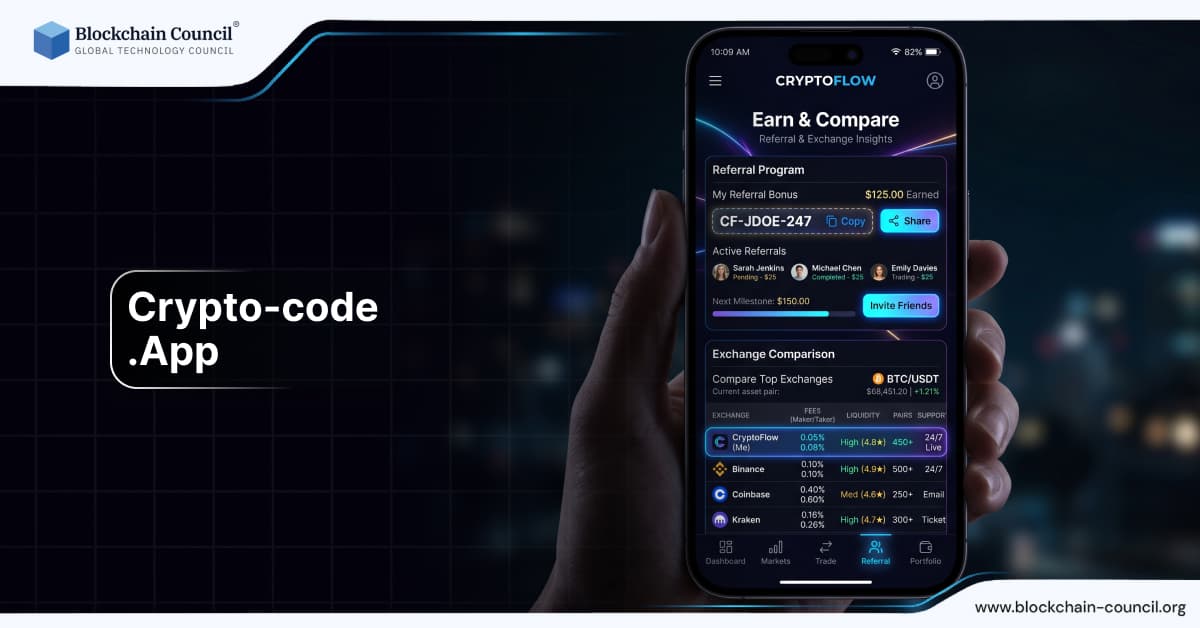
The rapid growth of cryptocurrency and blockchain technology has created a strong demand for development platforms that simplify coding, deployment, and integration. One emerging concept in this space is Crypto-code.App, a term often associated with tools and environments designed to support blockchain development and crypto-based applications.
While not tied to a single globally recognized platform, Crypto-code.App represents a broader category of tools that enable developers to build decentralized applications, smart contracts, and crypto systems efficiently.

Understanding these platforms is essential for anyone looking to participate in the evolving digital economy.
To build expertise in this field, many professionals rely on structured learning programs such as the Cryptocurrency Expert Certification and the Bitcoin expert certification.
What Is Crypto-code.App
Crypto-code.App can be understood as a conceptual or emerging platform that focuses on:
Blockchain application development
Smart contract creation
Crypto integration tools
Developer-friendly interfaces
It reflects the growing need for simplified and efficient development environments in the blockchain ecosystem.
Why Crypto Development Platforms Matter
Growing Demand for Blockchain Solutions
Businesses and developers are increasingly adopting blockchain for various use cases.
Complexity of Blockchain Coding
Traditional blockchain development requires specialized knowledge and technical expertise.
Need for Simplified Tools
Platforms like Crypto-code.App aim to reduce complexity and make development more accessible.
Core Features of Crypto Development Platforms
Smart Contract Development
Tools for writing, testing, and deploying smart contracts.
Integrated Development Environments
User-friendly interfaces that streamline coding processes.
API Integration
Support for connecting blockchain systems with external applications.
Security Tools
Built-in features to ensure safe and reliable code execution.
Real-World Applications
Decentralized Finance
Developers create lending, borrowing, and trading platforms.
NFT Platforms
Blockchain coding enables creation and management of digital assets.
Payment Systems
Crypto-based applications support fast and secure transactions.
Supply Chain Management
Blockchain improves transparency and traceability.
Role of AI in Crypto Development
Artificial intelligence is transforming how developers build blockchain applications.
Code Automation
AI assists in generating and optimizing code.
Error Detection
AI identifies bugs and vulnerabilities in smart contracts.
Performance Optimization
AI improves efficiency and scalability.
Developers often enhance their skills through programs like the AI Powered coding expert Course.
Marketing and Adoption Strategies
Developer Communities
Strong communities support growth and innovation.
Educational Content
Clear learning resources attract new developers.
Branding
Effective branding helps platforms stand out in a competitive market.
Professionals refine their strategies through programs like the AI powered marketing course.
Benefits of Crypto-code.App Platforms
Accessibility
Simplified tools make blockchain development more approachable.
Efficiency
Integrated systems reduce development time.
Innovation
Developers can experiment with new ideas and technologies.
Scalability
Platforms support growth and large-scale applications.
Challenges in Crypto Development
Technical Complexity
Advanced knowledge is still required for many tasks.
Security Risks
Smart contract vulnerabilities can lead to losses.
Rapid Changes
Technology evolves quickly, requiring continuous learning.
Regulatory Issues
Legal frameworks may impact development and deployment.
Recent Developments
Rise of No-Code and Low-Code Platforms
These tools allow users to build applications without deep coding knowledge.
Integration with Web3
Platforms are increasingly supporting decentralized internet applications.
Growth of Developer Tools
New frameworks and libraries are improving efficiency.
Future Outlook
Increased Adoption
More developers and businesses will use blockchain tools.
AI Integration
AI will further simplify coding and improve performance.
Expansion of Use Cases
Blockchain applications will extend into new industries.
Improved Security
Advanced tools will reduce vulnerabilities.
Conclusion
Crypto-code.App represents the broader evolution of blockchain development platforms designed to simplify and accelerate crypto innovation. While the term itself may not refer to a single established platform, it highlights an important trend in the industry.
As blockchain technology continues to grow, accessible and efficient development tools will play a key role in shaping the future of decentralized systems.
The reality is simple. Everyone wants to build on blockchain. Very few want to deal with the complexity. Platforms like this exist to bridge that gap.
FAQs
1. What is Crypto-code.App?
Crypto-code.App refers to a concept or category of platforms designed to support blockchain and cryptocurrency development. These platforms provide tools for building decentralized applications, writing smart contracts, and integrating crypto systems into real-world use cases. They aim to simplify complex coding processes and make blockchain development more accessible to a wider audience.
2. Is it a real platform?
Crypto-code.App is not widely recognized as a single, established platform in the crypto industry. Instead, it represents a broader idea or naming trend used for blockchain development tools and services. Because of this, users should always verify the legitimacy and functionality of any platform using this name before engaging with it.
3. What do crypto coding platforms do?
Crypto coding platforms provide developers with the necessary tools, frameworks, and environments to build blockchain-based applications. They support tasks such as writing smart contracts, testing code, deploying decentralized applications, and integrating blockchain networks. These platforms significantly improve development efficiency and reduce technical barriers.
4. What is a smart contract?
A smart contract is a self-executing program stored on a blockchain that automatically performs actions when predefined conditions are met. It eliminates the need for intermediaries by ensuring trust through code rather than human involvement. Smart contracts are widely used in applications such as decentralized finance, NFTs, and automated transactions.
5. Why are these platforms important?
Crypto development platforms are important because they simplify the complex process of building blockchain applications. They provide structured environments that reduce errors and improve productivity for developers. By lowering technical barriers, they also encourage innovation and accelerate the adoption of blockchain technology across industries.
6. Can beginners use these tools?
Many crypto development platforms offer beginner-friendly features such as graphical interfaces, tutorials, and low-code options. However, advanced functionality still requires a solid understanding of programming and blockchain concepts. Beginners can start with basic tools and gradually develop their skills through learning and practice.
7. What role does AI play?
Artificial intelligence plays a significant role in crypto development by automating coding tasks, identifying errors, and optimizing performance. AI tools can analyze large datasets to improve decision-making and detect vulnerabilities in smart contracts. This enhances efficiency, reduces development time, and improves the overall quality of blockchain applications.
8. What is blockchain technology?
Blockchain technology is a decentralized digital ledger that records transactions across a network of computers. Each transaction is stored securely and cannot be altered once confirmed, ensuring transparency and trust. This technology forms the foundation of cryptocurrencies and enables secure, peer-to-peer interactions without intermediaries.
9. What industries use crypto development?
Crypto development is used across multiple industries, including finance, gaming, supply chain management, healthcare, and digital identity systems. In finance, it powers decentralized applications, while in gaming, it enables ownership of digital assets. Adoption continues to grow as more sectors explore blockchain solutions.
10. What are the risks?
Crypto development involves risks such as security vulnerabilities, coding errors, and rapidly changing technologies. Smart contract bugs can lead to financial losses, and poorly designed systems may be exploited. Developers must follow best practices, conduct audits, and stay updated to minimize these risks.
11. What is Web3?
Web3 refers to the next generation of the internet that is built on decentralized technologies like blockchain. It aims to give users more control over their data and digital identities by removing reliance on centralized platforms. Web3 enables peer-to-peer interactions and supports applications such as decentralized finance and digital ownership.
12. How can professionals learn crypto coding?
Professionals can learn crypto coding through online courses, certification programs, and hands-on development experience. These learning paths cover blockchain fundamentals, programming languages, and smart contract development. Continuous learning is essential due to the rapid evolution of blockchain technology.
13. What is DeFi?
Decentralized finance, or DeFi, is a system of financial services built on blockchain technology that operates without traditional intermediaries. It allows users to lend, borrow, trade, and earn interest directly through decentralized platforms. DeFi increases accessibility and transparency in financial systems.
14. What is scalability?
Scalability refers to the ability of a blockchain network to handle an increasing number of transactions efficiently. It is a critical factor in ensuring that systems can support growing user demand without slowing down. Solutions such as Layer 2 technologies are often used to improve scalability.
15. What is low-code development?
Low-code development is an approach that allows users to build applications with minimal manual coding by using visual interfaces and pre-built components. It simplifies the development process and makes it accessible to non-programmers. This approach is gaining popularity in blockchain development platforms.
16. Is crypto coding secure?
Crypto coding can be secure if proper practices are followed, including code audits, testing, and secure deployment methods. However, vulnerabilities can still exist due to human error or complex system design. Security remains a critical focus area in blockchain development.
17. What tools are used?
Crypto development involves tools such as programming frameworks, integrated development environments, APIs, and testing platforms. Popular tools support smart contract creation, debugging, and deployment. These tools help developers build efficient and reliable blockchain applications.
18. What is the future of crypto platforms?
The future of crypto platforms includes increased integration with artificial intelligence, improved scalability, and more user-friendly development environments. As adoption grows, these platforms will become more advanced and accessible. Innovation will continue to drive the evolution of blockchain technology.
19. How can users stay updated?
Users can stay updated by following trusted crypto news sources, joining developer communities, and participating in educational programs. Engaging with industry discussions and updates helps maintain awareness of trends and developments. Staying informed is essential in a fast-changing environment.
20. Why is Crypto-code.App important?
Crypto-code.App is important because it represents the shift toward simplifying blockchain development and making it more accessible. It highlights the growing demand for tools that enable faster and more efficient innovation. This trend is crucial for the continued growth of the crypto ecosystem.
Related Articles
View All
Info
VeChain Price Prediction: Supply Chain Adoption and What It Means for VET
VeChain's future price potential depends on enterprise adoption, supply chain activity, and developments in its dual-token ecosystem. Explore VET's tokenomics, StarGate staking, Galactica upgrades, technical price levels, and the key factors that could influence its long-term outlook.

Info
Most Accessible Crypto Exchange VIP Programs for Derivatives Traders in 2026
Compare the most accessible crypto exchange VIP programs for derivatives traders, including VIP qualification requirements, maker and taker fees, asset thresholds, leverage, and trading cost advantages across leading exchanges.

Info
How Spinbet NZ Is Bringing Blockchain into Faster and More Transparent Casino Play
One platform that shows how those benefits can work for casino payments is Spinbet NZ. Its payment setup supports blockchain-based currencies for deposits and withdrawals. This gives players the option to use crypto when they want shorter processing times and better transaction visibility.
Trending Articles
The Role of Blockchain in Ethical AI Development
How blockchain technology is being used to promote transparency and accountability in artificial intelligence systems.
AWS Career Roadmap
A step-by-step guide to building a successful career in Amazon Web Services cloud computing.

Top 5 DeFi Platforms
Explore the leading decentralized finance platforms and what makes each one unique in the evolving DeFi landscape.