

Blockchain Jobs in USA
 Toshendra Kumar Sharma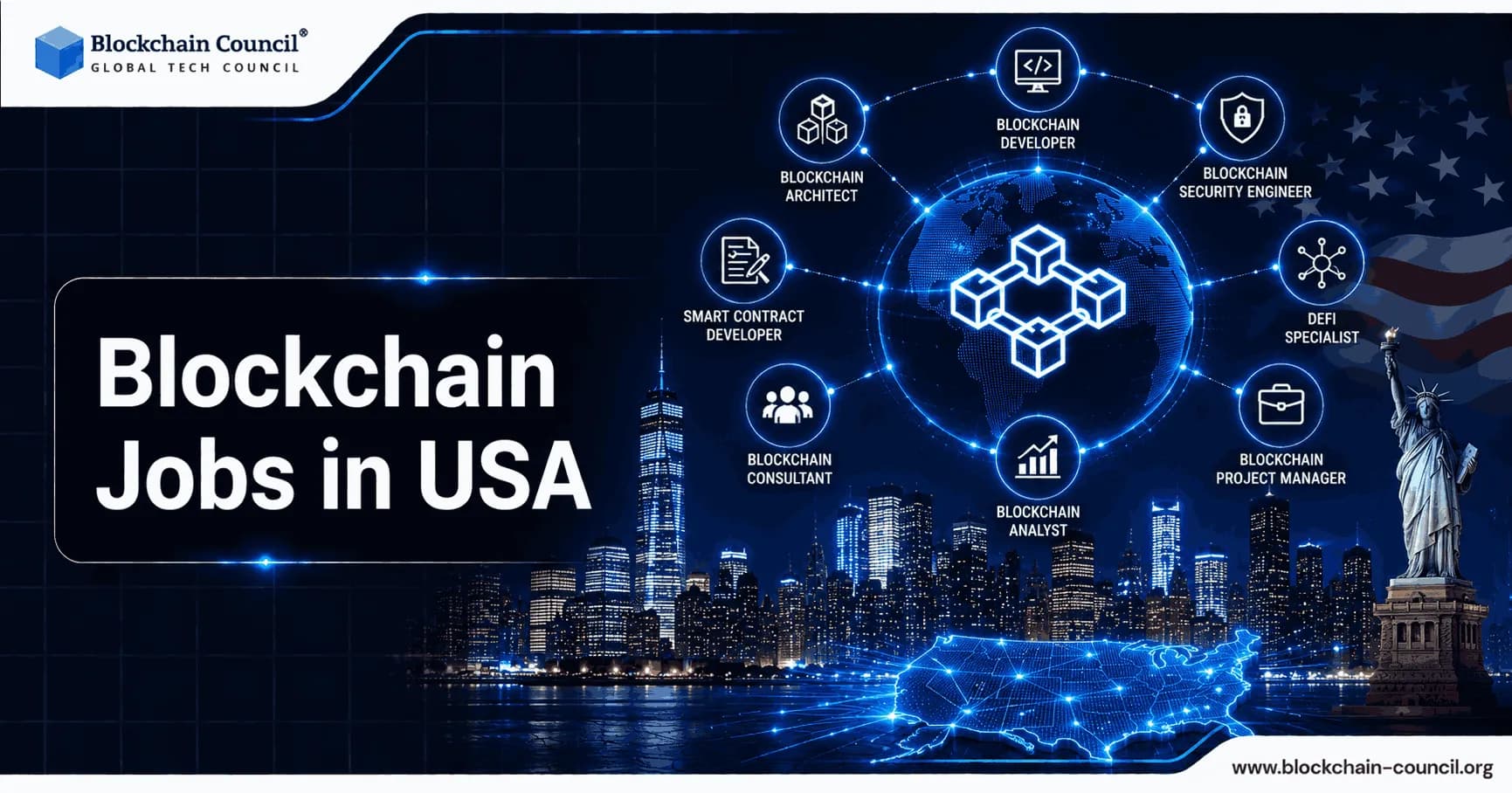
The United States blockchain job market has genuinely transformed since the GENIUS Act was signed into law in July 2025, establishing the country's first clear federal framework for stablecoin issuance and digital asset custody. This regulatory clarity has pushed blockchain hiring well beyond crypto native startups into major banks, payment companies, and traditional financial institutions building compliance ready digital asset infrastructure. According to ZipRecruiter's August 2026 data, the average blockchain professional in the United States earns $104,686 annually, with blockchain developers specifically averaging $111,845, and top roles reaching considerably higher. Many candidates preparing for these opportunities start with a Certified Blockchain Expert credential to build a genuine, verifiable foundation in a market now competing directly with traditional finance for skilled talent.
In this article, we will walk through the specific roles hiring across the United States, what current 2026 salary data actually shows by role and location, and the skills genuinely driving compensation in this rapidly maturing market.

How Regulatory Clarity Reshaped US Blockchain Hiring
For years, the absence of clear federal rules around digital asset custody and stablecoin issuance genuinely held back institutional blockchain hiring in the United States, with many major financial institutions reluctant to build significant digital asset teams amid regulatory uncertainty. The GENIUS Act changed this dynamic directly, replacing a genuinely fragmented, state by state patchwork of rules with defined federal standards for how stablecoins can be issued and managed.
The result has been a genuine hiring boom for what industry observers describe as compliance by design professionals, talent who understand both blockchain technology and the specific regulatory requirements now governing digital asset operations in the United States. Companies including Circle, the issuer of USDC, and MoonPay, a payments infrastructure company processing crypto transactions across more than 160 countries, actively list open US roles spanning engineering, compliance, and product functions. Building genuine, hands on technical competency remains essential to competing for these roles, which is why many candidates pursue a Certified Blockchain Developer credential specifically, validating the practical smart contract and blockchain development skills employers are actively screening for in this newly regulated environment.
Core Blockchain Roles Hiring Across the United States
Blockchain Developers and Smart Contract Engineers
The most common technical entry point, with ZipRecruiter reporting average compensation of $111,845 annually, and most workers earning between $90,000 and $130,000 depending on experience, location, and employer.
Blockchain Architects and Senior Protocol Engineers
These roles command genuinely premium compensation, with Levels.fyi and Glassdoor aggregated data placing median total compensation for mid-level blockchain developers between $140,000 and $185,000, and senior engineers and protocol specialists earning considerably more once equity and token components are included.
Agentic AI and On Chain Bot Developers
A genuinely new and rapidly growing specialization in 2026, involving developers who design autonomous, on chain AI agents capable of executing transactions and interacting with decentralized systems independently. Industry sources report this specific skill set now commands some of the highest salaries in the entire blockchain field.
Tokenomic Architects
A specialized, non engineering role focused on designing sustainable economic models for digital tokens, an increasingly important function as more companies launch tokens intended for long term utility rather than short term speculation.
Regulatory Solutions Architects and Compliance Specialists
This category has expanded considerably since the GENIUS Act's passage, with professionals in these roles ensuring digital asset products maintain full legal alignment with federal requirements while supporting continued innovation. Given how specialized this intersection of legal, financial, and technical knowledge has become, understanding the broader technology stack these compliance systems run on matters considerably. This is why many professionals in these roles also pursue a broader Tech Certification, developing well rounded technical literacy that strengthens their credibility when evaluating and designing compliance systems built directly into blockchain infrastructure.
Security Auditors and Smart Contract Reviewers
Companies like CertiK, which applies rigorous security research to enterprise blockchain applications, actively hire security specialists to identify vulnerabilities before smart contracts are deployed, roles that consistently command compensation at the top of the market given the genuinely high stakes involved.
What 2026 Salary Data Shows by Location
Location continues to meaningfully influence blockchain compensation across the United States. New York specifically shows an average blockchain salary of $114,530 annually according to ZipRecruiter's August 2026 data, with most workers earning between $65,100 and $122,500, slightly above the national blockchain average. New York's status as a major financial hub has attracted genuine blockchain activity from companies bridging traditional finance and digital assets, including Circle and various compliance focused technology firms building out local teams.
Broader national data continues to show wide variation depending on methodology and role specialization. ZipRecruiter's wider blockchain category data shows a range extending from $59,500 up to $400,000 depending on seniority and specific role, while specialized smart contract and Solidity focused positions reported by Web3.career average between $125,000 and $150,000, notably above general blockchain averages.
Skills Genuinely Driving Compensation in 2026
Programming language demand has shifted meaningfully in the US market this year, with high performance languages like Rust and Move now commanding stronger demand than Solidity alone, reflecting their growing use in next generation Layer 1 blockchain development. Beyond core programming skills, genuine fluency in both blockchain systems and AI integration has become a significant compensation driver, as autonomous AI agents increasingly execute transactions and interact with decentralized systems without continuous human oversight.
Future-Ready Skills
As technology becomes increasingly important across industries, students need opportunities to develop future-ready skills early in their education. A World Tech Olympiad can introduce students to areas such as artificial intelligence, coding, cybersecurity, robotics, and computational thinking while encouraging curiosity and continuous learning.
Building this kind of early technical foundation gives students across the United States a genuine head start toward eventually pursuing the country's growing number of well compensated blockchain careers.
Where US Blockchain Hiring Is Concentrated
While remote work remains genuinely common across the blockchain industry, certain US markets continue showing particularly strong, sustained hiring activity. New York's financial sector presence has made it a natural hub for blockchain roles bridging traditional finance and digital assets. Beyond New York, companies with remote first hiring models, including MoonPay, Circle, and Cash App's parent company Block, actively recruit blockchain talent nationally, reflecting how thoroughly distributed this job market has become compared to earlier years when blockchain hiring concentrated more narrowly around specific crypto hubs.
Building a Genuine Blockchain Career in the US Market
Real hiring patterns show that demonstrated, practical experience consistently outweighs credentials alone when it comes to actual compensation offers. Developers with genuine Solidity experience and an actual security audit track record have reportedly secured offers exceeding $160,000 in base salary, considerably above entry level offers in the $70,000 to $90,000 range typical for less experienced candidates. This pattern holds consistently across the market, real, shippable project experience matters more than years listed on a resume alone.
Communicating Your Blockchain Expertise Effectively
Technical skill alone rarely secures a competitive offer in a market this sophisticated. Candidates need to clearly explain their specific expertise, whether in a resume, technical interview, or professional portfolio, translating genuine hands on experience into language that resonates with hiring managers evaluating candidates across an increasingly regulated, institutional hiring landscape. This is why many professionals building blockchain careers also pursue a Marketing Certification, strengthening their ability to present technical and compliance expertise persuasively to employers navigating this newly clarified regulatory environment.
Final Thoughts
Blockchain jobs in the United States have matured considerably following the GENIUS Act's passage, shifting from speculative, crypto native hiring toward genuine institutional demand spanning engineering, compliance, and specialized roles like tokenomic architecture and agentic AI development. Compensation varies considerably by role, experience, and location, but national averages generally fall between $105,000 and $150,000, with specialized security, protocol, and AI integration roles reaching considerably higher.
For anyone building a career in this space, combining genuine technical or compliance expertise, staying current with how regulatory clarity continues reshaping hiring priorities, and clearly communicating that expertise to potential employers together provide the strongest foundation for a genuinely successful blockchain career in one of the world's most active and rapidly maturing job markets.
FAQs
1. What are blockchain jobs in the USA?
Blockchain jobs in the USA are career opportunities involving blockchain technology, Web3, cryptocurrency, smart contracts, digital assets, DeFi, tokenization, blockchain infrastructure, and cybersecurity. Current U.S. listings span engineering, product, finance, operations, marketing, legal, security, and business-development roles.
2. What types of blockchain jobs are available in the USA?
Common blockchain career opportunities include:
Blockchain Developer
Blockchain Engineer
Smart Contract Developer
Web3 Developer
Blockchain Architect
Blockchain Security Engineer
Blockchain Analyst
DeFi Developer
Blockchain Product Manager
Digital Asset Analyst
Blockchain Compliance Specialist
Web3 Marketing Specialist
Blockchain Researcher
Business Development Manager
Crypto Operations Specialist
3. Which US cities have the most blockchain jobs?
Major blockchain and Web3 employment hubs include New York City, San Francisco, Austin, Miami, Los Angeles, Boston, Chicago, Denver, Seattle, and the broader Silicon Valley area. Current job listings also show significant opportunities in New York, San Francisco, Texas, and California.
4. Are blockchain developers in demand in the USA?
Yes. Current U.S. job boards continue to list blockchain developer, blockchain engineer, Web3, digital-asset, and smart-contract positions. For example, Indeed currently lists blockchain developer openings across the United States, while Wellfound lists dedicated blockchain developer roles.
5. What skills are required for blockchain jobs in the USA?
Technical candidates can benefit from skills such as:
Solidity
Rust
Go
C++
JavaScript/TypeScript
Python
Smart contracts
Ethereum and EVM
Blockchain architecture
Distributed systems
Cryptography
Cybersecurity
APIs
Cloud computing
Git and GitHub
The exact requirements depend on whether the role focuses on protocol development, smart contracts, applications, infrastructure, security, or digital assets.
6. Can freshers get blockchain jobs in the USA?
Yes, although entry-level opportunities are generally more competitive than senior positions. Candidates can look for internships, junior developer roles, blockchain analyst positions, research roles, and entry-level Web3 jobs.
Some U.S. blockchain and Web3 job platforms explicitly include internship and entry-level filters, while current listings also show software engineering internships within the broader Web3 ecosystem.
7. What is the salary for blockchain jobs in the USA?
Blockchain compensation varies substantially based on experience, technical specialization, location, employer, and seniority.
Current listings illustrate the range. Wellfound shows U.S. blockchain positions with advertised compensation such as $40,000-$100,000 for a senior blockchain developer and $150,000-$250,000 for a senior software engineering role involving Web3 infrastructure.
8. Are blockchain jobs in the USA available remotely?
Yes. Remote blockchain and Web3 positions are widely available. Current U.S. listings include remote engineering, product, operations, security, and other roles. One current job board lists more than 500 remote crypto/Web3 openings available to candidates in the United States.
However, some positions are restricted to particular U.S. states or require candidates to be legally eligible to work in the country.
9. Is Solidity required for blockchain jobs in the USA?
No. Solidity is highly useful for Ethereum and EVM smart-contract development, but many blockchain positions use other technologies.
Depending on the role, employers may look for Rust, Go, C++, Python, JavaScript/TypeScript, cloud infrastructure, cybersecurity, or financial technology skills.
10. What industries hire blockchain professionals in the USA?
Blockchain professionals can find opportunities in:
Financial services
Fintech
Cryptocurrency
Digital payments
Asset management
Banking
Cybersecurity
Gaming
Supply-chain technology
Real estate
Digital identity
RWA tokenization
Enterprise software
Blockchain infrastructure
Current U.S. listings show roles spanning digital assets, payments, stablecoins, DeFi, wallets, and Web3 infrastructure.
11. Can non-technical professionals get blockchain jobs in the USA?
Yes. Blockchain companies also hire professionals in marketing, SEO, content, sales, business development, finance, legal, compliance, recruiting, operations, customer support, and product management.
Current U.S. crypto job listings include finance, marketing, legal, operations, business-development, and people-operations categories in addition to engineering.
12. What does a blockchain developer do in the USA?
A blockchain developer may design and maintain smart contracts, decentralized applications, wallets, blockchain integrations, APIs, protocols, and infrastructure.
The specific responsibilities depend on the company. Some developers work directly on blockchain protocols, while others build applications that interact with existing networks.
13. What certifications can help with blockchain jobs in the USA?
Relevant blockchain certifications can demonstrate structured knowledge of blockchain technology, smart contracts, cryptocurrency, Web3, digital assets, or blockchain security.
However, certification should ideally be supported by practical projects, technical experience, internships, or a professional portfolio. For developers, demonstrated coding ability can be particularly important.
14. Can international candidates get blockchain jobs in the USA?
Potentially, yes. International candidates should check the employer's visa sponsorship, work authorization, location, and employment requirements.
Some current U.S. blockchain listings specifically mention remote arrangements or location restrictions, while larger employers may have established processes for international hiring or relocation.
15. How can I become a blockchain developer in the USA?
A practical career path is:
Learn programming fundamentals.
Understand blockchain architecture.
Choose an ecosystem such as Ethereum.
Learn Solidity or another relevant programming language.
Study smart contracts and Web3 development.
Build practical blockchain projects.
Learn blockchain security.
Publish projects on GitHub.
Contribute to open-source projects.
Apply for internships, junior roles, and blockchain developer positions.
16. What projects should I build for a US blockchain job portfolio?
Good portfolio projects include:
ERC-20 token
NFT marketplace
DAO voting application
DeFi lending platform
Blockchain explorer
Multichain wallet
RWA tokenization prototype
Digital identity application
Smart-contract security project
Blockchain payment application
Explain the business problem, architecture, technology stack, testing, security considerations, and results for each project.
17. Are there blockchain jobs in the USA for non-developers?
Yes. Candidates without programming backgrounds can target positions such as:
Blockchain Content Writer
Crypto Research Analyst
Community Manager
Web3 Marketing Specialist
Blockchain Business Analyst
Product Associate
Compliance Analyst
Digital Asset Operations Associate
Business Development Associate
Blockchain Project Coordinator
The U.S. market currently includes opportunities across operations, finance, marketing, legal, sales, product, and other functions.
18. Where can I find blockchain jobs in the USA?
You can search LinkedIn, Indeed, Wellfound, Web3 job boards, specialized crypto recruitment platforms, and company career pages.
Useful search terms include:
"Blockchain Jobs USA," "Blockchain Developer USA," "Blockchain Engineer USA," "Web3 Jobs USA," "Smart Contract Developer USA," "Crypto Jobs USA," and "Blockchain Jobs Remote USA."
Current listings show thousands of blockchain-related positions on major job platforms.
19. Which blockchain companies are hiring in the USA?
The U.S. blockchain and crypto market includes exchanges, infrastructure providers, blockchain protocols, fintech companies, custody providers, Web3 startups, and digital-asset businesses.
Current job listings show hiring activity from organizations such as Coinbase, Polymarket, Hut 8, TRM, Gemini, Kraken, Fireblocks, and other blockchain and digital-asset companies.
20. What is the future of blockchain jobs in the USA?
The U.S. blockchain employment market is increasingly expanding beyond traditional cryptocurrency roles into stablecoins, tokenized assets, RWA tokenization, digital payments, blockchain security, DeFi, institutional digital assets, AI, and blockchain infrastructure.
Current job listings already demonstrate demand across engineering, finance, product, security, operations, legal, marketing, and business development.
Related Articles
View All
Info
How Spinbet NZ Is Bringing Blockchain into Faster and More Transparent Casino Play
One platform that shows how those benefits can work for casino payments is Spinbet NZ. Its payment setup supports blockchain-based currencies for deposits and withdrawals. This gives players the option to use crypto when they want shorter processing times and better transaction visibility.
Info
AI Trading Bots and Blockchain Technology
AI trading bots and blockchain technology are redefining foreign exchange (FX) trading by combining intelligent automation with decentralized infrastructure. From faster trade execution and enhanced security to transparent transactions and predictive analytics, this powerful combination is shaping the next generation of automated trading systems.

Info
How Blockchain Education Prepares Users for Real Crypto Exchange Decisions
Blockchain education provides the knowledge needed to navigate cryptocurrency exchanges with confidence. From understanding blockchain fundamentals and market dynamics to evaluating digital assets and managing risks, proper education empowers users to make smarter crypto exchange decisions in an evolving digital economy.
Trending Articles
The Role of Blockchain in Ethical AI Development
How blockchain technology is being used to promote transparency and accountability in artificial intelligence systems.
AWS Career Roadmap
A step-by-step guide to building a successful career in Amazon Web Services cloud computing.
What is AWS? A Beginner's Guide to Cloud Computing
Everything you need to know about Amazon Web Services, cloud computing fundamentals, and career opportunities.