

Blockchain Jobs in Tokyo
 Toshendra Kumar Sharma
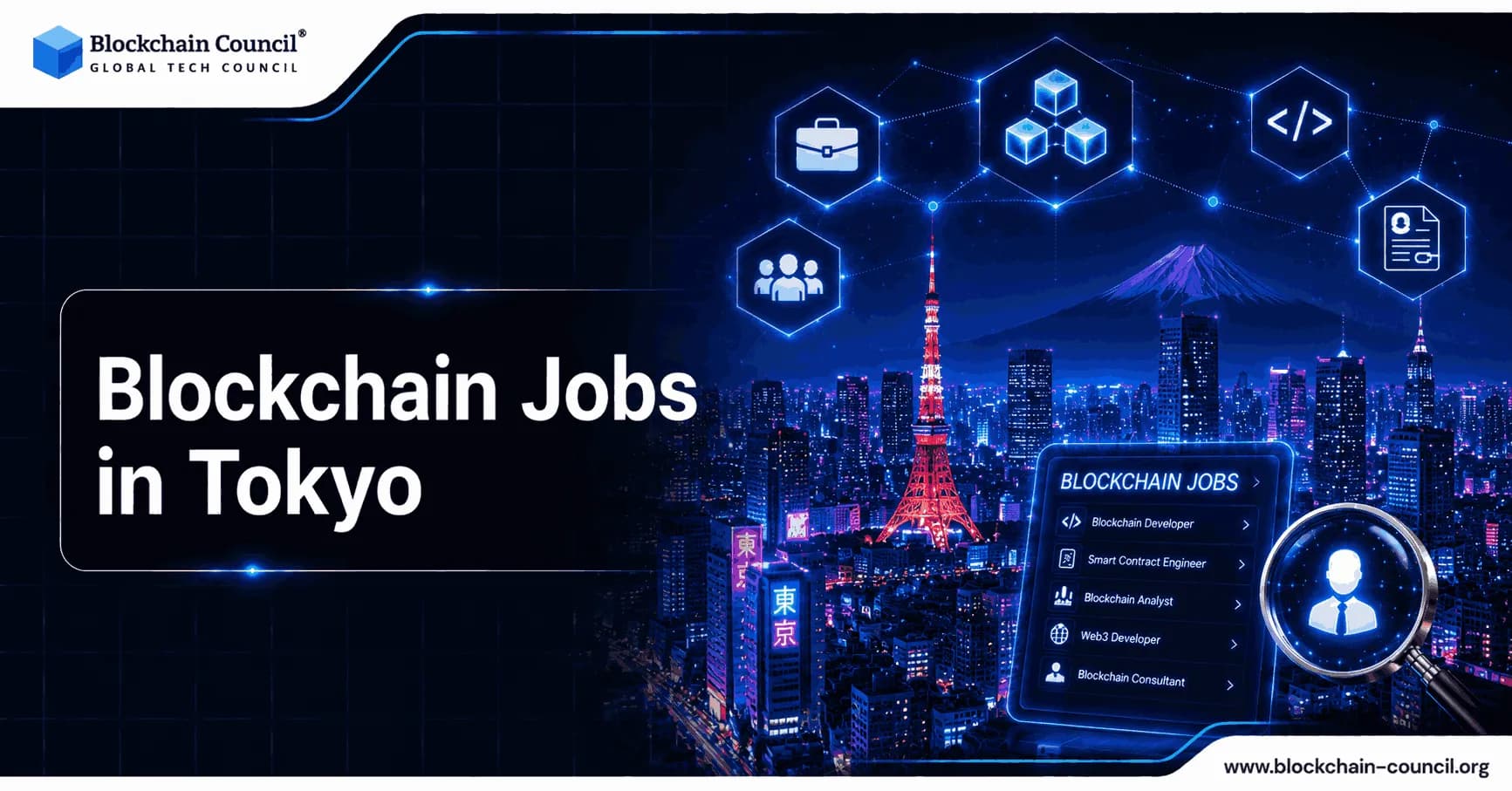
Tokyo has built one of Asia's most structured blockchain job markets, shaped heavily by Japan's licensing regime for digital asset businesses, a gaming industry that has embraced blockchain integration earlier than most global peers, and a corporate culture that has pushed several major financial institutions and technology conglomerates into serious blockchain experimentation. Blockchain jobs in Tokyo span smart contract development at licensed exchanges, protocol engineering at gaming companies, and enterprise blockchain consulting at large corporates exploring tokenization and supply chain applications. Anyone targeting these roles typically benefits from a Certified Blockchain Expert credential, since it verifies the broad architectural understanding that Tokyo employers expect before advancing candidates to more technical rounds.
What distinguishes Tokyo from other Asian blockchain hubs is the balance between regulatory formality and genuine enterprise adoption. Japan's Financial Services Agency has enforced a licensing framework for exchanges since 2017, which has pushed the industry toward well-capitalized, compliance-conscious employers rather than a scattered field of loosely regulated startups. That structure has produced a job market that rewards precision and process discipline as much as raw technical talent.

Why Tokyo Has Developed a Distinct Blockchain Hiring Pattern
A combination of regulatory maturity, industry crossover, and corporate experimentation explains why Tokyo's blockchain job market looks different from more loosely regulated regional hubs.
A licensed exchange environment. Japan's exchange licensing requirements have concentrated much of the country's crypto-native hiring inside established, well-resourced platforms rather than early-stage startups, giving job seekers access to more stable roles with clearer compliance processes built into daily engineering work.
Deep gaming industry integration. Japanese gaming companies, several among the largest in the world by revenue, have moved into blockchain and NFT integration steadily over recent years, creating consistent demand for blockchain engineers inside studios that are fundamentally gaming businesses rather than crypto-native firms.
Corporate and financial institution experimentation. Several major Japanese banks, trading houses, and technology conglomerates have run blockchain pilots or built internal blockchain divisions, often exploring tokenized assets, trade finance, or supply chain tracking, creating enterprise blockchain roles well outside the visible crypto-native sector.
A cautious but growing interest in tokenization. While Japan's regulatory approach has slowed pure DeFi adoption compared to some markets, interest in tokenizing real-world assets has grown steadily, opening new roles at firms exploring that specific intersection of traditional finance and blockchain infrastructure.
Categories of Blockchain Roles Available in Tokyo
Blockchain job postings in Tokyo cluster into recognizable categories shaped by the mix of licensed exchanges, gaming companies, and enterprise divisions active in the city.
Smart contract developers at licensed exchanges and fintech firms build token infrastructure, staking mechanisms, and custody-adjacent contract logic under stricter internal review processes than typical unregulated startups, given the financial exposure and regulatory scrutiny involved. A Certified Blockchain Developer credential appears frequently as a preferred qualification in these postings, since it demonstrates hands-on smart contract and application development capability that employers can verify against a defined standard.
Blockchain engineers at gaming and entertainment companies build NFT minting systems, in-game marketplaces, and infrastructure bridging traditional game servers with blockchain networks, a category that has expanded consistently as Japanese studios continue experimenting with blockchain-based ownership models.
Enterprise blockchain specialists at banks, trading houses, and large technology firms work on private or consortium blockchain projects, often valuing enterprise software experience and process discipline alongside blockchain-specific technical skill.
Compliance and risk analysts with technical fluency assess smart contract and token risk for licensed exchanges and financial institutions navigating Japan's registration requirements, a category that has grown as regulatory reporting obligations have become more detailed.
Security auditors and researchers review contracts for Japanese firms launching token products, carrying particular weight given the reputational and regulatory consequences of shipping a vulnerable contract at a licensed entity.
Core Skills Tokyo Employers Actually Screen For
Technical hiring for blockchain roles in Tokyo tends to converge on a consistent set of expectations, layered with local nuances that matter more here than in less regulated markets.
Solidity and smart contract fundamentals sit at the top of most technical postings, paired with a demonstrated understanding of common vulnerability patterns, since employers at regulated firms tend to probe security awareness deeply during interviews given the financial stakes involved.
Japanese language proficiency significantly widens the available role pool, particularly at domestic financial institutions and gaming companies where internal engineering communication happens primarily in Japanese, though international crypto-native firms with a Tokyo office often operate comfortably in English.
Process discipline and documentation habits carry more weight in Tokyo than in many other blockchain hubs, reflecting the broader Japanese corporate culture around thorough review and clear accountability, which extends naturally into how blockchain teams handle code review and deployment processes.
Regulatory awareness, even for purely technical roles, comes up often in interviews, and candidates who can speak knowledgeably about why certain token designs carry different regulatory implications tend to stand out from those who treat technical work as entirely separate from compliance considerations.
Future-Ready Skills
As technology becomes increasingly important across industries, students need opportunities to develop future-ready skills early in their education. A World Tech Olympiad can introduce students to areas such as artificial intelligence, coding, cybersecurity, robotics, and computational thinking while encouraging curiosity and continuous learning.
Career Paths for Blockchain Professionals in Tokyo
A junior blockchain developer in Tokyo typically starts on smart contract testing, minor feature work, or wallet integration tasks under a senior engineer's supervision, often transitioning in from a prior backend or fintech engineering role. Mid-level engineers take ownership of contract architecture, lead technical discussions with compliance teams at licensed exchanges, or specialize in gaming-focused blockchain integration.
Senior roles and architect positions involve making core technology decisions, whether that means choosing a scaling solution for a gaming company's NFT marketplace or designing the security review process for an exchange's token listing pipeline. Beyond individual contributor tracks, experienced professionals move into enterprise blockchain consulting, compliance leadership at licensed platforms, or specialized security auditing practices that serve clients across the broader Asian blockchain market given Tokyo's reputation for rigorous review standards.
Building Credibility Beyond Technical Skill
Strong technical ability gets a blockchain professional through Tokyo's hiring process, but building a lasting career here, whether through enterprise consulting, freelance auditing, or founding a blockchain venture, usually takes more than coding skill alone. A general Tech Certification can help round out broader technical fluency across enterprise software, cloud infrastructure, and conventional systems engineering, since a meaningful share of Tokyo's blockchain work happens inside larger, non-crypto-native organizations that value that breadth. Professionals who move into consulting, freelance work, or founding roles within Japan's blockchain scene often find they need to communicate technical work clearly to non-technical stakeholders and international partners, which is where a Marketing Certification can help turn solid engineering credentials into a pitch or portfolio that resonates outside a purely technical audience.
The Practical Next Step
If you are targeting a blockchain role in Tokyo, start by building a portfolio project that reflects genuine technical depth, whether that is a token contract, a gaming NFT integration, or an enterprise-style proof of concept, and pair it with enough regulatory awareness to speak intelligently about compliance considerations in an interview. Be honest about whether Japanese language skills will meaningfully expand your options, and consider targeting international companies with a Tokyo presence if language remains a barrier. Tokyo's blockchain job market rewards precision, process discipline, and regulatory fluency more than raw enthusiasm, and candidates who demonstrate all three alongside genuine shipped work tend to stand out quickly in a market known for stability over speculation.
FAQs
1. What are blockchain jobs in Tokyo?
Blockchain jobs in Tokyo include opportunities in blockchain development, Web3, smart contracts, digital assets, crypto operations, blockchain infrastructure, NFTs, DeFi, and blockchain security. Current listings span both technical and non-technical roles.
2. Is Tokyo a good city for blockchain jobs?
Yes. Tokyo has an established technology, financial-services, gaming, and Web3 ecosystem. Current hiring includes blockchain roles at companies such as Konami Digital Entertainment, Mercari, Binance, Fireblocks, and other blockchain-focused organizations.
3. What blockchain job roles are available in Tokyo?
Common roles include Blockchain Developer, Blockchain Engineer, Solidity Developer, Smart Contract Developer, Web3 Engineer, Blockchain Architect, Blockchain Project Manager, Digital Asset Specialist, Blockchain Product Manager, and Blockchain Business Development Manager. Konami's Tokyo listings, for example, include blockchain engineers, server programmers, project managers, planners, and business-development roles.
4. What skills are required for blockchain jobs in Tokyo?
Technical positions commonly require Solidity, Rust, Ethereum, JavaScript, TypeScript, Go, Kotlin, smart contracts, Web3 development, distributed systems, APIs, cloud technologies, and blockchain security. Current Tokyo listings specifically mention Solidity, Rust, TypeScript, Ethereum, Cosmos SDK, and Hyperledger Fabric.
5. Is Solidity in demand for blockchain jobs in Tokyo?
Yes. Solidity remains an important skill for Ethereum and EVM-based smart-contract development. Current Tokyo-area listings include Solidity development, smart-contract engineering, DeFi, NFT, and Web3 infrastructure work.
6. What is the salary for blockchain jobs in Tokyo?
Blockchain compensation varies considerably according to experience, technical specialization, company, and role. For example, one Tokyo blockchain Tech Lead listing advertises an expected annual salary of ¥6 million to ¥12 million, with higher compensation potentially available for highly experienced candidates.
7. Are there entry-level blockchain jobs in Tokyo?
Yes. Tokyo's Web3 job market includes opportunities across different experience levels, including internships and early-career positions. Current listings include a 2028 Software Engineer Internship at Mercari as well as more experienced blockchain and Web3 roles.
8. Are blockchain jobs in Tokyo only for developers?
No. Blockchain companies also hire professionals in product management, project management, operations, business development, marketing, compliance, finance, legal, and customer-facing roles. Current Tokyo listings include project management, business development, government relations, finance, and internal-audit positions related to digital assets and Web3.
9. Are Japanese companies hiring blockchain professionals in Tokyo?
Yes. Japanese companies are actively developing blockchain-related products and services. For example, Konami Digital Entertainment currently lists multiple Tokyo-based blockchain positions covering NFT marketplace development, blockchain engineering, project management, planning, operations, and business development.
10. Are there enterprise blockchain jobs in Tokyo?
Yes. Enterprise blockchain opportunities include blockchain infrastructure, financial technology, digital-asset custody, enterprise applications, and distributed-ledger systems. Current Tokyo roles include enterprise digital-asset infrastructure and blockchain projects involving financial institutions.
11. Are there RWA tokenization jobs in Tokyo?
Yes. RWA tokenization is an emerging opportunity within Tokyo's broader digital-asset and blockchain market. Professionals can target roles involving tokenized assets, digital securities, stablecoins, blockchain infrastructure, custody, financial products, and institutional digital assets. Japan is also exploring blockchain-based infrastructure for faster settlement of stocks and government bonds.
12. What skills are useful for RWA tokenization jobs in Tokyo?
Useful skills include Solidity, Ethereum/EVM networks, token standards, smart contracts, digital securities, asset tokenization, custody, KYC/AML, blockchain security, stablecoins, and financial-market infrastructure. Knowledge of Japanese financial regulations and traditional capital markets can provide an additional advantage.
13. Are there Web3 jobs in Tokyo?
Yes. Current job boards show numerous Web3 opportunities in Tokyo, covering engineering, product, business development, marketing, operations, infrastructure, and digital assets. One current listing source indexes 19 Web3 positions across five actively hiring companies, while another lists more than 150 Tokyo Web3 positions.
14. Is blockchain security important for careers in Tokyo?
Absolutely. Blockchain security is essential for protecting smart contracts, wallets, decentralized applications, digital assets, and blockchain infrastructure. Candidates can strengthen their profiles by learning smart-contract auditing, cryptography, secure coding, vulnerability analysis, and protocol security.
15. Which blockchain development tools should job seekers in Tokyo learn?
Useful tools include Hardhat, Foundry, OpenZeppelin, Ethers.js, Web3.js, Git/GitHub, Docker, blockchain explorers, and smart-contract testing frameworks. Developers should also learn the tools associated with their target ecosystem, such as Rust-based tooling for relevant blockchain projects.
16. Are there crypto and digital-asset jobs in Tokyo?
Yes. Tokyo has opportunities in digital-asset operations, custody, crypto infrastructure, exchanges, compliance, product management, and blockchain engineering. Current listings include Fireblocks' Japanese-speaking Project Manager role and Binance roles supporting Japan's digital-asset market.
17. Can freshers get blockchain jobs in Tokyo?
Yes, although specialized blockchain engineering roles can be competitive. Freshers can improve their chances by learning blockchain fundamentals, Solidity, Ethereum, smart contracts, Web3 development, Git, and basic cybersecurity, then building practical projects and publishing them on GitHub.
18. Where can I find blockchain jobs in Tokyo?
You can search LinkedIn, Indeed Japan, Web3.Career, Japanese Web3 job boards, JobsRadar, and company career pages. Current sources show opportunities across engineering, product, operations, gaming, digital assets, and blockchain infrastructure.
19. What should I include on my resume for a blockchain job in Tokyo?
Highlight Solidity or Rust projects, Ethereum/EVM experience, smart-contract deployments, GitHub repositories, Web3 applications, blockchain security, DeFi or RWA projects, APIs, backend development, and relevant certifications.
For non-technical roles, emphasize blockchain knowledge alongside experience in finance, compliance, product management, operations, marketing, business development, or project management. Japanese-language proficiency can also be valuable for roles specifically serving the Japanese market.
20. What is the future of blockchain jobs in Tokyo?
Tokyo's blockchain employment market is expanding beyond cryptocurrency development toward Web3 infrastructure, digital assets, NFTs, stablecoins, RWA tokenization, enterprise blockchain, blockchain security, and institutional financial applications. Japan's current exploration of blockchain-based settlement infrastructure further highlights the potential for blockchain skills across financial markets.
Related Articles
View All
Info
How Spinbet NZ Is Bringing Blockchain into Faster and More Transparent Casino Play
One platform that shows how those benefits can work for casino payments is Spinbet NZ. Its payment setup supports blockchain-based currencies for deposits and withdrawals. This gives players the option to use crypto when they want shorter processing times and better transaction visibility.
Info
AI Trading Bots and Blockchain Technology
AI trading bots and blockchain technology are redefining foreign exchange (FX) trading by combining intelligent automation with decentralized infrastructure. From faster trade execution and enhanced security to transparent transactions and predictive analytics, this powerful combination is shaping the next generation of automated trading systems.

Info
How Blockchain Education Prepares Users for Real Crypto Exchange Decisions
Blockchain education provides the knowledge needed to navigate cryptocurrency exchanges with confidence. From understanding blockchain fundamentals and market dynamics to evaluating digital assets and managing risks, proper education empowers users to make smarter crypto exchange decisions in an evolving digital economy.
Trending Articles
AWS Career Roadmap
A step-by-step guide to building a successful career in Amazon Web Services cloud computing.
Claude AI Tools for Productivity
Discover Claude AI tools for productivity to streamline tasks, manage workflows, and improve efficiency.
Blockchain in Supply Chain Provenance Tracking
Supply chains are under pressure to prove not just efficiency, but also authenticity, sustainability, and fairness. Customers want to know if their coffee really is fair trade, if the diamonds are con